White Whole Wheat Bread Recipe (Soft & Easy)
By Sarah — Last updated: November 11, 2026
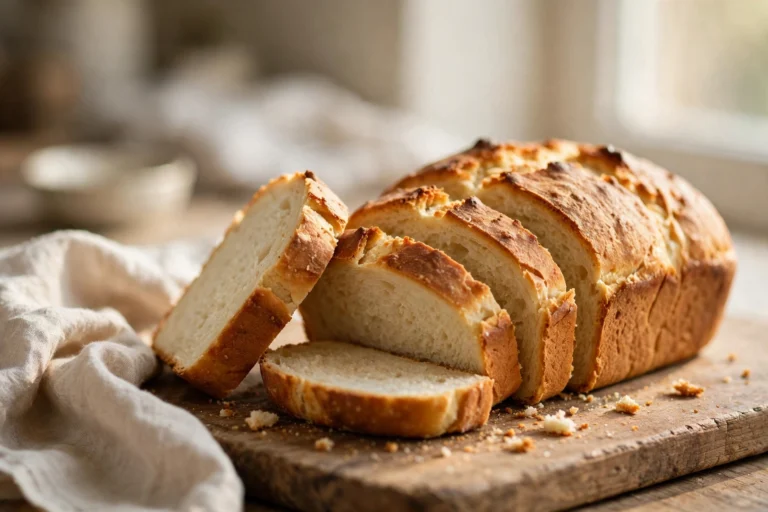
This white whole wheat bread recipe makes one soft, sliceable sandwich loaf with just 7 ingredients and no bread machine. It uses 100% white whole wheat flour, so you get whole-grain fiber in every slice, but the crumb stays light and mild. Prep takes about 20 minutes, and the loaf bakes in about 35 minutes.
Key Takeaways
- One soft sandwich loaf from 7 ingredients, no bread machine.
- 100% white whole wheat flour: whole-grain fiber, mild flavor.
- Each slice of this white whole wheat bread recipe has about 3 g fiber and 111 mg sodium.
Contents
- What Is White Whole Wheat Flour?
- Is White Whole Wheat Bread Healthy?
- White Whole Wheat Bread Recipe
- Why Is My Whole Wheat Bread Dense?
- How Do I Store Homemade Whole Wheat Bread?
- Can I Make It Without Vital Wheat Gluten?
- Variations
- What Can I Serve With White Whole Wheat Bread?
- Frequently Asked Questions
What Is White Whole Wheat Flour?
White whole wheat flour is flour milled from hard white wheat, ground with all three parts of the grain — the bran, the germ, and the endosperm. That makes it a true whole grain. White wheat is lighter in color and milder in flavor than red wheat.
That mild flavor is the whole point. Regular whole wheat flour comes from hard red wheat and can taste strong or bitter. This white whole wheat bread recipe uses 100% white whole wheat flour, which tastes softer and sweeter.
A wheat grain has three parts: the bran (outer skin, most of the fiber), the germ (center, healthy fats and vitamins), and the endosperm (starchy middle). White flour is made from the endosperm alone.
When you shop, check the bag: it should say “white whole wheat flour” first. King Arthur calls its version “Golden Wheat Flour” — the same thing under a brand name.
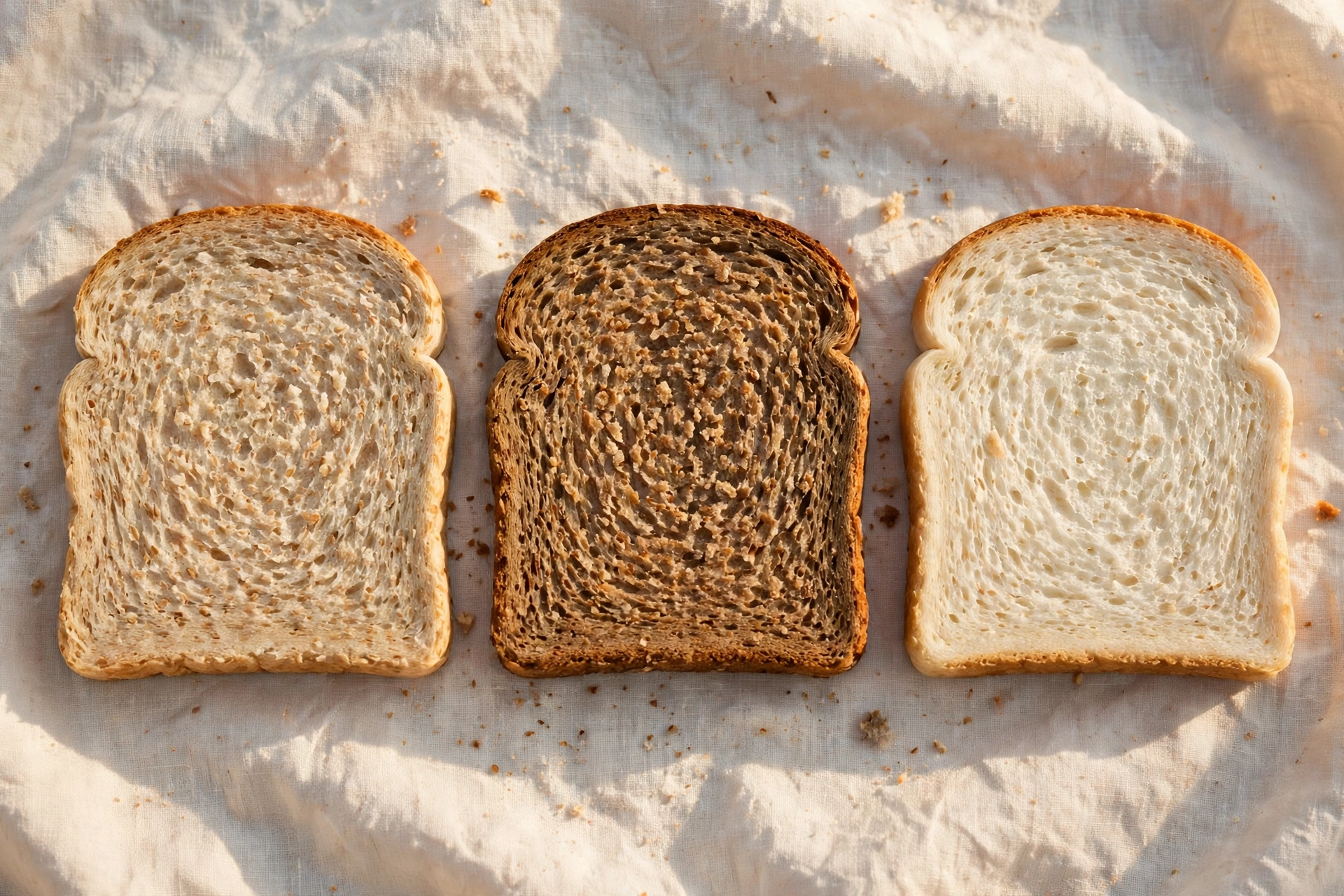
White Whole Wheat vs Regular Whole Wheat vs White Bread
They all come from wheat, but they are not the same food.
| White whole wheat bread | Regular whole wheat bread | White bread | |
|---|---|---|---|
| Made from | Hard white wheat, whole grain | Hard red wheat, whole grain | Refined wheat (endosperm only) |
| Color | Light tan | Brown | White |
| Flavor | Mild, lightly nutty | Stronger, nutty | Plain, soft |
| Fiber per slice (approx.) | About 3 g | About 3–4 g | Less than 1 g |
| Glycemic index (approx.) | About 50 | About 50 | About 70 |
| Best for | Everyday sandwiches and toast | Hearty breads and toast | Soft sandwiches |
Is White Whole Wheat Bread Healthy?
Yes, white whole wheat bread can be part of a healthy diet. It is made from 100% whole grain, so it gives you fiber that white bread does not. It also has less added sugar than many store-bought loaves. Like any bread, it works best as part of a balanced diet.
The fiber is the biggest win. Each slice of this white whole wheat bread recipe has about 3 g of fiber. Fiber helps you feel full and slows down how fast your body takes in carbs. See our list of foods high in soluble fiber.
Whole grains have strong evidence behind them. The Harvard T.H. Chan School of Public Health links eating whole grains with a lower risk of heart disease and type 2 diabetes. That is a link, not a promise.
This loaf is low in fat, has no cholesterol, and uses only 2 tablespoons of honey — about 2 g of added sugar per slice. Whole wheat sits near 50 on the glycemic index, while white bread sits near 70.
Bread label checklist:
- First ingredient: whole wheat flour or white whole wheat flour
- At least 3 g fiber per slice
- Less than 3 g added sugar per slice
- 140 mg sodium or less per slice
Note: this bread contains wheat and gluten, so it is not safe for celiac disease or a wheat allergy.
How Much Sodium Is in Homemade Bread?
Most homemade white whole wheat bread has far less sodium than store-bought bread. This white whole wheat bread recipe has about 111 mg of sodium per slice. Some homemade recipes have as much as 352 mg per slice, and many store loaves sit near 200 mg.
Sodium is the part of salt that matters for blood pressure, and bread is one of the biggest sources of it. Read our guide on sodium and blood pressure for the full picture.
| Bread | Sodium per slice |
|---|---|
| This recipe | About 111 mg |
| Lowest homemade recipe we found | 47 mg |
| Highest homemade recipe we found | 352 mg |
| Typical store-bought whole wheat loaf | About 150–200 mg |
The FDA draws the “low sodium” line at 140 mg or less per serving, and our loaf sits under it at about 111 mg. We get there with ¾ teaspoon of salt for the whole loaf instead of the usual 1½ teaspoons. If you do not watch sodium, use 1 teaspoon — about 140 mg per slice.
White Whole Wheat Bread Recipe
This white whole wheat bread recipe makes 1 loaf and 16 slices in a 9×5-inch pan. Prep is 20 minutes, baking is 30–35 minutes, and the full time is about 2 hours 30 minutes with two rises. Double it for two loaves, or halve it for a small 8×4-inch pan. You need a 9×5-inch pan, a bowl or mixer, a towel, a thermometer, and a rack.

Ingredients
- 3¾ cups (450 g) white whole wheat flour
- 1⅓ cups (320 ml) warm water (105–110°F / 40–43°C)
- 2¼ teaspoons (7 g) instant yeast (1 packet)
- 3 tablespoons (30 g) vital wheat gluten
- 2 tablespoons (42 g) honey
- 2 tablespoons (28 ml) canola oil
- ¾ teaspoon (4.5 g) fine sea salt

How to Make White Whole Wheat Bread
- Wake up the yeast. Stir the warm water, honey, and yeast in a bowl. Rest 5 minutes until foamy.
- Mix the dough. Add the flour, vital wheat gluten, oil, and salt. Stir until a shaggy ball forms, with no dry flour left.
- Knead until smooth. Use a dough hook for 8–10 minutes, or knead by hand for 10–12 minutes. Windowpane test: stretch a piece thin — if it holds, it is ready.
- First rise. Put the dough in a lightly oiled bowl, cover, and rest in a warm spot for 60–75 minutes, until doubled.
- Shape the loaf. Press out the air, roll into a log, and place seam-side down in the greased pan.
- Second rise. Cover the pan and let the dough rise 30–45 minutes, until it crowns about 1 inch above the rim. Do not over-rise, or the loaf may sink.
- Bake. Heat the oven to 350°F (175°C) and bake 30–35 minutes. Tent with foil after 20 minutes if it browns. Done at 190°F (88°C) in the center.
- Cool before slicing. Rest 10 minutes in the pan, then turn out onto a rack. Wait 30 minutes before slicing — hot bread slices gummy.
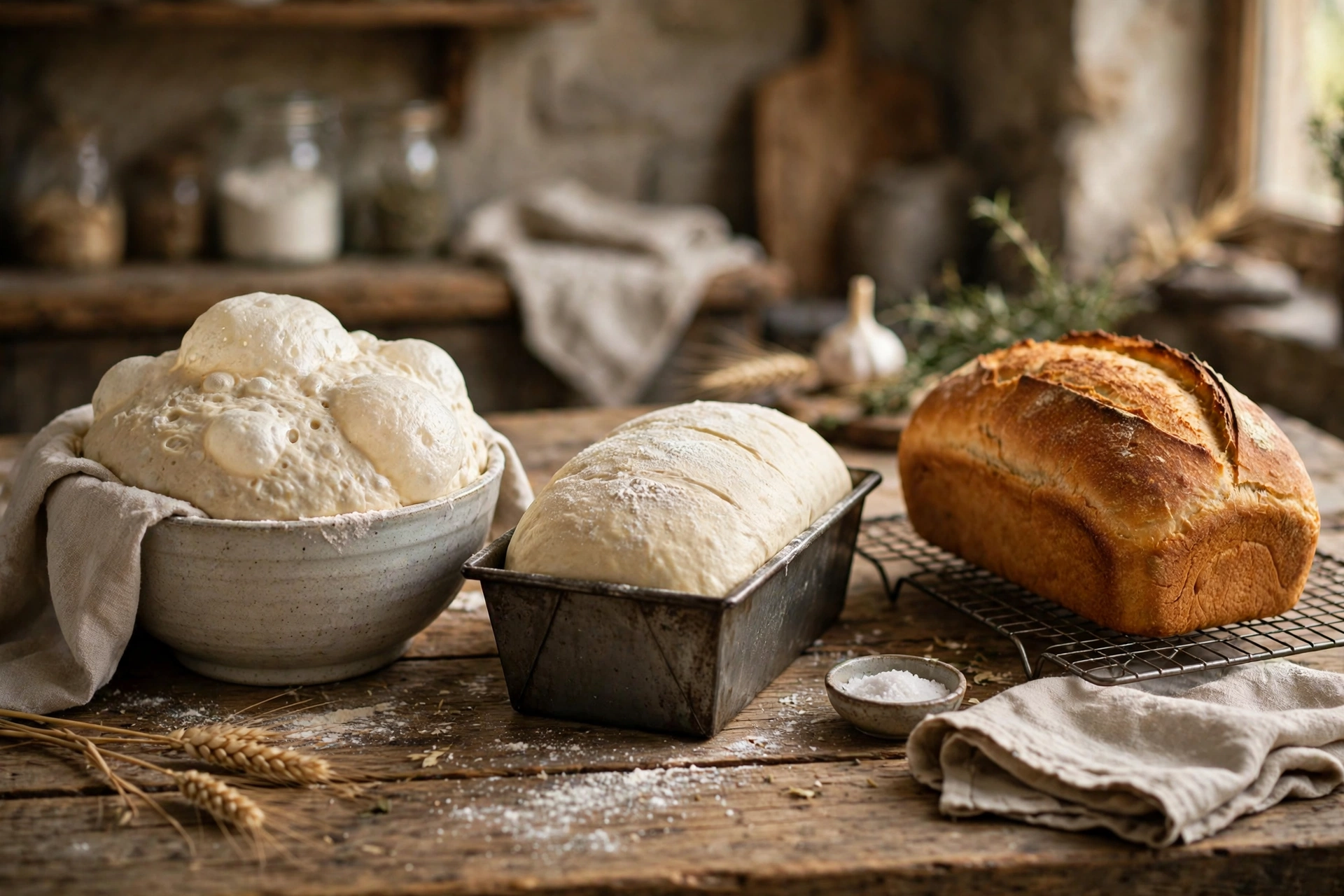
The dough doubled in about an hour in my warm kitchen, and felt soft and slightly tacky — not sticky. My oven needed 33 minutes for the center to reach 190°F, and the crust came out golden, not dark.
Ingredients
Equipment
Method
- Stir the warm water, honey, and yeast in a large bowl. Let sit 5 minutes until foamy.
- Add the flour, vital wheat gluten, oil, and salt. Stir until a shaggy dough forms with no dry flour left.
- Knead with a dough hook for 8–10 minutes, or by hand for 10–12 minutes, until smooth and stretchy (windowpane test).
- Place in a lightly oiled bowl, cover, and let rise in a warm spot for 60–75 minutes, until doubled.
- Press down gently, roll into a log, and place seam-side down in a greased 9×5-inch pan.
- Cover and let rise 30–45 minutes, until the dough crowns about 1 inch above the pan rim.
- Bake at 350°F (175°C) for 30–35 minutes, tenting loosely with foil after 20 minutes if the top browns fast. Done at 190°F (88°C) in the center.
- Cool in the pan for 10 minutes, then turn out onto a rack. Wait at least 30 minutes before slicing.
Notes
Why Is My Whole Wheat Bread Dense?
This white whole wheat bread recipe turns out dense most often because the dough did not rise long enough, the yeast was old or the water was too hot, or too much flour went in during kneading. Whole wheat flour is thirsty, so it needs enough water and a full knead for a soft crumb.
| Problem | Likely cause | Fix |
|---|---|---|
| Dense, heavy crumb | Not enough kneading, or not enough water | Knead the full time and pass the windowpane test; add water 1 tablespoon at a time if the dough feels stiff |
| Did not rise | Old yeast, or water too hot or too cold | Use fresh yeast and water at 105–110°F (40–43°C); let the dough rise in a warm spot |
| Gummy center | Sliced too soon, or underbaked | Bake to 190°F (88°C) in the center and wait at least 30 minutes before slicing |
| Dry loaf | Too much flour, or baked too long | Measure flour with a scale, and check the bread at 30 minutes |
| Split or burst top | Second rise went too far, or oven too hot | Let the dough crown only about 1 inch above the pan rim; check your oven temperature |
Two softness tricks from King Arthur’s bakers: swap 2 tablespoons of water for orange juice to soften the bitter edge, or swap 2 tablespoons of flour for potato flour to keep the crumb soft longer.
How Do I Store Homemade Whole Wheat Bread?
Keep this bread at room temperature in a bread bag or bread box for up to 3 days. The fridge keeps it safe longer but dries it out fast. For longer storage, slice the loaf first and freeze it for up to 3 months.
Slice the loaf first, so you can take out one slice at a time. Wrap the slices in plastic wrap and a freezer bag. To refresh a slice, warm it in a 325°F oven for 10 minutes, or toast it.
Can I Make It Without Vital Wheat Gluten?
Yes, you can leave out the vital wheat gluten, but the loaf will be a little denser and will not rise as high. Vital wheat gluten adds protein that helps the dough hold gas and build a taller crumb. If you skip it, give the second rise a few extra minutes.
I baked one loaf without the vital wheat gluten, and it rose about an inch less and came out a little denser — still soft and good for toast, just not as tall.
Variations
This white whole wheat bread recipe is easy to change. For a simpler bake, try our 2 ingredient bread with Greek yogurt.
Bread machine. Add liquids first, then dry ingredients, yeast on top. Use the whole wheat or basic cycle, 1.5-lb setting.
No-knead. Stir into a sticky dough, cover, and rest 12–16 hours. Shape, rise in the pan 45–60 minutes, then bake as usual.
Maple instead of honey. Use the same amount of maple syrup, or a diabetes-friendly sweetener from our guide to sugar substitutes for diabetics.
What Can I Serve With White Whole Wheat Bread?
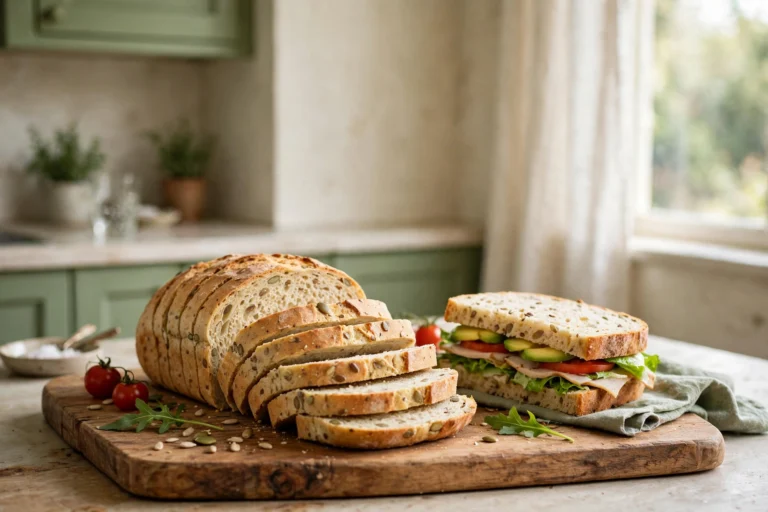
Toast a slice with avocado and egg, or make a tuna salad sandwich.
For a high-protein breakfast, pair a slice with eggs or serve it next to our high-protein overnight oats without protein powder.

Frequently Asked Questions
What is white whole wheat flour?
White whole wheat flour is flour milled from hard white wheat with all three parts of the grain — bran, germ, and endosperm. It is a true whole grain. White wheat is lighter in color and milder in flavor than red wheat.
Is white whole wheat bread good for diabetics?
White whole wheat bread can be part of a balanced diet, but it is not a treatment for diabetes. Each slice has about 3 g of fiber and about 2 g of added sugar. Whole wheat has a glycemic index near 50, while white bread sits near 70.
Can I use regular whole wheat flour instead of white whole wheat?
Yes, you can swap in the same amount of regular whole wheat flour. The loaf will be darker and stronger in flavor, and it may need 1–2 tablespoons more water. The bake time, rises, and other ingredients all stay the same.
Why is my whole wheat bread dense?
The most common causes are a short rise, old yeast, water that was too hot, or too much flour. Let the dough double in size, use fresh yeast with water at 105–110°F, and measure the flour with a scale. Knead until the dough passes the windowpane test.
How do I store homemade whole wheat bread? Can I freeze it?
Keep the loaf at room temperature in a bread bag or bread box for up to 3 days. The fridge is safe for up to 1 week but dries the bread out. For longer storage, slice the loaf first and freeze it for up to 3 months.
Do I need vital wheat gluten?
No, you can bake this loaf without it, but the bread will be a little denser and shorter. Vital wheat gluten adds protein that helps whole wheat dough hold gas and build a taller crumb. If you skip it, give the second rise a few extra minutes.
The Last Slice
This white whole wheat bread recipe gives you a soft, mild sandwich loaf with real whole-grain fiber and less salt than most breads. Bake it once, freeze half, and good bread is ready all week.
This article is for general information only and is not medical advice. Please talk to your doctor or a registered dietitian, especially if you have diabetes, heart disease or take medicine.