Are Bananas Bad for Diabetics? The Honest Answer
By Sarah | Last updated: November 11, 2026
Are bananas bad for diabetics? No. A banana can fit into a diabetes-friendly diet when you pick the right size and ripeness and pair it with protein or healthy fat. Portion, ripeness and pairing decide how much your blood sugar rises.
Key Takeaways
- No, bananas are not off-limits. Size, ripeness and pairing matter most.
- Pick a small or green-tipped banana — fewer carbs, lower glycemic index.
- A medium banana (118 g) has about 27 g of carbs. Count it as a carb portion.
- Pair banana with protein or healthy fat, like Greek yogurt, nuts or peanut butter.
- Ask your doctor first with kidney disease or medicine that raises potassium.
Contents
- The short answer
- Banana nutrition
- GI and GL
- Green vs ripe
- How many?
- No spike
- Best time
- Other fruits
- Heart health
- Diabetes types
- Be careful
- Banana bread
- Self-check
- FAQs
- The bottom line
What Is the Short Answer?
Think of a banana as a carb portion, not a free food and not a banned food. A small banana counts as one 15 g carb exchange, says the ADA — a simple swap rule for fitting bananas into your day.
What's in a Banana?
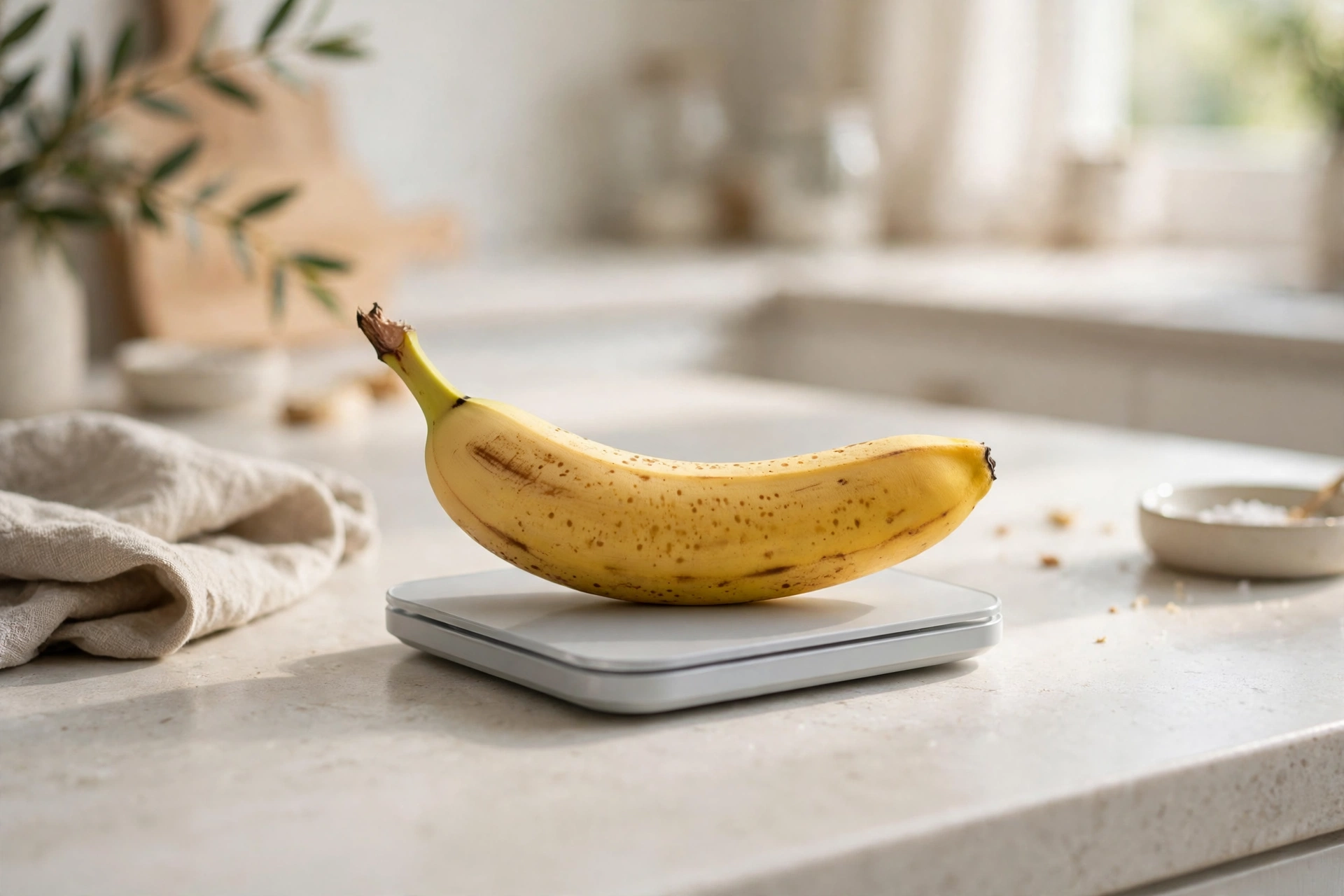
A medium banana (118 g) is mostly carbohydrate and water, with fiber, potassium and vitamins. It has about 27 g of carbs, 14 g of sugar, 3 g of fiber and 422 mg of potassium, with 105 calories (USDA, 118 g banana).
| Banana | Calories | Carbs | Sugar | Fiber | Potassium |
|---|---|---|---|---|---|
| Medium banana (118 g) | 105 | 27 g | 14 g | 3 g | 422 mg |
| Per 100 g | 89 | 22.8 g | 12.2 g | 2.6 g | 358 mg |
| Banana (126 g) | 112 | 29 g | 15 g | 3 g | 450 mg |
| Vitamin B6 0.43 mg, vitamin C 10.3 mg, magnesium 32 mg (118 g banana) | |||||
| Net carbs, 126 g banana: 29 g carbs − 3 g fiber ≈ 26 g | |||||
| Source: USDA FoodData Central (FDC ID 173944); 126 g figures from Healthline and HealthEncyclo |
You may see different numbers elsewhere, and that is normal. A 126 g banana has 29 g of carbs and 15 g of sugar, while the 118 g banana has 27 g and 14 g. The difference is the weight.
What Are the Glycemic Index and Glycemic Load of a Banana?
A ripe banana has a glycemic index (GI) of about 51 — low to medium. The glycemic load (GL) of a medium ripe banana is about 13, which is moderate. Both numbers rise as the banana ripens and the portion grows.
The glycemic index, or GI, is a 0-to-100 scale for how fast a food raises blood sugar. Low is 55 or less, medium is 56 to 69, and high is 70 or more. A ripe banana at 51 sits in the low range.
The glycemic load, or GL, is a better guide for real meals because it counts portion size too. Under 10 is low, 11 to 19 is moderate, and 20 or more is high. A medium ripe banana is about 13, but a fully ripe large banana can reach 22.
Is a Green Banana Better Than a Ripe Banana for Diabetes?
Yes, a green or green-tipped banana is usually the better pick. Its glycemic index is about 30 to 37, while a ripe banana is about 51 and a heavily spotted banana is about 62. The greener the banana, the slower its carbs turn into sugar.
Green bananas are rich in resistant starch. As a banana ripens, that starch turns into sugar, so the fruit tastes sweeter and raises blood sugar faster. A small 2023 study of 17 adults with type 2 diabetes found native banana starch cut fasting blood sugar, the after-meal spike and hunger, and raised fullness — but with only 17 people, treat this as early evidence, not proof.

| Ripeness stage | GI | Resistant starch | Best for you |
|---|---|---|---|
| Green | ~30 | High | Best choice for blood sugar |
| Green-tipped | ~37 | High | A good everyday pick |
| Yellow (ripe) | ~51 | Medium | Fine in a small portion |
| Brown-spotted | ~55 | Low | Eat half, and pair it well |
| Heavily spotted | ~62 | Very low | Best for baking, not snacking |
| GL note: a green banana has a GL of about 11; a medium ripe banana is about 13 (range 10–15). GI values: HealthcareOnTime and Healthline; ripe GI 51 ± 3 (Atkinson 2008). |
Buy bananas a little green and eat them before they turn heavily spotted. If one gets too ripe, do not throw it away — freeze it for smoothies or bake with it.
How Many Bananas Can a Diabetic Eat a Day?
Most people with well-managed type 2 diabetes can fit one small banana a day into their carb plan, but no single number suits everyone. Your carb budget, medicine and readings matter more than a fixed limit. Ask your doctor what fits your plan.
Carbs in a banana range from about 18.5 g to 35 g by size, says Healthline. A small banana counts as one 15 g carbohydrate exchange, says the ADA. An exchange is a serving with about 15 g of carbs. A slice of whole-wheat bread is often counted as one exchange too.
| Portion | Carbs | Carb exchanges |
|---|---|---|
| Half a medium banana | about 15 g | 1 |
| Extra-small banana | about 18.5 g | about 1 |
| Small banana | about 15–20 g | 1 |
| Medium banana (118 g) | about 27 g | almost 2 |
| Large banana | up to about 35 g | about 2 |
| Carb range by size: Healthline. Small banana = one 15 g exchange: ADA. Half a medium banana ≈ 15 g carbs: Mayo Clinic. |
A common starting point is half to one small banana a day, spread across meals. That is a starting point, not a prescription — your readings and your care team decide what works for you.
How Can You Eat Bananas Without Spiking Blood Sugar?
Pair your banana with protein, healthy fat or fiber, and eat it as part of a meal rather than alone. Protein and fat slow digestion, so the sugar enters your blood more slowly. Alone, a banana raises blood sugar faster than with yogurt.
Try these five combos:
- Half a green-tipped banana with 1 tablespoon of peanut butter — 12 g of carbs, 4 g of protein, 8 g of fat and 130 calories.
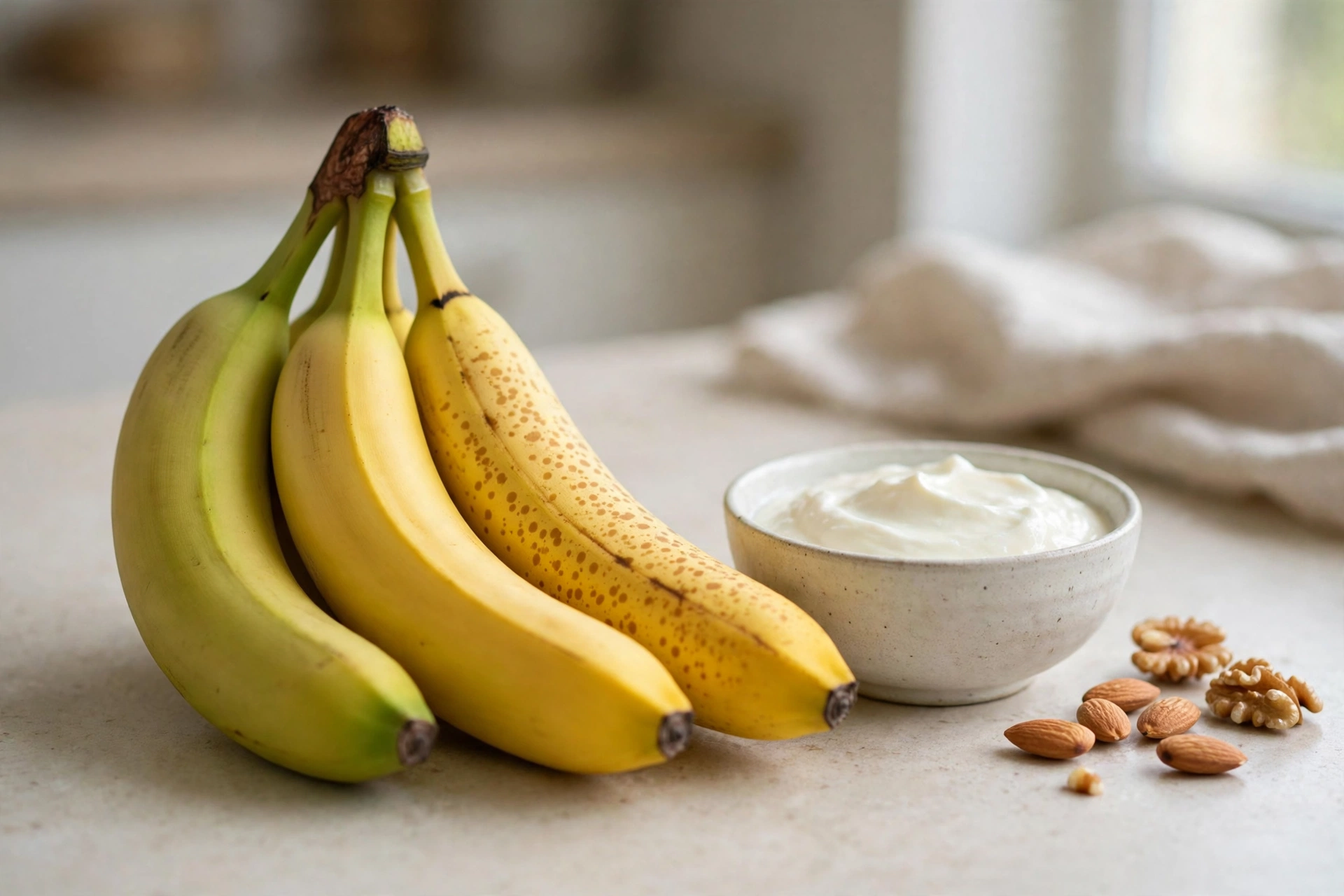
- Half a banana sliced into plain Greek yogurt with walnuts.
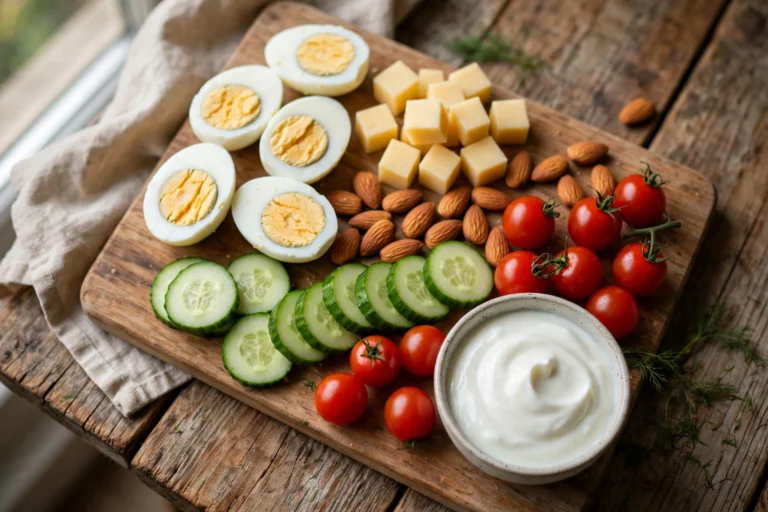
- A few banana slices with a handful of almonds.
- Half a banana with cottage cheese.
- Banana slices in overnight oats with banana — a filling, high-fiber breakfast.

Spread fruit through the day instead of eating two bananas at once. Pair each serving with protein or healthy fat — that is the pattern the ADA supports. A healthy tuna salad made with Greek yogurt is one easy protein-rich lunch.
My usual morning pairing is half a green-tipped banana sliced into plain Greek yogurt with a small handful of walnuts. I eat it after my walk, and it is quick enough to make on a busy morning.
When Is the Best Time to Eat a Banana?
Mid-morning or mid-afternoon, as part of a meal or snack with protein, is usually the safest time. Your body handles carbs better earlier in the day than late at night. A banana before bed may push up your morning reading.
A ripe banana eaten alone starts to raise blood sugar within 15 to 20 minutes and peaks at about 30 to 45 minutes. A small banana also works before a walk.
How Do Bananas Compare with Other Fruits for Diabetics?
Bananas sit in the middle of the fruit list, with a glycemic index of 51. Berries, apples, pears and oranges score lower, while watermelon scores higher at 76. No fruit is banned — serving size and carbs matter most of all.
| Fruit | Glycemic index |
|---|---|
| Apple | 36 |
| Pear | 38 |
| Strawberries | 41 |
| Orange | 43 |
| Banana | 51 |
| Blueberries | 53 |
| Grapes | 53 |
| Watermelon | 76 |
| GI values: HealthcareOnTime fruit comparison table (USDA FoodData Central). |
Mayo Clinic’s guidance on fruit and diabetes makes the same point: total carbs in a serving matter more than whether they come from starch or sugar, and one serving should hold no more than 15 g of carbs — about half a medium banana. Bananas are also one of the cheapest fruits you can buy.
Are Bananas Good for Heart Health and Cholesterol?
Yes, bananas fit well into a heart-healthy, low-cholesterol eating pattern. They have no fat, no cholesterol and almost no sodium, and they give you potassium and fiber. People with diabetes have a higher risk of heart disease, so heart-healthy foods matter even more.
A medium banana (118 g) has 422 mg of potassium and about 3 g of fiber — about one-eighth of the 25 g a day the EFSA calls an adequate intake. Potassium in food supports heart health, but bananas alone do not treat blood pressure.
In three large US studies of more than 187,000 people, eating bananas was linked to about 5% lower type 2 diabetes risk per three servings a week. That only shows a link — it does not prove that bananas prevent diabetes.
Are Bananas Bad for Diabetics with Type 1, Type 2, Prediabetes or Gestational Diabetes?
No, but the rules change a little with the type. With type 1, count the carbs and match insulin to the portion. With type 2 and prediabetes, watch portion size and pairing most. With gestational diabetes, follow your doctor’s plan first.
| Diabetes type | What to keep in mind |
|---|---|
| Type 1 | Count the carbs in your portion and match your insulin dose to it. |
| Type 2 | Portion size and pairing matter most; a small green-tipped banana is the safest pick. |
| Prediabetes | The same rules as type 2 — small portions, less ripe fruit, always paired. |
| Gestational diabetes | Follow your doctor’s plan first; never change your fruit intake without asking. |
When Should You Be Careful or Ask Your Doctor First?
Be careful with kidney disease, medicine that raises potassium, or a latex allergy. Bananas are rich in potassium, so they can be a problem when your body cannot clear it well. Take extra care when your blood sugar is very high.
Potassium can build up with kidney disease or with ACE inhibitors, ARBs or potassium-sparing diuretics such as spironolactone. With latex-fruit syndrome, bananas can trigger a reaction, as can avocado and chestnuts. Agree your banana intake with your doctor.
What About Banana Bread and Smoothies?
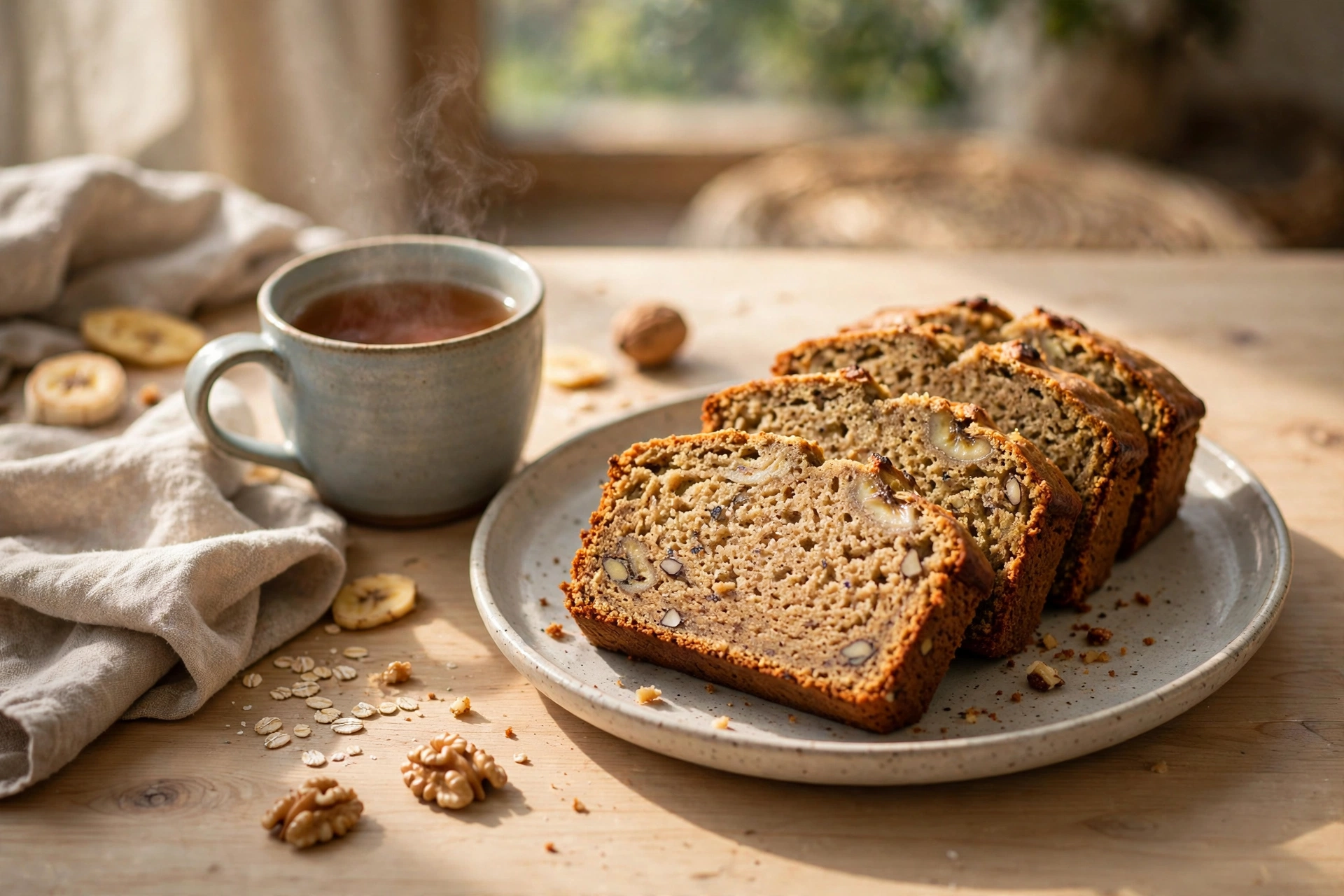
Banana bread and smoothies can still fit, but only if you watch the portion and skip added sugar. Overripe bananas are sweeter and raise blood sugar faster, so a thick slice counts as more carbs than a small banana. Keep slices small and add protein.
Our 4-ingredient gluten-free banana bread uses ripe bananas for sweetness with no added sugar — a smarter way to use overripe bananas. For smoothies, keep the whole fruit to keep the fiber, skip juice and added sugar, and watch the portion size.
How Can You Test Your Own Response to Bananas?
Eat a known portion with a known pairing, then check your blood sugar two hours later. Compare the number with the ADA target of under 180 mg/dL at two hours. Repeat the test on another day before you draw any firm conclusion.
- Pick a small banana and eat it with protein, like Greek yogurt.
- Note the portion, pairing and time.
- Check your blood sugar at two hours and note the number.
Frequently Asked Questions
Are bananas bad for diabetics?
No. Bananas are not bad for diabetics when the portion fits your carb plan. Choose a small or green-tipped banana, pair it with protein or healthy fat, and check your blood sugar. A banana is a carb portion, not a banned food.
How many bananas can a diabetic eat a day?
Most people with well-managed type 2 diabetes can fit one small banana a day into their carb plan. A common starting point is half to one small banana, spread across meals. Your carb budget, medicine and readings decide the number.
Do bananas raise blood sugar?
Yes, bananas raise blood sugar — about 27 g of carbs in a medium banana (118 g). How much it rises depends on size, ripeness and pairing. A small green-tipped banana with yogurt raises it far less than a large ripe banana alone.
Is a green banana better than a ripe banana for diabetes?
Yes. A green banana has a glycemic index of about 30, while a ripe banana is about 51 and a heavily spotted banana about 62. Green bananas are richer in resistant starch, which your body digests slowly. Pick green-tipped ones when you can.
Can diabetics eat bananas at night?
Avoid a banana late at night, especially a large ripe one on its own. Your body handles carbs better earlier in the day, and a bedtime banana may push up your morning reading. For a night snack, keep it small and add protein.
Can diabetics eat banana bread?
Yes, in a small slice, if it has no added sugar and you count the carbs. Overripe bananas raise blood sugar faster, so keep the slice small and pair it with protein. Our 4-ingredient gluten-free banana bread is one option.
The Bottom Line
Bananas are not bad for diabetics. Pick a small or green-tipped banana, count the carbs, pair it with protein or healthy fat, and check your blood sugar. Start with half a small banana with yogurt and test at two hours.
This article is for general information only and is not medical advice. Please talk to your doctor or a registered dietitian, especially if you have diabetes, heart disease or take medicine.
Sources: USDA, ADA, Mayo Clinic, Atkinson 2008, Muraki 2013.