Low Sodium Salad Dressing Recipes: 5 Easy Dressings
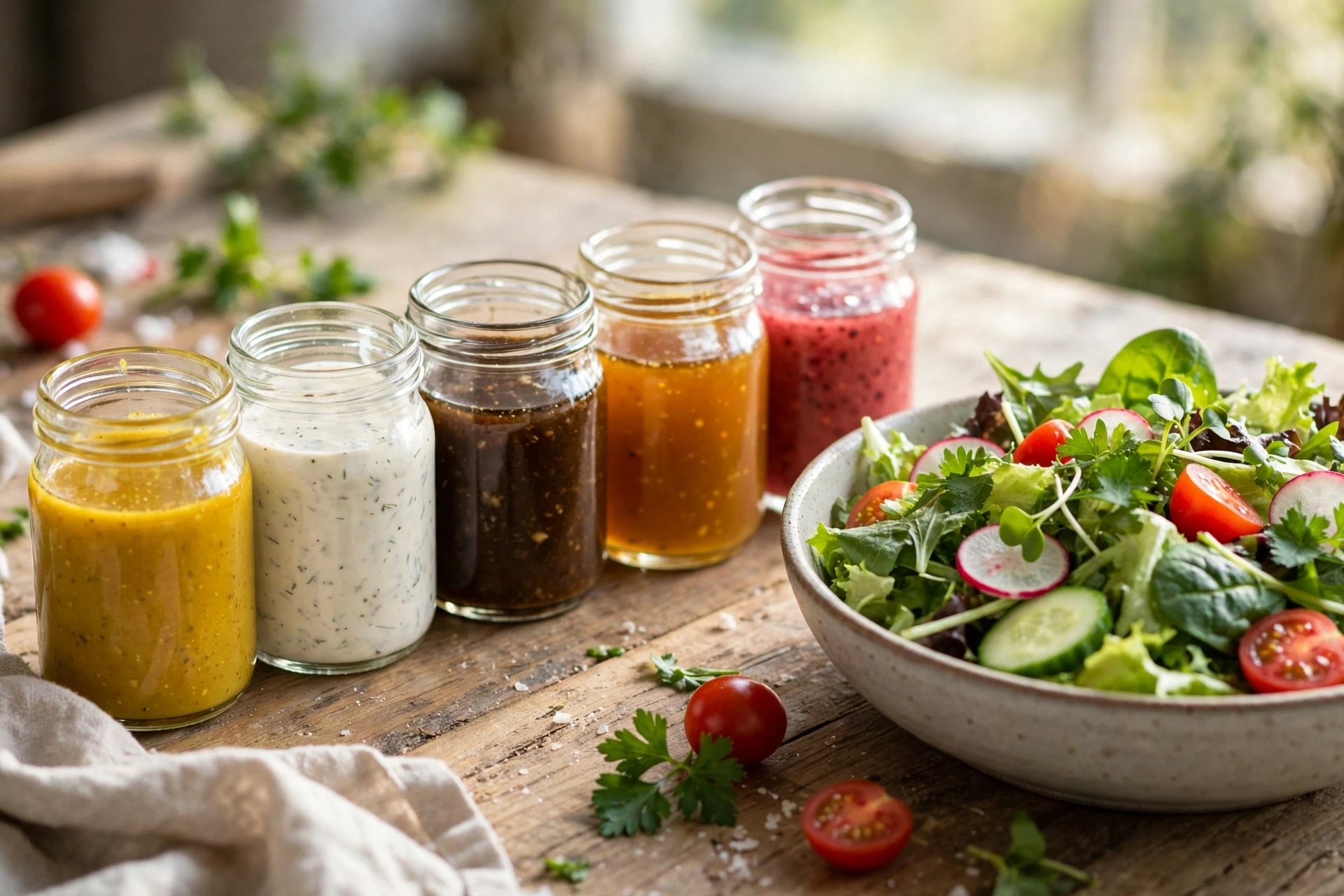
These low sodium salad dressing recipes have 18 to 66 mg of sodium per serving — about a tenth of bottled dressing. Five dressings, five minutes each: lemon herb vinaigrette, creamy yogurt ranch, balsamic vinaigrette, honey mustard and sesame ginger. Shake them in a jar and keep them in the fridge all week.
By Sarah | Last updated: November 11, 2026
Key Takeaways
- These low sodium salad dressing recipes have 18–66 mg sodium per 2 tablespoons — bottled ranch runs about 320 mg.
- The creamy yogurt ranch is the lowest-calorie option at 18 calories per serving.
- Dijon mustard is the hidden sodium source — 120 mg per teaspoon. Use it sparingly.
- Every dressing takes 5 minutes and keeps 1 to 2 weeks in the fridge.
- The 3:1 oil-to-acid formula lets you build your own dressing from what you have.
On This Page
- Why bottled is salty
- 5 at a glance
- 1. Lemon herb
- 2. Yogurt ranch
- 3. Balsamic
- 4. Honey mustard
- 5. Sesame ginger
- 3:1 formula
- The Dijon trap
- Storage
- FAQs
Why Is Bottled Dressing So Salty?
Bottled salad dressing is one of the saltiest things in the fridge. Two tablespoons — the amount most people pour without thinking — carries 280 to 320 mg of sodium in ranch, Italian and honey mustard alike. The salt is there for flavour and shelf life, and manufacturers use a lot of it because dressing is mostly oil and vinegar, which taste flat without seasoning.
These low sodium salad dressing recipes replace salt with acid, herbs and spices. Lemon juice, vinegar, garlic and mustard give the sharpness salt usually provides, and honey rounds out the edges. The numbers speak for themselves:
| Dressing (2 tbsp) | Bottled sodium | Homemade sodium |
|---|---|---|
| Ranch | ~320 mg | ~23 mg |
| Italian | ~300 mg | ~20 mg |
| Honey mustard | ~280 mg | ~66 mg |
| Balsamic vinaigrette | ~280 mg | ~22 mg |
| Sesame ginger | ~300 mg | ~23 mg |
If you already love our low sodium Italian dressing and avocado cilantro lime dressing, these five are the next set — different flavours, same low-sodium approach.
The 5 Dressings at a Glance
Here are all five low sodium salad dressing recipes in one table, per 2-tablespoon serving.
| Dressing | Sodium | Calories | Best on |
|---|---|---|---|
| Lemon Herb Vinaigrette | ~20 mg | 165 | Green salads, grilled chicken |
| Creamy Yogurt Ranch | ~23 mg | 18 | Veggie dips, wedge salads |
| Balsamic Vinaigrette | ~22 mg | 169 | Tomato salads, roasted vegetables |
| Honey Mustard | ~66 mg | 59 | Chicken salads, grain bowls |
| Sesame Ginger | ~23 mg | 72 | Asian salads, noodle bowls |
The ranch is the lightest by far — 18 calories, because it is yogurt-based. The vinaigrettes are higher in calories because olive oil is calorie-dense, but the fat is mostly monounsaturated. The honey mustard is highest in sodium (66 mg) because of the Dijon — still 80% below bottled.
1. Lemon Herb Vinaigrette
The everyday dressing. Bright, herby and ready in 5 minutes — the first of these low sodium salad dressing recipes to make, because it goes with everything.


Ingredients
Method
- Whisk everything together in a bowl, or shake in a jar.
- Taste and add more lemon juice if you like it sharper.
- Keeps 2 weeks in the fridge.
Notes
Ingredients (makes ¾ cup / 6 servings):
- ½ cup olive oil.
- 3 tablespoons fresh lemon juice.
- 1 tablespoon white wine vinegar.
- 1 small clove garlic, minced.
- 1 teaspoon Dijon mustard.
- 1 teaspoon honey.
- 1 teaspoon dried oregano.
- ¼ teaspoon black pepper.
Method: whisk everything together in a bowl, or shake in a jar. Taste and add more lemon juice if you like it sharper. Keeps 2 weeks in the fridge.
Per serving (2 tbsp): 165 calories, 18 g fat, 20 mg sodium.
The Dijon holds the oil and lemon juice together so the dressing does not separate. One teaspoon across six servings adds 20 mg each. Without it, shake the jar before every pour.
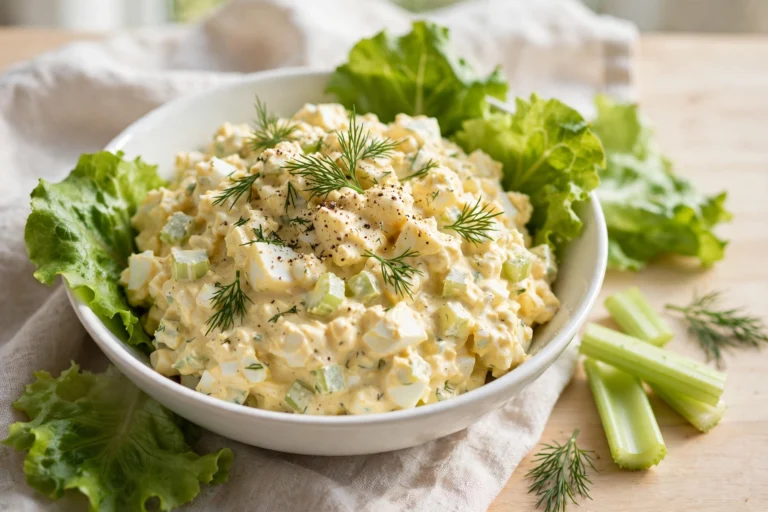
2. Creamy Yogurt Ranch
The lightest dressing in the set — 18 calories per serving, with the tang and herbs of ranch and none of the salt. Of these low sodium salad dressing recipes, this is the one to make if you love creamy dressing but not the calories.

Ingredients
Method
- Whisk everything together until smooth.
- Thin with a little more buttermilk if you want it pourable.
- Chill for 30 minutes for the best flavour.
- Keeps 1 week in the fridge.
Notes
Ingredients (makes ¾ cup / 6 servings):
- ½ cup plain non-fat Greek yogurt.
- ¼ cup buttermilk.
- 1 teaspoon fresh lemon juice.
- ½ teaspoon garlic powder.
- ½ teaspoon onion powder.
- ¼ teaspoon black pepper.
- 1 tablespoon chopped fresh parsley.
Method: whisk everything together until smooth. Thin with a little more buttermilk if you want it pourable. Chill for 30 minutes for the best flavour. Keeps 1 week in the fridge.
Per serving (2 tbsp): 18 calories, 2.5 g protein, 23 mg sodium.
The buttermilk is the biggest sodium source here (about 15 mg per serving) — and what makes it taste like ranch. No buttermilk? Use milk with a squeeze of lemon juice, left for 5 minutes.
3. Balsamic Vinaigrette
Rich, dark and a little sweet — the dressing for tomato salads and roasted vegetables. Of these low sodium salad dressing recipes, this one uses real balsamic vinegar, which brings its own sweetness, so the honey is just a teaspoon.

Ingredients
Method
- Whisk everything together in a bowl, or shake in a jar.
- Keeps 2 weeks in the fridge.
Notes
Ingredients (makes ¾ cup / 6 servings):
- ½ cup olive oil.
- 3 tablespoons balsamic vinegar.
- 1 small clove garlic, minced.
- 1 teaspoon Dijon mustard.
- 1 teaspoon honey.
- ¼ teaspoon black pepper.
Method: whisk everything together in a bowl, or shake in a jar. The balsamic makes it dark and glossy. Keeps 2 weeks in the fridge.
Per serving (2 tbsp): 169 calories, 18 g fat, 22 mg sodium.
Use a decent balsamic — the cheap, thin kind tastes sharp and needs more honey. A thicker, aged balsamic gives the sweetness and depth this dressing needs. The sodium is almost all from the Dijon (20 mg per serving).
4. Honey Mustard Dressing
The sweet one of these low sodium salad dressing recipes — and the highest-sodium mini at 66 mg, because it uses two teaspoons of Dijon. It is still 80% below bottled honey mustard, and the yogurt base keeps it light.
Ingredients
Method
- Whisk everything together until smooth.
- Taste and add more honey for sweetness or more vinegar for tang.
- Keeps 1 week in the fridge.
Notes
Ingredients (makes ½ cup / 4 servings):
- ¼ cup plain non-fat Greek yogurt.
- 2 teaspoons Dijon mustard.
- 1 tablespoon honey.
- 1 tablespoon olive oil.
- 1 tablespoon apple cider vinegar.
- ¼ teaspoon black pepper.
Method: whisk everything together until smooth. Taste and add more honey for sweetness or more vinegar for tang. Keeps 1 week in the fridge.
Per serving (2 tbsp): 59 calories, 5 g sugar, 66 mg sodium.
The Dijon does two jobs here — flavour and emulsifier — so it is hard to cut. Use 1 teaspoon instead of 2 and the serving drops to about 36 mg. Serve it over our tuna white bean salad or healthy tuna salad with Greek yogurt.
5. Sesame Ginger Dressing
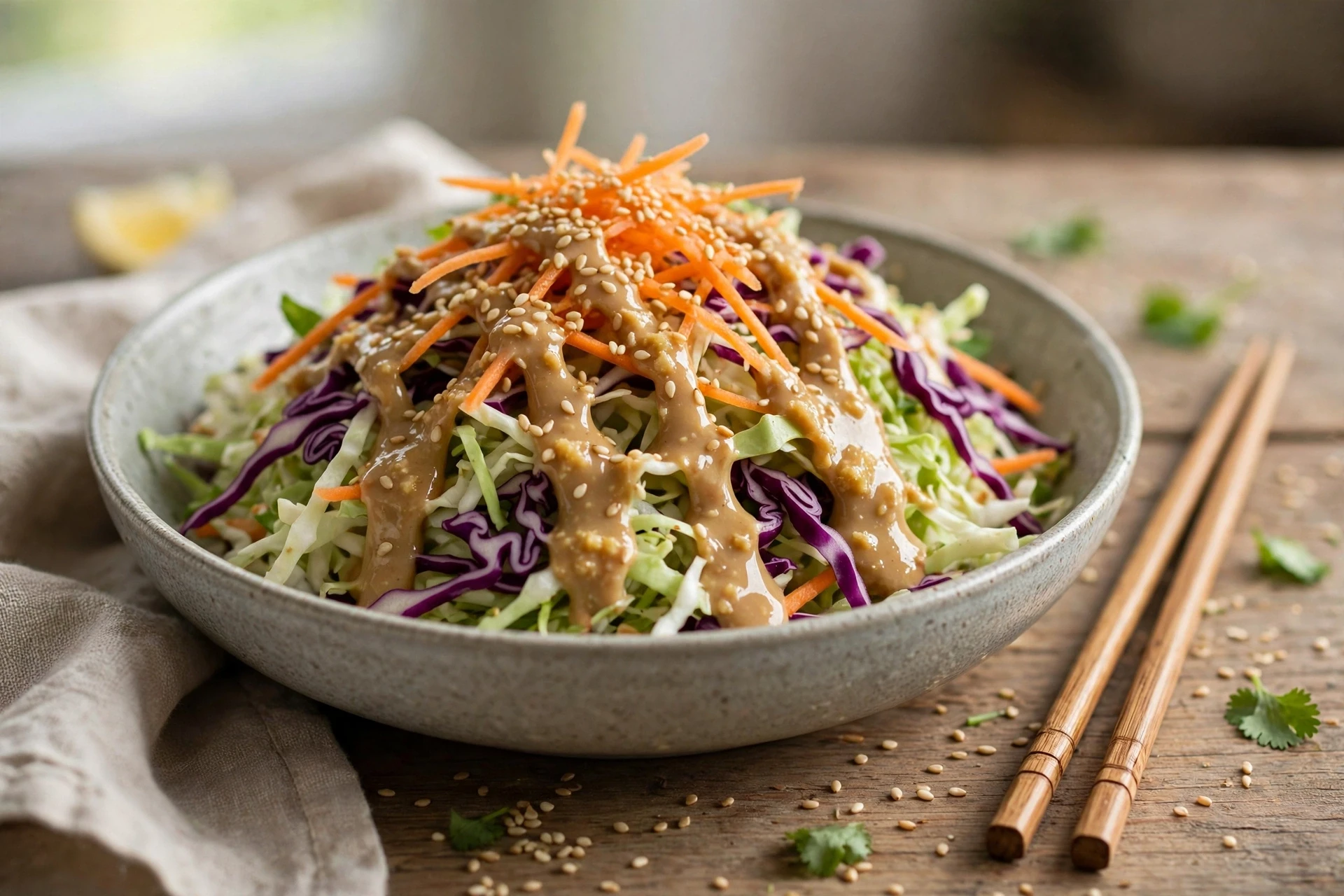
The Asian-inspired one — nutty sesame, fresh ginger and a splash of coconut aminos instead of soy sauce. Of these low sodium salad dressing recipes, this is the answer for noodle bowls and cabbage salads.
Ingredients
Method
- Whisk everything together in a bowl, or shake in a jar.
- Keeps 2 weeks in the fridge.
Notes
Ingredients (makes ½ cup / 4 servings):
- 3 tablespoons rice vinegar.
- 1 tablespoon sesame oil.
- 1 tablespoon olive oil.
- 1 teaspoon grated fresh ginger.
- 1 small clove garlic, minced.
- 1 teaspoon coconut aminos.
- 1 teaspoon honey.
Method: whisk everything together in a bowl, or shake in a jar. The sesame oil is the flavour — do not swap it for another oil. Keeps 2 weeks in the fridge.
Per serving (2 tbsp): 72 calories, 7 g fat, 23 mg sodium.
The coconut aminos adds about 22 mg per serving — nearly all of it. Without it, the dressing drops to about 1 mg but loses its savoury depth.
The 3:1 Formula: Build Your Own
Every vinaigrette in these low sodium salad dressing recipes follows the same formula: 3 parts oil to 1 part acid, plus flavour. Once you know it, you can build a dressing from whatever is in the kitchen.
- Oil (3 parts): olive oil is the default. Avocado oil works too. The American Heart Association explains the different types of dietary fats and why unsaturated fats are the better choice for dressings.
- Acid (1 part): lemon juice, lime juice, any vinegar, or a mix.
- Emulsifier (1 teaspoon): Dijon mustard is the classic — but it adds 120 mg of sodium per teaspoon. Use half a teaspoon if sodium matters most.
- Sweetness (optional): a teaspoon of honey or maple syrup rounds out sharp vinegar.
- Flavour: garlic, herbs, spices, ginger — whatever fits the meal.
Shake it in a jar and taste. Too sharp? Add oil. Too flat? Add acid. Too bland? Add garlic or herbs.
The Dijon Trap in Low Sodium Salad Dressing Recipes
Dijon mustard is the hidden sodium source in homemade dressing. One teaspoon has about 120 mg of sodium — more than the rest of a vinaigrette combined. The lemon herb and balsamic dressings in this guide each use one teaspoon across six servings, which adds 20 mg per serving. The honey mustard uses two teaspoons across four servings, which adds 60 mg.
That does not mean you should skip Dijon. It is the best emulsifier — it holds oil and vinegar together. But measure it, do not pour freehand. For a no-Dijon dressing, pick the yogurt ranch (no mustard) or the sesame ginger (coconut aminos instead).
How to Store Homemade Dressing
These low sodium salad dressing recipes keep well, but the rules differ by type.
- Vinaigrettes: 2 weeks in the fridge in a sealed jar. The olive oil may solidify — let the jar sit out for 10 minutes and shake before using.
- Yogurt-based (ranch, honey mustard): 1 week in the fridge. Yogurt spoils faster than oil, so make smaller batches.
- Always label the jar with the date you made it. Homemade dressing has no preservatives.
- Do not leave dressing out for more than 2 hours, especially the yogurt-based ones.
Shake every dressing before serving — even the emulsified ones settle a little over time.
For more low-sodium ideas, see our low sodium snacks for high blood pressure.
Frequently Asked Questions
What is the lowest sodium salad dressing?
The creamy yogurt ranch is the lowest-calorie option at 18 calories, and all five dressings are between 18 and 66 mg of sodium per serving. The lemon herb vinaigrette is the lowest in sodium at 20 mg. Bottled dressings run 280 to 320 mg per serving, so any homemade version is a big improvement.
Can I make salad dressing without salt?
Yes — none of these low sodium salad dressing recipes use added salt. The flavour comes from acid (lemon juice, vinegar), herbs, garlic and mustard. Dijon mustard does add sodium (120 mg per teaspoon), but one teaspoon spread across six servings adds just 20 mg each. The yogurt ranch uses no mustard at all.
How long does homemade salad dressing last?
Vinaigrettes (lemon herb, balsamic, sesame ginger) keep 2 weeks in the fridge in a sealed jar. Yogurt-based dressings (ranch, honey mustard) keep 1 week. Always label the jar with the date, and do not leave dressing at room temperature for more than 2 hours.
Is olive oil dressing healthy?
Olive oil is mostly monounsaturated fat, which is the kind that supports heart health as part of a balanced diet. A vinaigrette has about 165 calories per 2 tablespoons because oil is calorie-dense — measure it rather than pouring freehand. Choose dressings built on olive oil over those built on saturated fat.
Can I use these low sodium salad dressing recipes as marinades?
Yes — the lemon herb and balsamic vinaigrettes work well as marinades for chicken and fish. Marinate for 30 minutes to 2 hours in the fridge, then discard the used marinade (do not reuse it as dressing). The sesame ginger is good for tofu and vegetables. Do not marinate in the yogurt-based dressings for more than 2 hours.
Which of these low sodium salad dressing recipes is best for weight loss?
The creamy yogurt ranch, at 18 calories per 2 tablespoons — about a tenth of the vinaigrettes. It is yogurt-based instead of oil-based, so you get the creamy texture without the calories. The honey mustard (59 calories) and sesame ginger (72 calories) are the next lightest. Measure your portions either way — even a light dressing adds up if you pour freely.
Your Next Step
These low sodium salad dressing recipes take five minutes each and change every salad you eat this week. Start with the lemon herb vinaigrette — it goes with everything — then try the ranch for dipping and the sesame ginger for noodle bowls.
Make two jars on Sunday and the bottled dressing will not be missed.
This article is for general information only and is not medical advice. Please talk to your doctor or a registered dietitian, especially if you have diabetes, heart disease or take medicine.