Foods to Avoid with High Cholesterol: 13 to Limit
By Sarah | Last updated: November 11, 2026

Foods to avoid with high cholesterol are foods high in saturated fat and trans fat. They raise LDL cholesterol, the “bad” kind that can clog your arteries. The worst ones are processed meats, fatty red meat, butter, full-fat dairy, coconut oil, and fried foods. You do not have to cut them out. Eat them less often and in smaller portions.
Key Takeaways
- Saturated fat is the main food factor that raises LDL (“bad”) cholesterol. Trans fat is worse — there is no safe level.
- One fast-food meal can hold 20–30 g of saturated fat — about two days of budget.
- Eggs, shellfish, olive oil, nuts, and avocado are not on the avoid list.
- “Avoid” means eat less often and in smaller portions — not never again.
- Check the label in 30 seconds: serving size, saturated fat, then the ingredient list.
In this article
- What Makes a Food Bad for Cholesterol?
- How Much Saturated Fat Is Too Much?
- 13 Foods to Limit
- Foods You Do NOT Need to Avoid
- How to Read a Food Label in 30 Seconds
- What to Eat More Of
- Frequently Asked Questions
What Makes a Food Bad for Cholesterol?
Not all fat is the same. Saturated fat and trans fat matter most; dietary cholesterol matters much less.
Saturated fat — the main driver
Saturated fat is the fat that is solid at room temperature, like butter and the white fat on a steak. When you eat a lot of it, your liver makes more LDL cholesterol, the “bad” kind that can build up in your arteries over time.
Trans fat — no safe level
Trans fat is made when liquid oil is turned into solid fat in a factory. It raises LDL and lowers HDL, the “good” cholesterol. That double hit is why experts say there is no safe level. If the ingredient list says “partially hydrogenated oils,” put the food back.
Dietary cholesterol is not the main problem
Dietary cholesterol is the cholesterol in food, like the cholesterol in an egg yolk. For most people, it has only a small effect on blood cholesterol. Your liver makes most of it. What matters more is the saturated fat you eat with it.
How Much Saturated Fat Is Too Much?
The American Heart Association says to keep saturated fat to 5–6% of your daily calories — about 11–13 g on a 2,000-calorie day. One tablespoon of butter already has 7 g. In the UK, the limit is 30 g a day for men and 20 g for women.
The table below ranks these foods by saturated fat per serving.
| Food | Typical serving | Saturated fat |
|---|---|---|
| Fast-food burger meal (burger + fries + soda) | 1 meal | 20–30 g |
| Butter | 1 tablespoon | 7 g |
| Ribeye steak | 3 oz (85 g) | 7 g |
| Hard cheese | 1 oz (28 g) | 6–7 g |
| Red and processed meat | 100 g | 5–10 g |
| Whole milk | 1 cup (240 ml) | 4.6 g |
| Coconut oil | per 100 g of fat | 82–85% saturated fat |
| Palm oil | per 100 g of fat | 49–50% saturated fat |
| Olive oil (for comparison) | per 100 g of fat | 14% saturated fat |
The oils are shown as a percentage of their fat. For more on the limits, see the American Heart Association’s healthy food facts.

13 Foods to Avoid with High Cholesterol
These foods add the most saturated fat and trans fat to a normal diet. Each one has a simple swap — eat them less often and pick the swap most of the time.
1. Processed meats (bacon, sausage, salami, deli meat)
Processed meats are high in saturated fat and salt — about 5–10 g per 100 g. Keep portions small.
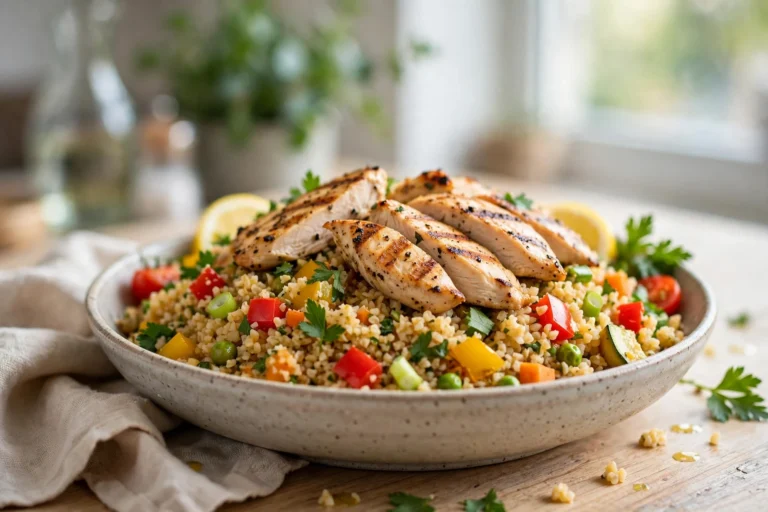
Swap: Grilled chicken or turkey, tuna salad with Greek yogurt, or homemade low-sodium taco seasoning for flavor.
2. Fatty cuts of red meat
Ribeye, brisket, and regular ground beef carry a lot of saturated fat. A 3 oz ribeye has about 7 g — more than half a day’s budget. Choose lean cuts and trim the fat you can see.
Swap: Sirloin, 90% lean beef, or fish and beans.
3. Poultry skin and fried chicken
Chicken itself is lean, but the skin is not. Fried chicken adds more fat from the coating and the oil. Take the skin off and skip the deep fryer.
Swap: Skinless grilled or baked chicken, or air-fried chicken.
4. Butter, ghee and lard
Butter, ghee, and lard are about half saturated fat, and one tablespoon of butter has 7 g. They are fine in tiny amounts, but not as your daily cooking fat.
Swap: Olive oil or rapeseed oil for cooking and dressings.
5. Full-fat dairy (whole milk, cream, ice cream)
Whole milk has 4.6 g of saturated fat per cup, and cream and ice cream are higher. Ice cream is a double problem: saturated fat plus added sugar, a mix that can raise LDL cholesterol and triglycerides.
Swap: Semi-skimmed milk, plain yogurt, or berries with yogurt.
6. Large cheese portions
Cheese has about 6–7 g of saturated fat per ounce — a small cube, not a big slice. It is easy to overeat because it is served in large portions. You do not have to stop eating it.
Swap: A thin slice of hard cheese, or cottage cheese and hummus as spreads.
7. Coconut oil and palm oil
Coconut oil is 82–85% saturated fat, and palm oil is about 49–50% — both far higher than olive oil at 14%. Coconut oil has a health halo, but the numbers do not support it.
Swap: Olive, sunflower, or rapeseed oil for everyday cooking.
8. Deep-fried foods
French fries, fried chicken, and donuts are cooked in hot oil. They soak up fat and often carry trans fat too. Baking or air-frying gives the crunch with far less fat.
Swap: Oven-baked fries, air-fried vegetables, or roasted potatoes.
9. Packaged pastries, biscuits and cakes
Pastries, biscuits, and cakes are made with butter, palm oil, or shortening — a lot of saturated fat in a small bite. Many also have added sugar. One pastry can use up a big part of your daily budget.
Swap: Oat-based snacks, fruit with yogurt, or whole wheat bread and peanut butter.
10. Packaged snacks (chips, crackers, cookies)
Chips, flavored crackers, and cookies often carry 200–400 mg of sodium per serving, plus saturated fat from palm oil or butter. The bag makes it easy to eat two or three servings.
Swap: Air-popped popcorn with herbs, unsalted nuts, or rice cakes with hummus.
11. Fast-food meals (burger + fries + soda)
A fast-food burger meal can hold 20–30 g of saturated fat in one sitting — about two days of budget. The soda adds sugar, which can raise triglycerides.
Swap: A grilled chicken sandwich, a side salad, and water or unsweetened tea.
12. Sugary drinks
Soda and sweet drinks are the main source of added sugar in many diets. Too much sugar can raise triglycerides and LDL cholesterol. One can a day is already too much for most people.
Swap: Water, sparkling water with lemon, or unsweetened tea.
13. Organ meats (in large, frequent portions)
Organ meats like liver are very high in dietary cholesterol — beef liver has 331 mg per 3 oz serving. A small portion now and then is fine for most people. Large, frequent portions are the problem.
Swap: Lean meat, fish, or beans and lentils.

I swapped bacon for grilled chicken in my weekend breakfast, and honestly I did not miss the bacon — the chicken with a little smoked paprika tasted just as satisfying, and I felt lighter after eating it.
Foods You Do NOT Need to Avoid
Some foods sound scary but do not belong on this list.
Eggs. One large egg has about 186 mg of cholesterol, but dietary cholesterol has only a small effect on blood cholesterol. The Heart Foundation says up to 7 eggs a week is fine for people with high cholesterol or diabetes. See our companion post, Are Eggs Bad for Cholesterol?.
Non-fried shellfish. Shrimp (166 mg per 3 oz) and squid (198 mg) are low in saturated fat and fine in normal portions for most people.
Olive oil. Olive oil is only 14% saturated fat. It is mostly unsaturated fat, which can help support healthy cholesterol levels.
Nuts and seeds. Unsalted nuts are high in healthy fats and fiber — a small handful is enough.
Avocado. Avocado is high in unsaturated fat and fiber, and fits a heart-healthy diet in normal portions.
How to Read a Food Label in 30 Seconds
Three checks take 30 seconds — no need to study every label.
Step 1: Serving size. If the pack holds three servings, all the numbers triple when you eat the whole pack.
Step 2: Saturated fat. Look for under 2 g per serving. Trans fat should be 0 g.
Step 3: Ingredient list. “Partially hydrogenated oils” means trans fat, even if the label says 0 g. Makers can round down to 0 g when a serving has less than 0.5 g. If those words are there, put the food back.

Last week I picked up a bag of crackers that said ‘lightly salted’ on the front, and the label showed 230 mg of sodium per serving — I put it back and took the plain rice cakes instead.
What to Eat More Of
Cutting foods is only half the job — these foods may help support healthy cholesterol levels.
Oats and barley. They are rich in soluble fiber, a type of fiber that can help trap some cholesterol in your gut. Try overnight oats for breakfast.
Beans and lentils. They are high in fiber and protein and very low in fat — add them to soups, salads, and tacos.
Oily fish. Salmon, mackerel, and sardines give you omega-3 fats.
Vegetables and fruit. They add fiber and volume with very little fat — fill half your plate with them.
Olive oil. Use it in place of butter for cooking and dressings.
Nuts and seeds. A small handful a day adds healthy fats and fiber.
If you have diabetes too, watch refined carbs and sugary drinks — they can raise triglycerides. Pair carbs with protein or fiber.

Frequently Asked Questions
Can I eat eggs if I have high cholesterol?
Yes, for most people. One large egg has about 186 mg of cholesterol, but dietary cholesterol has only a small effect on blood cholesterol for most people. Saturated fat matters more. The Heart Foundation says up to 7 eggs a week is fine for people with high cholesterol or diabetes. If you have familial high cholesterol, ask your doctor first.
Is coconut oil bad for cholesterol?
Yes, coconut oil is about 82–85% saturated fat, which is higher than butter. It can raise LDL cholesterol. Use it rarely and in small amounts. For daily cooking, olive oil or rapeseed oil are better choices because they are mostly unsaturated fat.
How quickly can food changes affect cholesterol?
Most people see a change in 4 to 12 weeks. Some guides say 4–6 weeks, and others say 8–12 weeks. The exact time depends on your starting level, your diet, and your medicine. Ask your doctor for a repeat blood test after about three months.
Is cheese bad for high cholesterol?
Cheese is high in saturated fat, about 6–7 g per ounce, so large portions can raise LDL cholesterol. You do not have to cut it out. Use smaller amounts, choose lower-fat options, and save it for a few meals a week instead of every day.
Do I need to cut out all fat?
No, your body needs fat. The goal is to swap saturated fat for unsaturated fat. Use olive oil instead of butter, eat oily fish twice a week, and add nuts, seeds, and avocado. Keep total fat moderate and watch your portion sizes.
Can menopause raise cholesterol?
Yes, cholesterol often rises during perimenopause and after menopause, even if your diet does not change. Lower estrogen levels play a part. Food swaps still help, and it is worth asking your doctor for a cholesterol check at this stage of life.
Conclusion
The foods that raise cholesterol most are high in saturated fat and trans fat. You do not need to ban them — eat them less often and in smaller portions, and swap them for foods that support your heart. Start with one swap this week.
This article is for general information only and is not medical advice. Please talk to your doctor or a registered dietitian, especially if you have diabetes, heart disease or take medicine.