Is Bulgur Good for Diabetics? GI, Carbs + Portions
Yes, bulgur is one of the best grains for blood sugar. Is bulgur good for diabetics? For most people, yes: it scores about 47 on the glycemic index, and one cup has 8.2 grams of fiber. A half cup has just 17 grams of carbs, and it cooks in 10 to 15 minutes.
By Sarah | Last updated: November 16, 2026
Key Takeaways
- Is bulgur good for diabetics? Yes — low GI, very high fiber, fast to cook.
- One cup cooked has 34 g of carbs and 8.2 g of fiber; a half cup has 17 g of carbs.
- In tests with people who have diabetes, bulgur scored about 47 on the glycemic index.
- Medium-grind bulgur cooks in 10 to 15 minutes — the fastest whole grain.
- Bulgur contains gluten — it is not safe for celiac disease or wheat allergy.
On This Page
- Short Answer
- What Is Bulgur
- Nutrition
- Blood Sugar
- How Much
- Bulgur vs Other Grains
- Cooking and Storage
- Who Should Be Careful
- FAQs
Is Bulgur Good for Diabetics? The Short Answer
Yes, bulgur is an excellent grain choice for most people with diabetes. It has the lowest glycemic index of the common whole grains, the most fiber per cup, and the fastest cook time. That is a rare combination, and it makes bulgur easy to eat often.
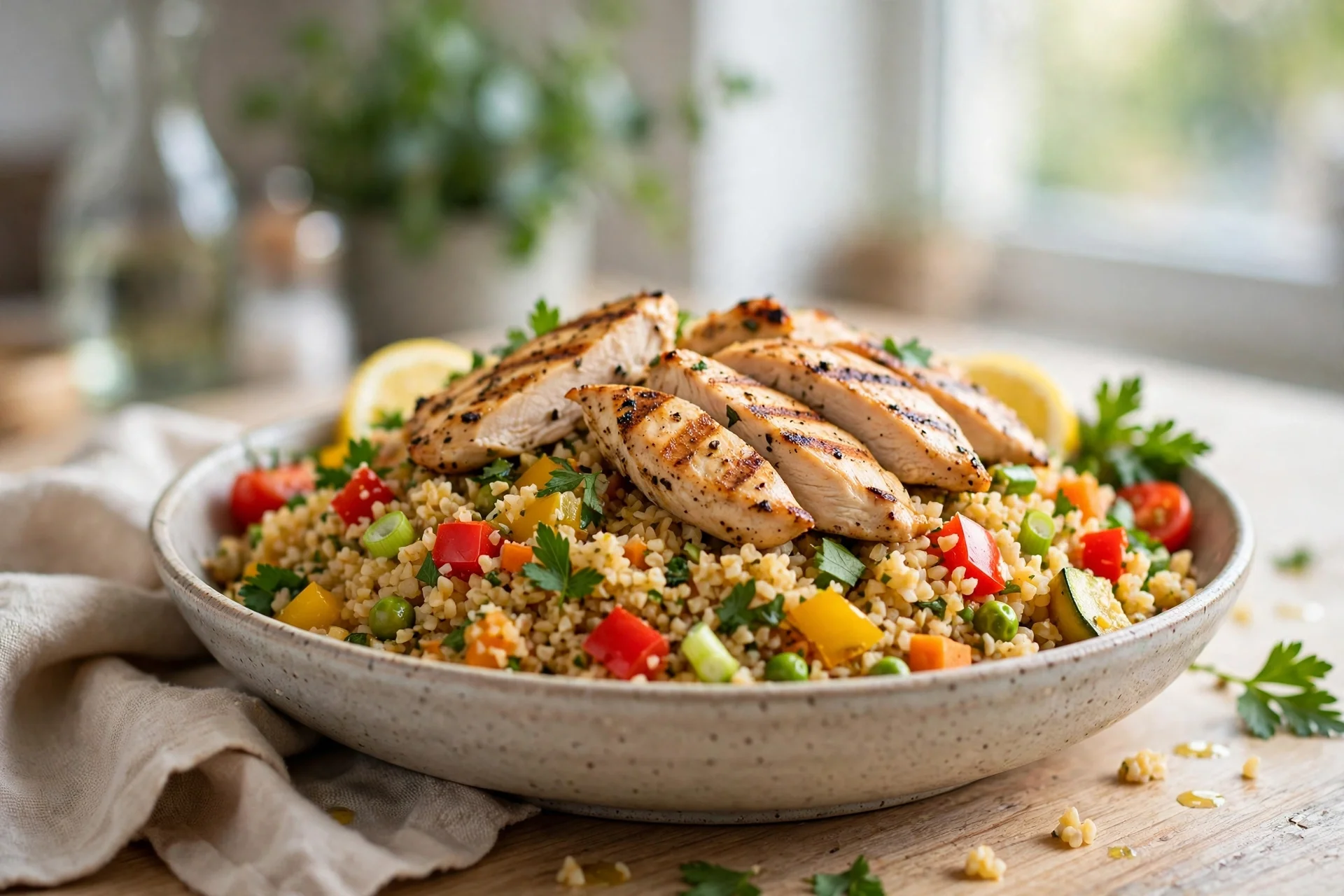
People often ask me, “Is bulgur good for diabetics?” My honest answer is that it is one of the first grains I recommend. I keep a jar of medium-grind bulgur in my pantry at all times. On busy nights, a pot of bulgur pilaf with vegetables and chicken is dinner in 15 minutes.
Unlike farro, bulgur has actually been tested in people with diabetes — which is why “is bulgur good for diabetics?” has such a firm answer. Five glycemic index tests in people with diabetes averaged a score of 47, which counts as low. That is real data, not a guess from its fiber content.
What Is Bulgur?
Bulgur is whole wheat — usually durum wheat — that is boiled, dried, and then cracked into small golden pieces. It is a staple across Turkey and the Middle East, where it stars in tabbouleh, pilafs, and soups. Because it is already cooked before it is sold, it only needs a short soak or simmer at home.
When people ask “is bulgur good for diabetics?”, I start with what it is: a whole grain, not a refined one. Milling strips the bran and germ from wheat to make white flour. Bulgur is cracked, not milled, so it keeps its bran, its germ, and its fiber. That is the whole story in one sentence.
Bulgur comes in three grinds. Fine bulgur is the usual choice for tabbouleh — it softens with a soak and needs no cooking. Medium bulgur works for pilafs and salads. Coarse bulgur holds its shape in soups and stuffings. All three are the same grain, just cracked to different sizes.
Bulgur Nutrition: What's in a Serving?
One cup of cooked bulgur (182 grams) has 151 calories, 34 grams of carbs, 8.2 grams of fiber, and 5.6 grams of protein. It is nearly fat-free, at 0.4 grams per cup. It also gives you 48 percent of your daily manganese and 14 percent of your magnesium.
The fiber is the headline number. At 8.2 grams per cup, bulgur has nearly four times the fiber of couscous (2.2 grams) and almost three times the fiber of brown rice (3 grams). The NIDDK’s diabetes eating guidance stresses whole grains and fiber as part of a healthy eating pattern. That is why the question “is bulgur good for diabetics?” has such a strong answer.
| Serving | Carbs | Fiber | Calories |
|---|---|---|---|
| 1/4 cup cooked | About 8 g | About 2 g | About 38 |
| 1/2 cup cooked | About 17 g | About 4 g | About 76 |
| 3/4 cup cooked | About 25 g | About 6 g | About 113 |
| 1 cup cooked | 34 g | 8.2 g | 151 |

Does Bulgur Spike Blood Sugar?
Bulgur raises blood sugar gently, more gently than bread made from wheat flour. In tests with people who have diabetes, bulgur scored 46 on the glycemic index, against 67 for bread made from wholemeal wheat flour. Five tests in people with diabetes averaged 47, which counts as low.
So is bulgur good for diabetics from a blood-sugar view? Yes — and the evidence is stronger than for most grains. A review of 42 trials in 1,789 adults with prediabetes or diabetes found that eating more fiber lowered HbA1c by about 0.2 points and fasting blood sugar by about 10 mg/dL. Bulgur’s 8.2 grams of fiber per cup is a big step toward that goal.
You may see a higher number quoted for bulgur — up to 65. That figure comes from one small test in 8 healthy adults, not people with diabetes. The five tests in people with diabetes all landed near 47. When sources disagree, trust the tests done in people like you.
How Much Bulgur Can a Diabetic Eat?
A common portion is a half cup to one cup of cooked bulgur per meal. A half cup has about 17 grams of carbs, which fits most meal plans. A full cup has 34 grams, which is still modest for a grain. Your target depends on your total carbs per meal, so ask your doctor.
The answer to “is bulgur good for diabetics?” depends on the portion, but bulgur is forgiving. Even a full cup has fewer carbs than a cup of brown rice (52 grams). That gives you room to eat a satisfying serving without blowing your carb budget.
Use the plate method: half your plate non-starchy vegetables, a quarter bulgur, and a quarter lean protein. Eat the vegetables first — one study found that eating vegetables before carbs led to lower blood sugar after the meal.
Bulgur vs Brown Rice, Farro and Buckwheat
Bulgur beats brown rice on every number that matters for blood sugar. It has fewer carbs per cup (34 g vs 52 g), far more fiber (8.2 g vs 3 g), and a lower glycemic index (47 vs about 55 to 68). It also cooks in a quarter of the time.
Against farro and buckwheat, bulgur wins on fiber and speed. Farro has a chewier bite and more protein per cup. Buckwheat is gluten-free, which bulgur is not. That is why “is bulgur good for diabetics?” gets such a strong yes from me. See our farro guide and our buckwheat guide for the full comparison.
| Grain (1 cup cooked) | Carbs | Fiber | Cook time |
|---|---|---|---|
| Bulgur | 34 g | 8.2 g | 10–15 minutes |
| Brown rice | 52 g | 3 g | 45–55 minutes |
| Farro | About 37 g | About 5 g | 25–40 minutes |
| Buckwheat | About 33 g | About 4.5 g | 15–20 minutes |

Oats are another whole grain worth comparing — see our oatmeal guide for steel-cut vs instant. And our brown rice guide covers the grain most people switch from.
How to Cook and Store Bulgur
Bulgur is the fastest whole grain to cook. For medium-grind bulgur, use one cup of bulgur to two cups of water or broth, simmer 10 to 15 minutes, then rest 5 minutes and fluff with a fork. Fine bulgur needs no cooking at all — just cover it with boiling water and let it soak for 10 minutes.
Cooking it right is part of the answer to “is bulgur good for diabetics?” — a fluffy, separate grain digests more slowly than a mushy one. I used to add too much water and end up with porridge. Now I measure the water, keep the lid on, and never stir while it simmers.
Store cooked bulgur safely. Refrigerate it within two hours of cooking, and use it within 3 to 4 days at 40°F or below. Cooked bulgur also freezes well for 1 to 2 months. Dry bulgur keeps in a sealed jar in the pantry for 12 to 18 months.


Who Should Be Careful?
Bulgur is safe for most people, but a few groups should take care. If you have celiac disease or a wheat allergy, do not eat bulgur — it is wheat, and it contains gluten. If you take insulin, count the carbs and check your blood sugar after eating.
If you have celiac disease, the answer to “is bulgur good for diabetics?” is no for you, no matter how good its fiber looks. Buckwheat is the gluten-free grain in this family, and it is the safer swap. Some people also feel bloated when they first add high-fiber bulgur — start with a half cup and drink plenty of water.
Bulgur is a whole grain, not a medicine. It will not lower your blood sugar on its own. If your readings run high after bulgur, try a smaller serving or swap in cauliflower rice for half the portion.
Frequently Asked Questions
Is bulgur good for diabetics with type 2 diabetes?
Yes. For type 2 diabetes, bulgur is one of the best grain picks. It scored about 47 on the glycemic index in tests with people who have diabetes, and it has 8.2 grams of fiber per cup. Keep the serving near half a cup to one cup, pair it with vegetables and protein, and check your blood sugar after eating.
Is bulgur good for diabetics every day?
It can be, if the portion fits your meal plan. A half cup a day is easy to fit at 17 grams of carbs. A full cup every day adds 34 grams of carbs per meal, which still fits most plans. Vary your grains — try farro, buckwheat, or cauliflower rice on some days so no single grain dominates your plate.
How much bulgur can a diabetic eat in one meal?
A common portion is a half cup to one cup of cooked bulgur per meal. A half cup has about 17 grams of carbs; a full cup has 34 grams. Use the plate method: half vegetables, a quarter bulgur, a quarter protein. Ask your doctor what total carbs per meal fits your plan.
Does bulgur spike blood sugar?
Bulgur raises blood sugar gently. In tests with people who have diabetes, it scored about 47 on the glycemic index — low. Its 8.2 grams of fiber per cup slow digestion further. A half cup with vegetables and chicken raises blood sugar far less than a large bowl of plain bulgur.
Is bulgur better than brown rice for diabetics?
For most people, yes. Bulgur has fewer carbs per cup (34 g vs 52 g), far more fiber (8.2 g vs 3 g), and a lower glycemic index (about 47 vs about 55 to 68). It also cooks in 10 to 15 minutes instead of 45 to 55. Brown rice is gluten-free, which matters if you also avoid gluten.
Is bulgur gluten-free?
No. Bulgur is cracked wheat, so it contains gluten. It is not safe for celiac disease or wheat allergy. If you need a gluten-free grain, buckwheat is a good swap — it is a seed, not a wheat, and it is naturally gluten-free. Always check labels for cross-contact warnings.
Your Next Step
So, is bulgur good for diabetics? For most people, yes — it is one of the best grains for blood sugar. Low GI, very high fiber, ready in 15 minutes. Keep the serving near half a cup to one cup, fill the rest of your plate with vegetables and protein, and test your own response.
Try one measured serving this week: cook a batch, build the plate, and check your numbers.
This article is for general information only and is not medical advice. Please talk to your doctor or a registered dietitian, especially if you have diabetes, heart disease or take medicine.