Low Sodium Mashed Potatoes Recipe (Only 17 mg Sodium)
This low sodium mashed potatoes recipe has just 17 mg of sodium per serving — no added salt, no salt in the cooking water, and still creamy and fluffy. Russet potatoes, garlic boiled right in the pot, unsalted butter, warm milk and a spoonful of Greek yogurt do all the work in 30 minutes.
By Sarah | Last updated: November 11, 2026

Key Takeaways
- This low sodium mashed potatoes recipe has 17 mg sodium per serving — boxed instant mash runs 330 to 460 mg.
- No salt anywhere: not in the water, not in the butter, not on top.
- Russet potatoes mash the fluffiest; Yukon Gold gives a richer, denser mash.
- Greek yogurt adds creaminess and tang without salt or extra fat.
- Ready in 30 minutes, make-ahead friendly, and it freezes well.
On This Page
- Why potatoes win
- Ingredients
- Best potatoes
- How to make it
- Sodium
- Creamy without salt
- Variations
- Storage
- Mistakes
- FAQs
Why Potatoes Are a Low-Sodium Win
Potatoes start out almost sodium-free. A plain potato has about 6 mg of sodium per 100 g — one of the lowest numbers of any staple food. They are also rich in potassium, a mineral that helps the body balance sodium. That makes potatoes a natural fit for a low-sodium table, before you add anything at all.
The sodium in most mashed potatoes comes from what the cook adds: salt in the boiling water, salted butter, and salty milk or cream. A boxed instant mash adds more, at 330 to 460 mg per serving. This low sodium mashed potatoes recipe keeps the potato’s natural advantage by leaving all of it out — and the result still tastes like real mashed potatoes, because the garlic, butter and yogurt carry the flavour.
What Ingredients Do You Need?
You need russet potatoes, garlic, unsalted butter, whole milk, plain Greek yogurt, garlic powder, black pepper and chives. That is the full list for this low sodium mashed potatoes recipe — eight simple things, and no salt shaker in sight.
- 2 lb (907 g) russet potatoes, peeled and cut into chunks
- 4 cloves garlic, peeled
- 2 tablespoons unsalted butter
- ½ cup whole milk, warmed
- ¼ cup plain non-fat Greek yogurt
- ¼ teaspoon garlic powder
- ¼ teaspoon black pepper
- 2 tablespoons chopped fresh chives

The garlic cloves go into the pot with the potatoes, so they soften and sweeten as they boil. Warm the milk before you add it — cold milk cools the potatoes and makes them gluey. And check the butter label: “unsalted” matters, because salted butter adds about 90 mg of sodium per tablespoon. Our guide to how sodium affects blood pressure explains why those small swaps add up.
Low Sodium Mashed Potatoes Recipe
Ingredients
Method
- Put the potato chunks and garlic cloves in a large pot. Cover with cold water — no salt.
- Bring to a boil over high heat, then lower to a steady simmer. Cook for 18 to 20 minutes, until a fork slides through a chunk with no resistance.
- Drain well and return the pot to the hot burner for 30 seconds to dry the potatoes.
- Add the unsalted butter and mash with a hand masher until mostly smooth.
- Pour in the warm milk and Greek yogurt. Mash and stir until creamy. Add the garlic powder and black pepper.
- Taste and adjust the pepper. Serve topped with chives.
Notes
Which Potatoes Make the Best Mash?
Russet potatoes make the fluffiest mash. They are high in starch and low in moisture, so they fall apart easily and whip up light. Yukon Gold potatoes make a denser, creamier mash with a naturally buttery flavour and a golden colour. Both work in this low sodium mashed potatoes recipe — the choice is about texture.
Avoid waxy potatoes like red potatoes or new potatoes for mashing. Their low starch and high moisture make a gluey, heavy mash no matter how careful you are. If you only have waxy potatoes, mash them gently by hand and stop early — a food processor will turn them to paste.
Sweet potatoes are a different dish entirely, but if you like them, our guide to whether diabetics can eat sweet potatoes covers their nutrition and how they compare.
How Do You Make This Low Sodium Mashed Potatoes Recipe?
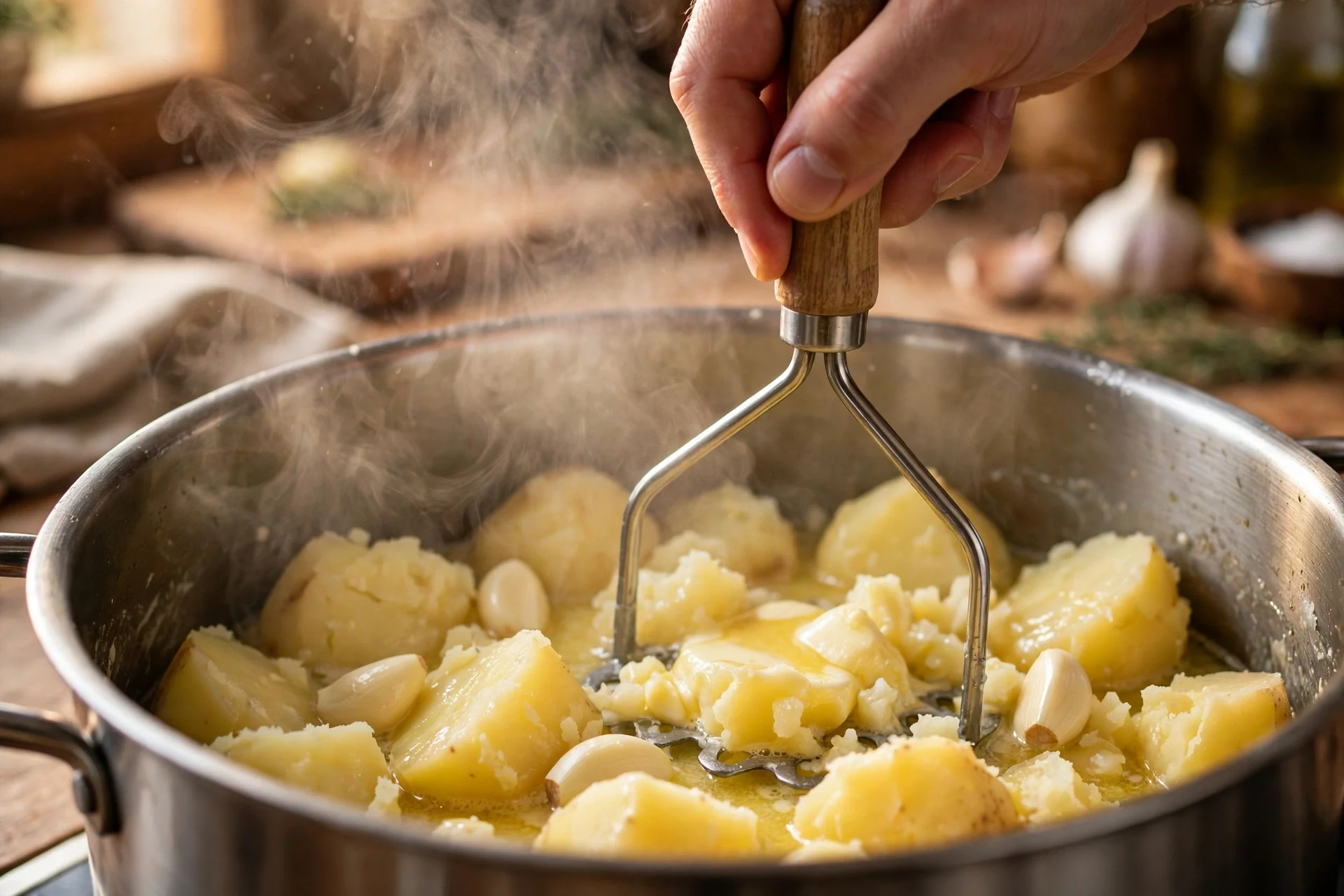
This low sodium mashed potatoes recipe takes 30 minutes from peeling to table. The method is simple, but two details matter: start the potatoes in cold water, and never add salt to it.
- Put the potato chunks and garlic cloves in a large pot. Cover with cold water — no salt.
- Bring to a boil over high heat, then lower to a steady simmer. Cook for 18 to 20 minutes, until a fork slides through a chunk with no resistance.
- Drain well and return the pot to the hot burner for 30 seconds to dry the potatoes. This step keeps the mash fluffy.
- Add the unsalted butter and mash with a hand masher until mostly smooth.
- Pour in the warm milk and Greek yogurt. Mash and stir until creamy. Add the garlic powder and black pepper.
- Taste and adjust the pepper. Serve topped with chives.
Start the potatoes in cold water so they cook evenly — dropping them into boiling water cooks the outside before the centre catches up. Draining and drying them on the burner drives off surface water, which is the difference between fluffy and wet. A hand masher gives you control; a food processor or blender overworks the starch and turns potatoes gluey.
How Much Sodium Is in Mashed Potatoes?
Each serving of this low sodium mashed potatoes recipe has about 17 mg of sodium, from a batch total of about 134 mg across 8 servings. Here is the per-ingredient audit:
| Ingredient | Sodium in the batch |
|---|---|
| Russet potatoes (907 g) | ~54 mg |
| Whole milk (120 g) | ~52 mg |
| Greek yogurt (60 g) | ~22 mg |
| Unsalted butter (28 g) | ~3 mg |
| Garlic, garlic powder, pepper, chives | ~4 mg |
The potatoes and the milk together supply most of the sodium — and both are naturally low. Nothing here is added salt. The FDA explains where sodium hides in everyday foods and how to spot it on labels.
Compare that with the alternatives:
| Mashed potatoes (1 serving) | Sodium |
|---|---|
| This recipe | ~17 mg |
| With salted butter instead of unsalted | ~39 mg |
| With salt in the cooking water | ~100 mg or more |
| Boxed instant mashed potatoes | 330–460 mg |
| Fast-food mashed potatoes with gravy | ~460 mg |
The cooking water is the hidden source most recipes never mention. A teaspoon of salt in the pot adds about 2,300 mg to the batch, and the potatoes soak up a share of it. Leaving it out costs nothing in flavour — the garlic and butter do that job.
How to Keep Them Creamy Without Salt
Salt is not what makes mashed potatoes creamy — fat, liquid and technique do. This low sodium mashed potatoes recipe gets its texture from three things: butter for richness, warm milk for smoothness, and Greek yogurt for body and a gentle tang.
Warm the milk before adding it. Cold milk shocks the hot potatoes and makes them stiffen, so the mash turns lumpy. Add the milk a little at a time and mash between pours — you can always add more, but you cannot take it back. Stop mashing as soon as the potatoes are smooth. Every extra press releases more starch and pushes the texture toward glue.
If the mash is too thick, stir in more warm milk a tablespoon at a time. If it is too thin, set the pot over low heat for a minute or two and stir — the extra water cooks off.

Variations: Dairy-Free, Herb, Roasted Garlic
This low sodium mashed potatoes recipe adapts easily. The base method stays the same.
- Dairy-free: swap the butter for 2 tablespoons of olive oil and the milk for warm oat milk or almond milk (unsweetened, unsalted — check the label, since some brands add salt). Skip the yogurt or use a dairy-free plain yogurt. Sodium stays near 15 mg per serving.
- Herb: fold in 2 tablespoons each of chopped parsley and dill with the chives. Fresh herbs add flavour that salt never could.
- Roasted garlic: roast a whole head of garlic at 400°F for 40 minutes, squeeze the soft cloves into the mash, and skip the boiled garlic. The flavour is deeper and sweeter.
- Cream cheese: for a richer holiday version, swap the yogurt for 2 tablespoons of plain cream cheese. Sodium rises to about 25 mg per serving — still very low.
Serve these beside our low sodium turkey burger or low sodium meatloaf for a full low-sodium dinner. For a different potato night, try our low sodium baked potato toppings .
How to Store and Reheat Them
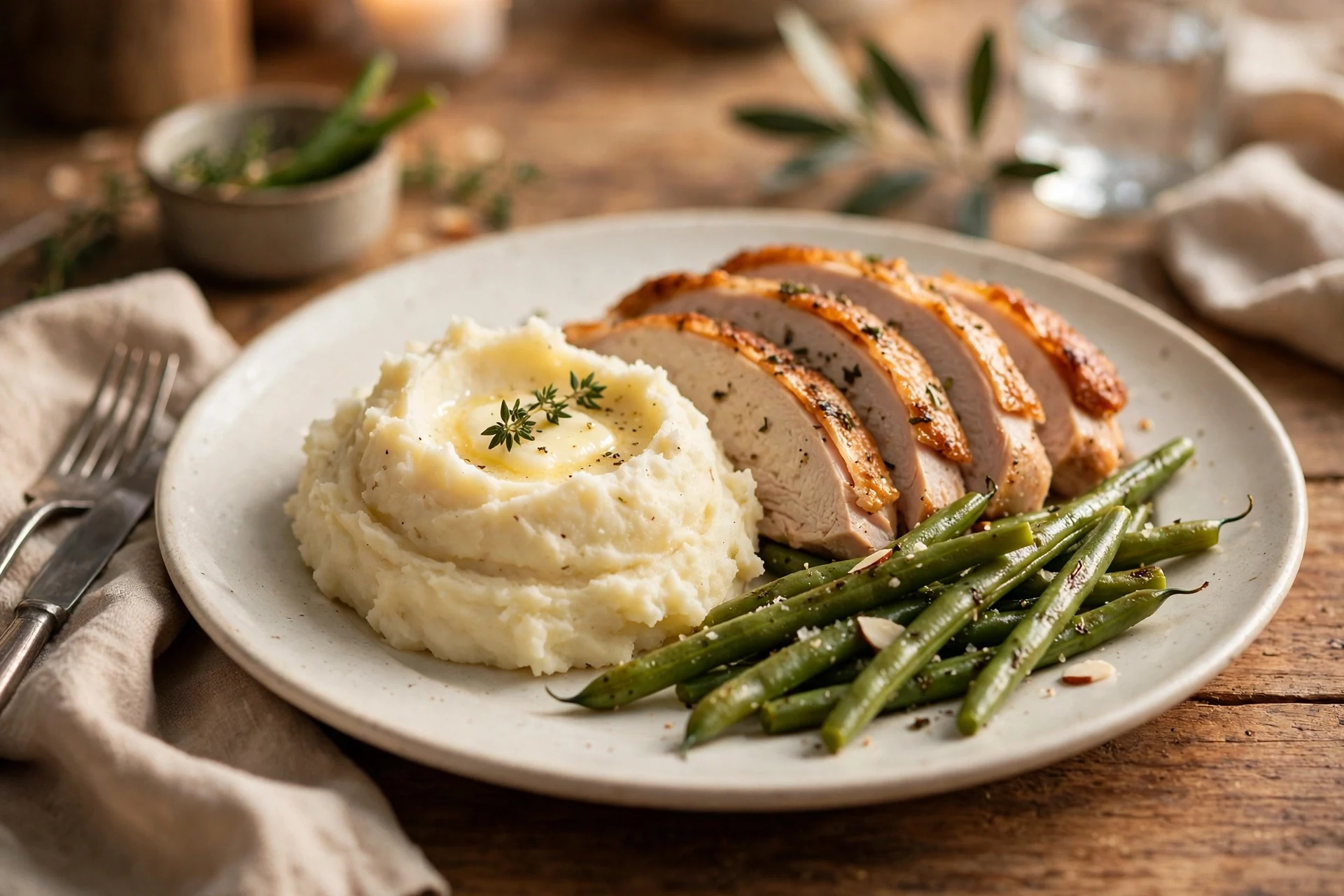
This low sodium mashed potatoes recipe is make-ahead friendly — useful for holidays, when the stove is busy.
- Fridge: 3 to 4 days in a sealed container. Cool within 2 hours of cooking.
- Freezer: up to 3 months. Portion into freezer bags and press flat so they thaw fast. Thaw overnight in the fridge.
- Reheat (stovetop): warm over low heat with a splash of milk, stirring often, until steaming hot.
- Reheat (microwave): heat in 1-minute bursts, stirring between each, until hot all the way through.
- Make-ahead: cook them up to 2 days before, refrigerate, and reheat with extra milk. They lose a little fluff but keep their flavour.
Mashed potatoes dry out as they sit, so always add a splash of milk when reheating. If they were frozen, they may look grainy when thawed — a good stir with warm milk brings them back.
Common Mistakes
A few small slips can undo this low sodium mashed potatoes recipe. Here are the ones I see most.
- Salting the cooking water. It is the habit to break. A teaspoon of salt adds 2,300 mg to the pot, and the potatoes absorb it.
- Using salted butter. Two tablespoons of salted butter add about 180 mg to the batch — more than the whole recipe. Use unsalted, always.
- Starting in boiling water. The outside overcooks while the centre stays hard. Cold water, then bring it up.
- Over-mashing. A food processor or blender turns potatoes gluey. Use a hand masher and stop when smooth.
- Adding cold milk. Cold milk cools the potatoes and stiffens the mash. Warm it first.
Frequently Asked Questions
How much sodium is in this low sodium mashed potatoes recipe?
Each serving has about 17 mg of sodium, from a batch total of about 134 mg across 8 servings. The potatoes supply about 54 mg and the milk about 52 mg — both naturally low. No salt is added at any step, which is why the number is far below boxed mash at 330 to 460 mg.
Can I make this low sodium mashed potatoes recipe without any salt?
Yes — this recipe has no added salt at all, and it still tastes like mashed potatoes. Garlic boiled in the pot, unsalted butter, warm milk and Greek yogurt carry the flavour. Black pepper and fresh chives add the sharpness that salt usually provides. Most people do not miss the salt.
What are the best potatoes for mashed potatoes?
Russet potatoes make the fluffiest mash because they are high in starch and low in moisture. Yukon Gold potatoes make a denser, creamier mash with a buttery flavour. Avoid waxy potatoes like red potatoes — they turn gluey when mashed. Either russet or Yukon Gold works in this recipe.
Can I make this low sodium mashed potatoes recipe ahead of time?
Yes. Cook them up to 2 days ahead and refrigerate in a sealed container, or freeze them for up to 3 months. Reheat gently on the stovetop with a splash of warm milk, stirring until steaming hot. They lose a little fluff after storage but keep their flavour.
Can I use salted butter in low sodium mashed potatoes?
You can, but it more than doubles the sodium. Two tablespoons of salted butter add about 180 mg to the batch, taking each serving from 17 mg to about 39 mg. That is still low, but unsalted butter keeps the recipe at its best — and you control the flavour with garlic and herbs instead.
How long do mashed potatoes last in the fridge?
They keep 3 to 4 days in a sealed container in the fridge. Cool them within 2 hours of cooking, and reheat only the portion you plan to eat. Do not leave them at room temperature for more than 2 hours, and freeze leftovers within a day if you will not eat them soon.
Your Next Step
This low sodium mashed potatoes recipe proves that the comfort food you love does not need salt to be good. Seventeen milligrams of sodium, real butter, real garlic, and a bowl that disappears fast.
Make them this week — beside a roast, a burger or a meatloaf — and see how little you miss the salt shaker.
This article is for general information only and is not medical advice. Please talk to your doctor or a registered dietitian, especially if you have diabetes, heart disease or take medicine.