

Can Diabetics Eat Sweet Potatoes? Yes — With 3 Rules
By Sarah

Can diabetics eat sweet potatoes? Yes, in most cases. Keep the portion small, cook them in a wet way like boiling, and pair them with protein and non-starchy vegetables. A medium baked sweet potato has about 24 grams of carbs, so the amount you eat matters more than the food itself.
Key Takeaways
- Yes, sweet potatoes can fit a diabetes-friendly plan in a small portion.
- A medium potato has about 24 g of carbs; a small one, about 15 g.
- Boiled scores 46 on the glycemic index; baked scores 94.
- Pair them with lean protein and vegetables.
In This Guide
- Carbs
- Glycemic index
- Baking mistake
- Vs white potato
- Varieties
- Cooking methods
- Build your plate
- Heart health
- Choosing
- Fries
- Thanksgiving
- Check your response
- Ask your doctor
- Every day
- FAQ
How Many Carbs Are in a Sweet Potato?
A medium sweet potato has about 24 g of carbs and about 4 g of fibre, based on USDA FoodData Central. That is a modest amount, but it still counts toward your meal total. The size you pick changes the carbs a lot, so start with size, not willpower.
The portion ladder: small vs medium vs large
Small, about 4 inches: about 15 g. Medium, about 5 inches: about 24 g. Large: 30 to 40 g.
| Size | Carbs (approx.) |
|---|---|
| Small (about 4 inches) | About 15 g |
| Medium (about 5 inches, with skin) | About 24 g |
| Large | 30–40 g |
Sweet potato by the numbers
USDA FoodData Central, via Milk & Honey Nutrition. One cup cooked: roughly 25 to 30 g of carbs. Half a cup cooked: about 15 g. Many people work with roughly 45 to 60 g per meal. Your own target comes from your care team.
| Serving | Carbs | Fibre | Sugar |
|---|---|---|---|
| 1 cup raw, cubed | About 27 g | 4 g | 6 g |
| 1 medium, baked with skin | About 24 g | 4 g | 10 g |
| 1/2 cup, mashed | 29 g | 4 g | 9 g |
| 1 cup, cooked | Roughly 25–30 g | — | — |

What Is the Glycemic Index of Sweet Potatoes?
The glycemic index is a scale from 0 to 100 that shows how fast a food may raise blood sugar. Sweet potatoes have no single number on that scale. How you cook them changes the number a lot, from low to high.
GI by cooking method
Source: glycemicindex.com, via Milk & Honey Nutrition. Boiled 30 minutes: 46, low. Boiled 8 minutes: 61. Roasted: 82. Baked 45 minutes: 94. Fried: 76. About 63 is sometimes quoted — treat it as a rough average only. No tested number exists for steaming, so this guide gives none.
| Cooking method | GI | Band |
|---|---|---|
| Boiled, 30 minutes | 46 | Low (0–55) |
| Boiled, 8 minutes | 61 | Medium (56–70) |
| Roasted, peeled | 82 | High (over 70) |
| Baked, 45 minutes, peeled | 94 | High (over 70) |
| Fried | 76 | High (over 70) |
What glycemic load adds
Glycemic load looks at both the glycemic index and the carbs in a serving. Sweet potato scores 11.1, in the moderate band of 11 to 19.

The Baking Mistake: Why Baked Isn't the Lowest-GI Option
Some guides say baking is one of the best ways to cook sweet potatoes for blood sugar. The GI data says the opposite. Baked 45 minutes, peeled: 94 — the highest figure above. Boiled 30 minutes: 46. That gap is the whole point of this guide.
Baked sweet potatoes are not banned — baking is quick and needs no added fat. But for steady blood sugar, boiling or steaming is better.
Sweet Potato vs White Potato: Which Is Better for Diabetes?
Sweet potatoes are the better pick for most people. A medium baked sweet potato has about 24 g of carbs, while a medium baked white potato with skin has 37 g, based on USDA FoodData Central. Both have about 4 g of fibre.
The glycemic index tells the same story: sweet potatoes average about 63, white potatoes about 78 to 85. For the same size, sweet potatoes give fewer carbs and a slower rise.
Which Sweet Potato Is Best? Orange vs Purple vs Japanese
Orange is the type most shops sell. Most recipes use this type. Beta-carotene is the plant pigment that gives sweet potatoes their orange colour, and the body can turn it into vitamin A. They also give fibre, vitamin C, vitamin B6 and potassium.
Purple sweet potatoes get their deep colour from anthocyanins — the plant pigments behind that colour. Studies indicate they may help with insulin resistance, but the findings are early.
Japanese sweet potatoes contain caiapo, a compound from the skin. One study found caiapo reduced fasting and 2-hour blood glucose versus a placebo, and also reduced cholesterol. These are early, extract-based findings — a reason to enjoy them, not to eat unlimited amounts. No sweet potato cures, treats or reverses diabetes.
Best Ways to Cook Sweet Potatoes for Diabetes
The best way to cook sweet potatoes for diabetes is the wet way: boil or steam them. Wet heat keeps the glycemic index lower than dry heat. Keep the skin on, since it adds fibre. Season with cinnamon or paprika, not brown sugar.
Boil or steam: the steadier choice
Boil cubed sweet potatoes for about 30 minutes, or steam them until tender. Longer boiling gave the lowest GI above, at 46. Drain well and serve plain.
I pack boiled sweet potato cubes in a lunch box with grilled chicken and a few cucumber sticks. The cubes hold their shape, and the chicken makes the box feel like a proper lunch instead of a snack.
Cook, cool, reheat: the resistant-starch meal-prep method
Cooling after boiling increases resistant starch — a type of starch that resists digestion in the small gut and acts a bit like fibre. That may give a gentler blood sugar response later. Boil a batch on Sunday, cool it, and store it in single servings. Reheat as needed.
Roasting, baking and the microwave: when they fit
Roasted sweet potatoes score 82, so keep the portion small. Baking is handy, but at 94 it is the highest-GI method here. Use both when the rest of your plate is strong. For flavour without sugar, try our low-sodium taco seasoning.

How to Build a Diabetes-Friendly Plate with Sweet Potatoes
The Diabetes Plate Method is simple: half non-starchy vegetables, one quarter lean protein, one quarter a starchy food like sweet potato. It works for most meals. The American Diabetes Association shares food guidance on its food and nutrition hub.
Pairing ideas and a worked example
Protein and healthy fat slow digestion and steady the rise from carbs. Good pairings: grilled chicken, fish, eggs, beans, lentils, plus olive oil. For lunch, try our healthy tuna salad with Greek yogurt next to your sweet potato. For breakfast, see our high-protein overnight oats.
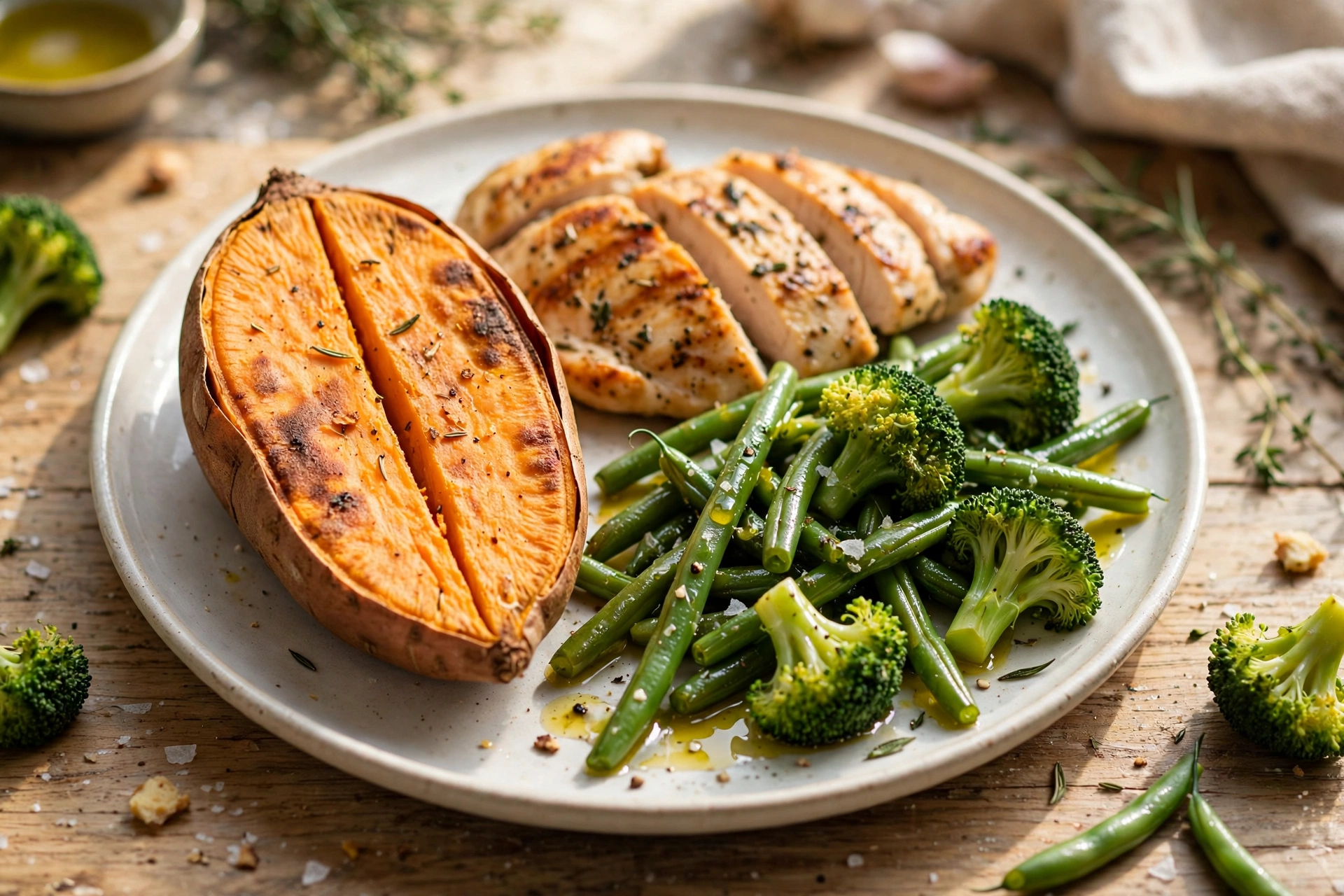
One worked plate: half a medium sweet potato, grilled chicken, and half a plate of broccoli and green beans. Half a medium potato gives about 12 g of carbs, since a whole one has about 24 g. The chicken adds protein with almost no carbs, and the vegetables add fibre and only a few grams of carbs.
At home I serve half a medium sweet potato next to grilled chicken and a pile of broccoli and green beans, and I measure the potato with a half-cup measure before it goes on the plate.
Sweet Potatoes and Heart Health: Good for Cholesterol Too?
Many people with diabetes also watch cholesterol. Sweet potatoes fit a heart-healthy plate well: rich in fibre and potassium, and naturally low in sodium and saturated fat when served plain. Fibre may help support healthy cholesterol as part of a balanced diet.
The key word is “plain.” Butter, brown sugar, marshmallows and cream add saturated fat, sodium and added sugar. Keep it simple: olive oil, not butter, and cinnamon for sweetness.

Choosing, Storing and Portioning Sweet Potatoes
Buy medium, fist-size potatoes: a medium potato is one serving, a large one can be two. Pick firm, heavy potatoes with smooth skin and no soft spots. Store them cool, dark and dry, and wash them only when you cook them.
Sweet Potato Fries, Chips and Restaurant Sweet Potatoes
Sweet potato fries differ from a plain sweet potato. A fast-food serving has about 35 to 40 g of carbs plus 15 to 20 g of fat, based on Seniors Info — more carbs than a medium baked potato, plus a lot of frying fat.
At home, cut a medium sweet potato into wedges, toss in olive oil, and bake at 400°F until crisp. Skip chips and canned sweet potatoes in syrup. On a packaged product, check total carbs, fibre, added sugars, sodium and saturated fat. A daily value of 5% or less is low; 20% or more is high.
Sweet Potatoes at Thanksgiving and Holidays
Holidays make portions hard to keep small. Take a small scoop of casserole as a side, not a main dish. Skip the marshmallow topping, or pick a pecan topping with no added sugar. Offer plain roasted cubes. Fill your plate with turkey and vegetables first.
How to Check Your Own Blood Sugar Response
Every person responds a little differently, so test your own response. Check your blood sugar before you eat, then again 2 hours after the meal. Note the food, amount and method. Look for a pattern, not one reading. If one method gives a bigger rise, switch methods. Share your notes with your doctor.
When to Ask Your Doctor
Ask your doctor or a registered dietitian before you change how you eat — above all if you take insulin or diabetes medicine. Never change a medicine dose on your own. Ask about potassium if you have kidney or heart disease. With type 1 or gestational diabetes, follow your care team’s carb plan.
Can Diabetics Eat Sweet Potatoes Every Day?
Yes, many people can eat sweet potatoes most days, as long as the portion stays small and the diet stays varied. A small or half-medium portion beats a large potato every day. Rotate your starches with whole grains, beans and other vegetables.
Frequently Asked Questions
Can diabetics eat sweet potatoes every day?
Yes, most people with diabetes can eat sweet potatoes most days in a small portion. Keep it to a small or half-medium potato, boil or steam it, and pair it with protein and vegetables. Rotate your starches across the week.
How much sweet potato can I eat per day?
Start with half a medium sweet potato, or about half a cup cooked — about 15 g of carbs. Some fit a whole medium potato, about 24 g, into one meal. Your own amount depends on your meal plan, so check it with your care team.
Can I eat sweet potato fries if I have diabetes?
Yes, now and then, in a small portion. A fast-food serving has about 35 to 40 g of carbs plus 15 to 20 g of fat — a treat, not an everyday side. At home, bake wedges in a little olive oil and keep the portion small.
Should I eat the skin of a sweet potato?
Yes, eat the skin when the potato is washed well. The skin adds fibre, which may help slow digestion. Scrub it under running water, and skip skin that looks damaged or sprouted. Peel it only if it is tough or you prefer it smooth.
Sweet potato vs yam — what's the difference?
Most “yams” sold in US shops are really sweet potatoes. True yams are a different food: drier, starchier, and less sweet. In most recipes and shops, the orange-fleshed potato labelled “yam” is a sweet potato. Check the label, and cook it the same way.
What if my blood sugar spikes after eating sweet potatoes?
First, try a smaller portion and a different cooking method, such as boiled instead of baked. Add more protein and non-starchy vegetables to the plate. Keep notes on the portion, method and pairing, then share them with your doctor or care team for advice.
The Bottom Line
Sweet potatoes can be part of a balanced, diabetes-friendly diet with three rules: small portion, wet cooking, good pairing. Ready to cook? Try these diabetic-friendly sweet potato recipes . Also see our 4-ingredient gluten-free banana bread.
This article is for general information only and is not medical advice. Please talk to your doctor or a registered dietitian, especially if you have diabetes, heart disease or take medicine.


