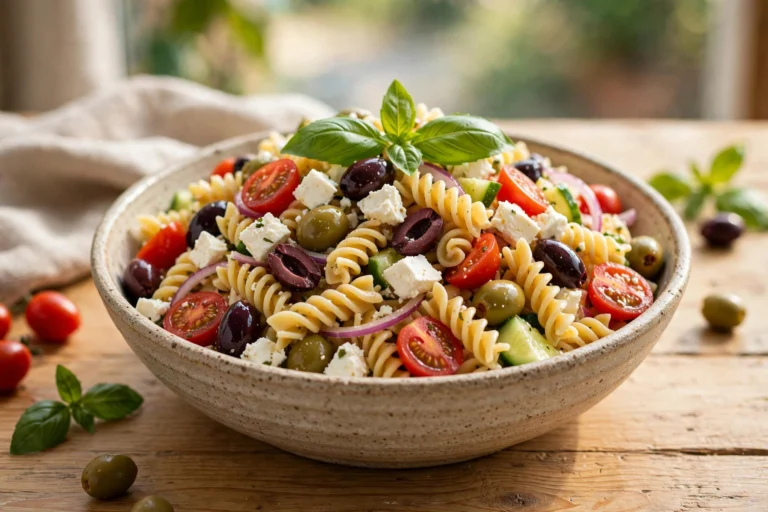
Low Sodium Caesar Dressing Recipe (18 mg Sodium)

This low sodium Caesar dressing recipe has just 18 mg of sodium per 2 tablespoons — vs 170 mg in Cardini’s. Greek yogurt, low-sodium mayo, Parmesan, and lemon, whisked in 10 minutes. No salt, no anchovy paste, and all the Caesar flavor.
By Sarah | Last updated: November 18, 2026
Key Takeaways
- 18 mg sodium per 2 tablespoons. Cardini’s has 170 mg.
- No salt, no anchovy paste. The two biggest sodium sources are both out.
- Greek yogurt base. More protein, less fat than bottled Caesar.
- 10 minutes. One bowl, one whisk, done.
- Parmesan ladder. Adjust the cheese to set the sodium.
In This Post
- Why Bottled Caesar Isn’t Low Sodium
- The Anchovy Problem
- The Sodium Math
- The Parmesan Ladder
- Ingredients
- How to Make It
- What Makes It Taste Like Caesar?
- Storage
- What to Serve It On
- Nutrition per Serving
- FAQs
Why Bottled Caesar Isn’t Low in Sodium
Caesar dressing is one of the saltiest salad dressings in the shop. Cardini’s Original Caesar has 170 mg of sodium per 2 tablespoons. A normal pour on a Caesar salad is easily 3–4 tablespoons — 255–340 mg before the salad itself.
The salt is not there by accident. Caesar dressing is shelf-stable, and salt is part of what keeps it safe at room temperature for months. It also sharpens the Parmesan and garlic flavors. That is why even “light” bottled Caesars are salty — the fat goes down, but the salt stays.
This low sodium Caesar dressing recipe takes the fresh path: made in 10 minutes from Greek yogurt, low-sodium mayo, Parmesan, and lemon, kept in the fridge for 5 days. It needs no salt to stay safe, because it never sits on a shelf. Its tang, umami, and garlic come from the lemon, the Parmesan, and the Worcestershire below.
The Anchovy Problem
Classic Caesar is made with anchovy paste. That is where the deep, savory flavor comes from — and most of the sodium. Anchovy paste has over 1,000 mg of sodium per tablespoon. One tablespoon in a batch would add about 125 mg of sodium per serving on its own — more than six times this recipe’s total.
This low sodium Caesar dressing recipe skips the anchovies entirely, and replaces their umami with two ingredients that do the same job for far less sodium.
Low-sodium Worcestershire sauce. One teaspoon adds 45 mg to the batch — about 6 mg per serving. Worcestershire is made with anchovies, so it carries the same savory depth in a much smaller dose. Regular Worcestershire would add about 200 mg per teaspoon — use the low-sodium version.
Parmesan cheese. Two tablespoons add 33 mg to the batch. Parmesan is a salty cheese, but in small amounts it adds more flavor than sodium. See the Parmesan ladder below.
The result tastes like Caesar — savory, tangy, garlicky — without a single anchovy.
The Sodium Math: How This Caesar Stays at 18 mg
Here is every milligram of sodium in the batch, from USDA values and label data:
| Ingredient | Amount | Sodium |
|---|---|---|
| Low-sodium Worcestershire sauce | 1 tsp | 45 mg |
| Plain non-fat Greek yogurt | ½ cup (120 g) | 43 mg |
| Grated Parmesan | 2 tbsp (10 g) | 33 mg |
| Low sodium mayo (our recipe) | ¼ cup (4 tbsp) | 20 mg |
| Lemon juice + garlic | — | 1 mg |
| Batch total | 8 servings | 142 mg |
| Per serving (2 tbsp) | 18 mg |
The Worcestershire sauce is the biggest number — 45 mg — and the one ingredient you could cut to go lower. Without it, the batch would be 97 mg, or about 12 mg per serving. But it gives this low sodium Caesar dressing recipe its savory depth, so it earns its place.
The mayo adds 20 mg, which is why it must be low-sodium: regular mayo would add about 360 mg to the batch instead. Our low sodium mayonnaise recipe has just 4 mg per tablespoon.
Two tablespoons of this recipe: 18 mg. Two tablespoons of Cardini’s: 170 mg. That is 9 times more sodium in the bottled dressing — for a flavor you can match in 10 minutes at home.
The Parmesan Ladder
Parmesan is the saltiest ingredient in this low sodium Caesar dressing recipe by weight — about 330 mg of sodium per 100 grams. But it is also what makes Caesar taste like Caesar. The ladder lets you choose how much flavor you want for how much sodium:
| Parmesan | Sodium added to batch | Sodium per serving |
|---|---|---|
| 1 tbsp (5 g) | 17 mg | 16 mg |
| 2 tbsp (10 g) — as written | 33 mg | 18 mg |
| ¼ cup (20 g) | 66 mg | 22 mg |
Two tablespoons is the sweet spot — enough Parmesan to taste it clearly, not so much that the sodium climbs. One tablespoon works for the lowest number, but the dressing will taste milder. A quarter cup is for Parmesan lovers who do not mind 22 mg per serving.
Ingredients

Ingredients
Method
- Whisk the base. Put the yogurt, mayo, Parmesan, lemon juice, garlic, Worcestershire sauce, mustard powder, and black pepper in a bowl. Whisk until smooth.
- Thin with water. Add the water a teaspoon at a time, whisking after each addition, until the dressing pours the way you like. Start with 1 tablespoon — you may need a little more or less.
- Taste and adjust. More lemon juice for tang, more Parmesan for savory depth, more black pepper for warmth. The flavor deepens as it chills, so season lightly.
- Chill (optional). The dressing is ready right away, but 30 minutes in the fridge blends the flavors. Cover and refrigerate if you have the time.
- Serve. Stir before serving. If it has thickened in the fridge, add a teaspoon of water.
Notes
This low sodium Caesar dressing recipe uses Greek yogurt, low-sodium mayo, Parmesan, lemon, garlic, and low-sodium Worcestershire sauce.

- Plain non-fat Greek yogurt (½ cup, 120 g): The base. Plain, not flavored — flavored yogurt has added sugar and salt.
- Low sodium mayonnaise (¼ cup, 4 tbsp): Our low sodium mayonnaise recipe . Regular mayo would add about 360 mg to the batch.
- Grated Parmesan (2 tablespoons, 10 g): Freshly grated if possible. See the Parmesan ladder above.
- Lemon juice (2 tablespoons, 30 g): Fresh or bottled. It adds the tang that defines Caesar.
- Garlic (1 small clove, 3 g): Minced or grated. Fresh, not powder — the flavor is brighter.
- Low-sodium Worcestershire sauce (1 teaspoon): The umami. Must be low-sodium — regular adds about 200 mg per teaspoon.
- Mustard powder (½ teaspoon, 1 g): The emulsifier — it helps the dressing stay mixed.
- Black pepper (¼ teaspoon, 1 g): Freshly ground if possible.
- Water (1 tablespoon, 15 g): To thin the dressing to pouring consistency.
- Salt: None. Not a pinch.
- Anchovy paste: None. See the Anchovy Problem above.
How to Make Low Sodium Caesar Dressing
This low sodium Caesar dressing recipe takes 10 minutes: whisk everything together, thin with water, and serve. No cooking, no blending.

- Whisk the base. Put the yogurt, mayo, Parmesan, lemon juice, garlic, Worcestershire sauce, mustard powder, and black pepper in a bowl. Whisk until smooth.
- Thin with water. Add the water a teaspoon at a time, whisking after each addition, until the dressing pours the way you like. Start with 1 tablespoon — you may need a little more or less.
- Taste and adjust. More lemon juice for tang, more Parmesan for savory depth, more black pepper for warmth. The flavor deepens as it chills, so season lightly.
- Chill (optional). The dressing is ready right away, but 30 minutes in the fridge blends the flavors. Cover and refrigerate if you have the time.
- Serve. Stir before serving. If it has thickened in the fridge, add a teaspoon of water.
The dressing tastes a little sharp right after mixing — the lemon juice and garlic are at their strongest. After 30 minutes in the fridge, the flavors round out and the dressing tastes like Caesar. Used right away, it is still good — just a little bolder.
What Makes It Taste Like Caesar?
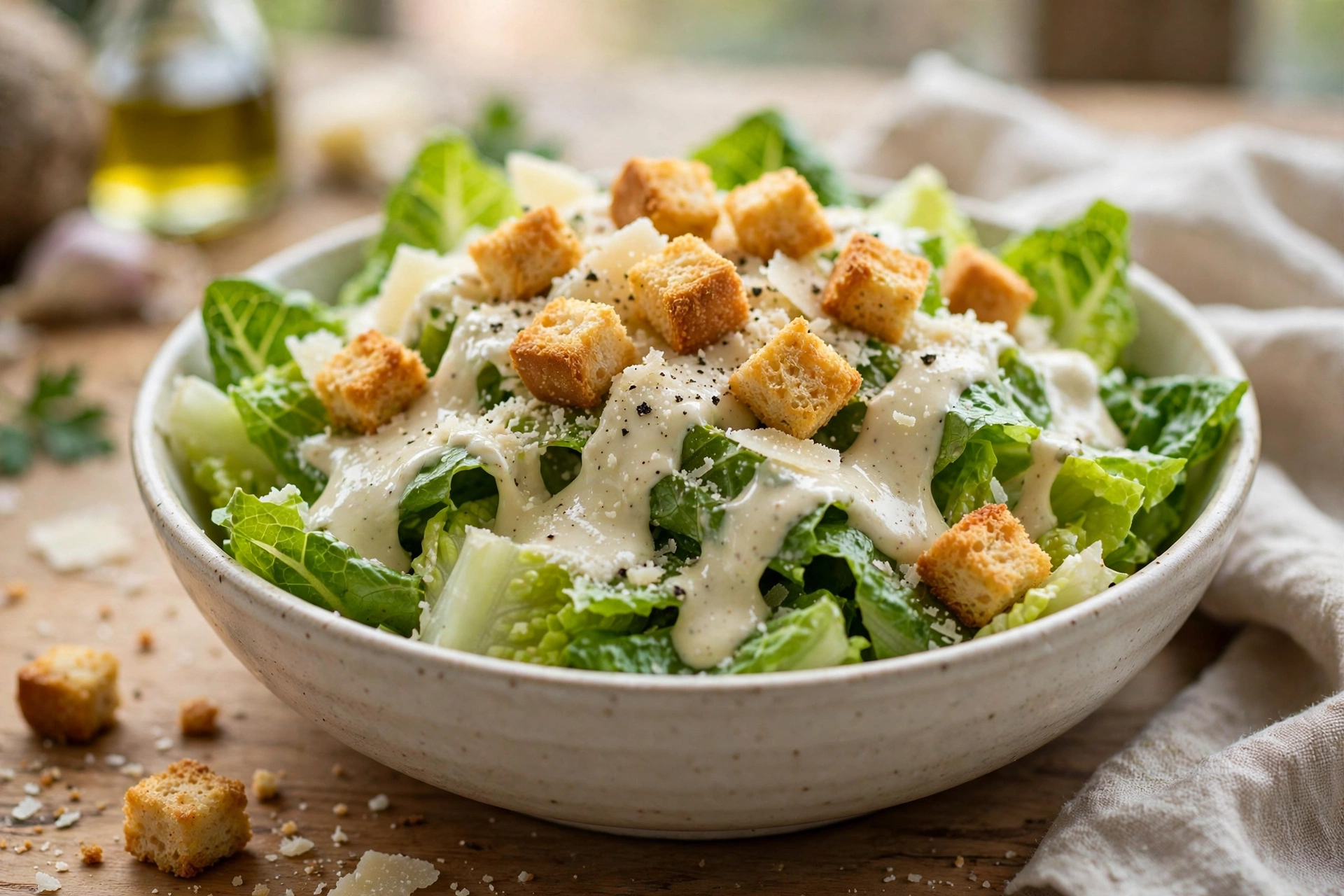
Caesar dressing has four flavors, and this low sodium Caesar dressing recipe hits all four without salt or anchovies:
Salty and savory. The Parmesan and Worcestershire provide the umami — the deep, savory flavor anchovies would normally give. The Parmesan adds a nutty saltiness; the Worcestershire adds a dark, meaty depth.
Tangy. The lemon juice is the tang. Two tablespoons is more than most Caesar recipes use, because the lemon has to do the work salt would do — brightening the flavors and cutting through the richness.
Garlicky. One small clove of fresh garlic, minced or grated. Fresh garlic is brighter and sharper than garlic powder, and it is the flavor you notice first in a good Caesar.
Peppery. Black pepper, freshly ground if possible. It adds warmth and rounds out the other flavors.
Storage: 5 Days in the Fridge
This low sodium Caesar dressing recipe keeps for 5 days in the fridge — not 5 months on a shelf. That is the trade for no salt and no preservatives.
Salt is a preservative. Bottled Caesar lasts months at room temperature because it is loaded with salt, vinegar, and preservatives that stop bacteria growing. This Caesar has the lemon juice, but no salt and no preservatives — so it needs the fridge, and 5 days to be used.
Store it in a clean jar with a tight lid, in the fridge from the moment it is made. If it smells off, looks moldy, or tastes sour, throw it away. Do not leave it out for hours — put it back in the fridge after the meal.
What to Serve It On
This low sodium Caesar dressing recipe works anywhere bottled Caesar does:
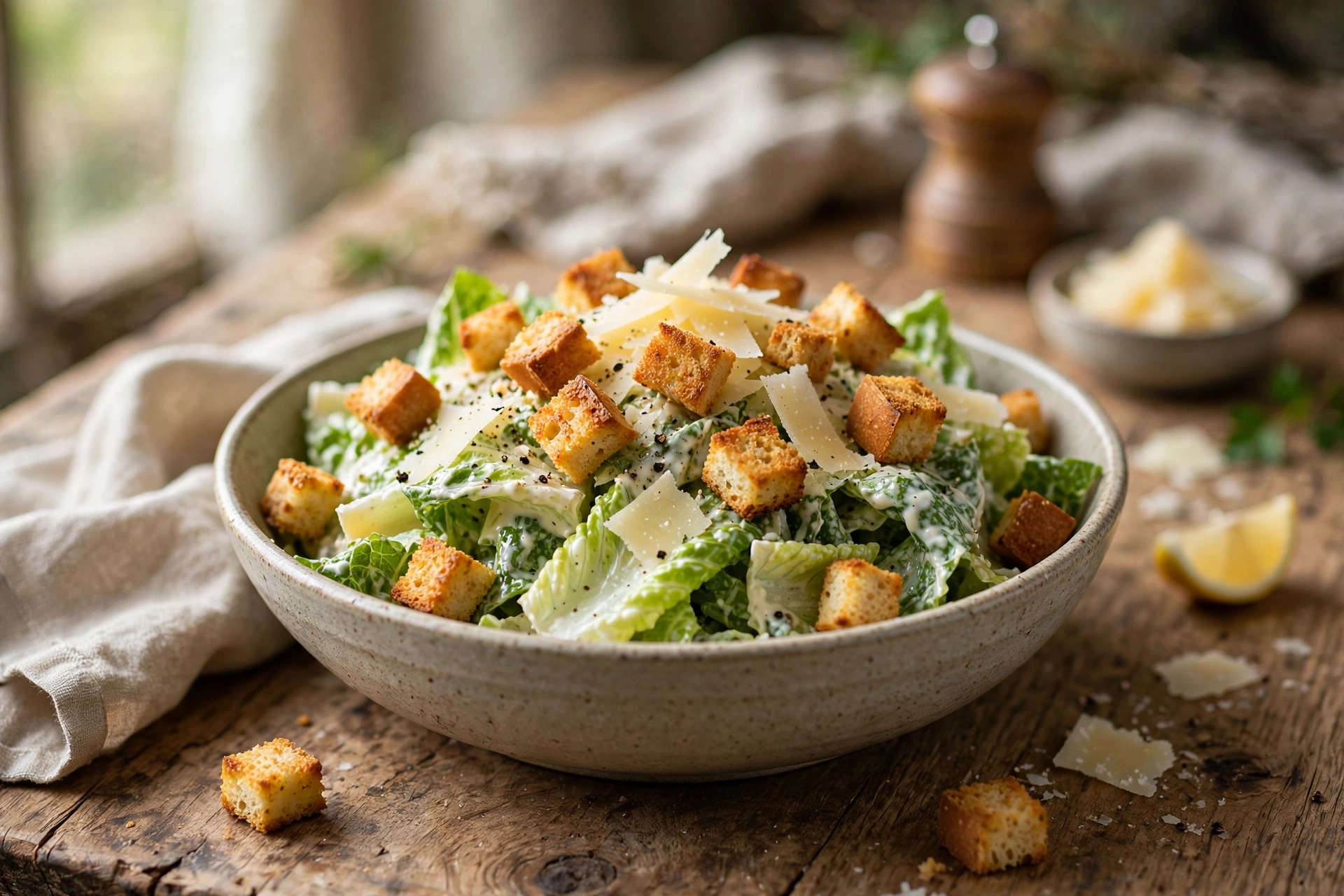
- Caesar salad. Romaine, croutons, Parmesan, and this dressing.
- Kale salad. Try it on our kale salad recipe — a sturdier green that holds up to the dressing.
- Wraps and sandwiches. Spread it on a chicken wrap or a turkey sandwich.
- As a dip. Serve it with vegetables, chicken tenders, or pizza crusts.
For more low-sodium dressings, see our low sodium ranch dressing recipe , our low sodium salad dressing recipes, and our Greek salad recipe.
Nutrition per Serving
Each serving of this low sodium Caesar dressing recipe is 2 tablespoons. The numbers come from USDA values for every ingredient, batch totals divided by 8 servings.
| Nutrient | Per serving |
|---|---|
| Calories | 79 |
| Protein | 2 g |
| Carbohydrates | 1 g |
| Fiber | 0 g |
| Sugar | 1 g |
| Fat | 7 g |
| Saturated fat | 1 g |
| Sodium | 18 mg |
| Cholesterol | 6 mg |
At 79 calories per serving, this Caesar is lighter than bottled Caesar (about 140 calories per 2 tablespoons) and higher in protein, thanks to the Greek yogurt. Harvard’s guide to salt and sodium explains why dressings matter: small servings that add up fast across a meal, and most dietary sodium comes from processed foods and sauces, not the salt shaker.
FAQs
How much sodium is in homemade Caesar dressing?
This low sodium Caesar dressing recipe has 18 mg of sodium per 2 tablespoons, because it uses Greek yogurt and low-sodium mayo with no added salt or anchovy paste. Cardini’s has 170 mg per 2 tablespoons — the salt and anchovies manufacturers add as preservatives and flavor.
Can I make Caesar dressing without anchovies?
Yes — this low sodium Caesar dressing recipe skips the anchovies entirely and uses low-sodium Worcestershire sauce and Parmesan for the savory depth. Anchovy paste has over 1,000 mg of sodium per tablespoon, so leaving it out is the single biggest sodium saving in this recipe.
How long does homemade Caesar dressing last?
Fridge: up to 5 days in a clean jar with a tight lid. Homemade Caesar lasts less time than bottled Caesar — it has no salt or preservatives. If it smells off or looks moldy, throw it away. Do not freeze it — the yogurt separates when thawed.
Why is my Caesar dressing too thick?
Add water a teaspoon at a time until it pours the way you like. This low sodium Caesar dressing recipe thickens slightly as it chills, so if you make it ahead, stir in a teaspoon of water before serving. Start with 1 tablespoon of water and adjust from there.
Can I use regular Worcestershire sauce instead of low-sodium?
You can, but the sodium jumps. Regular Worcestershire has about 200 mg per teaspoon, vs 45 mg for low-sodium. That adds about 155 mg to the batch — roughly 19 mg per serving, doubling the total to about 37 mg. The low-sodium version is worth finding.
Is Caesar dressing good for weight loss?
This low sodium Caesar dressing recipe has 79 calories per 2 tablespoons — about half of bottled Caesar, which has about 140 calories. It is a reasonable dressing in small amounts. The key is portion size: measure 2 tablespoons instead of pouring freely.
The Bottom Line
This low sodium Caesar dressing recipe gives you about a cup of real Caesar at 18 mg of sodium per serving, in 10 minutes, with Greek yogurt, Parmesan, and no anchovies. Make it fresh, keep it in the fridge, and use it all week.
This article is for general information only and is not medical advice. Please talk to your doctor or a registered dietitian, especially if you have diabetes, heart disease or take medicine.