Low Sodium Coleslaw Recipe (22 mg Sodium)
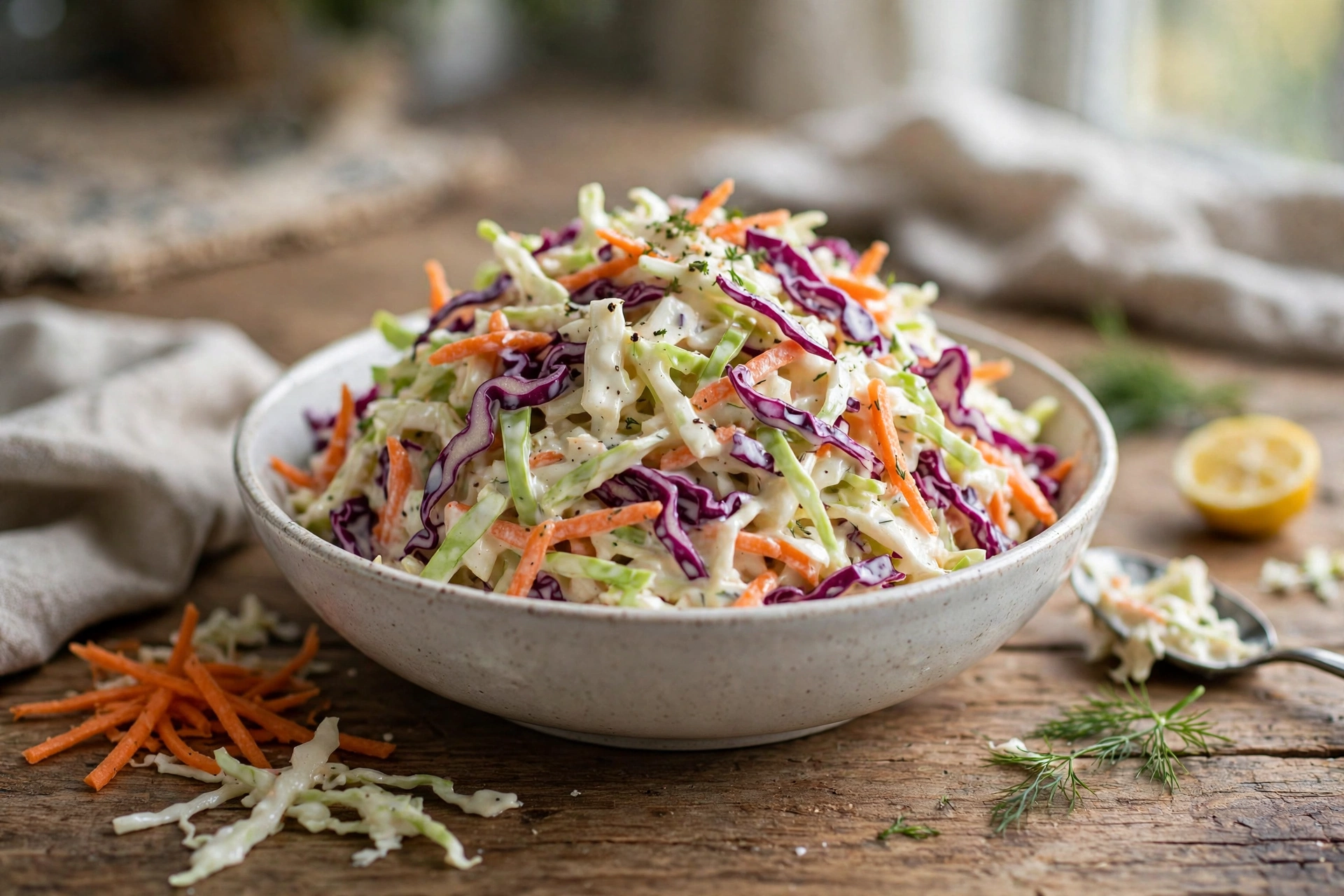
This low sodium coleslaw recipe has just 22 mg of sodium per cup — vs about 590 mg per half cup from the deli. Creamy yogurt dressing, crunchy cabbage, ready in 15 minutes. No salt, no Dijon, and it tastes like real coleslaw should.
By Sarah | Last updated: November 18, 2026
Key Takeaways
- 22 mg sodium per cup. Deli coleslaw has about 590 mg per half cup.
- No salt, no Dijon. The two biggest sodium traps are both out.
- Greek yogurt dressing. More protein, less fat than deli coleslaw.
- 15 minutes. One bowl, one whisk, done.
- Chill 30 minutes. The flavors need time to blend.
In This Post
- Why Deli Coleslaw Isn’t Low Sodium
- The Dijon Trap
- The Sodium Math
- Ingredients
- How to Make It
- Creamy vs Vinegar Coleslaw
- The 30-Minute Rule
- Storage
- What to Serve It With
- Nutrition per Serving
- FAQs
Why Deli Coleslaw Isn’t Low in Sodium
Coleslaw looks like a light, healthy side — shredded cabbage and carrots in a creamy dressing. It is not low in sodium. Deli coleslaw has about 590 mg of sodium per half cup, and a normal serving is a full cup — about 1,180 mg, more than half the daily limit of 2,300 mg, from a side dish.
The salt is not there by accident. Deli coleslaw is made in bulk and stored for days, and salt is part of what keeps it safe and flavorful.
This low sodium coleslaw recipe takes the fresh path — made in 15 minutes from a bag of coleslaw mix, Greek yogurt, low-sodium mayo, and vinegar, and kept in the fridge for 3 days. It does not need salt to stay safe, because it never sits in a deli case. The balance of creamy, tangy, and sweet comes from the yogurt, vinegar, and honey below.
The Dijon Trap
Many coleslaw recipes call for Dijon mustard. That is a sodium trap. Dijon has about 120 mg of sodium per teaspoon — roughly 360 mg per tablespoon. One tablespoon of Dijon in a batch of coleslaw would add about 45 mg of sodium per serving — more than double this recipe’s total of 22 mg.
Any prepared mustard is salty, because mustard is made with salt as a preservative — yellow mustard has about 165 mg per tablespoon.
This low sodium coleslaw recipe uses mustard powder instead — 1 teaspoon of dry mustard powder, about 0.3 mg of sodium. The powder gives the same mustard flavor without the salt and dissolves into the dressing, so there are no lumps. For a stronger mustard flavor, add another ½ teaspoon — it adds almost no sodium.
The Sodium Math: How This Coleslaw Stays at 22 mg
Here is every milligram of sodium in the batch, from USDA values:
| Ingredient | Amount | Sodium |
|---|---|---|
| Tri-color coleslaw mix | 14 oz (400 g) | 100 mg |
| Plain non-fat Greek yogurt | ½ cup (120 g) | 43 mg |
| Low sodium mayo (our recipe) | ¼ cup (4 tbsp) | 20 mg |
| Green onions | 2 (30 g) | 5 mg |
| Celery seed | ½ tsp | 3 mg |
| Vinegar, honey, spices | — | 3 mg |
| Batch total | 8 servings | 174 mg |
| Per serving (1 cup) | 22 mg |
The coleslaw mix is the biggest number — 100 mg — and it is unavoidable, because cabbage and carrots contain sodium naturally. The yogurt adds 43 mg and the mayo 20 mg — which is why the mayo must be low-sodium: regular mayo would add about 360 mg to the batch instead. Our low sodium mayonnaise recipe has just 4 mg per tablespoon.
One cup of this low sodium coleslaw recipe: 22 mg. One cup of deli coleslaw: about 1,180 mg. That is 54 times more sodium — for a salad you can make in 15 minutes at home.
Ingredients

Ingredients
Method
- Whisk the dressing. Whisk the yogurt, mayo, vinegar, honey, mustard powder, celery seed, and black pepper in a large bowl until smooth.
- Add the cabbage and onions. Add the coleslaw mix and green onions.
- Toss. Toss with tongs until every strand is coated. The dressing looks like too little at first — keep tossing, it spreads.
- Taste and adjust. More vinegar for tang, more honey for sweetness, more black pepper for warmth. The flavor deepens as it chills, so season lightly.
- Chill 30 minutes. Cover and refrigerate for at least 30 minutes — the cabbage softens slightly and the flavors blend.
- Serve. Toss again before serving; if it looks dry, stir in a spoonful of yogurt.
Notes
This low sodium coleslaw recipe uses a bag of coleslaw mix, Greek yogurt, low-sodium mayo, vinegar, honey, and mustard powder — all easy to find at any shop.
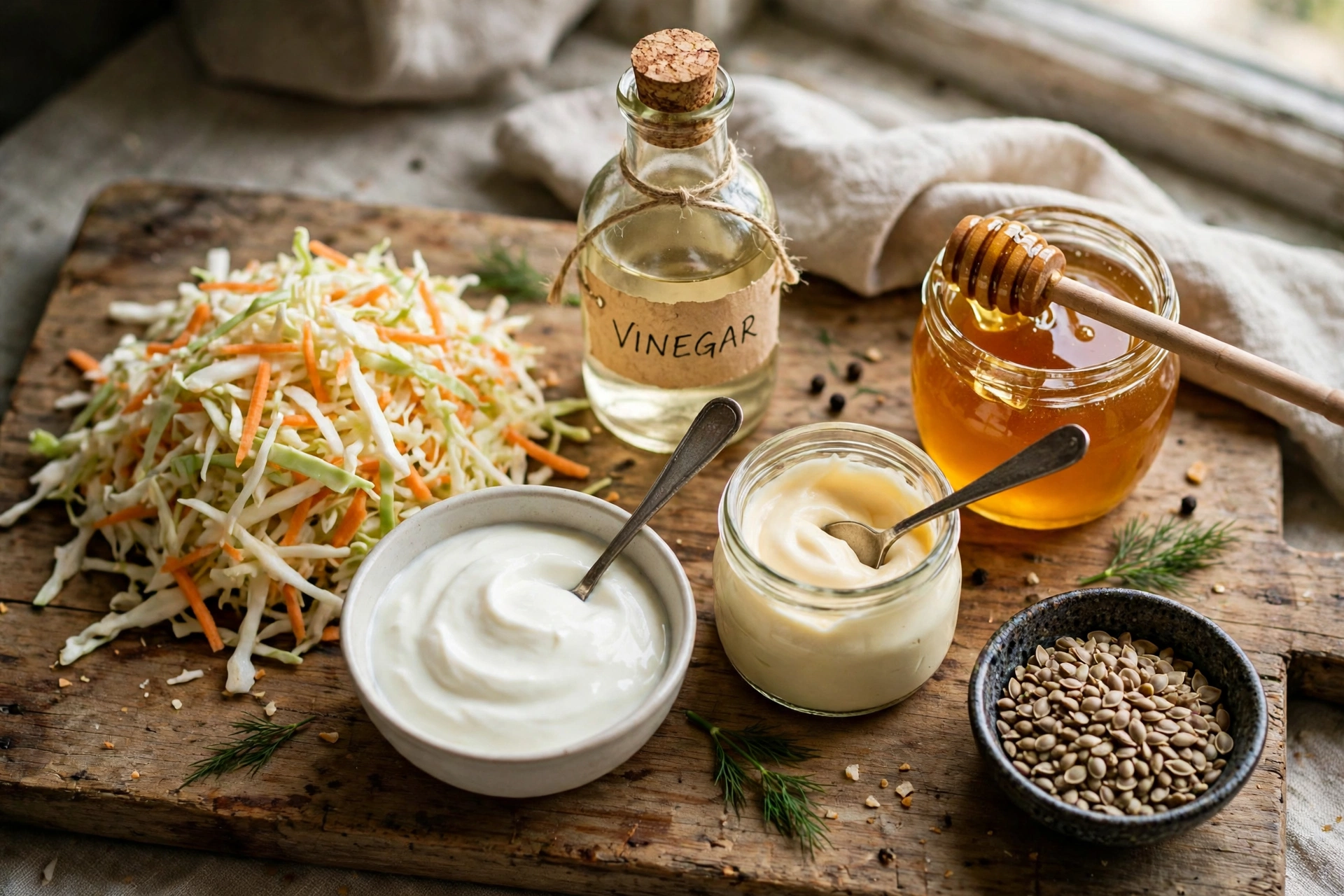
- Tri-color coleslaw mix (1 bag, 14 oz / 400 g): Shredded green cabbage, red cabbage, and carrots — a bag saves 15 minutes of shredding.
- Plain non-fat Greek yogurt (½ cup, 120 g): The base — plain, not flavored. Flavored yogurt has added sugar and salt.
- Low sodium mayonnaise (¼ cup, 4 tbsp): Our low sodium mayonnaise recipe . Regular mayo would add about 360 mg to the batch.
- Apple cider vinegar (2 tablespoons, 30 g): The tang. White vinegar works, but cider vinegar tastes better here.
- Honey (1 tablespoon, 21 g): The sweetness. It balances the vinegar.
- Mustard powder (1 teaspoon, 2 g): The mustard flavor — without the sodium of prepared mustard. See the Dijon Trap above.
- Celery seed (½ teaspoon, 2 g): The signature coleslaw spice — do not skip it.
- Black pepper (¼ teaspoon, 1 g).
- Green onions (2, 30 g): Sliced thin — they add color and a mild onion flavor.
- Salt: None. Not a pinch.
- Dijon mustard: None. See the Dijon Trap above.
How to Make Low Sodium Coleslaw
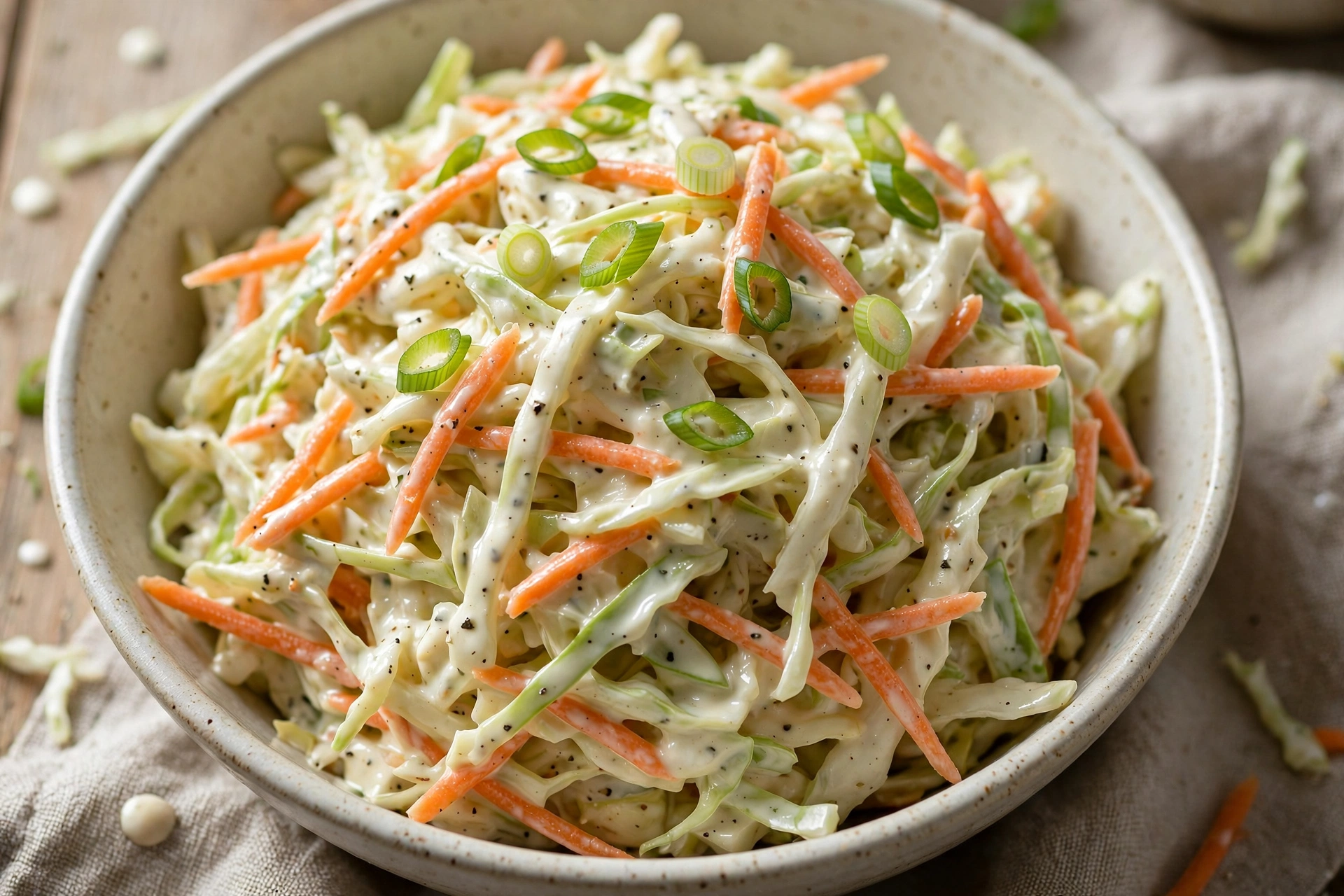
This low sodium coleslaw recipe takes 15 minutes: whisk the dressing, toss with the cabbage, and chill for 30 minutes. The chill matters — the flavors need time to blend and the cabbage needs time to soften.
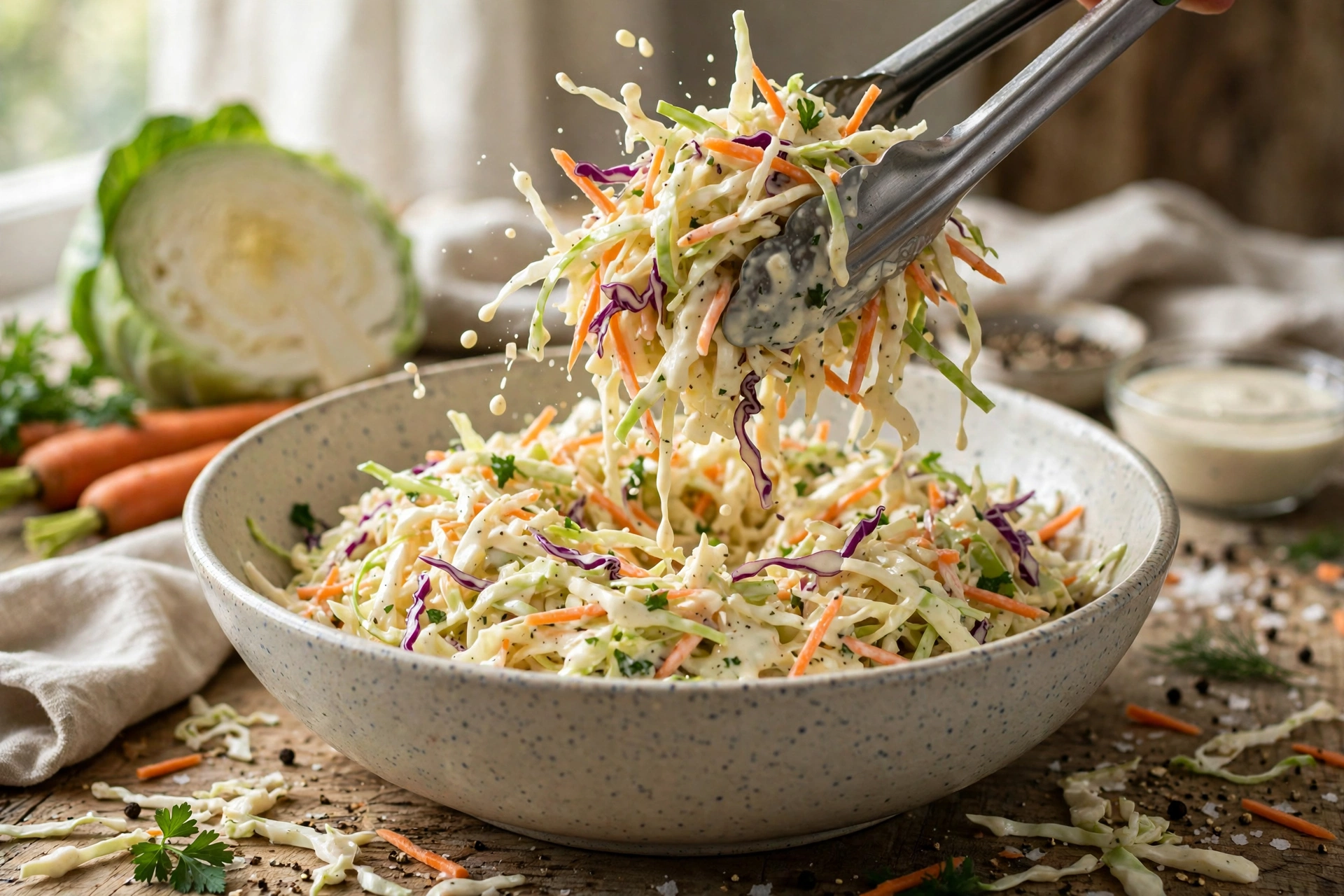
- Whisk the dressing. Whisk the yogurt, mayo, vinegar, honey, mustard powder, celery seed, and black pepper in a large bowl until smooth.
- Add the cabbage and onions. Add the coleslaw mix and green onions.
- Toss. Toss with tongs until every strand is coated. The dressing looks like too little at first — keep tossing, it spreads.
- Taste and adjust. More vinegar for tang, more honey for sweetness, more black pepper for warmth. The flavor deepens as it chills, so season lightly.
- Chill 30 minutes. Cover and refrigerate for at least 30 minutes — the cabbage softens slightly and the flavors blend.
- Serve. Toss again before serving; if it looks dry, stir in a spoonful of yogurt.
The coleslaw looks dry right after tossing — the cabbage has not released moisture yet. After 30 minutes in the fridge, the cabbage softens and the dressing coats everything. Do not add extra dressing before the chill; wait and see.
Creamy vs Vinegar Coleslaw
There are two styles of coleslaw, and they are very different:
Creamy coleslaw (this recipe). The dressing is yogurt and mayo — thick, rich, and smooth. It coats the cabbage and stays put on a plate. This is the style most people think of as “coleslaw,” and it pairs best with barbecue and fried chicken.
Vinegar coleslaw. The dressing is oil and vinegar with sugar and spices — thin, sharp, and light. It has fewer calories (no mayo, no yogurt) and keeps longer in the fridge, because there is no dairy. It is excellent with pulled meats.
This low sodium coleslaw recipe is the creamy style, because the yogurt dressing makes it a complete side dish — protein, creaminess, and tang in one bowl. For the vinegar style, skip the yogurt and mayo and whisk ¼ cup of apple cider vinegar with 2 tablespoons of olive oil, 1 tablespoon of honey, and the same spices. The sodium is even lower — about 15 mg per cup.
The 30-Minute Rule
Coleslaw needs 30 minutes in the fridge before serving. That is not a suggestion — it is the difference between good coleslaw and great coleslaw.
In the first 30 minutes, three things happen. The cabbage softens slightly, losing its raw crunch. The dressing soaks into the cabbage, coating every strand. And the flavors blend — the vinegar mellows, the honey rounds out, and the celery seed and mustard powder spread through the dressing.
After 30 minutes, the coleslaw is at its best. After 2 hours, it is still good. After a day, it is softer but still tasty. After 3 days, the cabbage has gone limp — time for a fresh batch.
This low sodium coleslaw recipe is best the same day it is made, after the 30-minute chill. To make it ahead, mix the dressing and the cabbage separately and toss them together 30 minutes before serving — the cabbage stays crisp until the last moment.
Storage: 3 Days in the Fridge
This low sodium coleslaw recipe keeps for 3 days in the fridge — not 3 weeks in a deli case. That is the trade for leaving out the salt and preservatives.
Salt is a preservative. Deli coleslaw lasts days in a refrigerated case because it is loaded with salt, vinegar, and preservatives that stop bacteria growing. This coleslaw has the vinegar, but no salt and no preservatives — so it needs the fridge, and 3 days to be used.
Store it in a clean container with a tight lid, in the fridge from the moment it is made. If it smells off, looks slimy, or tastes sour, throw it away. Do not leave it out at a picnic for hours — put it back in the fridge between servings.
What to Serve It With
This low sodium coleslaw recipe works anywhere deli coleslaw does:
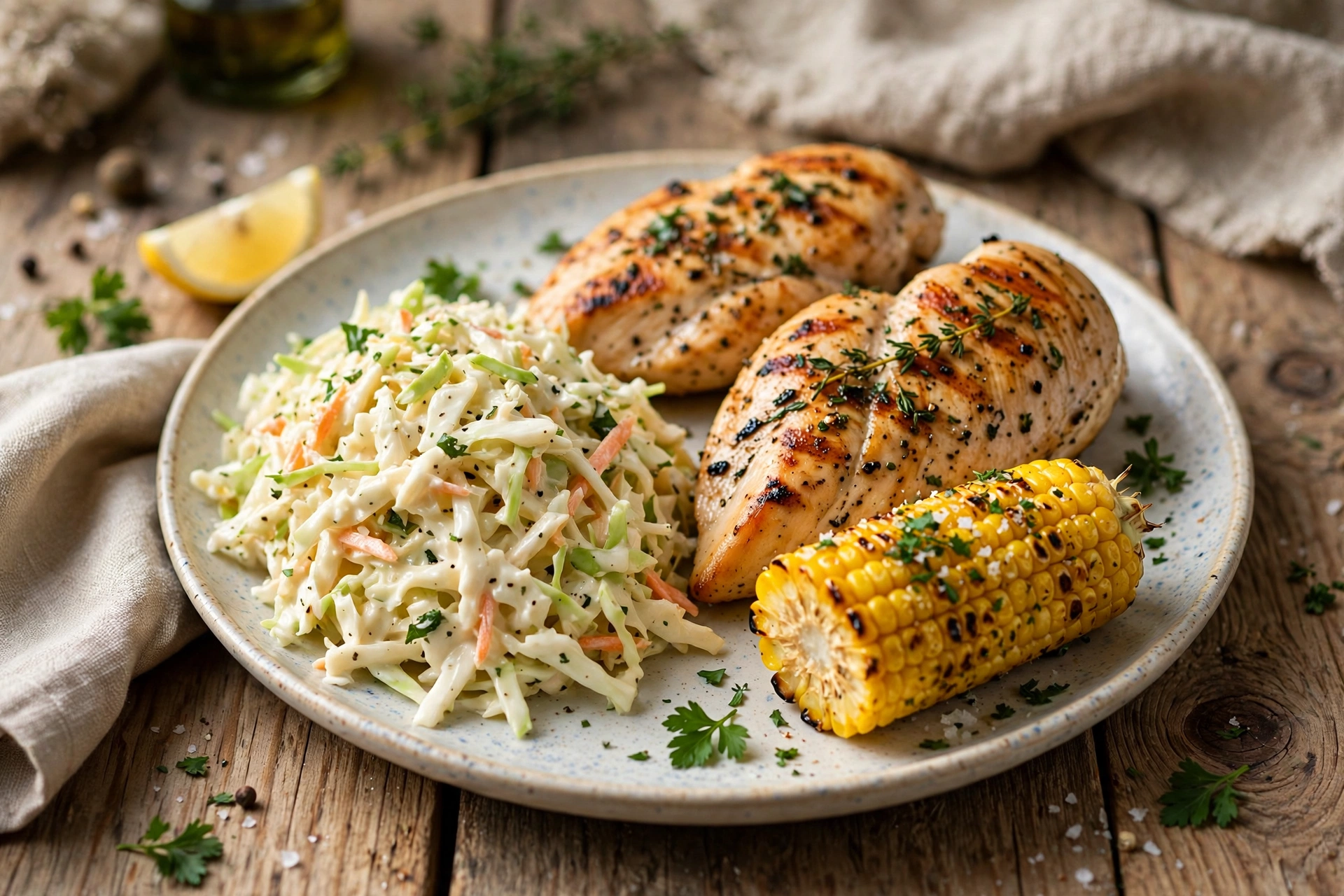
- Barbecue. The classic. Serve it with our low sodium BBQ sauce recipe on grilled chicken or ribs.
- Sandwiches. Pile it on a pulled chicken sandwich or turkey burger.
- Tacos. A spoonful on a fish taco or chicken taco adds crunch and tang.
- Fried chicken. The cool, creamy slaw balances hot, crispy chicken.
- As a side. Serve it beside our low sodium potato salad recipe for a picnic plate.
For more low-sodium salads, see our kale salad recipe and our broccoli salad recipe.
Nutrition per Serving
Each serving of this low sodium coleslaw recipe is 1 cup. The numbers come from USDA values for every ingredient, batch totals divided by 8 servings.
| Nutrient | Per serving |
|---|---|
| Calories | 96 |
| Protein | 3 g |
| Carbohydrates | 6 g |
| Fiber | 1 g |
| Sugar | 4 g |
| Fat | 7 g |
| Saturated fat | 1 g |
| Sodium | 22 mg |
| Cholesterol | 5 mg |
At 96 calories and 3 grams of protein per cup, this coleslaw is lighter than deli coleslaw (about 150 calories per half cup) and higher in protein, thanks to the Greek yogurt. The FDA’s guide to sodium in your diet explains why side dishes matter: they add up fast across a meal, and most dietary sodium comes from processed foods, not the salt shaker.
FAQs
How much sodium is in homemade coleslaw?
This low sodium coleslaw recipe has 22 mg of sodium per cup, because it uses Greek yogurt and low-sodium mayo with no added salt or Dijon mustard. Deli coleslaw has about 590 mg per half cup — about 1,180 mg per cup — the salt and regular mayo delis use.
Can I make coleslaw without Dijon mustard?
Yes — this recipe uses mustard powder instead: 1 teaspoon of dry mustard powder, about 0.3 mg of sodium. Dijon has about 360 mg per tablespoon, so the swap is the biggest sodium saving in this recipe after the mayo.
How long does homemade coleslaw last?
This low sodium coleslaw recipe keeps up to 3 days in the fridge, in a clean container with a tight lid. Homemade coleslaw lasts less time than deli coleslaw because it has no salt or preservatives. After 3 days the cabbage goes limp. If it smells off or looks slimy, throw it away.
Why is my coleslaw watery?
The cabbage releases water as it sits, which thins the dressing. If it looks watery after chilling, drain off the excess and stir in a spoonful of yogurt. To prevent it, do not add extra dressing before the chill — wait and see how it looks after 30 minutes.
Can I use a bag of coleslaw mix?
Yes — this low sodium coleslaw recipe is built around a 14-ounce bag of tri-color coleslaw mix (green cabbage, red cabbage, and carrots). A bag saves about 15 minutes of shredding. To shred your own, use about 400 grams of shredded cabbage and carrots.
Is coleslaw good for weight loss?
This low sodium coleslaw recipe has 96 calories per cup — about a third of deli coleslaw (about 150 calories per half cup). It is a reasonable side dish in normal portions. The cabbage and carrots add fiber and volume, which help you feel full.
The Bottom Line
This low sodium coleslaw recipe gives you 8 cups of creamy, crunchy coleslaw at 22 mg of sodium per cup, in 15 minutes, with Greek yogurt, fresh cabbage, and no Dijon. Make it fresh, keep it in the fridge, and use it all week.
This article is for general information only and is not medical advice. Please talk to your doctor or a registered dietitian, especially if you have diabetes, heart disease or take medicine.