Are Prunes Good for Constipation? What Trials Say
Are prunes good for constipation? Yes — prunes are one of the few foods with real trial evidence behind them. In a 2011 trial, 50 g of prunes twice a day worked better than psyllium for constipation. Sorbitol, fiber, and polyphenols work together to soften stool and speed it along. This guide covers the dose, the trials, and who should skip prunes.
By Sarah | Last updated: November 21, 2026
Key Takeaways
- Are prunes good for constipation? Yes — trials show they beat psyllium.
- The trial dose is 50 g twice a day (about 10 prunes total).
- Prunes work three ways: sorbitol draws water in, fiber adds bulk, polyphenols feed gut bacteria.
- Most people notice a difference in 1–3 days; the full effect takes 1–2 weeks.
- Prunes have 38 g of natural sugar per 100 g — people with diabetes should count them.
On This Page
- The Short Answer
- How Prunes Help
- What the Trials Show
- How Many Prunes?
- How Fast Do They Work?
- Prunes vs Prune Juice
- How to Eat Prunes
- Who Should Be Careful?
- FAQs
Are Prunes Good for Constipation? The Short Answer
Are prunes good for constipation? Yes — prunes are one of the best foods for constipation, and one of the few with trial evidence. They work through three mechanisms at once: sorbitol (a natural sugar alcohol) draws water into the bowel, fiber adds bulk to stool, and polyphenols feed the gut bacteria that keep your colon healthy. No other single food combines all three.
Prunes are dried plums — the same fruit, with the water removed. Drying concentrates the fiber and sorbitol, which is why prunes work better than fresh plums for constipation. Our best foods for constipation relief guide ranks prunes among the top foods, with the evidence explained.
How Do Prunes Help Constipation?
Prunes help constipation through three mechanisms working together. Sorbitol is the main one: prunes contain 14.7 g of sorbitol per 100 g, and sorbitol is poorly absorbed in the gut — it draws water into the bowel by osmosis, which softens stool. Fiber adds bulk: prunes have about 7 g of fiber per 100 g, a mix of soluble and insoluble. Polyphenols (plant compounds) feed the good bacteria in your gut, which produce short-chain fatty acids that support colon health.
The combination is what makes prunes special — and it is why the answer to “are prunes good for constipation” is yes. Psyllium gives you fiber but no sorbitol. Sorbitol on its own (in sugar-free sweets) causes gas without the fiber’s bulk. Prunes give you all three in one food — which is why the trials show them beating psyllium. Our best foods for gut health guide explains how polyphenols support the microbiome.
What Do the Trials Actually Show?
Two trials matter most. Attaluri 2011 tested 40 adults with chronic constipation: half ate 50 g of prunes twice a day (about 10 prunes total), half took psyllium. After three weeks, the prune group had 3.5 complete bowel movements a week, up from 1.7 — better than the psyllium group’s 2.8. The prune group also rated their stool as softer.
Lever 2019 tested 120 adults with mild constipation: 80 g or 120 g of prunes a day for four weeks. Both doses increased stool weight (by 22 g and 33 g a day) and stool frequency, with no significant difference between the two doses — 80 g worked as well as 120 g. The honest caveats: Attaluri 2011 was small (40 people), unblinded, and partly funded by the California Dried Plum Board. Lever 2019 was larger and better designed. Together, they make a solid case — but prunes are not a medicine, and they do not work for everyone.
What is a “complete bowel movement”? It means you feel fully emptied after going — not just that you went. The trials counted complete movements because they are the best measure of relief. Going more often without feeling emptied does not count as success. So are prunes good for constipation? The trials say yes — with the caveats above.
How Many Prunes Should You Eat?
Start with 5–6 prunes a day (about 50 g) and build up to 10–12 (about 100 g) over a week. That ladder matters — jumping straight to 12 prunes a day causes gas and bloating in most people. The trial dose was 50 g twice a day, but you do not need to match it exactly: 80 g a day (about 8 prunes) worked as well as 120 g in the Lever trial.
Are prunes good for constipation at 5 a day? Yes, for mild constipation — 5 prunes give you about 3 g of fiber and 7 g of sorbitol, which is enough to help many people. For stubborn constipation, build to 10–12. Eat them with a glass of water: the sorbitol needs fluid to work, and water helps the fiber do its job too.
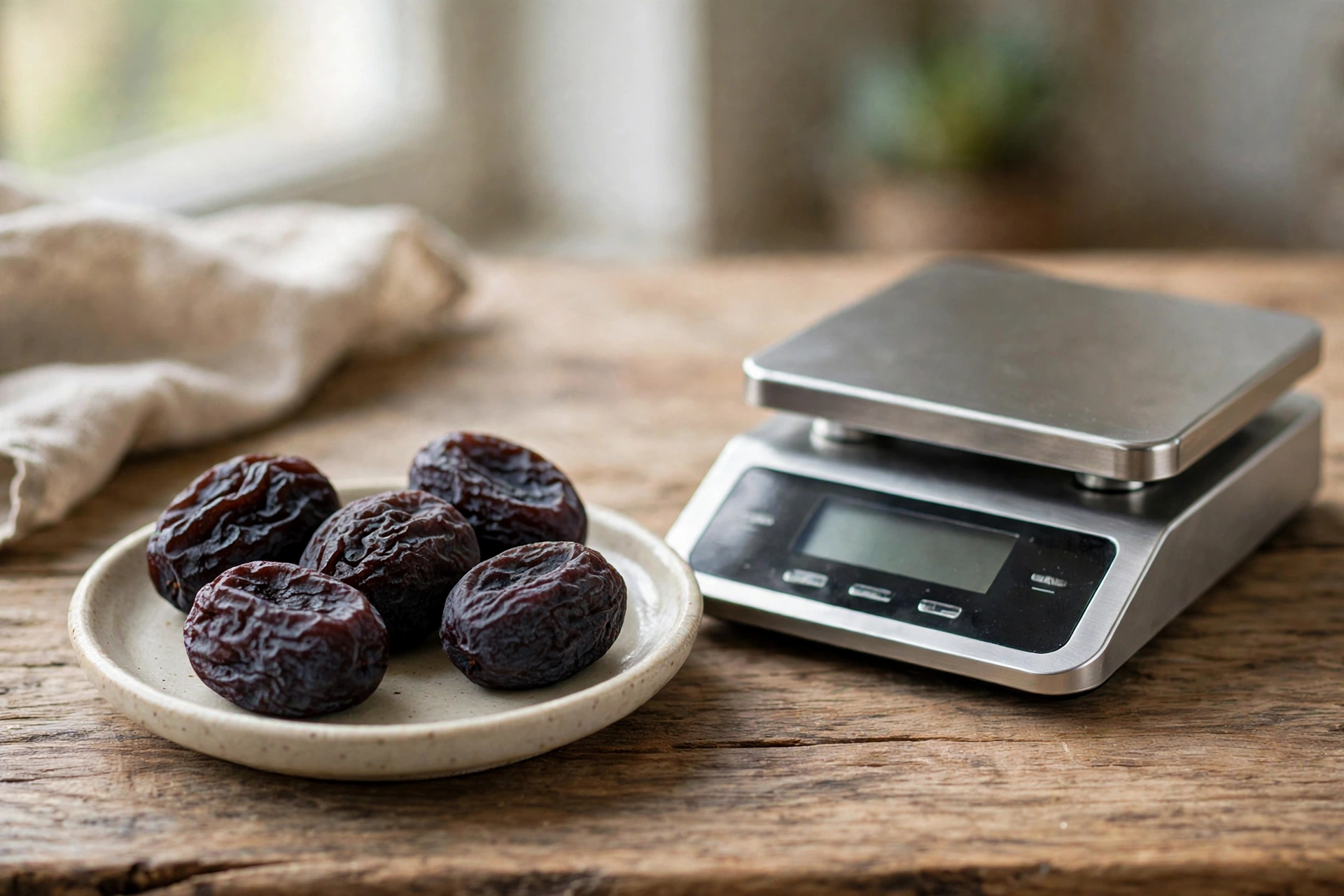
How much is 50 g? About 5–6 prunes, depending on size. You do not need a scale — count them. A small handful is about 5 prunes. If your prunes are large, 4–5 is enough for the starting dose.
How Fast Do Prunes Work?
Are prunes good for constipation fast? Not overnight — most people notice a difference in 1–3 days. Sorbitol starts drawing water into the bowel within hours, but the full effect — softer stool, more regular movements — takes 1–2 weeks of daily eating. The trials measured results after 3–4 weeks, so give prunes at least two weeks before deciding they do not work.
If nothing changes after two weeks of 10–12 prunes a day with plenty of water, prunes may not be the answer for you. Try kiwi — our is kiwi good for constipation guide covers the trial evidence for two kiwis a day — or talk to your doctor about other options. Constipation has many causes, and no single food fixes them all.
Prunes vs Prune Juice
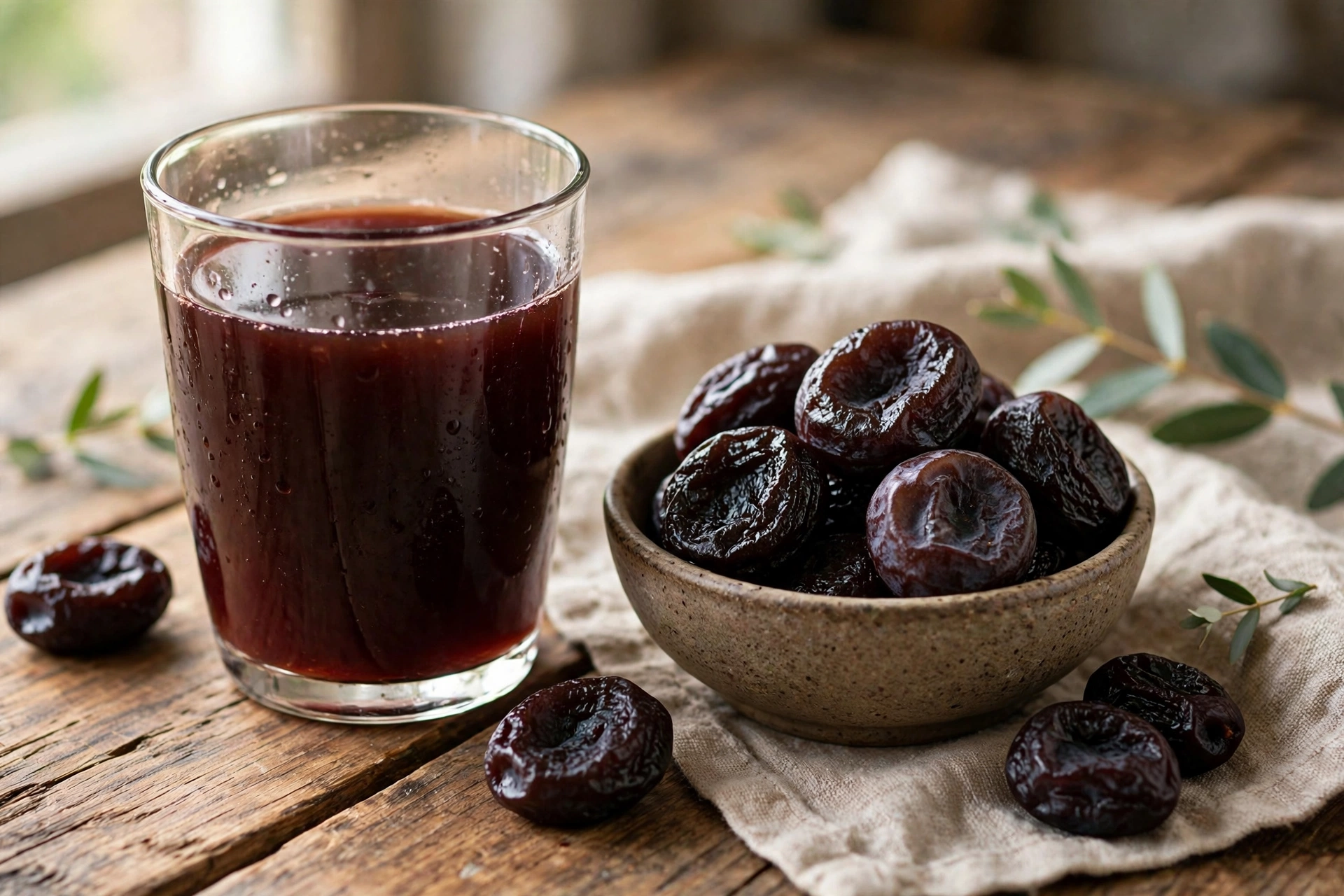
Whole prunes beat prune juice for constipation. Juice keeps the sorbitol but loses most of the fiber — and fiber is one of the three mechanisms. A glass of prune juice (240 ml) has about 2.5 g of fiber; 10 whole prunes have about 7 g. Juice is also easier to overdo: it is sweet, it goes down fast, and a large glass can cause cramps.
| Whole prunes (10, ~100 g) | Prune juice (1 glass, 240 ml) | |
|---|---|---|
| Fiber | 7 g | 2.5 g |
| Sorbitol | 14.7 g | ~10 g |
| Sugar | 38 g | 42 g |
| Calories | 240 | 180 |
| Chewing (slows eating) | Yes | No |
Prune juice still helps — it is a good choice if you struggle to chew or prefer a drink. But for the full effect, whole prunes win. The table makes the case: are prunes good for constipation in whole form? Yes — more fiber, more chewing, and the same sorbitol. If you use juice, start with half a glass (120 ml) a day and build up.
How to Eat Prunes
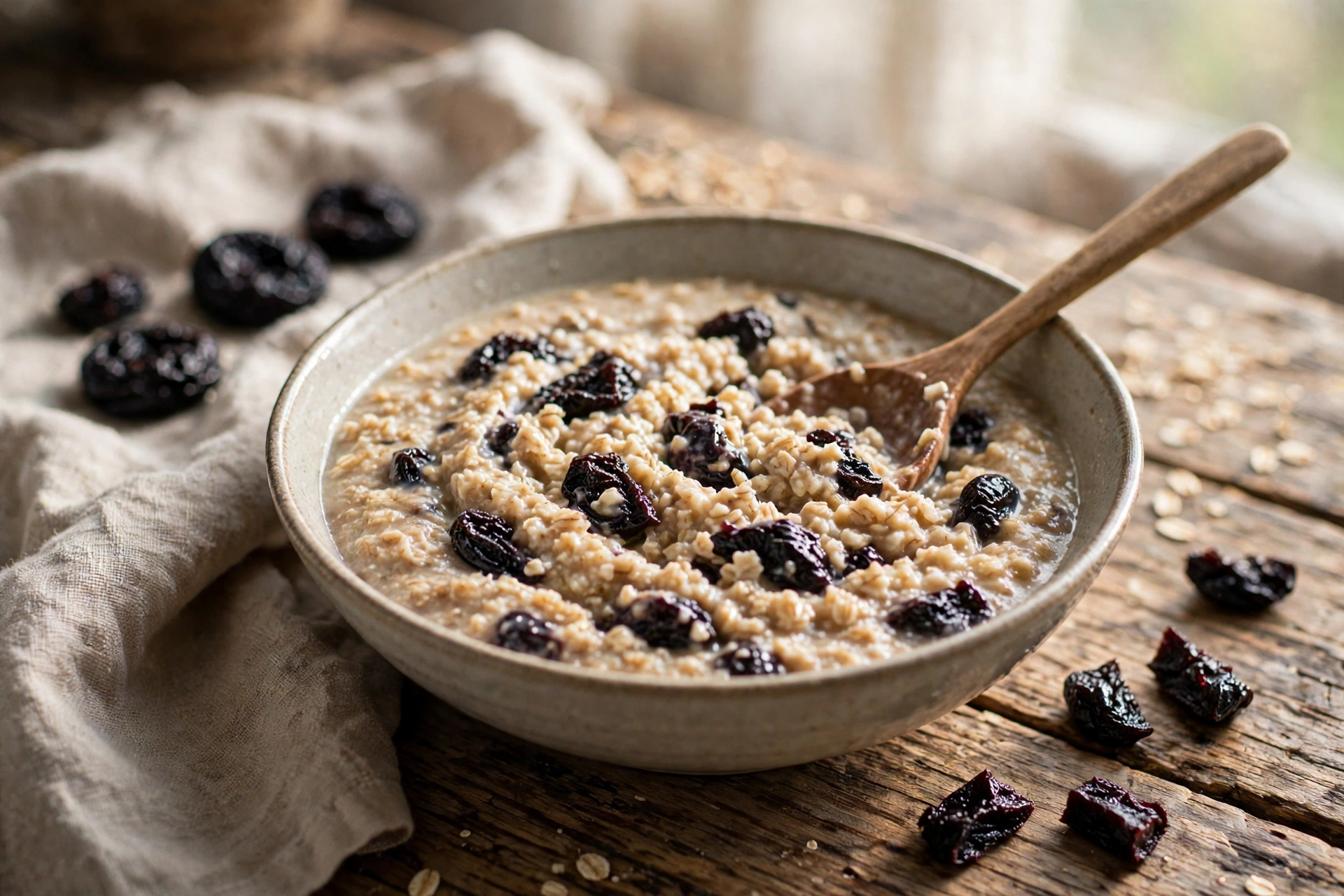
The simplest way is plain: eat 5–6 prunes as a snack, with a glass of water. But prunes are easy to build into meals. Chop them into oatmeal — they soften as the oats cook and sweeten the bowl without added sugar. Stir them into yogurt with walnuts for a snack that pairs fiber with protein. Or stew them: simmer prunes in water for 10 minutes until soft, then eat them warm with the liquid — the stewed liquid carries sorbitol too. Are prunes good for constipation however you eat them? Yes — plain, chopped, or stewed, the sorbitol and fiber work the same.
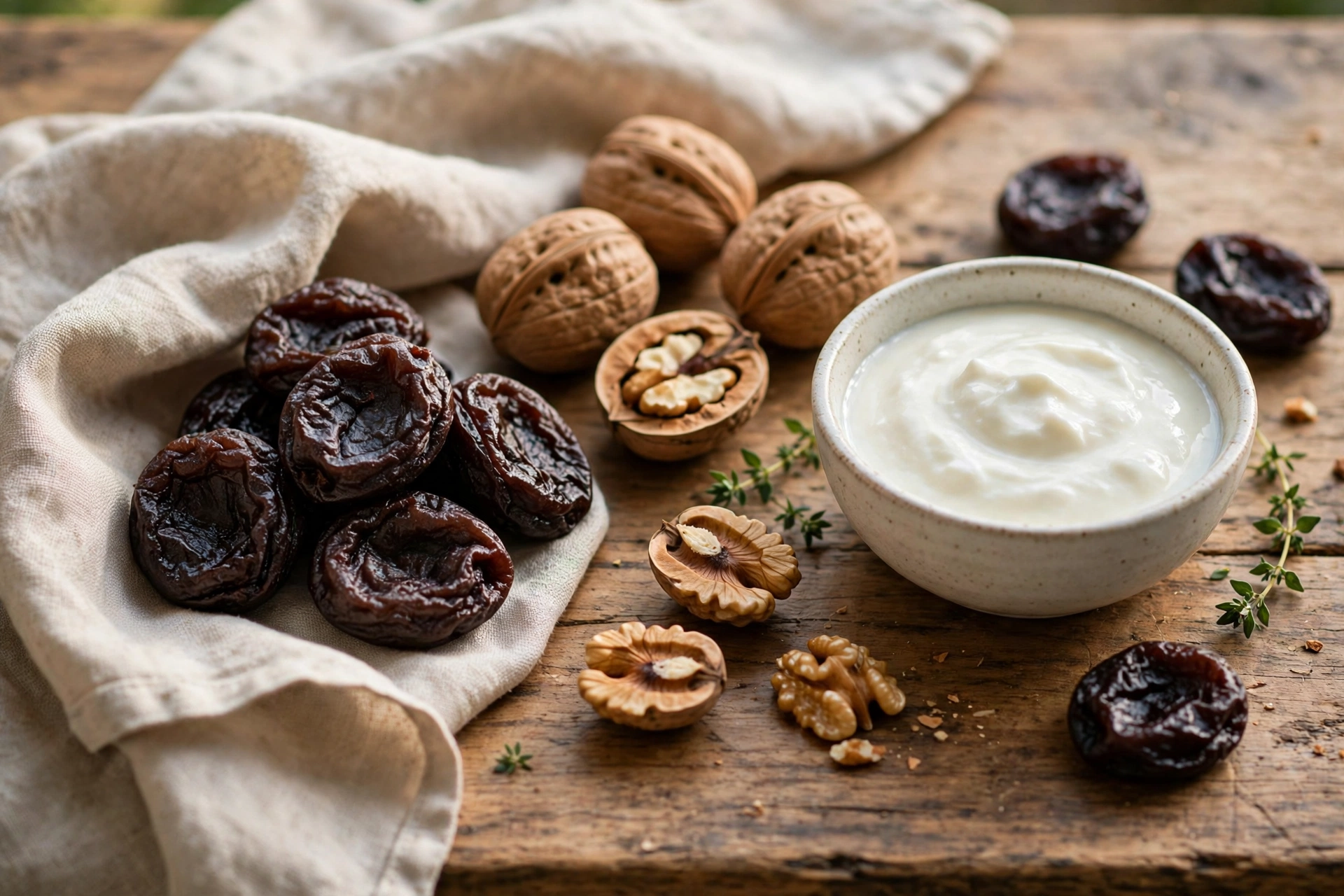
A simple prune snack: 5 prunes + a small handful of walnuts + a spoonful of yogurt. The prunes bring fiber and sorbitol, the walnuts bring healthy fat, and the yogurt brings protein. It keeps well in a lunchbox.
Are prunes good for constipation in oatmeal? Yes — the combination is one of the best breakfasts for constipation: oats (4 g fiber) + 5 prunes (3 g) + chia (5 g) = 12 g of fiber in one bowl. Our is chia seed good for constipation guide covers chia’s role in that bowl.
Who Should Be Careful With Prunes?
Are prunes good for constipation for everyone? Almost — but three groups should be careful. People with IBS may find that sorbitol triggers gas and bloating — sorbitol is a FODMAP, and people with IBS often react to it. Start with 2–3 prunes and see how you feel. People with diabetes should count prunes: 100 g has 38 g of natural sugar. The glycemic index is low (29), so the sugar rises slowly, but 10 prunes is still a significant amount — spread them through the day rather than eating them all at once.
Anyone who eats too many will feel it: more than 12–15 prunes a day commonly causes gas, cramps, and loose stools. More is not better. The NIDDK’s constipation treatment guide covers when diet changes are enough and when to seek medical help. Our foods that reduce bloating fast list helps if prunes leave you gassy.
Frequently Asked Questions
Are prunes good for constipation every day?
Yes — eating prunes every day is fine and helpful for most people. Five to ten prunes a day with a glass of water is a sustainable habit. The trials used daily prunes for 3–4 weeks with no problems. If you feel gassy, drop back to 5 a day and build up again slowly over a week.
How many prunes should I eat for constipation?
Start with 5–6 prunes a day (about 50 g) and build to 10–12 (about 100 g) over a week. The trial dose was 50 g twice a day, but 80 g a day worked as well as 120 g in the larger trial. More than 12–15 a day commonly causes gas and loose stools — more is not better.
Are prunes good for constipation if I have diabetes?
Yes, with care. Prunes have 38 g of natural sugar per 100 g, but a low glycemic index (29), so the sugar rises slowly. Eat 5 prunes at a time, spread through the day, and count them in your daily carbohydrate intake. Talk to your doctor or dietitian if you are unsure about the right portion for you.
Are prunes good for constipation, or should I take a laxative?
For mild constipation, prunes worked better than psyllium (a bulk-forming laxative) in the Attaluri trial — 3.5 complete bowel movements a week vs 2.8. But prunes are food, not medicine: they work slowly (1–2 weeks) and do not help every cause of constipation. For severe or sudden constipation, see your doctor rather than relying on prunes alone.
Is prune juice as good as whole prunes?
No — whole prunes are better. Juice keeps the sorbitol but loses most of the fiber (2.5 g per glass vs 7 g in 10 prunes). Juice still helps and is a good choice if you struggle to chew, but for the full effect, eat the whole fruit. Start with half a glass of juice a day if you prefer it.
Can children eat prunes for constipation?
Prunes are safe for most children over 1 year old, in small portions — 2–3 prunes or a few spoonfuls of prune puree. For babies and young children, talk to your paediatrician first about the right amount. Do not give prunes to babies under 6 months without medical advice.
Your Next Step
Are prunes good for constipation? The trials say yes — 50 g twice a day beat psyllium, and 80 g a day worked as well as 120 g. Start with 5–6 prunes a day, build to 10–12 over a week, and drink a glass of water with them. Give it two weeks before you judge. Small changes, done daily, are what move constipation in the right direction.
This article is for general information only and is not medical advice. Please talk to your doctor or a registered dietitian, especially if you have diabetes, heart disease or take medicine.