Are Dates Good for Diabetics? The Honest Answer
Yes, dates can fit a diabetes-friendly diet, but the portion is small and the size matters. Are dates good for diabetics? For most people, yes: one Medjool date has 18 grams of carbs and a glycemic index of 42 to 53. Keep the serving to one Medjool date or two to three small dates, and pair them with nuts.
By Sarah | Last updated: November 11, 2026

Key Takeaways
- Are dates good for diabetics? Yes — in a small, counted portion.
- The glycemic index is 42 to 53 (low); the load is 17 for two dates.
- One Medjool date has 18 g of carbs and 66 calories.
- Medjool dates are about twice as large as other varieties.
- Dates break the fast in Ramadan — count them into the iftar meal.
On This Page
- Short Answer
- Glycemic Index
- Nutrition
- How Many
- Research
- Other Dried Fruit
- Ramadan
- No-Spike Tips
- Who Should Be Careful
- FAQs
Are Dates Good for Diabetics? The Short Answer
Yes, dates are a good fruit for most people with diabetes — in a small portion. Their glycemic index is low, at 42 to 53, and they bring fiber, magnesium, and potassium. But dates are also high in natural sugar: one Medjool date has 16 grams of sugar. The portion is what decides.
So, are dates good for diabetics? For most people, yes — one Medjool date or two to three small dates, with nuts. I keep a small box of Medjool dates in the pantry. One date, stuffed with an almond, after lunch — that is my sweet treat.
Dates Glycemic Index and Glycemic Load
The glycemic index of dates is about 42 to 53, which puts them in the low range. Medical News Today reports an average GI of 42. A 2011 UAE study found 44 to 53 — but it had only 10 adults with type 2 diabetes, so read it as a signal, not proof.
Glycemic load tells the other half of the story. It counts the carbs in a real serving. Two dates (48 grams) have 36 grams of carbs and a load of 17, which is medium. One Medjool date has a load of about 8, which is low. The exact number depends on the variety and how ripe the date is. That range is why the question “are dates good for diabetics” has no single-number answer — the count decides the load.
Date Nutrition: What's in One Medjool Date?
One dried, pitted Medjool date (24 grams) has 66.5 calories, 18 grams of carbs, 16 grams of sugar, and 1.61 grams of fiber, based on USDA data. Two dates have 334 milligrams of potassium — about 10 to 13 percent of your daily value — plus magnesium and antioxidants. Dates are also rich in polyphenols, plant compounds that may help reduce inflammation.
The fiber is modest but useful: it slows how fast the sugar reaches your blood. MedlinePlus explains how fiber helps blood sugar — it slows how fast carbs turn into glucose. That is the short version of “are dates good for diabetics” — low GI, real nutrients, but the sugar is real too.
| Serving | Carbs | Calories |
|---|---|---|
| 1 Medjool date (24 g) | 18 g | 66.5 |
| 2 Medjool dates (48 g) | 36 g | 133 |
| 2–3 small dates | About 15–20 g | About 55–75 |
| 2 tbsp chopped dates | About 15 g | About 55 |
How Many Dates Can a Diabetic Eat?
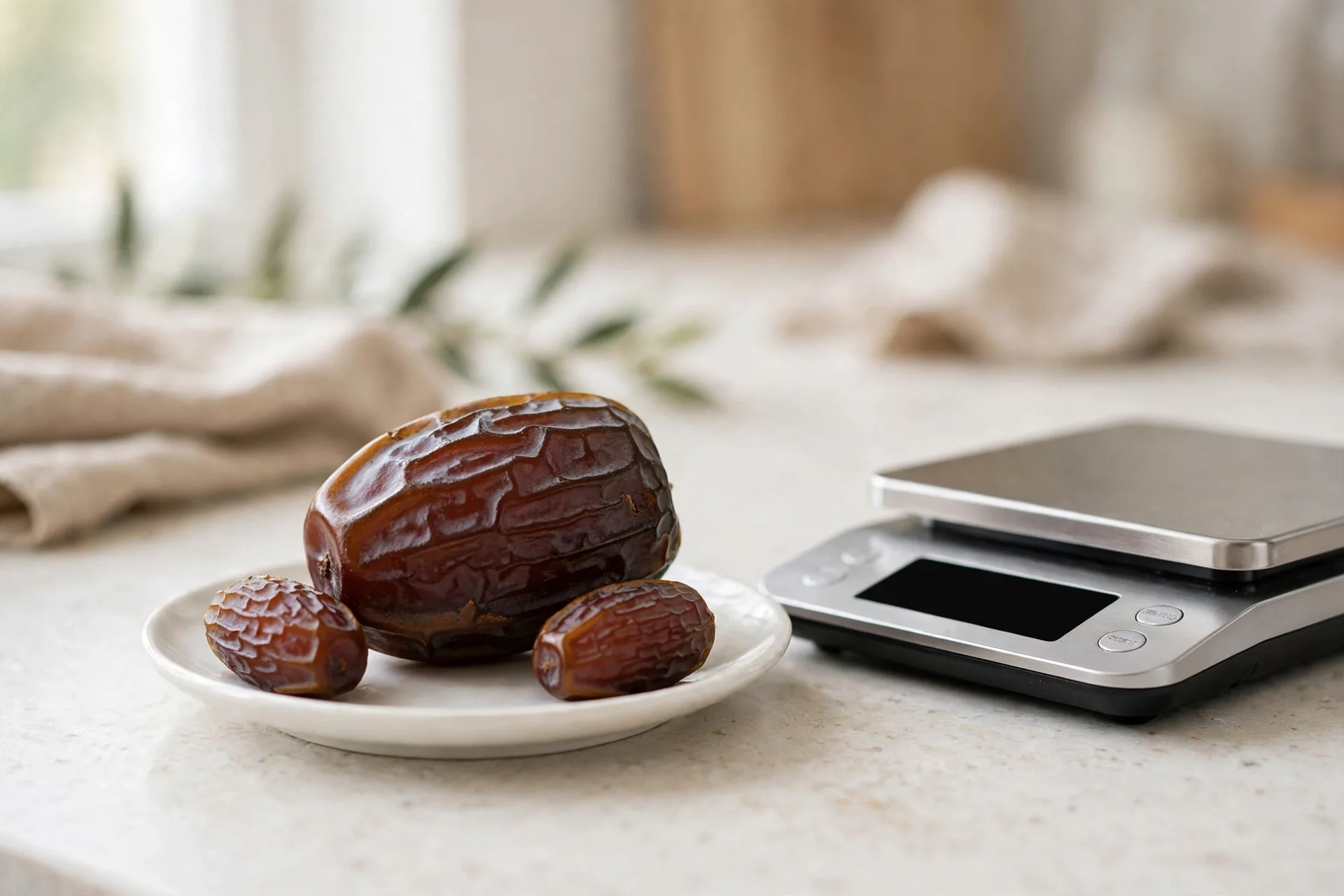
A common portion is one Medjool date or two to three small dates at a time. That is 15 to 18 grams of carbs, which fits most meal plans. Two Medjool dates is 36 grams of carbs, which is too much for one sitting for most people unless the rest of the meal is very light.
The trap is size: Medjool dates are about twice as large as other varieties. “Two to three dates” means very different carbs depending on the type. If your dates are Medjool, count one. If they are small Deglet Noor, count two or three. That is why “are dates good for diabetics” is really a question about which date, not just how many.
I used to eat four or five dates without counting. Now I take one Medjool, stuff it with a walnut, and stop. One good date beats five mindless ones.

What Does the Research Say?
The research on dates and diabetes is more encouraging than most people expect. A 2024 review of 24 studies found that dates lowered fasting glucose, total cholesterol, and triglycerides, and raised HDL (“good”) cholesterol. Trials in Bahrain ran for 12 and 16 weeks and found HbA1c stayed unchanged — dates did not make it worse.
Read the review with care. No trial in people with diabetes lasted over 16 weeks, so we do not know the long-term picture. And the studies used measured portions, not handfuls. What the research suggests is that dates, in a counted portion, are a reasonable choice — not a forbidden one. That is one more reason “are dates good for diabetics” has a better answer than the sugar content suggests.
Dates vs Raisins vs Other Dried Fruit
All dried fruit is concentrated sugar — the water is gone, so the carbs pack into a small bite. The ADA counts two tablespoons of any dried fruit as about 15 grams of carbs. Dates are no worse than raisins or apricots by that measure. What sets dates apart is their low GI (42 to 53) and their potassium.
Grapes are the fresh version of raisins, and the same logic applies: fresh fruit fills you up more than dried fruit for the same carbs. If you love dried fruit, measure two tablespoons and stop. For sweetener swaps, see our sugar substitutes guide. That is one reason “are dates good for diabetics” has a similar answer to the same question for raisins.
| Dried fruit (2 tbsp) | Carbs | Notes |
|---|---|---|
| Dates, chopped | About 15 g | Low GI (42–53); high potassium |
| Raisins | About 15 g | Same carbs; smaller bite, easy to overeat |
| Dried apricots | About 15 g | Good vitamin A; watch the portion |
| Prunes | About 15 g | High fiber; can cause gas in large amounts |

Dates and Ramadan
Dates break the fast for millions of people with diabetes, and they can stay in the iftar meal — counted, not free. One or two dates at iftar is the tradition, and it is also a sensible portion: 18 to 36 grams of carbs. Eat the dates, then pause for prayer before the main meal.
Count the dates into your iftar carbs, just like any other food. If you eat two Medjool dates, that is 36 grams — nearly a full meal’s worth for some plans. Pair them with water and a few nuts, and check your blood sugar after iftar. If you fast with diabetes, talk to your doctor first about whether fasting is safe for you and how to adjust medicine.
How to Eat Dates Without Spiking Blood Sugar
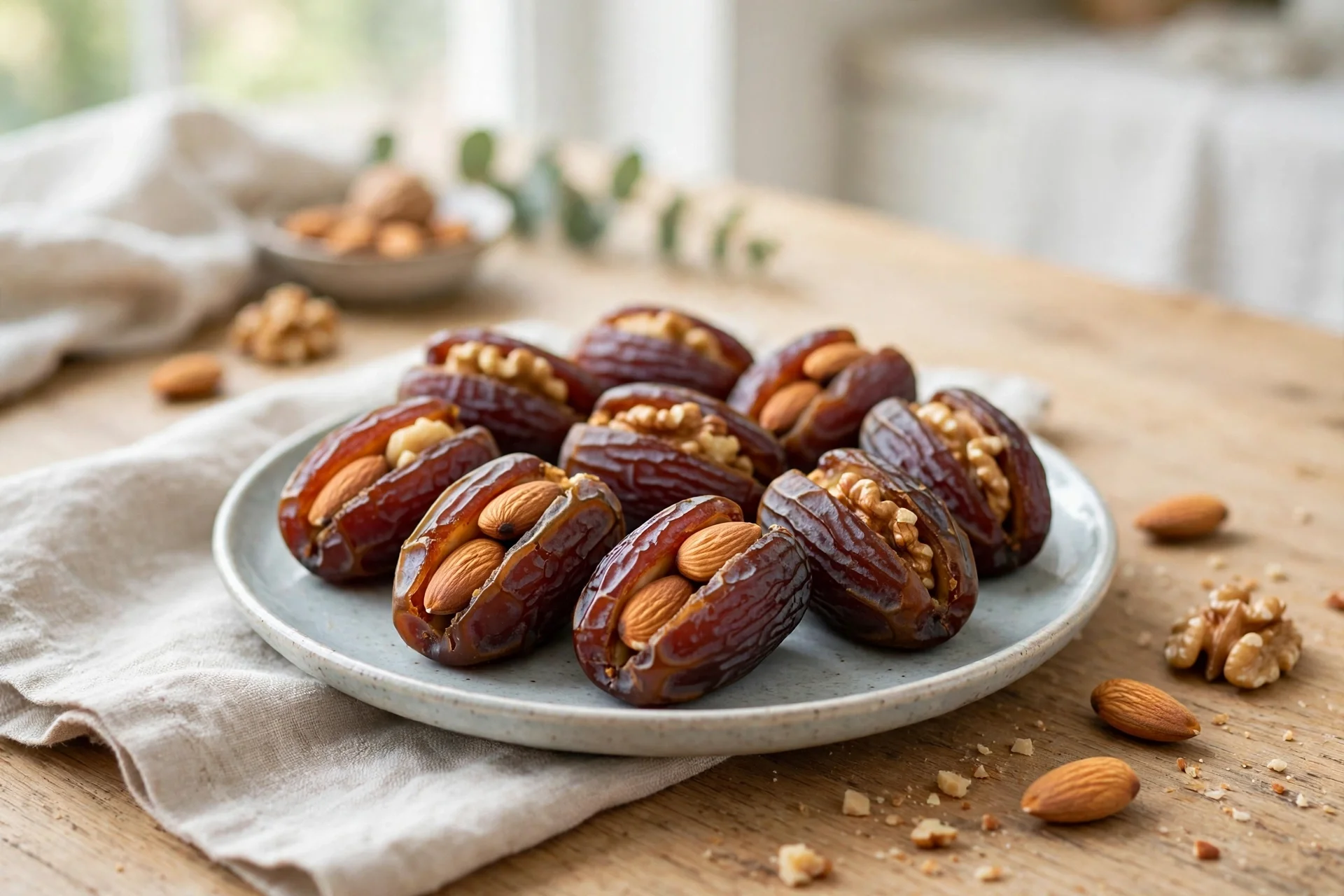
Pair dates with protein or fat, and the rise gets gentler. Almonds, walnuts, or Greek yogurt all slow digestion. One date stuffed with a walnut is a better snack than a date alone. Never eat dates on an empty stomach if your blood sugar runs high — except at iftar, where the tradition pairs them with water and prayer.
Three easy habits make dates work:
- Count one Medjool or two to three small dates. Put the box away first.
- Pair with protein or fat: almonds, walnuts, or yogurt.
- Eat dates after a meal, not as a standalone snack on an empty stomach.
Dates with nuts also work well as an evening snack — they are on our best snacks for diabetics at night list. For more high-fiber ideas, see our foods high in soluble fiber guide. The pairing is the real answer to “are dates good for diabetics” — a date alone is sweet, but a date with a walnut is better.
Who Should Be Careful?
Dates are safe for most people, but a few groups should take care. If you have kidney disease and limit potassium, ask your doctor — two dates have 334 milligrams of potassium. If you take insulin, count the carbs and check your blood sugar after eating. Date syrup is concentrated sugar: treat it like honey, not a whole date.
Dates are a fruit, not a medicine. They will not lower your blood sugar on their own, and the 2024 review does not change that. If your readings run high after dates, try a smaller portion or swap in a fresh fruit. That is your own answer to “are dates good for diabetics.”
Frequently Asked Questions
Are dates good for diabetics with type 2 diabetes?
Yes. For type 2 diabetes, dates are a good pick in a small portion. Their glycemic index is low (42 to 53), and one Medjool date has 18 grams of carbs. Keep the serving to one Medjool date or two to three small dates, pair them with nuts, and check your blood sugar after eating.
Can diabetics eat dates every day?
Yes, if the portion fits your meal plan. One Medjool date a day is easy to fit for most people. Two Medjool dates every day adds 36 grams of carbs, which may crowd out other foods. Vary your fruit — try grapes, apples, or pears on some days instead of dates.
How many dates can a diabetic eat in one day?
A common portion is one Medjool date or two to three small dates at a time, which is 15 to 18 grams of carbs. Two Medjool dates is 36 grams of carbs, which is too much for one sitting for most meal plans. Count the dates first, then eat, and check your blood sugar after eating.
Are dates good for diabetics, or do they spike blood sugar?
Dates raise blood sugar, but more slowly than their sugar content suggests. Their glycemic index is low (42 to 53), and one Medjool date has 18 grams of carbs. The size of the rise depends on the portion and what you eat with them. A date with a walnut raises blood sugar far less than four dates alone.
Are Medjool dates OK for diabetics?
Yes, in a counted portion. Medjool dates are about twice as large as other varieties, so one Medjool date has 18 grams of carbs — the same as two to three small dates. Count one Medjool date as a serving, pair it with a nut, and check your blood sugar after eating.
Is date syrup bad for diabetics?
Date syrup is concentrated sugar with the fiber removed, so it raises blood sugar faster than a whole date. Treat it like honey: a measured teaspoon, counted into your carb plan, not a free sweetener. Whole dates are always the better choice. If you use syrup, measure it — never pour from the bottle.
Your Next Step
So, are dates good for diabetics? For most people, yes — in a small, counted portion. Pick whole dates over date syrup, count one Medjool or two to three small dates, and pair them with almonds or walnuts. Then test your own response and adjust.
Try one measured serving this week: one Medjool date, stuffed with a walnut — and check your numbers. Dates are a pleasure, not a problem, when the portion is counted.
This article is for general information only and is not medical advice. Please talk to your doctor or a registered dietitian, especially if you have diabetes, heart disease or take medicine.