Cottage Cheese Pasta Bake Recipe (Low Sodium)
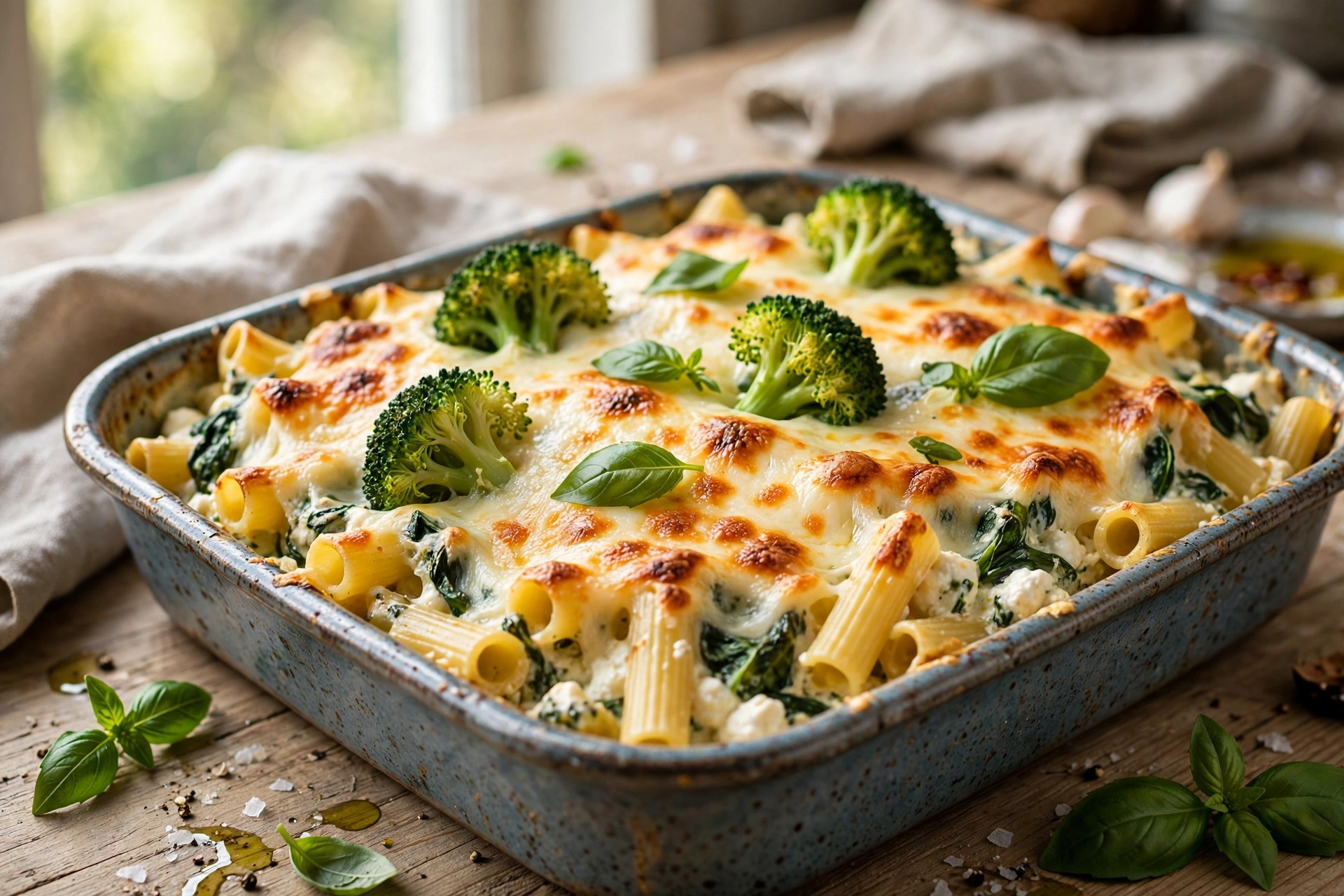
This cottage cheese pasta bake recipe is a vegetarian bake with blended cottage cheese, whole-wheat penne, spinach, broccoli and melted mozzarella. Each serving has about 26 g of protein and only 269 mg of sodium, and it takes 50 minutes.
Key Takeaways
- Low sodium for a pasta bake: about 269 mg per serving — less than half of most rivals.
- High protein, no meat: about 26 g per serving from cottage cheese, mozzarella and whole-wheat penne.
- Blended, not chunky: the cottage cheese blends smooth with an egg.
- Freezer friendly: 3 months frozen, 3–4 days in the fridge.
Table of Contents
- How Much Sodium Is in a Cottage Cheese Pasta Bake?
- What Makes This Pasta Bake High in Protein?
- Do You Have to Blend the Cottage Cheese?
- What Ingredients Do You Need for a Cottage Cheese Pasta Bake?
- How to Make a Cottage Cheese Pasta Bake
- How to Store and Reheat Cottage Cheese Pasta Bake
- Common Mistakes to Avoid
- Frequently Asked Questions
- Conclusion
How Much Sodium Is in a Cottage Cheese Pasta Bake?
This cottage cheese pasta bake recipe has about 269 mg of sodium per serving — about 12% of the FDA’s daily value of 2,300 mg, well below the 20% threshold the FDA calls “high”, and far below rival bakes at 584–1,254 mg per serving.
The low-sodium cottage cheese is the lever nobody in the SERP mentions: regular cottage cheese has about 350 mg of sodium per half cup, low-sodium about 60 mg — swapping it saves nearly 200 mg per serving. The FDA on sodium in your diet notes over 70% of dietary sodium comes from packaged foods.
| Source | Sodium per serving |
|---|---|
| Walder Wellness (RD, vegetarian) | 1,254 mg |
| Healthful Blondie (ground beef) | 584 mg |
| Maria Lucey (ground turkey) | not stated |
| Recipe Top / Middle East Sector | not stated |
| This recipe | ~269 mg |
| Ingredient | Sodium per batch |
|---|---|
| 1 cup part-skim mozzarella | ~680 mg |
| 1/4 cup Parmesan | ~375 mg |
| 2 cups low-sodium cottage cheese | ~240 mg |
| 1 can no-salt-added crushed tomatoes | ~100 mg |
| 1 egg | ~70 mg |
| Spinach, broccoli, garlic, penne | ~146 mg |
| Total | ~1,612 mg ÷ 6 servings = ~269 mg per serving |
What Makes This Pasta Bake High in Protein?
This cottage cheese pasta bake recipe gets about 26 g of protein per serving from five sources: cottage cheese, mozzarella, Parmesan, whole-wheat penne and one egg. No meat is needed — the dairy and pasta carry the protein, and the egg binds the sauce.
Whole-wheat penne is a surprise protein source in this cottage cheese pasta bake recipe — about 13.4 g of protein per 100 g dry, so 12 oz delivers about 46 g to the batch, nearly as much as the cottage cheese. White penne has almost the same protein, but you lose about 3 g of fiber. If you like cooking with cottage cheese, try our high protein cottage cheese pancakes.
| Ingredient | Protein per batch |
|---|---|
| 12 oz whole-wheat penne | ~46 g |
| 2 cups low-sodium cottage cheese | ~44 g |
| 1 cup part-skim mozzarella | ~28 g |
| 1 can no-salt-added crushed tomatoes | ~13 g |
| 1/4 cup Parmesan | ~10 g |
| 1 egg | ~6 g |
| Spinach + broccoli | ~8 g |
| Total | ~155 g ÷ 6 servings = ~26 g per serving |
Do You Have to Blend the Cottage Cheese?
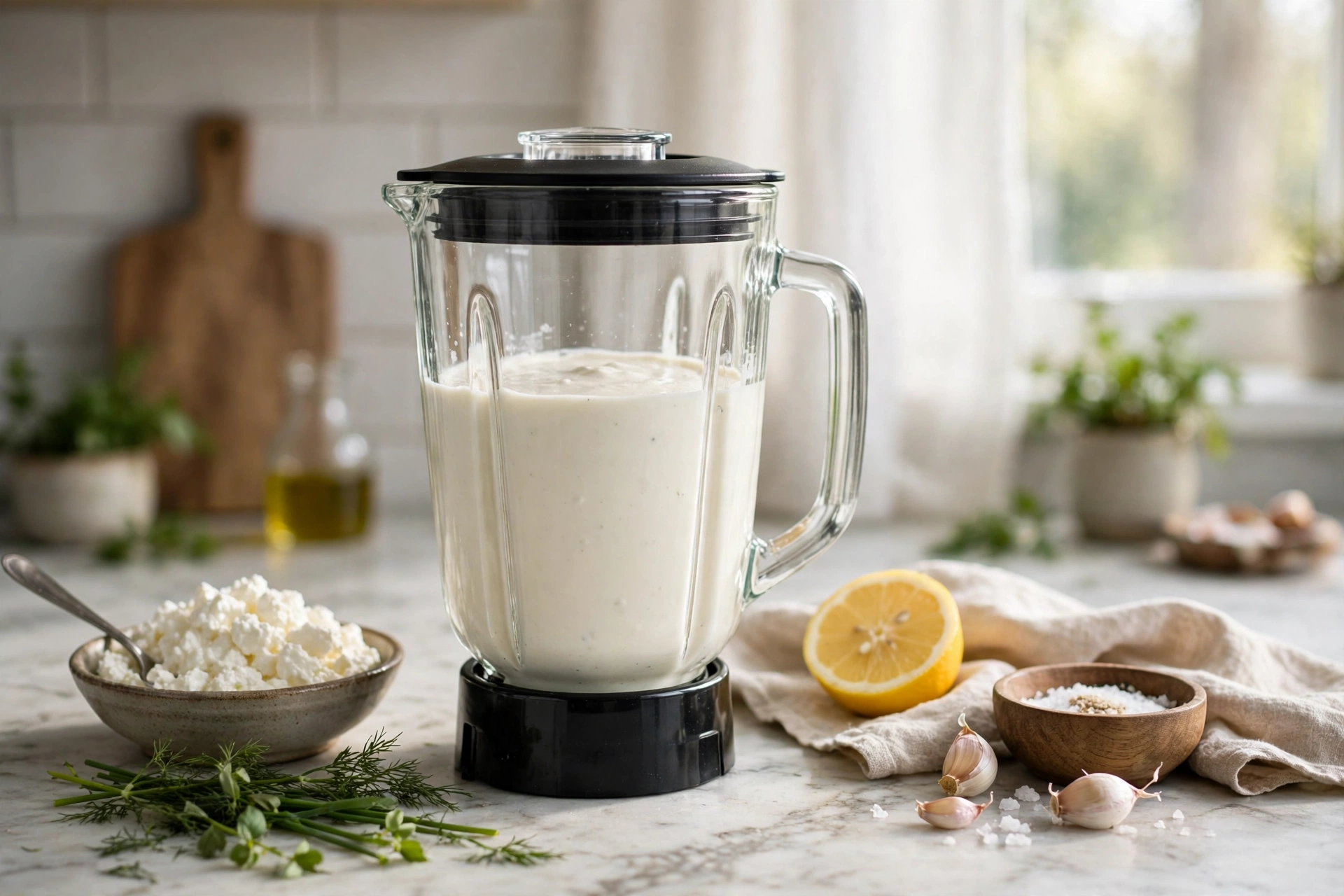
Yes, blend the cottage cheese for this cottage cheese pasta bake recipe. Blending turns the curds into a smooth, creamy sauce that coats the pasta. Unblended cottage cheese stays lumpy and grainy — the curds do not melt in the oven.
I blend the cottage cheese with the egg until completely smooth — the first time I skipped it, the sauce was grainy and my family noticed.
Blend the cottage cheese with the egg and garlic for 30–60 seconds, until no curds remain. Drain off excess whey first — too much liquid makes a watery sauce. The egg needs to reach 160°F (71°C), and the bake easily passes that. For another egg-based high-protein meal, try our high protein egg bites.
What Ingredients Do You Need for a Cottage Cheese Pasta Bake?
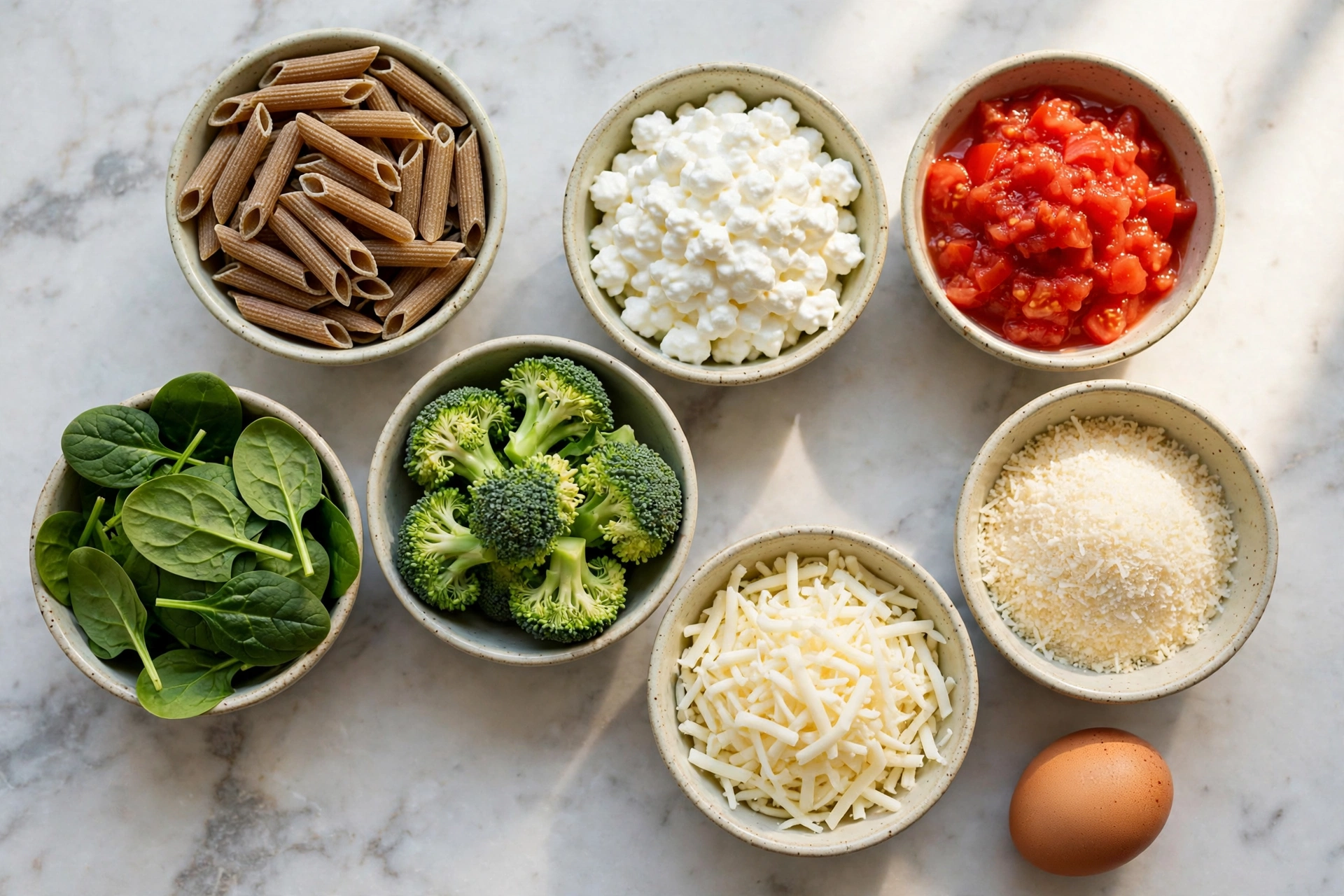
You need whole-wheat penne, low-sodium cottage cheese, no-salt-added crushed tomatoes, spinach, broccoli, part-skim mozzarella, Parmesan, one egg, garlic and Italian seasoning for this cottage cheese pasta bake recipe. No added salt — the cheeses bring all the savory flavor it needs.
- Whole-wheat penne (12 oz / 340 g): its tubes hold the sauce. Cook it 2 minutes less than the package says — it finishes in the oven.
- Low-sodium cottage cheese (2 cups / 452 g): about 60 mg of sodium per half cup, versus about 350 mg for regular cottage cheese.
- No-salt-added crushed tomatoes (1 can, 28 oz / 794 g): regular crushed tomatoes add about 60 mg of sodium per serving.
- Spinach (3 cups / 90 g): fresh, not frozen — frozen spinach releases too much water.
- Broccoli (2 cups / 180 g): florets, blanched 2 minutes — they add crunch and fiber.
- Part-skim mozzarella (1 cup / 113 g): shredded, divided — half mixed in, half on top. Part-skim keeps saturated fat at about 3 g per serving — see foods to avoid with high cholesterol for what to limit.
- Parmesan (1/4 cup / 25 g): grated, for the top — a little goes a long way; it is the saltiest ingredient here.
- Egg (1 large): binds the blended sauce and adds about 6 g of protein to the batch.
- Garlic (3 cloves) and Italian seasoning (1 tsp): add the garlic to the blender with the cottage cheese.
How to Make a Cottage Cheese Pasta Bake
Making this cottage cheese pasta bake recipe takes 50 minutes from start to finish: boil the pasta, blend the sauce, combine everything, assemble in a baking dish, and bake for 25–30 minutes. Rest it for 10 minutes before serving so the sauce sets.
- Heat the oven. Heat to 375°F (190°C) and grease a 9×13-inch baking dish with 1 tsp of olive oil.
- Cook the pasta. Cook the penne 2 minutes less than the package directions, then drain.
- Blanch the broccoli. Boil the florets 2 minutes, then drain — they should still be bright green.
- Blend the sauce. Blend the cottage cheese, egg and garlic until smooth, 30–60 seconds.
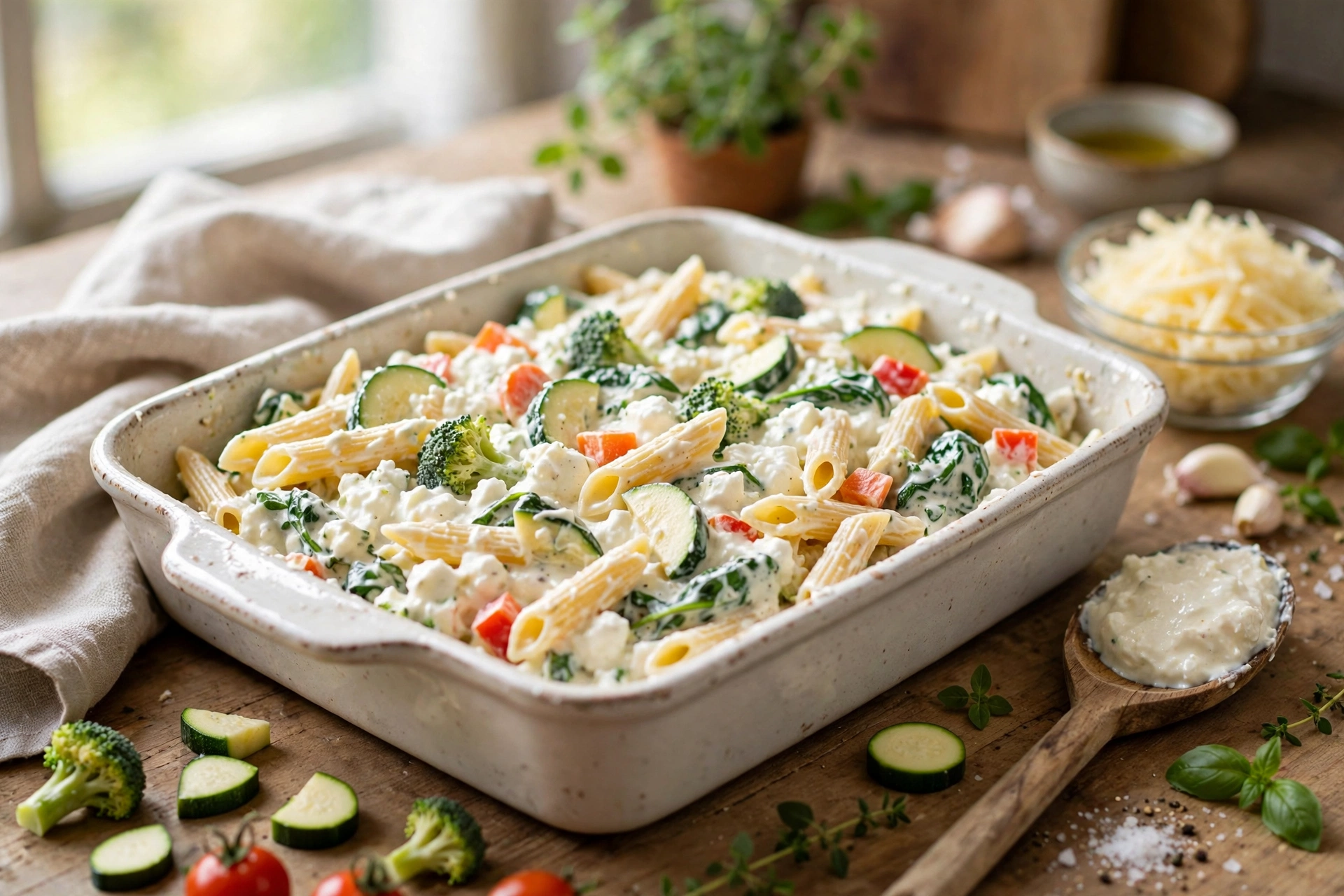
- Combine everything. In a large bowl, mix the pasta, blended sauce, crushed tomatoes, spinach, broccoli, half the mozzarella, Italian seasoning and black pepper.
- Assemble and bake. Spread the mixture in the dish, top with the remaining mozzarella and Parmesan, and bake 25–30 minutes, until bubbly and golden.
- Rest and serve. Rest 10 minutes — the sauce thickens and the slices hold together.
How to Store and Reheat Cottage Cheese Pasta Bake
Store this cottage cheese pasta bake recipe in the fridge for 3–4 days, in a sealed container. Reheat single portions in the microwave for 2–3 minutes, or the whole dish in a 350°F oven for 20 minutes, until it reaches 165°F inside.
This cottage cheese pasta bake recipe freezes well for up to 3 months — freeze in single portions and thaw overnight in the fridge. The texture softens slightly, but the flavor holds. Do not refreeze thawed portions. For a lighter meal, pair a portion with low sodium vegetable soup.
Common Mistakes to Avoid
The most common mistake with a cottage cheese pasta bake recipe is overcooking the pasta. Fully cooked penne turns mushy in the oven — cook it 2 minutes less than the package says, and it finishes perfectly while the cheese melts.
- Skipping the blend: unblended cottage cheese stays lumpy — blend it smooth with the egg and garlic.
- Using regular cottage cheese: it adds about 193 mg of sodium per serving — the bake jumps to about 462 mg. I use low-sodium cottage cheese every time now.
- Skipping the rest: cutting in straight from the oven gives you soup. Ten minutes lets the sauce set.
Ingredients
Method
- Heat the oven to 375°F (190°C). Grease a 9×13-inch baking dish with the olive oil.
- Cook the penne 2 minutes less than the package directions. Drain and set aside.
- Blanch the broccoli florets 2 minutes, then drain.
- Blend the cottage cheese, egg and garlic until smooth, 30–60 seconds.
- In a large bowl, mix the pasta, blended sauce, crushed tomatoes, spinach, broccoli, half the mozzarella, Italian seasoning and black pepper.
- Spread the mixture in the dish and top with the remaining mozzarella and Parmesan.
- Bake 25–30 minutes, until bubbly and golden. Rest 10 minutes.
Notes
Frequently Asked Questions
Is cottage cheese pasta bake healthy?
Yes. This cottage cheese pasta bake recipe has about 26 g of protein, 8 g of fiber and only 269 mg of sodium per serving. It is vegetarian, with about 3 g of saturated fat per serving. Whole-wheat penne adds fiber; spinach and broccoli add vitamins.
Do you have to blend the cottage cheese?
Yes, for the best texture. Blending turns the curds into a smooth, creamy sauce that coats the pasta. Unblended cottage cheese stays lumpy — the curds do not melt in the oven. Blend it with the egg and garlic for 30–60 seconds, and drain off excess whey first.
How much sodium is in cottage cheese pasta bake?
It depends on the recipe. One rival bake has 1,254 mg of sodium per serving, another 584 mg. This cottage cheese pasta bake recipe has about 269 mg per serving — low-sodium cottage cheese, no-salt-added tomatoes and no added salt keep it low. Regular cottage cheese pushes it to about 462 mg.
Can you freeze cottage cheese pasta bake?
Yes. Freeze this cottage cheese pasta bake recipe in single portions for up to 3 months, in sealed containers or freezer bags. Thaw overnight in the fridge, then reheat in the microwave for 2–3 minutes or in a 350°F oven for 20 minutes, to 165°F. The texture softens, but the flavor holds.
What pasta works best for a cottage cheese pasta bake?
Penne works best for this cottage cheese pasta bake recipe — its tubes hold the blended sauce. Whole-wheat penne adds fiber and protein, but white penne works too. Cook it 2 minutes less than the package directions — it finishes in the oven. Fully cooked pasta turns mushy.
Can I make it without the egg?
Yes. Skip the egg and blend the cottage cheese with the garlic alone — the melted mozzarella holds the bake together. Protein drops to about 25 g, calories to about 382 kcal, sodium to about 257 mg per serving. The egg adds binding, but the bake works without it.
Conclusion
This cottage cheese pasta bake recipe proves a vegetarian pasta bake can be high in protein and low in sodium. Blended cottage cheese, whole-wheat penne, spinach and broccoli — 26 g of protein, 269 mg of sodium. For a meaty alternative, try our high protein pasta bake — chicken and white beans, same low-sodium approach.
This article is for general information only and is not medical advice. Please talk to your doctor or a registered dietitian, especially if you have diabetes, heart disease or take medicine.