Gluten Free Energy Balls Recipe (No Bake, Dates)
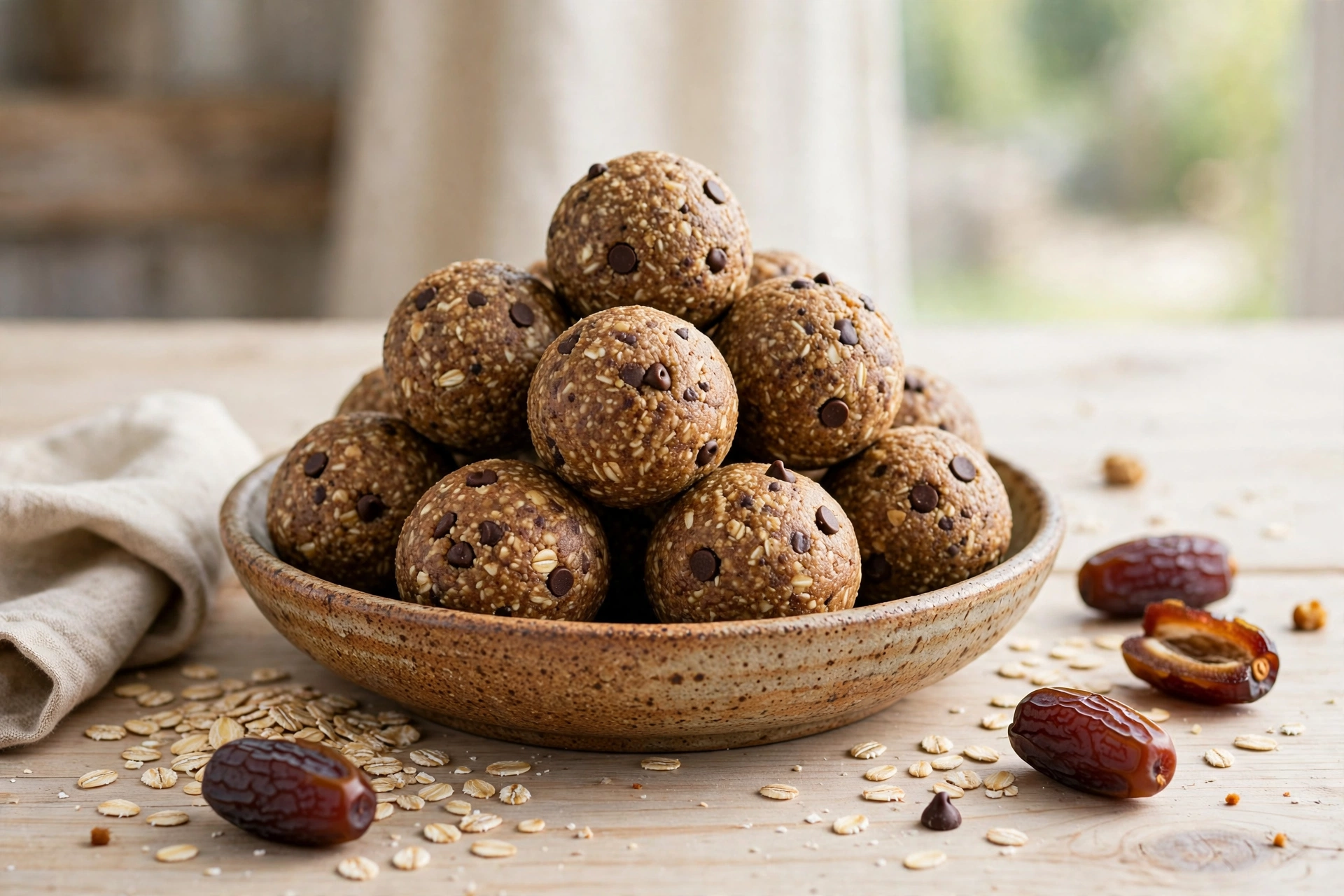
This gluten free energy balls recipe makes 20 no-bake bites with certified gluten-free oats, Medjool dates, peanut butter, flaxseed and chia seeds. No protein powder, no oven — just blend, roll, chill and eat. Fifteen minutes of hands-on time for a week of snacks.
Key Takeaways
- 109 calories per ball with 3 g of protein and 3 g of fiber.
- No protein powder — this gluten free energy balls recipe gets its energy from dates and oats.
- 15 minutes, no bake — blend, roll, chill, and the snacks are done.
Table of Contents
- Energy vs protein balls
- Ingredients
- How to make them
- Keep them together
- Compare
- Storage
- Mistakes
- FAQ
Energy Balls vs Protein Balls: What Is the Difference?
Energy balls and protein balls look the same, but the protein is the dividing line. Energy balls get their fuel from dates, oats and nut butter — about 3 g of protein per ball. Protein balls add protein powder or extra high-protein ingredients, pushing them to 6 g or more per ball.
Energy balls are the better choice for a quick snack before a walk or a workout — the dates give fast energy, and the oats give slow energy that lasts. Protein balls are better after a workout, when your muscles need protein to recover.
If you want the higher-protein version, try our gluten free protein balls — they use the same base plus vanilla protein powder, with 6 g of protein per ball.
What Ingredients Do You Need for Gluten Free Energy Balls?

You need certified gluten-free rolled oats, Medjool dates, peanut butter, ground flaxseed, chia seeds, mini chocolate chips, vanilla and salt. That is the whole list for this gluten free energy balls recipe — eight ingredients, no protein powder, no baking.
Each ingredient has a job in this gluten free energy balls recipe:
- Certified GF rolled oats (1 1/2 cups): the base. Rolled oats give slow energy and a chewy texture.
- Medjool dates (1 cup), pitted: the sweetness and glue. Dates sweeten the balls and hold them together.
- Natural peanut butter (1/2 cup): the binder and protein. It adds richness and helps the balls hold their shape.
- Ground flaxseed (1/4 cup): the fiber and healthy fats. Flaxseed adds omega-3s and helps bind the mix.
- Chia seeds (2 tbsp): the fiber. Chia seeds soak up moisture and help the balls set firm.
- Mini chocolate chips (1/4 cup): the sweetness. Small chips spread evenly through the balls.
- Vanilla (1 tsp) and salt (1/4 tsp): the balance. Salt sharpens the sweetness; vanilla adds depth.
For more on nuts, seeds and heart health, read Harvard on nuts for the heart.
How Do You Make This Gluten Free Energy Balls Recipe?
To make this gluten free energy balls recipe, blend the dates and peanut butter in a food processor until smooth, then add the oats, flaxseed, chia seeds, vanilla and salt and pulse until combined. Stir in the chocolate chips, roll into 20 balls, and chill for 30 minutes.
- Soak the dates (if dry). If your dates feel hard, soak them in warm water for 10 minutes, then drain. Soft dates blend much better.
- Blend dates and peanut butter. In a food processor, blend 1 cup of pitted dates with 1/2 cup of peanut butter until smooth, about 1 minute.
- Add dry ingredients. Add the oats, flaxseed, chia seeds, vanilla and salt. Pulse until combined — the mix should hold together when squeezed.
- Fold in chips. Stir in the mini chocolate chips by hand.
- Roll. Roll the mix into 20 balls, about 1 tablespoon each. Wet your hands lightly so the mix does not stick.
- Chill. Refrigerate for at least 30 minutes, or until firm.

I make this gluten free energy balls recipe every Sunday — a box in the fridge means I always have a healthy snack ready.
How Do You Keep Energy Balls From Falling Apart?
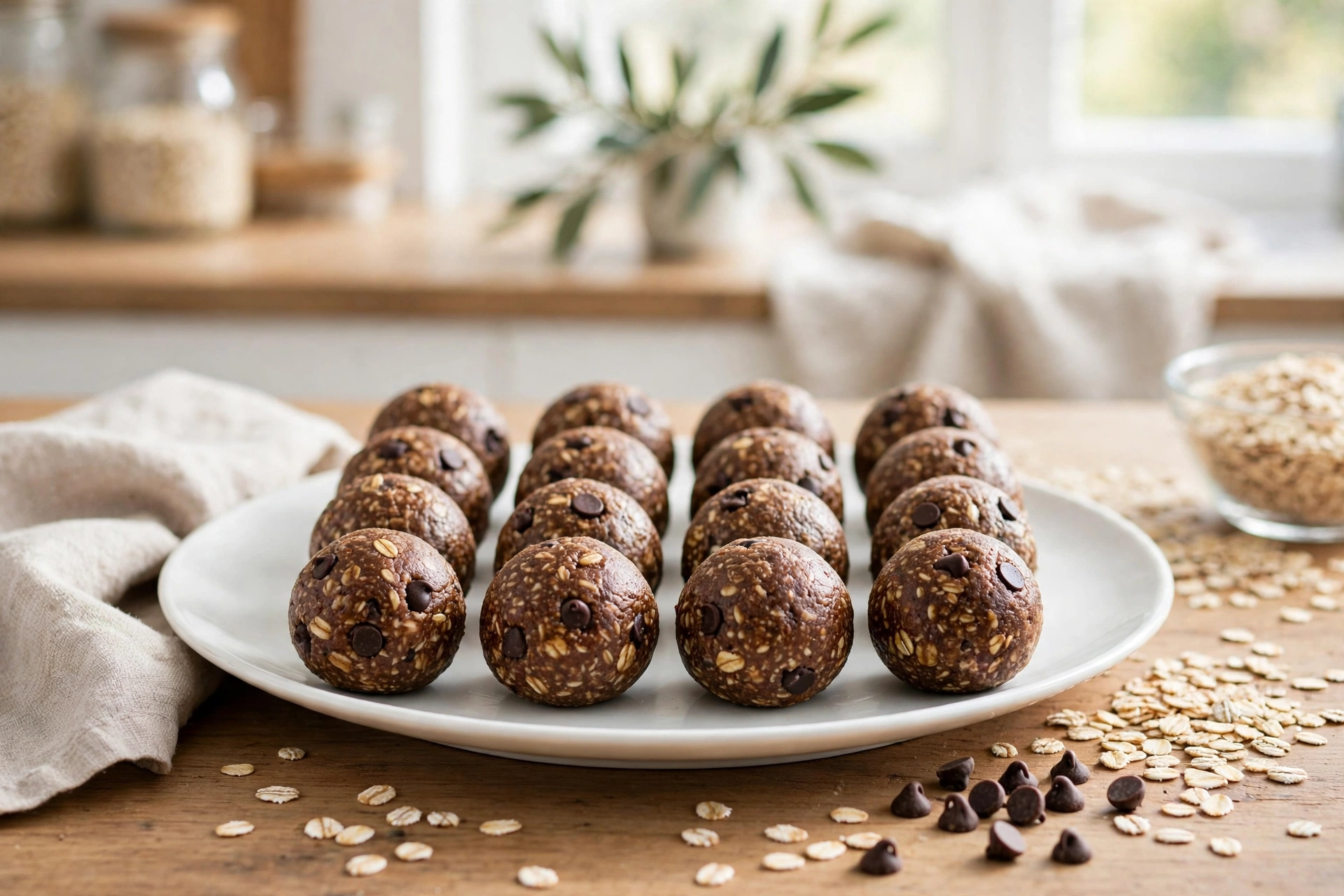
Use soft dates, blend long enough, and chill before eating. Dry dates do not bind well — soak them first if they feel hard. Blend the dates and peanut butter until smooth, not just chopped, so the paste holds the oats together. And chill the rolled balls for at least 30 minutes so the peanut butter firms up.
If the mix feels too dry, add 1 tablespoon of water or maple syrup and pulse again. If it feels too wet, add 2 tablespoons of oats. The mix should hold together when you squeeze a handful — if it crumbles, it needs more blending or a little more liquid.
Wet your hands before rolling. The mix is sticky, and damp hands keep it from sticking to your palms instead of forming smooth balls.
How Do These Balls Compare?
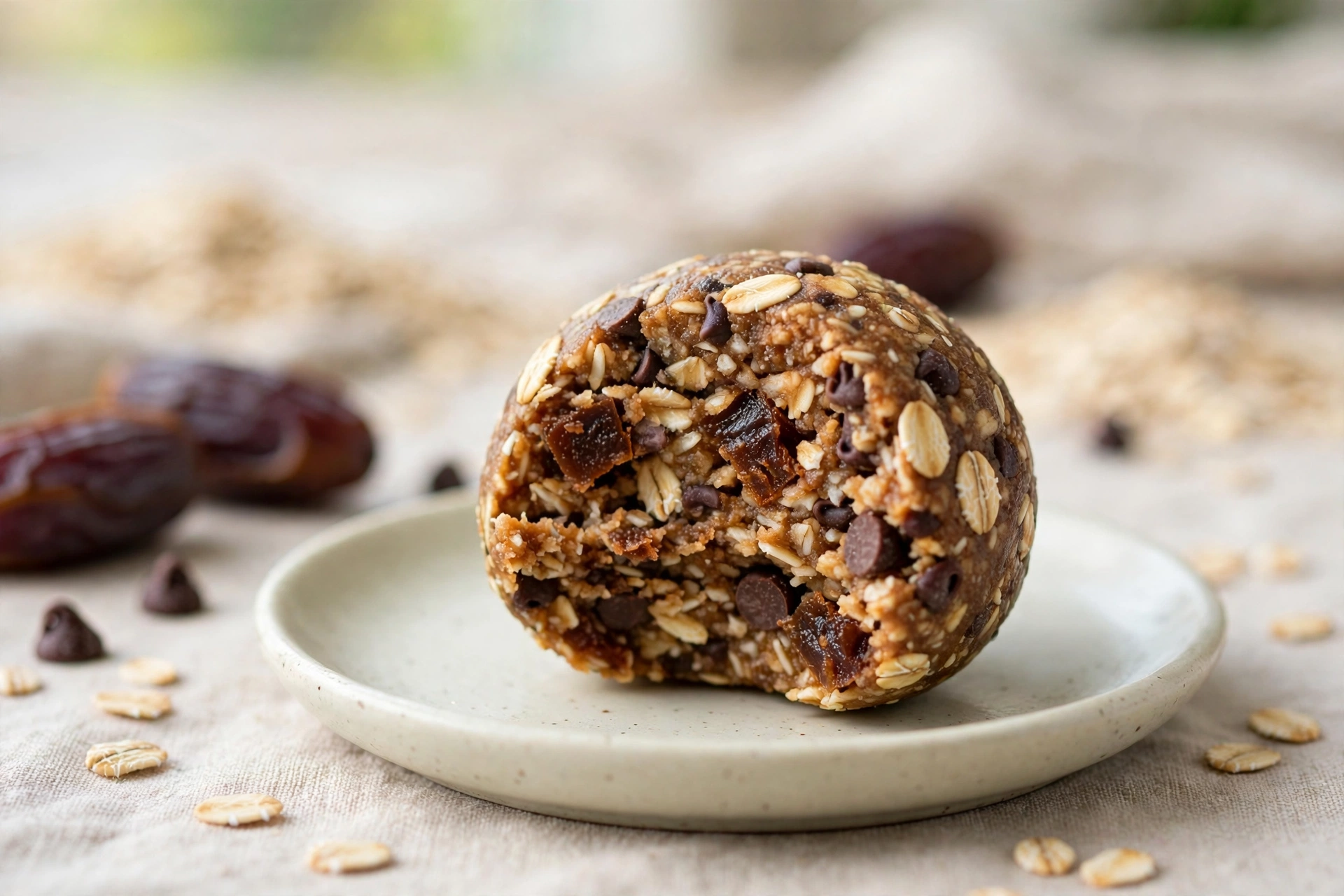
Each ball in this gluten free energy balls recipe has about 109 calories, 14 g of carbs and 7 g of sugar, with 3 g of protein and 3 g of fiber. The dates add about 5 g of sugar per ball — they are the main source of sweetness, and they bring fiber with it.
| Snack | Calories | Sugar | Protein |
|---|---|---|---|
| This recipe (1 ball) | ~109 kcal | ~7 g | ~3 g |
| Protein balls (ours, 1 ball) | ~133 kcal | ~7 g | ~6 g |
| Store-bought energy ball | ~140 kcal | ~10 g | ~4 g |
Two energy balls make a satisfying snack at about 218 calories — similar to a granola bar, but with more fiber and no additives. For a post-workout snack, the protein balls give twice the protein for only 24 more calories.
For more snack ideas, try our high protein snacks for work and high protein chia pudding.
Nutrition per ball in this gluten free energy balls recipe:
| Nutrient | Per ball |
|---|---|
| Calories | ~109 kcal |
| Carbohydrates | ~14 g |
| Sugar | ~7 g |
| Protein | ~3 g |
| Fat | ~5 g |
| Fiber | ~3 g |
| Sodium | ~31 mg |
Are these balls good for people with diabetes?
Each ball has 14 g of carbs and 7 g of sugar, so count it as a small snack. The oats, flaxseed and chia add fiber, which slows how fast the carbs reach your blood. Count the full 14 g if you track carbs, and keep the portion to one or two balls.
How to Store Gluten Free Energy Balls
Keep the balls from this gluten free energy balls recipe in the fridge in an airtight container for up to 2 weeks. They firm up in the cold and taste best chilled — at room temperature, they soften within an hour.
For lunchboxes, pack the balls frozen or with an ice pack. They thaw in about 30 minutes at room temperature and hold their shape well.
To freeze, put the balls in a freezer bag for up to 3 months. Thaw in the fridge overnight or at room temperature for 30 minutes.
Common Mistakes to Avoid
The most common mistakes with this gluten free energy balls recipe are dry dates, under-blending, and skipping the chill. Soak dry dates, blend until smooth, and chill for at least 30 minutes — those three habits fix most problems.
- Dry dates: hard dates do not bind. Soak them in warm water for 10 minutes first.
- Under-blending: a chunky mix falls apart. Blend the dates and peanut butter until smooth.
- Skipping the chill: warm balls are soft and sticky. Chill for at least 30 minutes.
- Regular oats: regular oats are not safe for celiac disease. Use certified gluten-free oats.
Ingredients
Method
- If the dates feel hard, soak them in warm water for 10 minutes, then drain.
- Blend the dates and peanut butter in a food processor until smooth, about 1 minute.
- Add the oats, flaxseed, chia seeds, vanilla and salt. Pulse until combined — the mix should hold together when squeezed.
- Stir in the mini chocolate chips by hand.
- Roll the mix into 20 balls, about 1 tablespoon each. Wet your hands lightly so the mix does not stick.
- Refrigerate for at least 30 minutes, or until firm.
Notes
Frequently Asked Questions
Here are the questions readers ask most about this gluten free energy balls recipe.
What is the difference between energy balls and protein balls?
Energy balls get their fuel from dates, oats and nut butter — about 3 g of protein per ball. Protein balls add protein powder or extra high-protein ingredients, pushing them to 6 g or more per ball. Energy balls are better before activity; protein balls are better after, when your muscles need protein to recover.
Do I need a food processor?
A food processor gives the smoothest result, but a high-powered blender works too. If you have neither, chop the dates very finely by hand and mash them with the peanut butter using a fork — the balls will be a little chunkier, but they will still hold together.
Can I make these balls nut-free?
Yes. Swap the peanut butter for sunflower seed butter in the same amount. The balls will taste a little different but will hold together just as well. Check that your sunflower seed butter is labeled gluten-free if you cook for someone with celiac disease.
Can I make these balls without dates?
Dates are the main binder and sweetener, so swapping them changes the recipe. You can try 1/2 cup of honey plus 1/4 cup of extra oats, but the balls will be stickier and sweeter. For a date-free snack, try our gluten free granola bars instead.
How long do gluten free energy balls last?
They keep in the fridge for up to 2 weeks in an airtight container, or in the freezer for up to 3 months. No-bake balls need the cold to hold their shape — at room temperature, they soften within about an hour. Pack frozen balls in lunchboxes to keep them firm.
Are energy balls healthy?
These balls are a healthier snack than most packaged bars — they use whole foods (oats, dates, peanut butter, seeds) with no additives. They still contain sugar from the dates, so they are a snack, not a health food. One or two balls is a sensible portion.
Conclusion
This gluten free energy balls recipe gives you quick, no-bake snacks with real oats, dates and peanut butter — fifteen minutes of work, no oven, and a week of healthy bites in the fridge. Make a batch tonight and grab one whenever you need energy.
For more oat snacks, try our easy gluten free granola and overnight oats 3 ways.
This article is for general information only and is not medical advice. Please talk to your doctor or a registered dietitian, especially if you have diabetes, heart disease or take medicine.