Healthy Salmon Salad Recipe (No Mayo, 25 Min)
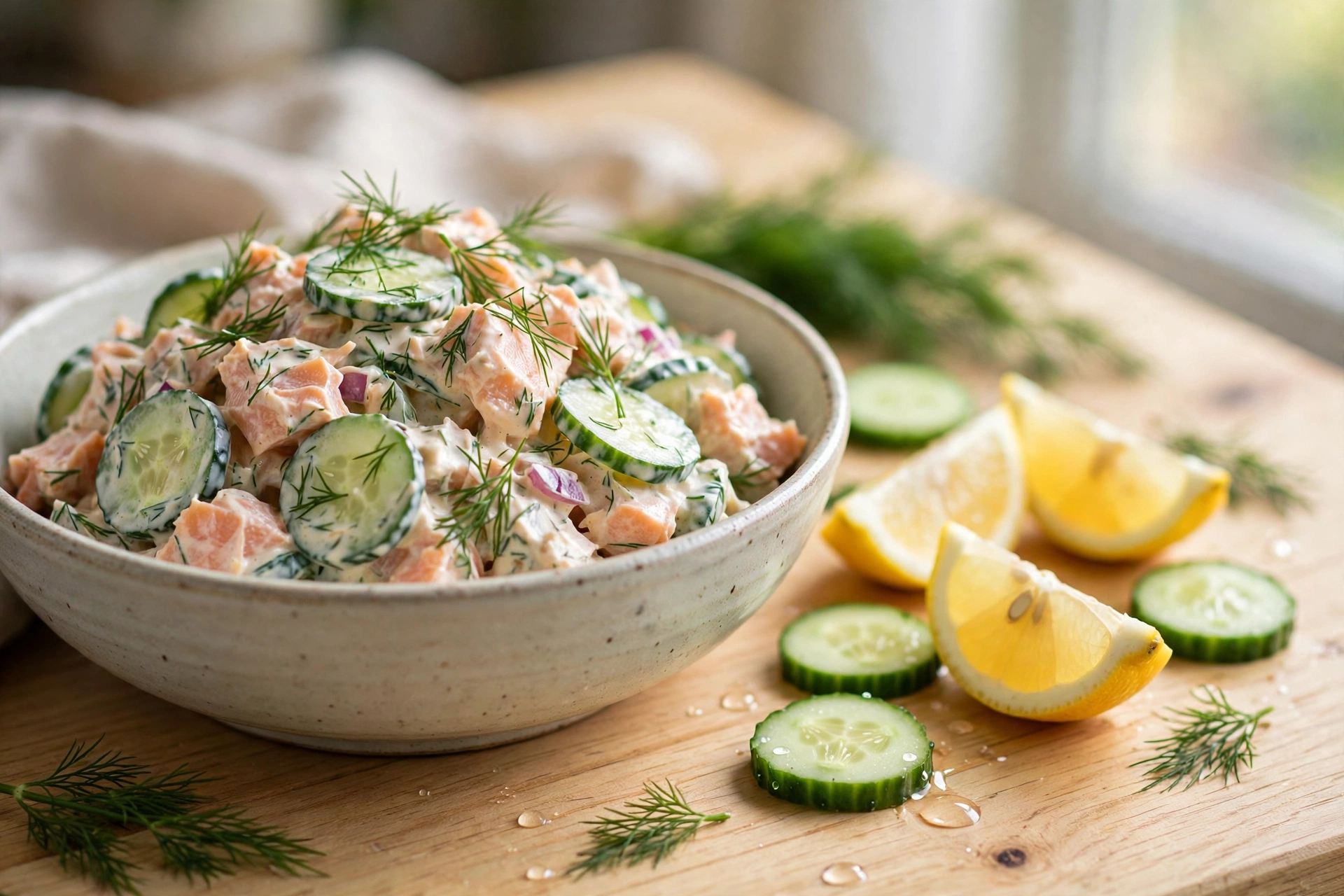
This healthy salmon salad recipe flakes oven-baked salmon into a Greek yogurt dressing with cucumber, capers and dill — no mayo, ready in 25 minutes. Each serving has 286 calories and 27 grams of protein, and it keeps for 3 days in the fridge.
Key Takeaways
- No mayo. Greek yogurt gives the same creaminess with far less fat.
- 286 calories a serving. High in protein, rich in omega-3 fats, and filling.
- 25 minutes. Salmon bakes in 12–15 minutes; the rest is mixing.
- Sodium stated. 488 mg per serving — capers rinsed, salt measured.
- Meal-prep friendly. This healthy salmon salad recipe keeps 3 days in the fridge.
In This Post
- What makes it healthy?
- Canned vs fresh vs leftover
- How to cook salmon
- Ingredients
- How to make
- How to serve
- Storage
- FAQs
What Makes This Salmon Salad Healthy?
Salmon is one of the healthiest proteins you can eat. It is rich in omega-3 fats — the type of fat linked with heart health — and a serving of this salad gives you 27 grams of protein for 286 calories. The fat in salmon is mostly unsaturated, including EPA and DHA.
The dressing is where this salad beats the usual version. Classic salmon salad is bound with mayonnaise, which adds a lot of fat and very little nutrition. This version uses plain nonfat Greek yogurt, lemon juice and Dijon mustard — the same creamy texture, plus extra protein from the yogurt, for far fewer calories.
Harvard’s Nutrition Source explains that omega-3 fats may help support heart health and that most people do not eat enough oily fish. This healthy salmon salad recipe is an easy way to close that gap.
The sodium is stated plainly: 488 mg per serving. One competitor salmon salad recipe lists 4,020 mg per serving — nearly two days’ worth. This version rinses the capers and measures the salt, so the number stays honest.
Canned vs Fresh vs Leftover Salmon — Which Should You Use?
All three work, but they give different results. Fresh salmon, baked and flaked, gives the best texture and flavour — large, moist flakes that hold up in the dressing. It takes 15 minutes of cooking, but it is worth it.
Canned salmon is the fastest option. It is already cooked, so you can make this salad in 10 minutes with no oven at all. The flakes are smaller and drier, so add an extra spoonful of yogurt to keep it creamy. Choose canned salmon in water, not oil, and drain it well.
Leftover salmon is the smartest option of all. If you baked salmon for dinner last night, this healthy salmon salad recipe turns the leftovers into tomorrow’s lunch.
| Fresh salmon (this recipe) | Canned salmon | Leftover salmon | |
|---|---|---|---|
| Cook time | 12–15 min baking | None | None |
| Texture | Large, moist flakes | Small, drier flakes | Depends on how it was cooked |
| Flavour | Best | Good, milder | Good |
| Cost | Highest | Lowest | Free (already cooked) |
| Best for | Weekend lunch | Weeknight speed | Using up dinner |
If you use canned salmon, check for bones and skin — most canned salmon is boneless and skinless, but cheaper tins may need a quick pick-through.
How Do You Cook Salmon for Salad?
Baking is the best method for the salmon in this healthy salmon salad recipe. It is hands-off, it cooks evenly, and it is hard to get wrong. Heat the oven to 200°C (400°F), place the fillets skin-side down on a lined baking sheet, brush with a little olive oil, and bake for 12 to 15 minutes.
Salmon is done at 145°F (63°C) at the thickest part, measured with a food thermometer — the FDA temperature for fish. The flesh should flake easily with a fork and look opaque all the way through. If you do not have a thermometer, the flake test is your guide, but a thermometer is the surer way.
I bake the salmon at 200°C for 12 minutes and check it at 10 — it flakes easily when it is done, and it stays moist if I do not overbake it. Let it cool for 10 minutes before you flake it in; hot salmon melts the yogurt dressing and turns the salad runny.
What Ingredients Do You Need?
You need 10 ingredients, and the salmon is the star. This healthy salmon salad recipe uses 450 grams of raw salmon fillets, which gives about 380 grams of cooked salmon once baked.
- 450 g salmon fillets, skin on or off
- 120 g plain nonfat Greek yogurt (about 1/2 cup)
- 100 g cucumber, diced (about 1/2 large cucumber)
- 1/4 small red onion (40 g), finely diced
- 30 g capers, drained and rinsed (about 2 tablespoons)
- 2 tablespoons lemon juice
- 1 tablespoon Dijon mustard
- 8 g fresh dill, chopped (about 2 tablespoons)
- 2 teaspoons olive oil (for baking)
- 1/4 teaspoon salt, plus black pepper to taste
Rinse the capers well under cold water — they are packed in brine, and rinsing removes a good share of the salt. If the cucumber is large, scoop the seeds out so the salad does not go watery.

How Do You Make This Healthy Salmon Salad Recipe?
The method is simple: bake the salmon, cool it, flake it, and fold it into the dressing. This healthy salmon salad recipe takes 25 minutes from start to finish, and most of that is oven time.
- Heat the oven to 200°C (400°F). Line a baking sheet with parchment paper.
- Place the salmon skin-side down, brush with olive oil, and season with a pinch of salt and pepper. Bake for 12–15 minutes, until it flakes easily and reaches 145°F.
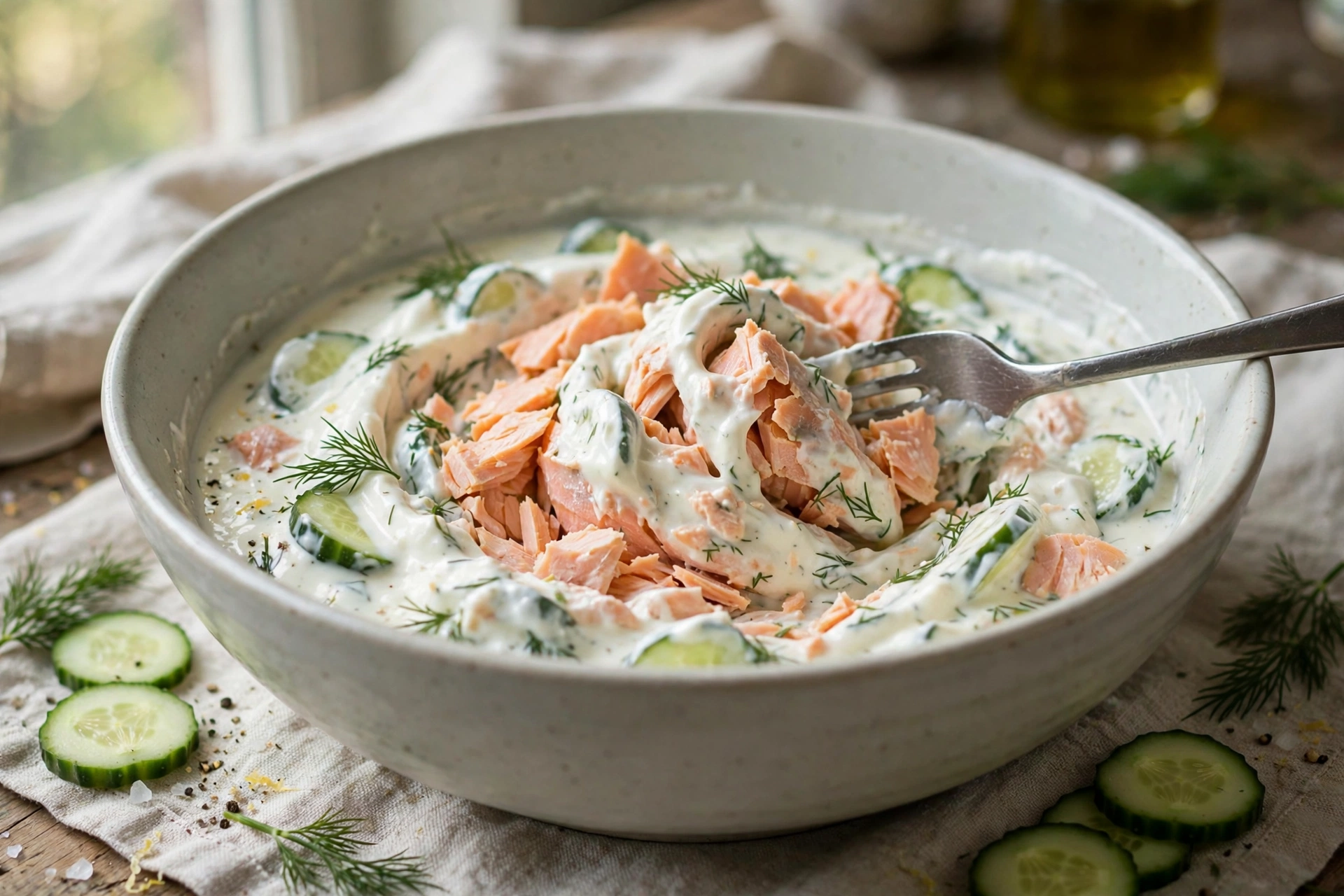
- Let the salmon cool for 10 minutes, then flake it into large pieces with a fork. Discard the skin.
- In a large bowl, stir together the yogurt, lemon juice, Dijon, dill and salt.
- Fold in the salmon, cucumber, red onion and capers. Season with pepper.
- Chill for 15 minutes if you have time — the flavours come together as it sits.
Fold gently. If you stir hard, the salmon breaks into mush and you lose the flakes that make this salad good.

How Do You Serve Salmon Salad?
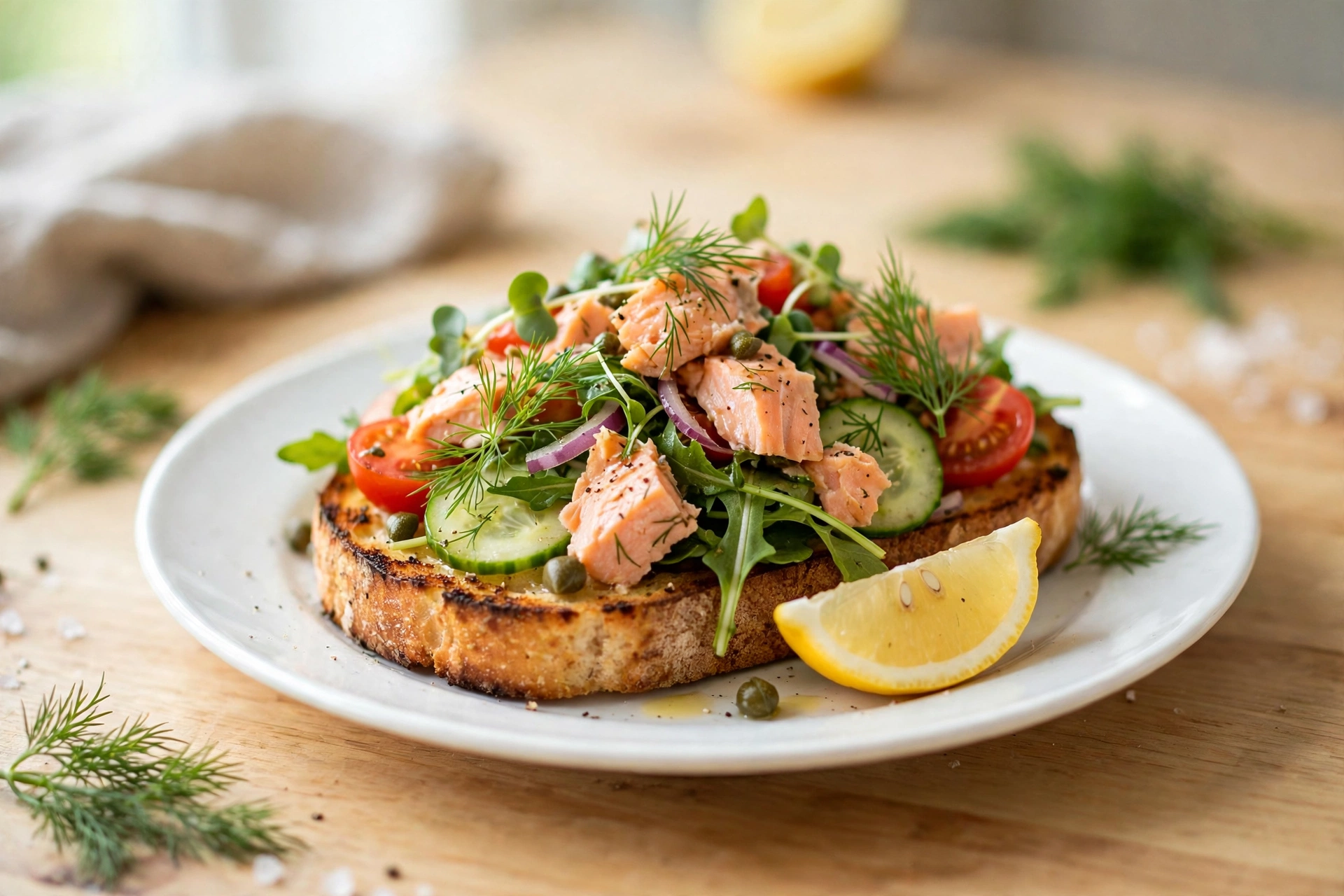
On toast is the classic way to serve this healthy salmon salad recipe — a thick slice of whole-grain bread, toasted, with a generous scoop of salad and a few extra dill fronds on top. It also works in lettuce cups for a lighter lunch, or over mixed greens with extra lemon wedges.
For a fuller plate, serve it with a simple cucumber salad or cherry tomatoes. It makes a good picnic dish too, packed in a sealed container with crackers on the side. Keep it cold until you serve it — fish salad should not sit at room temperature for more than 2 hours.
If you like this style of salad, try our healthy tuna salad with Greek yogurt and our healthy chicken salad — the same yogurt-dressing idea with different proteins. Our high-protein salmon salad is the higher-protein sibling of this recipe, and our posts on is salmon good for cholesterol and the best fish for heart health explain why salmon earns its place on the table.
How Do You Store Salmon Salad?
This healthy salmon salad recipe keeps for 3 days in the fridge in a sealed container. That is within the USDA 3–4 day window for cooked dishes, and 3 days is the safe limit for a fish salad — fish spoils faster than chicken or beef, and the cucumber softens after day 2.
Store it without the toast or lettuce cups — add those fresh when you serve. If the salad looks watery after a day in the fridge, the cucumber has released some juice; just stir it back in or drain a little off.
Do not freeze salmon salad. The yogurt dressing separates when thawed, the cucumber turns mushy, and the salmon goes dry. This is a make-and-eat-within-3-days recipe, not a freezer recipe.
Ingredients
Method
- Heat the oven to 200°C (400°F). Line a baking sheet with parchment paper.
- Place the salmon skin-side down, brush with olive oil, and season with salt and pepper. Bake for 12–15 minutes, until it flakes easily and reaches 145°F.
- Let the salmon cool for 10 minutes, then flake it into large pieces with a fork. Discard the skin.
- Stir together the yogurt, lemon juice, Dijon, dill and salt in a large bowl.
- Fold in the salmon, cucumber, red onion and capers. Season with pepper.
- Chill for 15 minutes before serving if you have time.
Notes
FAQs
Is salmon salad healthy?
Yes. Salmon is rich in omega-3 fats and protein, and this healthy salmon salad recipe keeps the dressing light with Greek yogurt instead of mayonnaise. Each serving has 286 calories, 27 grams of protein and 18 grams of mostly unsaturated fat. Watch the sodium — rinse the capers and measure the salt.
Can I use canned salmon in this healthy salmon salad recipe?
Yes. Canned salmon in water works well — drain it, pick out any bones or skin, and flake it into the dressing. The flakes are smaller and drier than fresh salmon, so add an extra spoonful of yogurt. You can make this healthy salmon salad recipe in 10 minutes with canned salmon and no oven at all.
How do you know when salmon is done?
Salmon is done at 145°F (63°C) at the thickest part, measured with a food thermometer — the FDA temperature for fish. The flesh should flake easily with a fork and look opaque all the way through, with no raw, glassy centre. If you do not have a thermometer, the flake test is your guide, but a thermometer is the surer way.
How long does salmon salad last in the fridge?
Salmon salad lasts 3 days in the fridge in a sealed container. That is within the USDA 3–4 day window for cooked dishes, but 3 days is the safe limit for fish — it spoils faster than chicken or beef, and the cucumber softens after day 2. If it smells strong, throw it out.
Can you freeze salmon salad?
No — salmon salad does not freeze well. The yogurt dressing separates when thawed, the cucumber turns mushy, and the salmon goes dry. This healthy salmon salad recipe is a make-and-eat-within-3-days recipe. If you want to prep ahead, freeze the raw salmon fillets instead and make the salad fresh when you need it.
Is salmon salad good for weight loss?
Yes, it can help. Each serving has 286 calories with 27 grams of protein, which is a filling combination for the calories. The omega-3 fats and protein help you feel full longer. Serve it in lettuce cups or over greens instead of on bread if you want to keep the meal lighter.
Conclusion
This healthy salmon salad recipe is the creamy salmon salad you actually want for lunch: baked salmon, Greek yogurt instead of mayo, cucumber and capers for crunch, dill for flavour. Twenty-five minutes, one baking sheet, lunch sorted for 3 days.
This article is for general information only and is not medical advice. Please talk to your doctor or a registered dietitian, especially if you have diabetes, heart disease or take medicine.