How to Make Kombucha at Home (Easy First Batch)
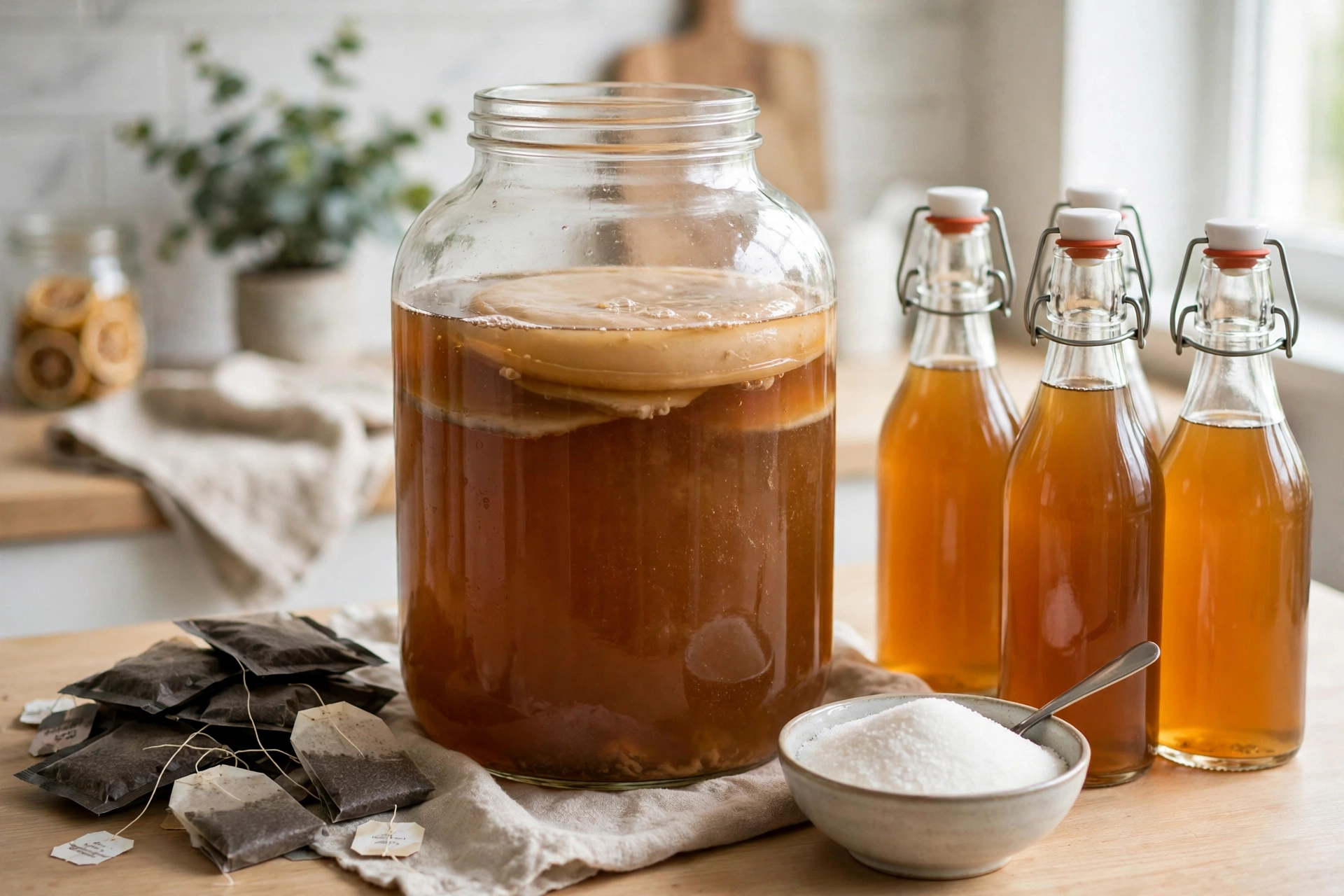
Learning how to make kombucha at home is easier than it looks. Brew sweet tea, cool it, add a SCOBY and starter liquid, then ferment for 7 to 14 days. The result is a tangy, lightly fizzy drink with about 30 calories per cup — and this recipe follows Colorado State University Extension guidance.
Ingredients
Method
- Boil the water, remove from heat, add tea and steep 10 minutes. Remove tea.
- Stir in the sugar until dissolved. Cool to room temperature (below 90°F / 32°C).
- Pour into a clean 1-gallon glass jar. Add starter liquid and the SCOBY.
- Cover with cloth and a rubber band. Ferment 7–14 days at 64–79°F (18–26°C).
- Taste from day 7. When tangy enough, remove the SCOBY and reserve 1–2 cups as starter.
- Bottle the rest. For fizz, add 10–20% fruit or juice and second-ferment 1–3 days, burping daily.
Notes
Key Takeaways
- The basic recipe for how to make kombucha at home is sweet tea, a SCOBY and starter liquid: 1 gallon water, 1 cup sugar, 4–8 tea bags, 1–2 cups starter, one SCOBY.
- Ferment 7 to 14 days at 64–79°F (18–26°C). Taste from day 7 — the longer it ferments, the tangier and less sweet it gets.
- When you learn how to make kombucha at home, check the pH. Finished kombucha should be below pH 4.6. Fuzzy dry mold means the whole batch must be thrown out.
- Start with 4 oz a day — kombucha contains a trace of alcohol and is acidic.
- Plain finished kombucha has about 30 calories and 2–3 g of sugar per 8 oz cup.
In This Post
- What is kombucha?
- What you need
- Step by step
- How long to ferment
- Flavoring
- Is it safe?
- Storage
- Recipe card
- FAQs
What Is Kombucha?
Kombucha is fermented tea made by adding a SCOBY — a symbiotic culture of bacteria and yeast — to sweetened black or green tea. The yeast eats the sugar and makes alcohol and carbon dioxide; the bacteria turn the alcohol into acetic acid. That is what gives kombucha its tangy taste and light fizz.
The SCOBY is the rubbery disc on top of the tea — not a mushroom, though it is sometimes called a “tea mushroom.” Each batch grows a new layer, so you will have one to share after your first batch. For the health side, read our guide on is kombucha good for gut health first.
What You Need to Make Kombucha at Home
You need very little equipment for how to make kombucha at home. A wide-mouth glass jar is the most important piece — glass lets you see the SCOBY and does not react with acid. Avoid ceramic, plastic or metal containers, which can leach into the tea.
- 1-gallon glass jar (wide mouth, clean — no soap residue)
- Tightly woven cloth or coffee filter + rubber band (to cover the jar)
- 1 gallon filtered water
- ¼ cup loose tea or 4–8 tea bags (plain black or green tea — no flavored teas with oils)
- 1 cup cane sugar (white sugar ferments most reliably)
- 1–2 cups starter liquid (plain kombucha from a previous batch or a store bottle)
- 1 SCOBY (from a friend, a starter kit, or a bottle of raw kombucha)
- pH test strips (optional but recommended for a first batch)
- Glass bottles with swing tops (for the second fermentation)

How to Make Kombucha at Home: Step by Step
Here is how to make kombucha at home, one step at a time. Hands-on work takes about 20 minutes; the rest is waiting.
- Brew the tea. Bring 1 gallon of water to a boil. Remove from the heat, add the tea (¼ cup loose or 4–8 bags) and steep for 10 minutes. Remove the tea.
- Add the sugar. Stir in 1 cup of cane sugar until it dissolves. Let the sweet tea cool to room temperature — below 90°F (32°C). Hot tea will kill the SCOBY.
- Combine. Pour the cooled sweet tea into the clean glass jar. Add 1–2 cups of starter liquid and gently place the SCOBY on top. It may sink or float — both are fine.
- Cover. Cover the jar with a tightly woven cloth or coffee filter and secure it with a rubber band. The cloth keeps fruit flies out while letting air in.
- Ferment. Put the jar somewhere dark and warm, 64–79°F (18–26°C), out of direct sunlight. Do not move it. Ferment 7 to 14 days.
- Taste. From day 7, taste a little with a clean straw or spoon. When it is tangy enough for you, it is done. The longer it ferments, the tangier and less sweet it gets.
- Bottle. Remove the SCOBY and reserve 1–2 cups of finished kombucha as starter for the next batch. Bottle the rest for drinking or for a second fermentation.
The first step in how to make kombucha at home is brewing sweet tea — and the most common first-batch mistake is adding the SCOBY to tea that is still warm. I did it once with tea at 110°F and the SCOBY went quiet for days. Cool the tea fully, and the culture will start working right away.

How Long Does Kombucha Take to Ferment?
When you learn how to make kombucha at home, fermentation takes 7 to 14 days at 64–79°F (18–26°C). How long you ferment is the biggest variable — temperature, tea strength and SCOBY health all shift the timing. Warmer rooms ferment faster; cooler rooms take longer.
| Day | Taste | Sugar left |
|---|---|---|
| Day 7 | Lightly sweet, mildly tangy | Higher |
| Day 10 | Balanced sweet-tart | Medium |
| Day 14 | Quite tart, vinegar-like | Low |
Taste daily from day 7. Like it sweeter? Bottle at day 7 or 8. Want it very tart and low in sugar? Wait until day 12 to 14. Do not ferment past 14 days for a first batch — it turns vinegary fast.
How to Flavor Kombucha (Second Fermentation)
Once you know how to make kombucha at home, flavoring is the fun part. The second fermentation adds fizz and flavor: pour finished kombucha into swing-top bottles, leave 1 inch of headspace, and add flavoring at 10–20% of the volume — juice, fruit, ginger or herbs.
Seal the bottles and leave them at room temperature for 1 to 3 days, then refrigerate. The second fermentation builds carbonation, so “burp” bottles once a day to release pressure. Try ginger and lemon, mixed berries, or mango and mint. Our guide to fermented foods for gut health has more pairing ideas.

Is Homemade Kombucha Safe?
The most important rule in how to make kombucha at home is the pH test. Finished kombucha should be below pH 4.6 — that acidity is what keeps harmful bacteria from growing. Test with pH strips before bottling. If the pH is above 4.6 after 14 days, let it ferment longer or discard the batch.
Watch for mold. A new SCOBY layer looks smooth and cream-colored, with brown stringy bits (normal yeast strands). Fuzzy dry mold — spots that look like bread mold — means the whole batch must be thrown out, SCOBY included. Colorado State University Extension’s guide to making kombucha explains the pH and mold checks in detail.
Kombucha contains a trace of alcohol, and home batches can exceed 0.5% ABV. People who are pregnant, breastfeeding, avoiding alcohol or have a weakened immune system should skip homemade kombucha or check with a doctor first. New drinkers should start with no more than 4 oz a day.
How to Store Kombucha
After you learn how to make kombucha at home, storing it is simple. Keep finished kombucha in sealed glass bottles in the fridge. It stays good 1 to 2 weeks, though it keeps slowly fermenting and gets tangier — drink it within a week for the best flavor.
Keep your SCOBY between batches in a jar with 1–2 cups of finished kombucha (a “SCOBY hotel”), covered with cloth, at room temperature. Feed it fresh sweet tea every few weeks if you are not brewing. For more on building a gut-friendly routine, see our guide on how to improve gut health naturally.

Recipe Card
This is the full recipe for how to make kombucha at home — the same steps as above, in card form.
How to Make Kombucha at Home (Easy First Batch)
Prep time: 20 minutes | Cook time: — | Total time: 7–14 days | Servings: 16 (8 oz each) | Course: Drinks | Cuisine: American | Method: Fermented
Ingredients:
- 1 gallon (3.8 L) filtered water
- ¼ cup loose black or green tea (or 4–8 tea bags)
- 1 cup (200 g) cane sugar
- 1–2 cups plain starter kombucha
- 1 SCOBY
Instructions:
- Boil the water, remove from heat, add tea and steep 10 minutes. Remove tea.
- Stir in the sugar until dissolved. Cool to room temperature (below 90°F / 32°C).
- Pour into a clean 1-gallon glass jar. Add starter liquid and the SCOBY.
- Cover with cloth and a rubber band. Ferment 7–14 days at 64–79°F (18–26°C).
- Taste from day 7. When tangy enough, remove the SCOBY and reserve 1–2 cups as starter.
- Bottle the rest. For fizz, add 10–20% fruit or juice and second-ferment 1–3 days, burping daily.
Tips:
- Cool the tea fully before adding the SCOBY — hot tea kills the culture.
- Use plain black or green tea — flavored teas with oils can harm the SCOBY.
- Test the pH before bottling — finished kombucha should be below pH 4.6.
Substitutions:
- Green tea makes a lighter, more delicate kombucha; black tea makes a bolder one.
- A bottle of plain raw kombucha works as starter liquid for your first batch.
Storage: Fridge 1–2 weeks in sealed bottles. SCOBY rests in 1–2 cups finished kombucha between batches.
Nutrition (per serving, 8 oz plain finished kombucha): ~30 kcal | 7 g carbs | 3 g sugar | 0 g protein | 0 g fat | ~5 mg sodium. Values vary with ferment length and flavoring.
Frequently Asked Questions
How long does it take to make kombucha at home?
Learning how to make kombucha at home takes 7 to 14 days of fermenting, plus 20 minutes of hands-on work. Taste from day 7 and bottle when it is tangy enough. Warmer rooms ferment faster; cooler rooms take the full 14 days. A second fermentation adds 1 to 3 days.
Do I need a SCOBY to make kombucha?
Yes — how to make kombucha at home starts with a SCOBY and starter liquid. The SCOBY is the culture of bacteria and yeast that ferments the tea. You can buy one in a starter kit, get one from a friend, or grow one from a bottle of plain raw kombucha. Starter liquid alone will not ferment tea reliably.
How do I know if my kombucha has gone bad?
Fuzzy dry mold — spots that look like bread mold — means the batch has gone bad and must be thrown out, SCOBY included. A smooth cream SCOBY layer and brown stringy yeast bits are normal. If the pH stays above 4.6 after 14 days, discard the batch.
Can I make kombucha without sugar?
No. Sugar feeds the SCOBY — the yeast and bacteria eat most of it during fermentation. Finished kombucha has only 2–3 g of sugar per 8 oz cup, even though the recipe starts with 1 cup. Honey and stevia do not ferment the same way and can harm the culture.
Is homemade kombucha alcoholic?
Homemade kombucha contains a trace of alcohol, and home batches can exceed 0.5% ABV because home fermentation is not controlled like commercial brewing. People who are pregnant, breastfeeding or avoiding alcohol should skip it. New drinkers should start with no more than 4 oz a day.
What is the best tea for kombucha?
Plain black or green tea works best. Black tea gives a bold, classic flavor; green tea is lighter and more delicate. Avoid flavored teas with oils (like Earl Grey), herbal teas and decaf for a first batch — they can weaken the SCOBY. Our guide to is green tea good for heart explains why green tea is a healthy base.
Conclusion
Now you know how to make kombucha at home: brew sweet tea, cool it, add a SCOBY and starter, and ferment 7 to 14 days at 64–79°F. Taste from day 7, check the pH, and bottle when it is tangy enough. For more fermented foods, see our best foods for gut health and our how to make kefir at home recipe.
This article is for general information only and is not medical advice. Please talk to your doctor or a registered dietitian, especially if you have diabetes, heart disease or take medicine.