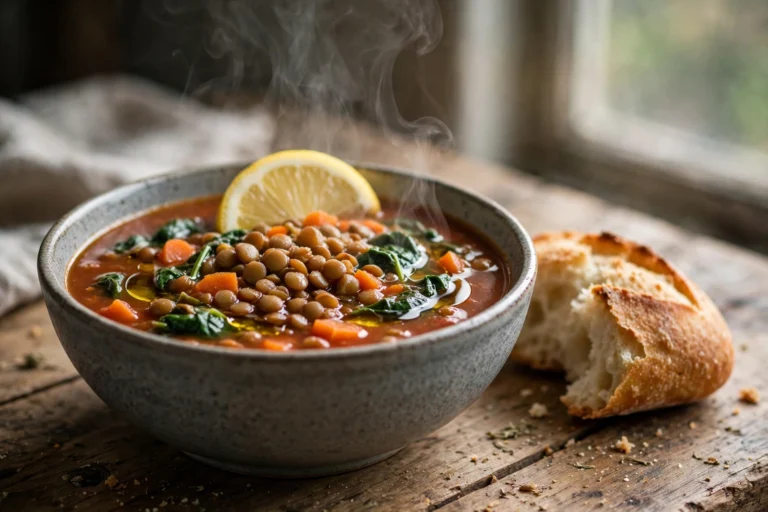
Slow Cooker Ratatouille Recipe (Rich, Not Watery)
This slow cooker ratatouille recipe stays rich, not watery — salted eggplant, tomato paste, and a slow simmer do the work. Eggplant, zucchini, peppers, and tomatoes melt into a French classic in 5 hours. Each serving has 129 calories, 19 g of carbs, and 214 mg of sodium.

Key Takeaways
- Salt the eggplant. 30 minutes draws out the water.
- Tomato paste for body. It thickens the sauce.
- Uncovered last 30 minutes. Steam escapes, sauce thickens.
- 129 kcal a serving. With 6 g of fiber and 4 g of protein.
- One pot, many meals. One pot of this slow cooker ratatouille recipe serves many meals: pasta, polenta, toast, eggs, or rice.
In This Post
- What Is Ratatouille?
- Salt the Eggplant?
- Ingredients
- How to Make
- How Long?
- Keep It From Going Watery?
- What to Serve?
- Is It Healthy?
- Storage
- FAQs
What Is Ratatouille?
Ratatouille is a French vegetable stew from Provence: eggplant, zucchini, bell peppers, tomatoes, onion, and garlic, simmered in olive oil with herbs. It is a summer dish, but it works year-round with good produce. The name comes from the French verb touiller, to stir up.
Some cooks sauté each vegetable separately; some dump them all in one pot. This slow cooker ratatouille recipe takes the dump-and-cook route, with one prep step — salting the eggplant — that makes the difference between rich and watery. For another eggplant dish, see our eggplant chickpea curry.
Do You Salt Eggplant Before Ratatouille?
Yes — salt the eggplant for 30 minutes before it goes in the pot. Eggplant is mostly water, and salting draws that water out before cooking. Skip this step and the water comes out in the slow cooker instead, leaving a thin, watery stew. It is the most important step in this slow cooker ratatouille recipe.
Cut the eggplant into cubes, toss with a teaspoon of salt, and leave it in a colander for 30 minutes. Rinse well and pat dry — the salt goes down the drain, not into the pot. The salting salt is not counted in the nutrition. The ½ teaspoon in the recipe is all the pot needs.
What Ingredients Do You Need?
This slow cooker ratatouille recipe uses the classic Provençal vegetables, no-salt tomato sauce, and tomato paste for body. The balsamic vinegar at the end is the secret — a tablespoon brightens the whole pot. Buy the vegetables fresh and firm — soft eggplant and zucchini turn mushy in the pot.
- Eggplant (450 g, 1 medium): Cubed, salted 30 minutes, rinsed, patted dry.
- Zucchini (400 g, 2 medium): Sliced.
- Red bell pepper (150 g, 1 large): Diced.
- Yellow bell pepper (150 g, 1 large): Diced.
- Tomatoes, fresh (400 g, 3 medium): Chopped.
- Onion (150 g, 1 medium, diced)
- Garlic (4 cloves, minced)
- Olive oil (2 tablespoons)
- Tomato sauce, no salt (240 g, 1 cup)
- Tomato paste (2 tablespoons)
- Italian seasoning (1 teaspoon): Or herbes de Provence.
- Salt (½ teaspoon)
- Basil, fresh (10 g) and balsamic vinegar (1 tablespoon)

How Do You Make Slow Cooker Ratatouille?
This slow cooker ratatouille recipe is a dump-and-cook with two timed steps: salt the eggplant first, and take the lid off for the last 30 minutes. Everything else cooks together from the start. The vegetables go in raw — no sautéing needed.
- Salt the eggplant. Cube it, toss with 1 teaspoon of salt, and leave in a colander 30 minutes. Rinse and pat dry.
- Load the pot. Add the eggplant, zucchini, peppers, tomatoes, onion, garlic, oil, tomato sauce, tomato paste, Italian seasoning, and salt to a 6-quart slow cooker.
- Cook. Cover and cook on LOW for 5 hours or on HIGH for 2.5 hours.
- Stir once. Stir halfway through so the vegetables cook evenly.
- Uncover for the last 30 minutes to let steam escape.
- Finish. Stir in the basil and balsamic vinegar.

The one stir halfway is the only time you touch it. Stirring more breaks the vegetables into mush; stirring less leaves the top layer undercooked.
How Long Do You Cook Ratatouille in a Slow Cooker?
Cook this slow cooker ratatouille recipe on LOW for 5 hours or on HIGH for 2.5 hours, with the last 30 minutes uncovered. The LOW cook melts the vegetables into a rich stew. They are done when the eggplant is silky and the zucchini is tender but still holds its shape.
Shorter cooks of this slow cooker ratatouille recipe keep the vegetables distinct; longer cooks meld them into a softer stew. For serving over pasta, the longer melded cook is better. For serving as a side, the shorter cook keeps the shapes.
How Do You Keep Ratatouille From Going Watery?
Watery ratatouille is the #1 complaint, and this slow cooker ratatouille recipe defends against it three ways. Most recipes skip all three and hope for the best — that is why so many slow cooker ratatouilles come out thin. The three defenses work together.
| Defense | How it works |
|---|---|
| Salt the eggplant 30 min | Draws water out before cooking |
| Tomato paste, 2 tablespoons | Adds body and thickness to the sauce |
| Uncovered last 30 min | Steam escapes, sauce concentrates |
If this slow cooker ratatouille recipe still looks thin, cook it uncovered on HIGH for another 30 minutes. Don’t add flour or cornstarch — the vegetables thicken the sauce once the water has a way out. And don’t add extra liquid: the vegetables release plenty as they cook.
What Do You Serve With Ratatouille?
This slow cooker ratatouille recipe is one of the most versatile dishes in the kitchen — it works as a side, a sauce, or a main. Serve it over pasta or polenta, on toasted bread as bruschetta, or alongside grilled chicken or fish. It is good hot, warm, or at room temperature.
| Serving | How | Best for |
|---|---|---|
| Over pasta | Spoon over cooked pasta, top with Parmesan | Dinner |
| Over polenta | Creamy polenta, ratatouille on top | Comfort meal |
| On toast | Thick toast, ratatouille, basil | Lunch |
| With eggs | Alongside a fried or poached egg | Brunch |
| Over rice | Fluffy rice, ratatouille, a drizzle of oil | Simple dinner |
For protein, grilled chicken or white fish works well. For a vegetarian plate, add a bean salad or a fried egg. Our air fryer roasted vegetables make a good side.


Is Ratatouille Healthy?
Yes — ratatouille is one of the lightest dishes you can make. This slow cooker ratatouille recipe has 129 calories, 19 g of carbs, 6 g of fiber, and 214 mg of sodium per serving. The 12 g of sugar is natural, from the vegetables, with no added sugar. The fat comes almost entirely from the olive oil.
The sodium stays low because the recipe uses no-salt tomato sauce and just ½ teaspoon of salt — the salting salt is rinsed off and doesn’t count. Harvard’s olive oil guide explains why the oil is worth it. For blood-sugar context, see our non-starchy vegetables for diabetics guide.
How Do You Store and Freeze Ratatouille?
Ratatouille keeps in the fridge for up to 4 days in an airtight container. It tastes better the next day — the flavors meld overnight. Reheat it gently in a saucepan over low heat, stirring often. Add a splash of water if it thickens too much.
For the freezer, cool it completely and freeze in portions for up to 3 months. Thaw overnight in the fridge. The texture softens after freezing, but the flavor holds up. For another freezer-friendly vegetable dish, try our low sodium Italian dressing on a fresh salad.
Ingredients
Method
- Cube the eggplant, toss with 1 teaspoon salt, and leave in a colander 30 minutes. Rinse and pat dry.
- Add the eggplant, zucchini, peppers, tomatoes, onion, garlic, oil, tomato sauce, tomato paste, Italian seasoning, and salt to a 6-quart slow cooker.
- Cover and cook on LOW 5 hours or HIGH 2.5 hours.
- Stir once halfway through.
- Take the lid off for the last 30 minutes.
- Stir in the basil and balsamic vinegar.
Notes
FAQs
What vegetables go in ratatouille?
The classic ratatouille vegetables are eggplant, zucchini, bell peppers, tomatoes, onion, and garlic — all simmered in olive oil with herbs. That is the traditional Provençal build, and this slow cooker ratatouille recipe sticks to it. Some versions add yellow squash or potatoes, but potatoes make it non-traditional. The vegetables peak in summer, which is why ratatouille is a summer dish.
Do you salt eggplant before ratatouille?
Yes — salt the eggplant for 30 minutes. Eggplant is mostly water, and salting draws that water out before cooking. Skip this step and the water comes out in the slow cooker instead, leaving a thin, watery stew. Cube the eggplant, toss with a teaspoon of salt, leave it in a colander, then rinse and pat dry.
How do you keep ratatouille from being watery?
Salt the eggplant for 30 minutes first, add 2 tablespoons of tomato paste, and cook uncovered for the last 30 minutes so steam escapes. Those three defenses keep this slow cooker ratatouille recipe rich, not thin. Don’t add extra liquid — the vegetables release plenty as they cook. If it still looks thin, cook uncovered on HIGH for another 30 minutes.
Can you freeze ratatouille?
Yes — ratatouille freezes well. Cool it completely, freeze in portions for up to 3 months, and thaw overnight in the fridge. The texture softens after freezing, but the flavor holds up. Reheat gently in a saucepan over low heat, stirring often. Add a splash of water if it thickens too much, and fresh basil to brighten it.
Is ratatouille healthy?
Yes — ratatouille is one of the lightest, most vegetable-packed dishes you can make. One serving has 129 calories, 19 g of carbs, 6 g of fiber, and 214 mg of sodium. The 12 g of sugar is natural, from the vegetables, with no added sugar. The fat comes almost entirely from the olive oil. It is vegetarian, vegan, and gluten-free.
What do you serve with ratatouille?
Serve ratatouille over pasta or polenta for a full meal, on toasted bread as bruschetta, or alongside grilled chicken or fish. It works as a side, a sauce, or a main — hot, warm, or at room temperature. For a vegetarian plate, add a bean salad or a fried egg. Pair it with crusty bread and a salad.
Conclusion
This slow cooker ratatouille recipe is the French classic that doesn’t need a stove full of pans — salt the eggplant, dump the vegetables, and let the slow cooker simmer. Make a pot, eat it three ways this week, and freeze the rest.
This article is for general information only and is not medical advice. Please talk to your doctor or a registered dietitian, especially if you have diabetes, heart disease or take medicine.