Sugar Free Fudge Recipe (Creamy Chocolate)
This sugar free fudge recipe makes rich, creamy chocolate fudge with zero added sugar — just 137 calories and 0.4 grams of sugar per square. Real chocolate, butter and cream do the work, with powdered erythritol for sweetness. You need 20 minutes of cooking, no candy thermometer, and 2 hours in the fridge.

Key Takeaways
- Zero added sugar — this sugar free fudge recipe uses powdered erythritol, not sugar, honey or maple syrup.
- 137 calories and 0.4 g sugar per square — rich enough that one square satisfies.
- Real cooked fudge — chocolate, butter and cream melted together, not a coconut-oil shortcut.
- No candy thermometer — if you can stir a pan, you can make this fudge.
Table of Contents
- What makes it real fudge
- Why powdered sweetener
- Ingredients
- How to make it
- Tips
- Substitutions
- Storage
- Nutrition
- Mistakes
- FAQ
What Makes This Real Fudge?
This sugar free fudge recipe is real cooked fudge, not a no-cook shortcut. The chocolate, butter and cream melt together in a pan, the sweetener dissolves into the warm mix, and the fudge sets firm in the fridge. That gives the dense, smooth bite real fudge should have.
Many sugar free fudge recipes skip the cooking. They stir cocoa powder into coconut oil and chill it — but that is chocolate fat, not fudge, and it melts the moment you pick it up. Coconut oil melts at 76°F, so those squares turn to puddles at room temperature. Butter and chocolate set much firmer, so this fudge holds its shape on a plate.
Cooking also dissolves the sweetener properly. Powdered erythritol melts into the warm chocolate and cream, so the fudge tastes smooth instead of gritty. If you love chocolate desserts, our sugar free chocolate cake uses the same idea — real chocolate, no added sugar.
Why Powdered Sweetener Matters
Powdered erythritol is the secret to smooth sugar free fudge. Granulated erythritol does not dissolve fully in fudge, because the mix never gets hot enough to melt the crystals. The result is gritty fudge that crunches when you bite it. Powdered sweetener dissolves into the warm cream and disappears.
You can buy powdered erythritol, or make it yourself: blend granulated erythritol in a dry blender or spice grinder for 30 seconds until it turns to powder. Measure after blending, not before — a cup of granulated sweetener makes less than a cup of powder. The FDA lists erythritol and monk fruit as allowed sweeteners for use in food.
Do not use liquid stevia or aspartame-based packets here. Liquid stevia tastes bitter in the amounts fudge needs, and aspartame breaks down with heat. Powdered erythritol is the one that behaves like powdered sugar.
Ingredients
Method
- Line an 8-inch square pan with parchment paper, leaving overhang on two sides for lifting.
- Put the chocolate, butter and cream in a medium saucepan over low heat. Stir often until smooth, about 5 minutes. Do not let it boil.
- Take the pan off the heat. Stir in the powdered erythritol, vanilla and salt until the mix is smooth and glossy.
- Stir in the chopped walnuts.
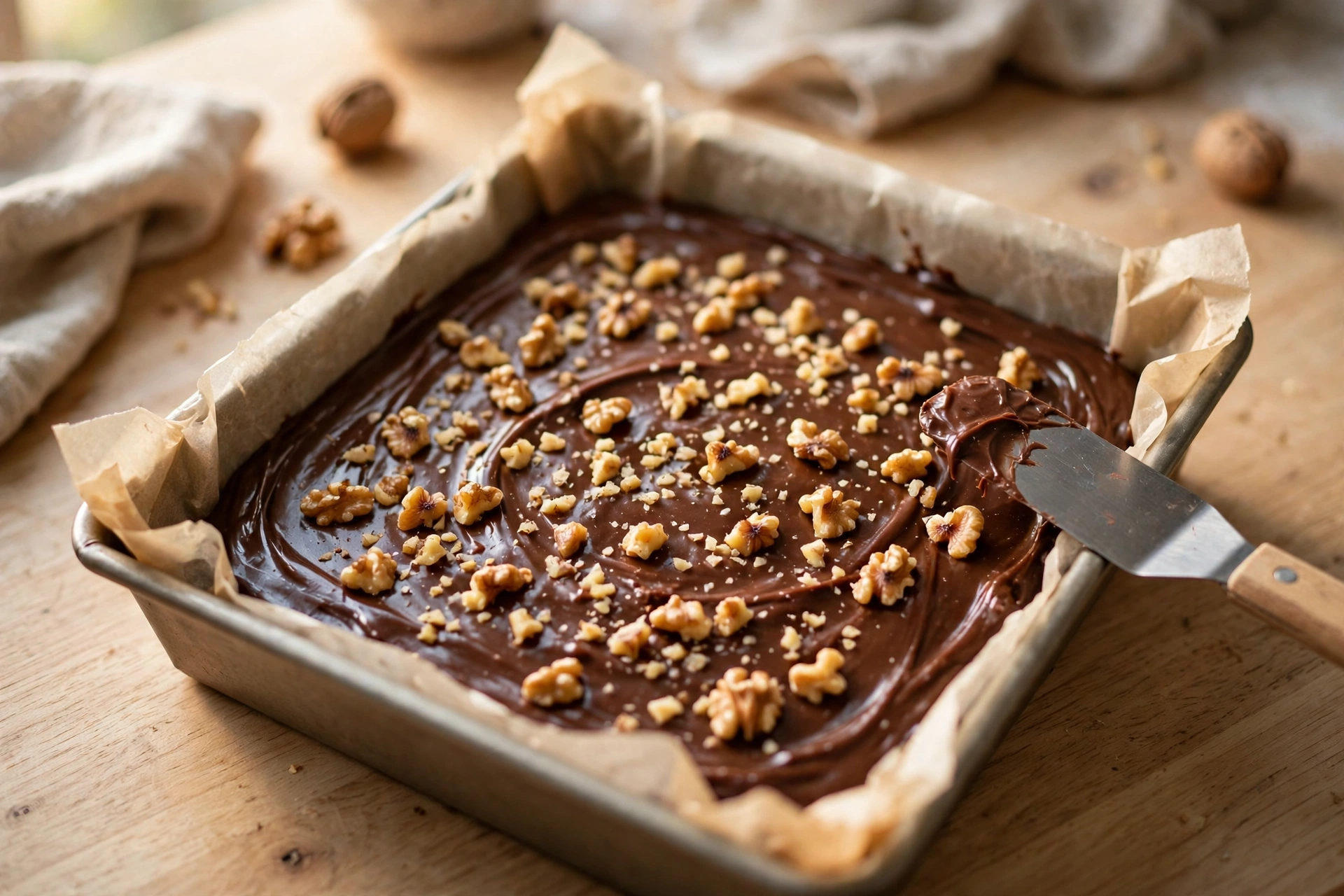
- Pour the fudge into the lined pan. Smooth the top with a spatula.
- Refrigerate for at least 2 hours, until firm all the way through.
- Lift the fudge out by the parchment overhang. Cut into 16 squares with a sharp knife, wiping the blade between cuts.
Notes
– Chop the chocolate small. Small pieces melt evenly. Big chunks leave lumps.
– Do not boil the cream. Bubbles are fine at the edges, but a rolling boil can split the mix.
– Stir the sweetener in off the heat. The warm mix dissolves it without cooking it.
– Chill the full 2 hours. Fudge that looks set on top may still be soft in the middle. Substitutions:
– No walnuts: Use pecans, almonds or macadamia nuts, or leave the nuts out.
– Mint chocolate: Add 1/2 teaspoon peppermint extract with the vanilla.
– Orange chocolate: Add 1 teaspoon of orange zest with the vanilla.
– Peanut butter swirl: Drop spoonfuls of natural peanut butter on top after pouring, then swirl with a knife.
– Allulose: Swap the erythritol blend 1:1 with powdered allulose. The fudge will be a little softer. Storage:
– Fridge: Airtight container, up to 2 weeks; parchment between layers so the squares do not stick. Let a square sit at room temperature for 5 minutes before eating.
– Freezer: Squares in a zip-top bag, up to 3 months. Thaw in the fridge overnight.
– Room temperature: Do not leave fudge out for more than a few hours — the butter and cream soften fast in a warm kitchen.
Ingredients
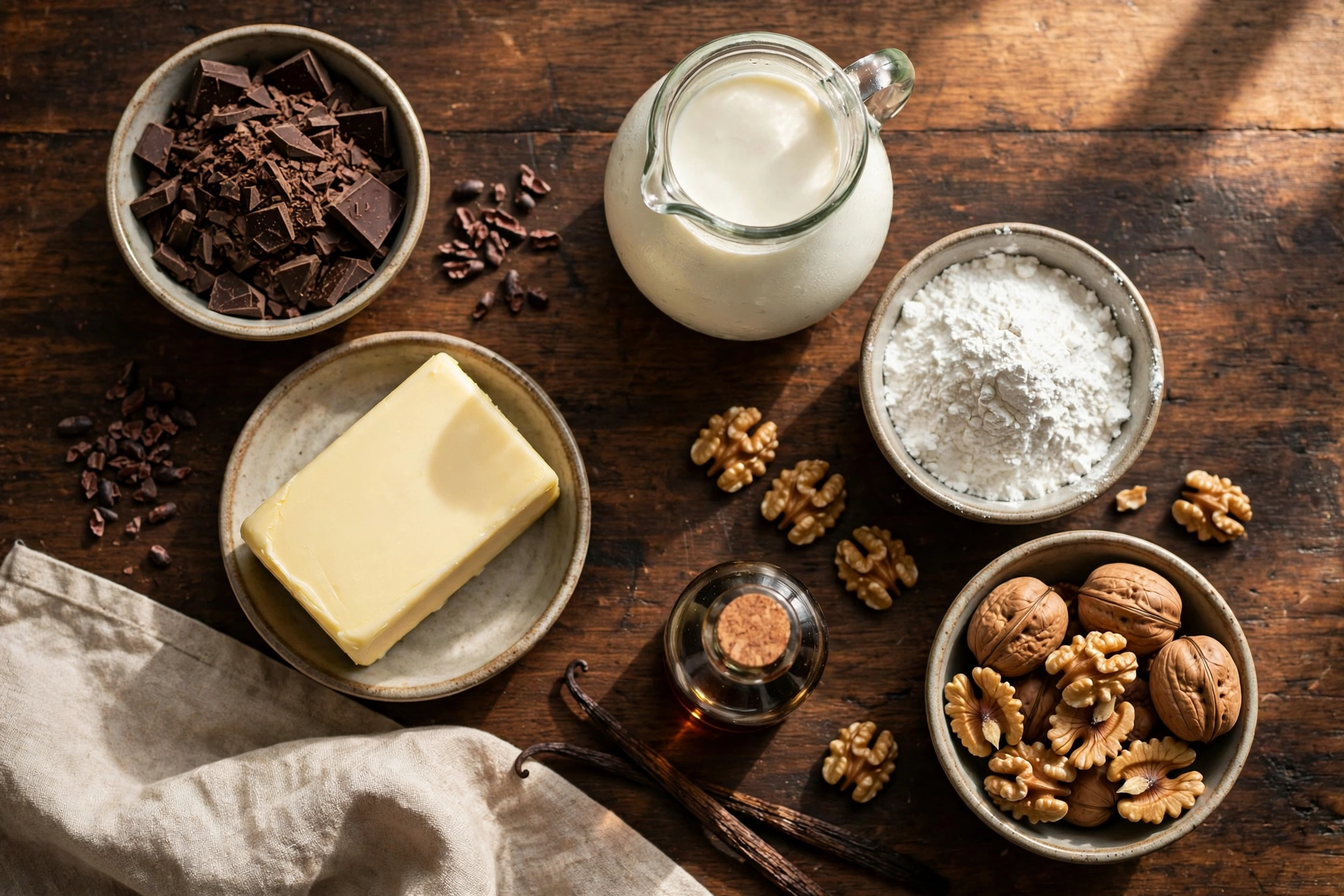
You need seven things for this sugar free fudge recipe, and the chocolate matters most. Use unsweetened baker’s chocolate — the kind sold in bars or squares — not cocoa powder and not sweetened chocolate chips. Baker’s chocolate melts smooth and gives deep flavor.
- 4 oz (113 g) unsweetened baker’s chocolate, chopped
- 1/2 cup (113 g) unsalted butter
- 1/2 cup (120 ml) heavy cream
- 2/3 cup (128 g) powdered erythritol and monk fruit blend
- 1 tsp vanilla extract
- 1/4 tsp salt
- 1/2 cup (60 g) walnuts, chopped
How to Make Sugar Free Fudge
To make this sugar free fudge recipe, melt the chocolate, butter and cream in a pan over low heat, stir in the powdered sweetener, vanilla and salt, fold in the walnuts, pour into a lined pan and chill for 2 hours. Cut into 16 squares.
- Line the pan. Line an 8-inch square pan with parchment paper, leaving overhang on two sides for lifting.
- Melt the chocolate. Put the chocolate, butter and cream in a medium saucepan over low heat. Stir often until smooth, about 5 minutes. Do not let it boil.
- Add the sweetener. Take the pan off the heat. Stir in the powdered erythritol, vanilla and salt until the mix is smooth and glossy.
- Fold in the walnuts. Stir in the chopped walnuts.
- Pour and smooth. Pour the fudge into the lined pan. Smooth the top with a spatula.
- Chill. Refrigerate for at least 2 hours, until firm all the way through.
- Cut. Lift the fudge out by the parchment overhang. Cut into 16 squares with a sharp knife, wiping the blade between cuts.
I cut the first batch too soon once — warm fudge drags and smears. Two hours in the fridge makes clean cuts.

Tips for Creamy Fudge
Creamy fudge comes from low heat and patience. This sugar free fudge recipe needs gentle melting — if the chocolate gets too hot, it turns grainy and dull. Keep the heat low, stir often, and take the pan off the burner as soon as the mix is smooth.
- Chop the chocolate small. Small pieces melt evenly. Big chunks leave lumps.
- Do not boil the cream. Bubbles are fine at the edges, but a rolling boil can split the mix.
- Stir the sweetener in off the heat. The warm mix dissolves it without cooking it.
- Chill the full 2 hours. Fudge that looks set on top may still be soft in the middle.
Substitutions and Variations
This sugar free fudge recipe adapts well, but keep the chocolate, butter and cream the same — they are the structure. Change the nuts and the flavors, not the base. A different extract or a swirl of peanut butter changes the whole fudge without changing how it sets.
- No walnuts: Use pecans, almonds or macadamia nuts, or leave the nuts out.
- Mint chocolate: Add 1/2 teaspoon peppermint extract with the vanilla.
- Orange chocolate: Add 1 teaspoon of orange zest with the vanilla.
- Peanut butter swirl: Drop spoonfuls of natural peanut butter on top after pouring, then swirl with a knife.
- Allulose: Swap the erythritol blend 1:1 with powdered allulose. The fudge will be a little softer.
How to Store Sugar Free Fudge
Store this sugar free fudge recipe in an airtight container in the fridge for up to 2 weeks. Put parchment between layers so the squares do not stick. Let a square sit at room temperature for 5 minutes before eating — cold fudge is firm, and a few minutes softens it to the right bite.
For longer storage, freeze the squares in a zip-top bag for up to 3 months. Thaw in the fridge overnight. Do not leave fudge at room temperature for more than a few hours — the butter and cream soften fast in a warm kitchen.
Sugar Free Fudge Nutrition
Each square in this sugar free fudge recipe has 137 calories and 0.4 grams of sugar — all natural, from the chocolate and cream. There is zero added sugar. The fat is high at 14.4 grams per square, because real fudge is a butter-and-chocolate food. That is why the serving is one square.
| Nutrient | Per square (1 of 16) |
|---|---|
| Calories | 137 kcal |
| Carbohydrates | 2.9 g |
| Fiber | 1.4 g |
| Sugar | 0.4 g (all natural, 0 g added) |
| Protein | 1.6 g |
| Fat | 14.4 g |
| Saturated fat | 7.6 g |
| Sodium | 41 mg |
| Cholesterol | 25 mg |
Compare that with regular fudge, which has about 130 calories and 18 grams of sugar per square. The calories are similar — the win here is the sugar, not the calories. Dark chocolate also brings flavanols; see our guide on dark chocolate and heart health. For more sweet ideas, browse our sugar free desserts for diabetics.
Common Mistakes to Avoid
Most problems with this sugar free fudge recipe come from the sweetener or the heat. Get those two right and the fudge sets smooth and creamy every time. Use powdered sweetener, keep the heat low, and give the pan the full 2 hours in the fridge before you cut.
- Granulated sweetener: It does not dissolve, so the fudge turns gritty. Use powdered erythritol.
- Heat too high: Scorched chocolate tastes bitter and looks dull. Keep the heat low and stir often.
- Cutting too soon: Warm fudge smears. Chill the full 2 hours before cutting.
- Skipping the parchment: Fudge sticks to the pan. Line it, with overhang for lifting.
Frequently Asked Questions
Here are the questions readers ask most about this sugar free fudge recipe.
Is sugar free fudge really sugar free?
Yes — this fudge has zero added sugar. The 0.4 grams of sugar per square comes naturally from the chocolate and cream. Check your chocolate label: unsweetened baker’s chocolate has almost no sugar, but sweetened chocolate chips would add sugar back in. Use baker’s chocolate only.
Can I use granulated erythritol instead of powdered?
You can, but the fudge will be gritty. Granulated erythritol does not dissolve fully at fudge temperatures. Blend it in a dry blender or spice grinder for 30 seconds until it turns to powder, then measure. Powdered sweetener is the single biggest upgrade for smooth fudge.
Why is my fudge soft and won’t set?
Soft fudge usually means the pan was under-chilled or the cream-to-chocolate ratio was off. Chill the full 2 hours, and measure the cream — too much cream keeps the fudge soft. If it still will not set, freeze it for 30 minutes, then cut and store it in the fridge.
How long does sugar free fudge last?
It keeps up to 2 weeks in the fridge in an airtight container, with parchment between layers. For longer storage, freeze it for up to 3 months. Do not leave it at room temperature for more than a few hours, since the butter and cream soften quickly.
Can I make fudge without a candy thermometer?
Yes. This recipe does not need one — you melt the chocolate, butter and cream over low heat and chill the pan, with no boiling stage. If you can stir a pan and wait 2 hours, you can make this fudge. A thermometer is only needed for old-style boiled fudge.
Is sugar free fudge keto?
Yes. Each square has 2.9 grams of carbs and 1.4 grams of fiber, so about 1.5 grams of net carbs. The fat is high, which fits a keto plan. One square is a serving — the calories add up fast if you eat three or four.
Your Next Step
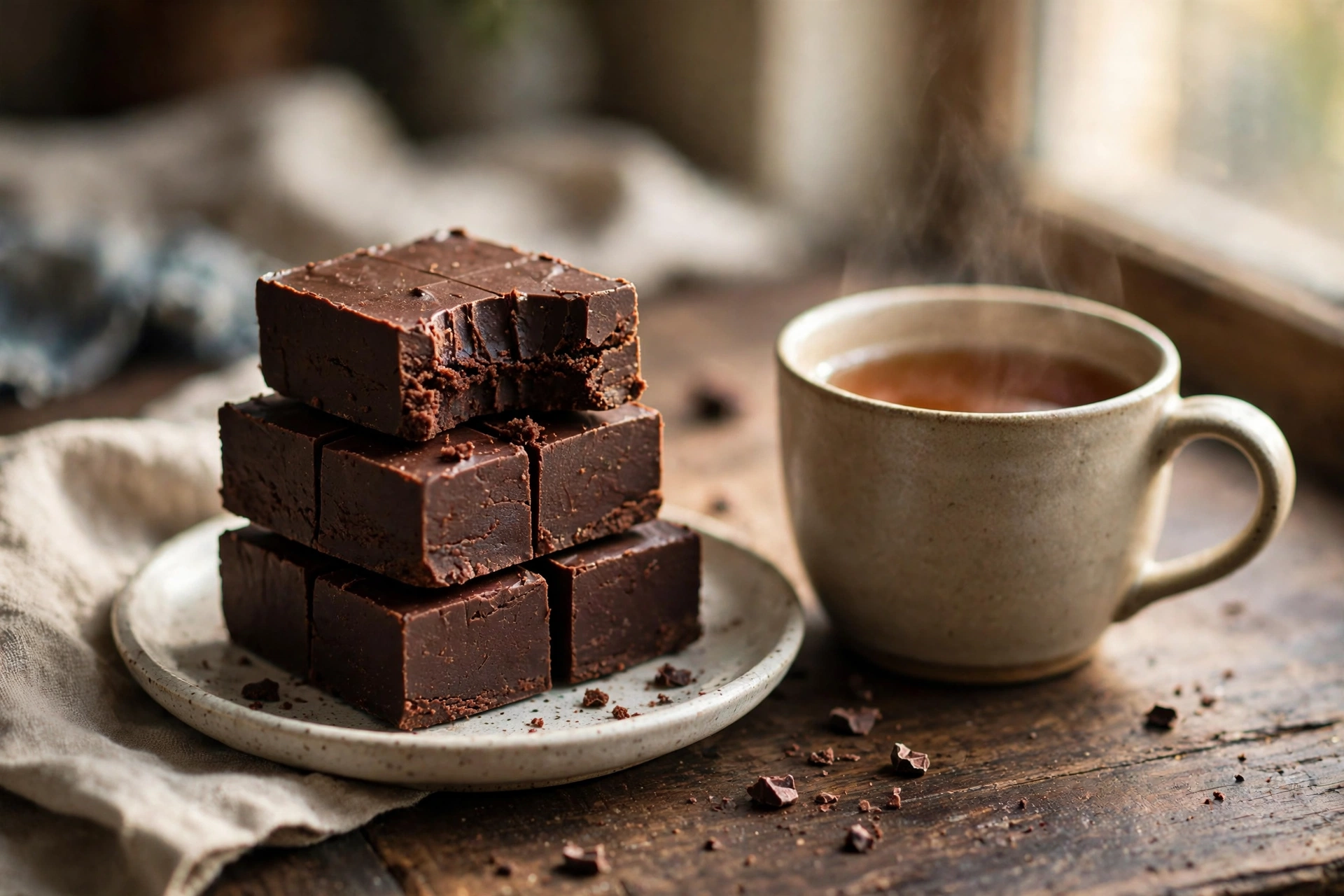
This sugar free fudge recipe gives you real cooked chocolate fudge — dense, smooth and rich — with zero added sugar and no candy thermometer. Make a batch this week, and try our sugar free ice cream and best sugar substitutes for diabetics next.
This article is for general information only and is not medical advice. Please talk to your doctor or a registered dietitian, especially if you have diabetes, heart disease or take medicine.