

How much water should you drink each day? This free water intake calculator works out your daily target from your body weight, how much you exercise, and your climate — in litres, glasses, and bottles, so the number is easy to use. Free, instant, and no sign-up needed.
Designed for adults aged 18 and over. Children, pregnant or breastfeeding women, and people with kidney disease or heart failure have different fluid needs — talk to your doctor about those.
How This Calculator Works
Your target starts with a widely used rule of thumb — 35 ml of water per kilogram of body weight per day — then adds for exercise and heat:
- Base: 35 ml × your weight in kg. A 70 kg person starts at about 2.5 litres.
- Exercise: about 350 ml extra for every 30 minutes of exercise, to replace what you sweat out.
- Hot or humid climate: 500 ml extra, because you lose more fluid through sweat.
For comparison, the US National Academies (NASEM) set an Adequate Intake for total water — from all drinks and food — of about 3.7 litres a day for men and 2.7 litres for women. About 20% of that total usually comes from food, so the amount you need to actually drink is closer to 3.0 litres for men and 2.2 litres for women. The 35 ml per kg rule is a practical starting estimate, not a medical prescription — your real needs vary with heat, activity, illness, and medication.
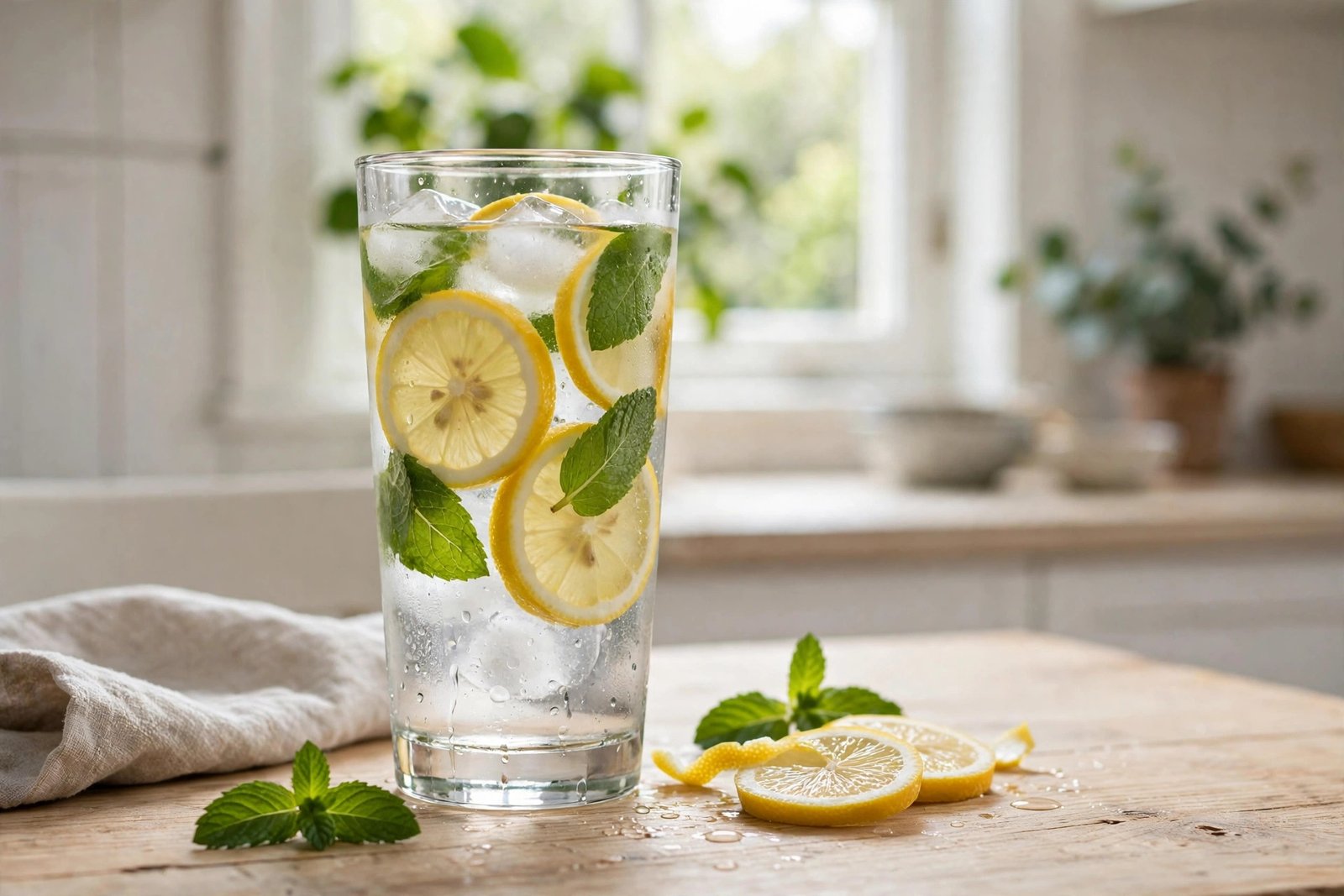
Water-Rich Foods That Count Toward Your Target
About a fifth of your daily water comes from food. These everyday foods do a surprising amount of the work:
| Food | Water content | Why it helps |
|---|---|---|
| Cucumber | About 96% | Almost entirely water, with crunch |
| Lettuce and leafy salad | About 95% | A big salad is a glass of water in disguise |
| Tomatoes | About 94% | Fresh, cooked, or as soup |
| Watermelon | About 92% | Sweet, hydrating, and low in calories |
| Strawberries | About 91% | High water, high vitamin C |
| Oranges | About 87% | Water plus fiber and vitamin C |
| Yogurt, plain | About 88% | Hydration with protein and calcium |
| Broth-based soup | About 92% | A warm way to top up fluids |
More Calculators
Every calculator on this site is free, instant, and built for healthy, diabetes-friendly eating. Browse all our free calculators.
- Calorie & Macro Calculator — find your daily calories, BMR, TDEE, and protein, carb, and fat targets.
- Protein Intake Calculator — work out your daily protein target in grams from your weight, goal, and activity.
- Glycemic Load Calculator — check the real blood sugar impact of any food or serving.
- Recipe Nutrition Calculator — add up the calories and macros in any homemade recipe, per serving.
- Sodium Intake Calculator — add up your daily sodium and compare it with the 1,500 mg and 2,300 mg limits.
- Recipe Scaling Calculator — double or halve any recipe and get the scaled ingredient list.
- Fiber Intake Calculator — find your daily fiber target from your age, sex, and calories.
- HbA1c Converter — turn your HbA1c into average glucose (eAG), or the other way round.
Frequently Asked Questions
How much water should I drink a day?
There is no single number for everyone. A practical starting point is 35 ml per kilogram of body weight, plus extra for exercise and heat. The US National Academies set an Adequate Intake for total water of about 3.7 litres a day for men and 2.7 litres for women, including water from food. This calculator personalises that for your weight and day.
Do tea and coffee count toward my water intake?
Yes. All drinks count toward your fluid intake, including tea and coffee — their mild diuretic effect does not cancel out the water they provide. Sugary drinks also count as fluid, but they add calories and are not a healthy way to hydrate.
Can you drink too much water?
Yes, though it is uncommon. Drinking very large amounts in a short time can dilute the sodium in your blood, a condition called hyponatremia. For most people, drinking to thirst plus a little extra in heat or exercise is safe. Endurance athletes should replace electrolytes as well as fluid on long sessions.
Do I need more water when I exercise?
Yes — you lose fluid as sweat. This calculator adds about 350 ml for every 30 minutes of exercise. On long or very sweaty sessions, weigh yourself before and after: each kilogram lost is roughly a litre of fluid to replace.
Does food count toward my water intake?
Yes. About 20% of daily water typically comes from food — fruits, vegetables, yogurt, and soups are the biggest contributors. A diet rich in fresh produce covers a meaningful part of your target before you drink anything.
How much water should I drink during pregnancy?
More than usual. The National Academies set the Adequate Intake for total water at about 3.0 litres a day during pregnancy and 3.8 litres while breastfeeding. Talk to your doctor or midwife about what is right for you.
Hydrate With Food Too
Soups, salads, and fresh fruit all count toward your target. Try our Low Sodium Vegetable Soup, browse our healthy recipes, or get a ready-made plan from our Meal Plans page.