How Does Sodium Affect Blood Pressure?
By Sarah | Last updated: November 9, 2026

Sodium makes your body hold on to water. More water means more blood in your vessels, and more blood pushes harder against the vessel walls, so blood pressure rises. Over time, too much sodium can also stiffen and narrow your blood vessels. So, how does sodium affect blood pressure? More salt means more fluid, and more fluid means more pressure.
Key Takeaways
- Sodium makes your body hold water, and that extra fluid raises blood pressure.
- Most adults should stay under 2,300 mg of sodium a day; 1,500 mg is ideal.
- About 75% of the salt we eat is hidden in packaged and restaurant foods.
- Cutting back can lower blood pressure within hours or days.
- Potassium-rich foods help your kidneys flush out extra sodium.
Table of Contents
- What Is the Difference Between Salt and Sodium?
- How Does Sodium Raise Blood Pressure?
- How Much Sodium Is Too Much?
- Where Does All the Salt Come From?
- What Is Salt Sensitivity?
- Can Cutting Salt Lower Your Blood Pressure?
- How to Cut 1,000 mg of Sodium a Day
- What About Potassium?
- Can You Eat Too Little Salt?
- Frequently Asked Questions
What Is the Difference Between Salt and Sodium?
Salt and sodium are not the same thing. Salt is sodium chloride, a crystal made of sodium and chloride. Sodium is the mineral inside salt, and it is the part that affects your blood pressure. Food labels list sodium in milligrams, so that is the number to check.
One teaspoon of table salt has about 2,300 mg of sodium — the whole daily limit for most adults, in a single teaspoon. This is why the shaker is not the main problem. Most of the salt we eat is already in the food we buy.
| Amount of salt | Salt in grams | Sodium in milligrams |
|---|---|---|
| 1/4 teaspoon | 1.5 g | about 600 mg |
| 1/2 teaspoon | 3 g | about 1,200 mg |
| 1 teaspoon | 5.9 g | about 2,300 mg |
| 1 tablespoon | 17.7 g | about 6,900 mg |
How Does Sodium Raise Blood Pressure?
Sodium raises blood pressure in three ways. First, it makes your body hold water, which increases blood volume. Second, more blood in the same vessels means more pressure on the walls. Third, over months and years, excess sodium can stiffen and narrow blood vessels, so pressure stays high even when you rest.
So how does sodium affect blood pressure in your body? Three things happen.
It makes your body hold water
Water follows sodium. When you eat salty food, sodium builds up in your blood, and your body holds on to water to balance it. Think of a garden hose: more water in the same hose means more force against the walls.
It raises blood volume, so pressure goes up
Blood pressure is the force of blood against your artery walls. When sodium holds extra water in your blood, the total volume goes up, and your heart must push a larger volume through the same pipes. That extra push is higher blood pressure.
It stiffens and narrows blood vessels over time
Short-term rises are only half the story. Over time, too much sodium can damage the inner lining of your arteries, called the endothelium. When it cannot relax well, vessels stay stiff and narrow. Stiff vessels raise pressure on their own. This is one reason high blood pressure can become a long-term problem.
It makes your kidneys work harder
Your kidneys filter your blood. They decide how much sodium to keep and how much to pass out in urine. When you eat a lot of salt, they must work harder to clear it. In some people, the kidneys hold on to sodium instead of letting it go. That keeps extra fluid in the body, so blood pressure stays up.
What happens, and when:
- Within 30 minutes of a very salty meal, blood vessels may not relax as well.
- Within hours or days of cutting back, blood pressure can start to fall.
How Much Sodium Is Too Much?
Most adults should eat less than 2,300 mg of sodium a day, about 1 teaspoon of salt. The American Heart Association says the ideal target is 1,500 mg a day. Most Americans eat about 3,400 mg a day, far above both limits.
The World Health Organization sets the limit at 2,000 mg of sodium a day, about 5 g of salt. Your body only needs 460 to 920 mg a day. Everything above that is extra, and the extra is what raises blood pressure.
| Who sets the limit | Daily sodium limit | Same as |
|---|---|---|
| World Health Organization | 2,000 mg | about 5 g of salt |
| US Dietary Guidelines | 2,300 mg | about 1 teaspoon of salt |
| American Heart Association (ideal) | 1,500 mg | about 2/3 teaspoon of salt |
| US average intake | 3,400 mg | about 1 1/2 teaspoons of salt |
| What your body needs | 460–920 mg | 1–2 g of salt |
Where Does All the Salt Come From?
About 75% of the salt we eat is already in packaged and restaurant foods. Only a small part comes from the salt shaker. Bread, soups, sauces, cheese and takeaway meals are the biggest sources.
A single can of chicken noodle soup can have more than 2,200 mg of sodium — almost the whole day’s limit in one can. Even bread adds up, because we eat it every day.
| Food | Serving | Sodium (about) |
|---|---|---|
| White bread | 1 slice | 170 mg |
| Chicken noodle soup | 1 can | more than 2,200 mg |
| Fast-food hamburger | 1 | more than 1,000 mg |
| Large fries | 1 order | 400 mg |
| Cheddar cheese | 1 oz | 190 mg |
| Soy sauce | 1 tablespoon | 900 mg |
| Ketchup | 1 tablespoon | 160 mg |
For a low-sodium lunch, try our tuna salad with Greek yogurt instead of mayo — about 34 g of protein, no mayo.
What Is Salt Sensitivity?
Salt sensitivity means your blood pressure rises a lot when you eat more salt. About 1 in 3 healthy people are salt-sensitive, and about 6 in 10 people with high blood pressure are. Eating less salt is the safest step.
Salt sensitivity is more common in older adults, in people with high blood pressure, diabetes or kidney disease, and in some families. About 1 in 10 people have the opposite pattern, inverse salt sensitivity, where blood pressure rises when they eat less salt. Genes play a role: researchers have found 18 genetic variants linked to it.
So how does sodium affect blood pressure in your body? It depends on how salt-sensitive you are.
Can Cutting Salt Lower Your Blood Pressure?
Yes. Cutting salt can lower blood pressure, often within hours or days. In a large review of 85 studies, any reduction in sodium lowered blood pressure, and the more you cut, the more it falls.
The DASH-Sodium trial is the clearest proof. In that trial, 412 adults ate three sodium levels: about 3,300 mg, 2,400 mg and 1,500 mg a day. Lower sodium intake meant lower blood pressure at every step. Going from the highest to the lowest level cut systolic blood pressure by about 7 mmHg on average, and by about 11.5 mmHg in people with high blood pressure. Blood pressure is measured in mmHg, short for millimetres of mercury.
The DASH eating plan, from the National Heart, Lung, and Blood Institute, is built for this. It is rich in fruits, vegetables and low-fat dairy. See also our guide to soluble fiber foods for high cholesterol.
How to Cut 1,000 mg of Sodium a Day
Cutting 1,000 mg of sodium a day is easier than it sounds. One swap can do most of the work: a can of soup has more than 2,200 mg, while a bowl of homemade low-sodium soup has about 70 mg.
| Swap | Before | After | Sodium saved |
|---|---|---|---|
| Canned soup → homemade low-sodium soup | 2,200 mg | 70 mg | about 2,130 mg |
| Soy sauce → lemon juice + herbs | 900 mg | 5 mg | about 895 mg |
| Deli ham (2 oz) → grilled chicken (3 oz) | 600 mg | 75 mg | about 525 mg |
| Canned green beans → fresh green beans | 400 mg | 5 mg | about 395 mg |
| Bottled ranch dressing → lemon + olive oil | 320 mg | 5 mg | about 315 mg |
| Regular bread (2 slices) → low-sodium bread (2 slices) | 340 mg | 100 mg | about 240 mg |
You do not need all six swaps. Even one or two make a real difference. Try our homemade low-sodium soup first — about 70 mg of sodium per serving, and one pot makes 8 servings.
In my kitchen, the soup swap was the easiest one to keep. I cook a big pot of low-sodium soup on Sunday, and it replaces canned soup for the whole week.
Here is one low-sodium day, adding up to about 1,250 mg of sodium — under the 1,500 mg ideal target.
| Meal | What you eat | Sodium (about) | Running total |
|---|---|---|---|
| Breakfast | 1 cup oatmeal, 1 banana, 1 cup milk, 1 slice whole-wheat toast | 280 mg | 280 mg |
| Lunch | 1 bowl low-sodium vegetable soup, 1 slice whole-wheat bread, 1 oz cheddar cheese | 430 mg | 710 mg |
| Snack | 1 cup plain Greek yogurt, 1 medium apple | 65 mg | 775 mg |
| Dinner | Grilled chicken, 1 cup brown rice, 1 cup broccoli, 1 dinner roll, 1 tsp butter, salad with ranch dressing | 475 mg | 1,250 mg |
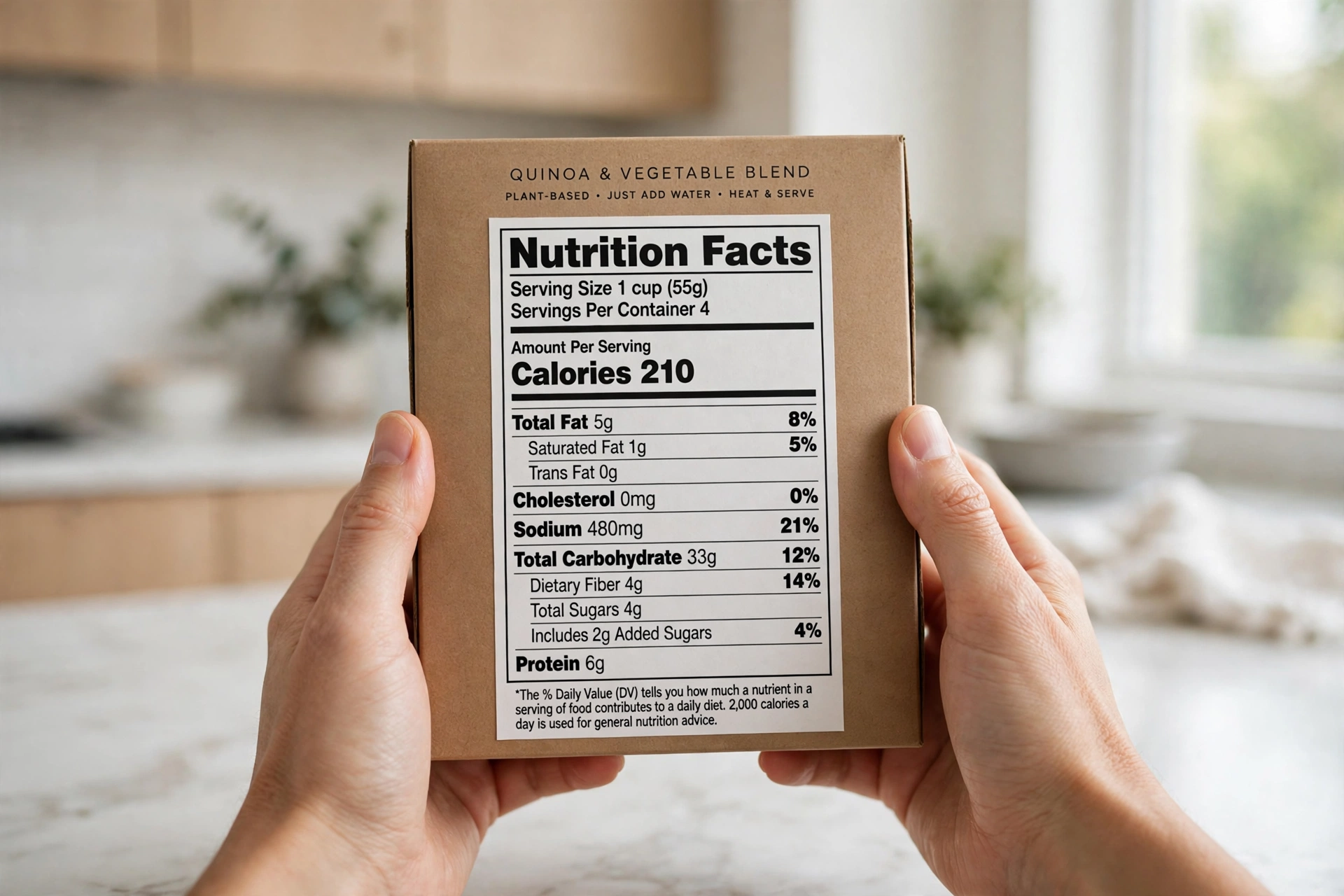
Labels are your best tool. Look at sodium in milligrams per serving, and check the serving size first. A food with 5% Daily Value or less is low in sodium; 20% or more is high. The words on the front matter too. “Low sodium” means 140 mg or less per serving. “Reduced sodium” only means 25% less than the regular version, which can still be high.
What About Potassium?
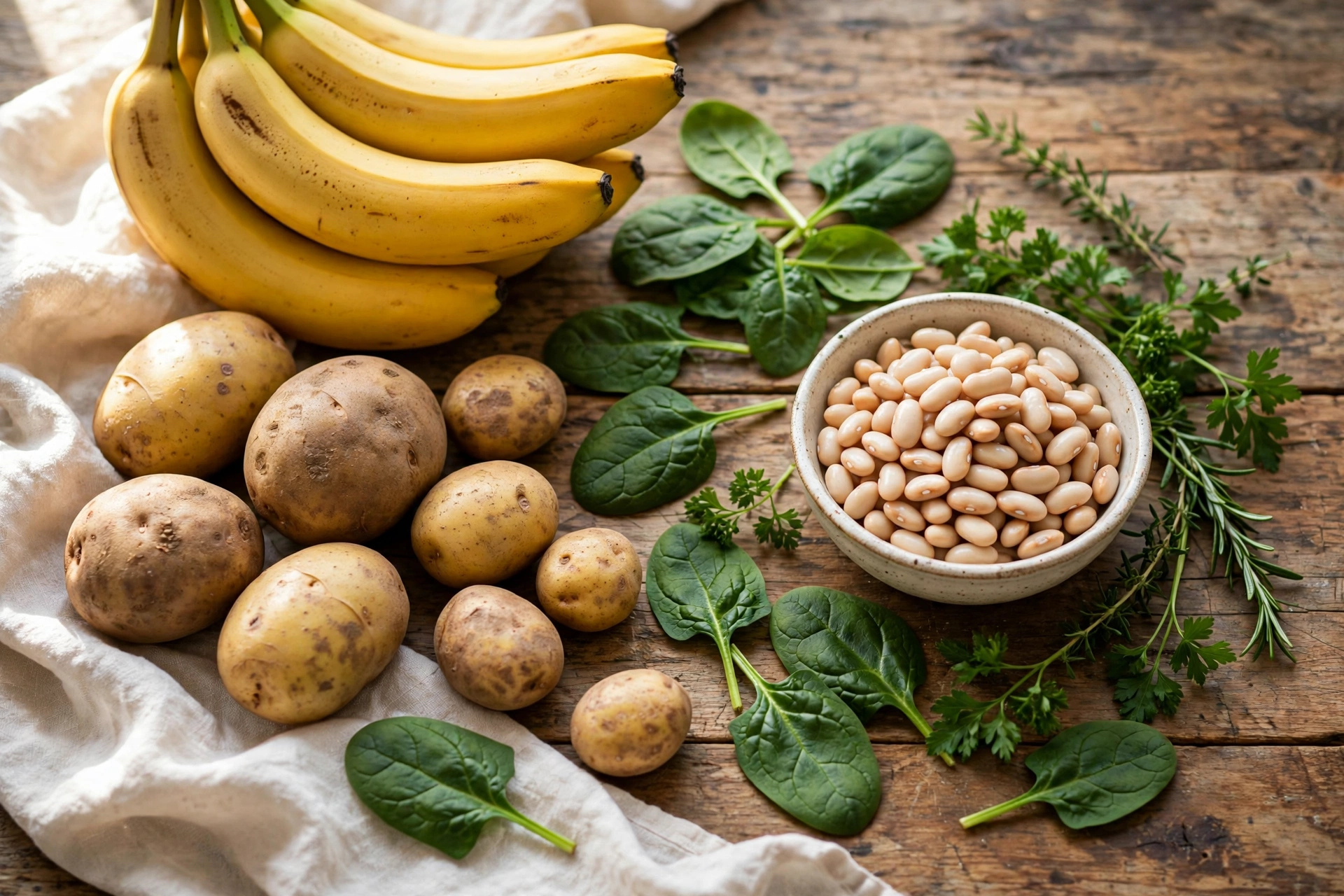
Potassium helps balance sodium. It helps your kidneys flush extra sodium out of your body, and it helps blood vessel walls relax. Most people eat too little potassium. Good sources are bananas, oranges, potatoes, sweet potatoes, spinach, broccoli and beans.
More potassium-rich foods can support healthy blood pressure. Many of them also appear in our list of foods high in soluble fiber. But be careful: if you have kidney disease or take certain blood pressure medicines, extra potassium can be unsafe. The same goes for salt substitutes made with potassium chloride. Talk to your doctor first.
Can You Eat Too Little Salt?
Yes, but it is rare. Your body only needs 460 to 920 mg of sodium a day. Most people eat far more than that, so ask your doctor if you sweat a lot or take certain medicines.
Frequently Asked Questions
How does sodium affect blood pressure?
Yes. Sodium makes your body hold water, which raises blood volume and pushes blood pressure up. Over time, it can also stiffen blood vessels. The effect is strongest in people who are salt-sensitive, but cutting sodium helps most people.
How much sodium per day is safe?
Most adults should stay under 2,300 mg of sodium a day, which is about 1 teaspoon of salt. The ideal target is 1,500 mg a day, especially if you have high blood pressure. The World Health Organization suggests 2,000 mg a day.
How fast does cutting salt lower blood pressure?
Blood pressure can start to fall within hours or days of eating less salt. A very salty meal can make blood vessels relax less well within 30 minutes. In the DASH-Sodium trial, each sodium level lasted 4 weeks, and lower sodium meant lower blood pressure at every step. Give it a few weeks.
What is salt sensitivity?
Salt sensitivity means your blood pressure reacts strongly to salt. About 1 in 3 healthy people are salt-sensitive, and about 6 in 10 people with high blood pressure are. It is more common in older adults and in people with diabetes or kidney disease. There is no simple test for it, so eating less salt is the safe choice.
Is sea salt or Himalayan salt better for blood pressure?
No. Sea salt, rock salt, Himalayan salt and table salt all have about the same sodium by weight. A teaspoon of any of them has about 2,300 mg of sodium. The shape and colour differ, but your blood pressure cannot tell them apart. What matters is how much salt you eat in total.
Conclusion
Sodium raises blood pressure by holding water in your body and stiffening your blood vessels over time. The good news is that you can change it. Start with one swap, read one label, or cook one low-sodium meal this week. For a simple start, try our low-sodium vegetable soup — about 70 mg of sodium per serving.
So, how does sodium affect blood pressure? In short: more salt, more fluid, more pressure. And less salt means less pressure, often within days.
This article is for general information only and is not medical advice. Please talk to your doctor or a registered dietitian, especially if you have diabetes, heart disease or take medicine.