Is Squid High in Cholesterol? Yes — But Read the Fat First
Is squid high in cholesterol? Yes — at 233 mg per 100 g, squid has the highest cholesterol of any common seafood. But squid is also almost fat-free, with under 2 g of fat per 100 g. The cholesterol number alone misleads: what matters for your blood cholesterol is the fat, and squid has barely any.
By Sarah | Last updated: November 17, 2026

Key Takeaways
- Is squid high in cholesterol? Yes — 233 mg per 100 g raw, the highest of any common seafood.
- A 4 oz cooked serving has about 526 mg of cholesterol. Cooking concentrates it as water leaves — and that is why “is squid high in cholesterol?” needs a portion size, not just a number.
- Saturated fat is almost nothing: about 0.4–0.5 g per 100 g — the fat that drives LDL is barely there.
- For “is squid high in cholesterol?”, the catch is the fryer: fried calamari adds oil, batter and calories.
- No trial has ever tested squid’s effect on blood cholesterol — the 1996 shrimp trial is the closest evidence.
In This Article
- Is Squid High in Cholesterol? The Short Answer
- Squid Nutrition: The Numbers
- Dietary Cholesterol vs Blood Cholesterol
- The Missing Trial: No One Has Tested Squid
- Grilled vs Fried Calamari
- The Sodium Catch
- Who Should Be Careful?
- Frequently Asked Questions
Is Squid High in Cholesterol? The Short Answer
Yes, squid is high in cholesterol. Raw squid contains 233 mg of cholesterol per 100 g — more than any other common seafood. A 3.5 oz serving has 231 mg, and a 4 oz cooked serving has about 526 mg. If you only look at the cholesterol number, squid looks like the worst seafood choice.
But the fat tells a different story. Raw squid has just 1.4–1.7 g of fat per 100 g, with only 0.4–0.5 g of saturated fat. Saturated fat is what drives your liver to make more LDL (“bad”) cholesterol. So squid carries a lot of dietary cholesterol in a very lean package — and that changes the verdict.
First, one clarification: calamari IS squid. Calamari is the Italian culinary name for squid, usually the rings. Same food, same numbers. When people ask “is squid high in cholesterol?”, they often mean the fried calamari rings at a restaurant — and the fryer, not the squid, is where the real problem starts.
Squid Nutrition: The Numbers
Squid is a lean protein. A 100 g serving of raw squid gives about 15.6 g of protein for roughly 92 calories, with under 2 g of fat. It also brings omega-3 fats: 500–1,000 mg of EPA and DHA per 4 oz cooked serving — more than most shellfish, though less than salmon.
| Seafood (3.5 oz) | Cholesterol |
|---|---|
| Squid | 231 mg |
| Shrimp | 194 mg |
| Salmon | 63 mg |
| Lobster | 71 mg* |
| Crab | 52 mg* |
| Halibut | 41 mg |
| Tuna | 30 mg |
*The UCSF figures for lobster and crab conflict with USDA values (lobster 146 mg, crab 97 mg per 100 g). Different entries and preparations explain the gap. Use USDA as the primary source for lobster and crab — see our guides to lobster and crab .
Squid tops the chart by a clear margin. But look at the fat column and the picture flips: squid has less fat than salmon and almost no saturated fat. That is why “is squid high in cholesterol?” needs a longer answer than yes or no. The cholesterol is high, the fat is almost zero, and the fat is what matters most for blood LDL.

Dietary Cholesterol vs Blood Cholesterol
Here is the fact that changes the whole question. Your liver makes about 80% of the cholesterol in your blood. The cholesterol you eat has a much smaller effect than most people think. For most healthy people, the liver simply makes less when you eat more, keeping blood levels fairly steady.
What does raise blood LDL is saturated fat (and trans fat). Saturated fat tells the liver to make more LDL and to clear less of it. That is why butter, fatty meat and full-fat cheese matter more for cholesterol than eggs or shellfish. The NHS advice on high cholesterol focuses on cutting saturated fat, not on avoiding dietary cholesterol.
Squid is the extreme test of this idea. It has the most dietary cholesterol of any seafood — and almost no saturated fat. If dietary cholesterol were the main driver of blood cholesterol, squid would be the worst seafood you could eat. That is the honest tension at the heart of “is squid high in cholesterol?” — the number is high, but the mechanism says it matters less than the number suggests.
The Missing Trial: No One Has Tested Squid
Here is something no competitor says plainly: no trial has ever tested squid’s effect on blood cholesterol. Not one. Every claim about squid and blood cholesterol is an educated guess from related foods. That does not mean squid is safe or dangerous — it means we do not know directly.
The closest evidence is the Rockefeller shrimp trial from 1996. Eighteen men ate 300 g of shrimp a day — a huge amount — and their LDL rose 7%, their HDL rose 12%, and their triglycerides fell 13%. The net effect on heart risk was roughly neutral. But shrimp is not squid. Shrimp has less cholesterol (194 mg vs 231 mg per 3.5 oz) and a different fat profile. Extrapolating from shrimp to squid is reasonable, but it is still extrapolation. That gap is the most honest part of “is squid high in cholesterol?” — and the part most articles skip.
So what should you do with this gap? If you have normal cholesterol, grilled squid in normal portions is a reasonable choice. If you have high cholesterol or heart disease, treat squid as an occasional food and talk to your doctor. The honest answer to “is squid high in cholesterol?” includes this uncertainty.
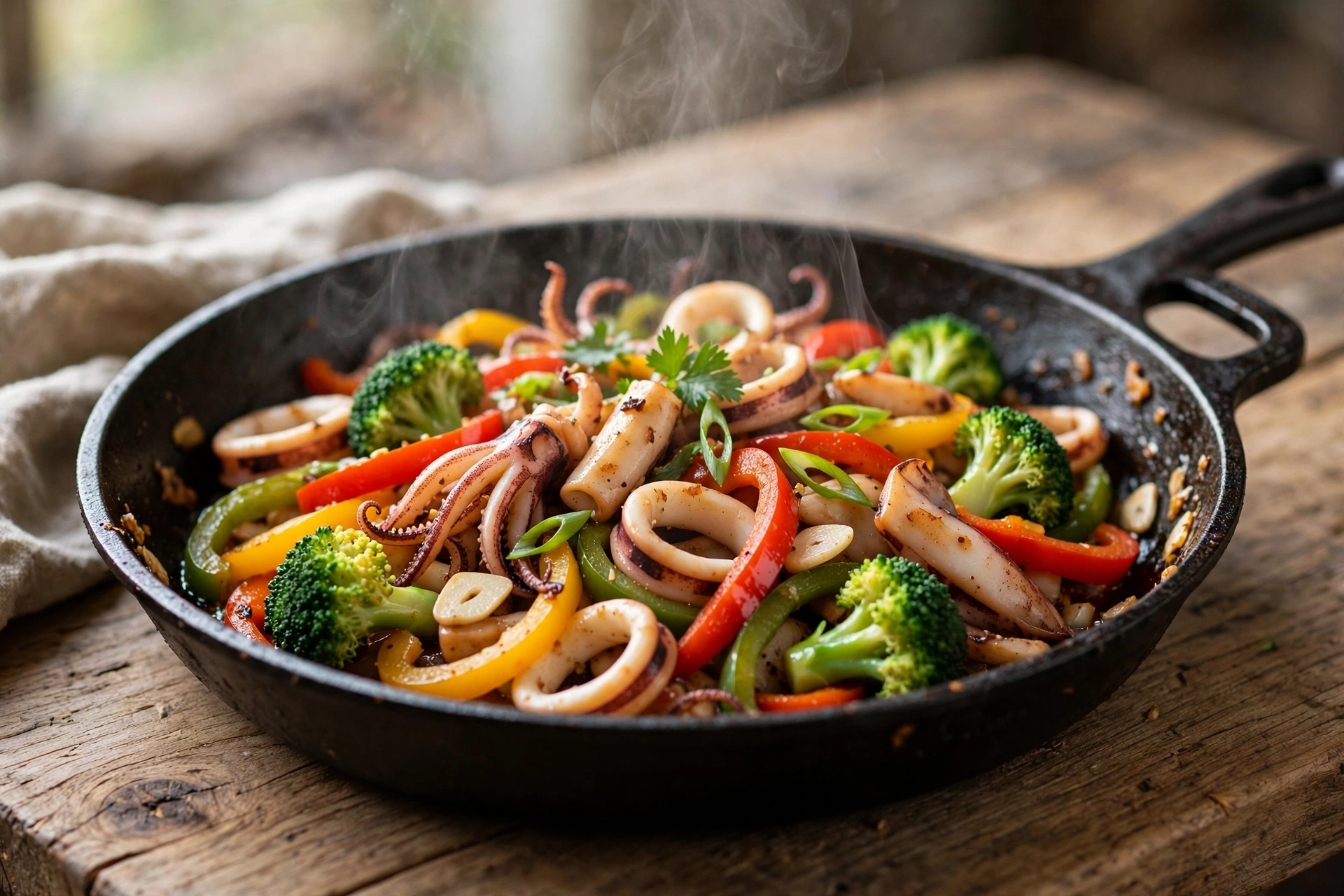
Grilled vs Fried Calamari
The preparation decides whether squid is a light meal or a heavy one. Grilled squid is about 100 calories per serving, with almost no fat. Fried calamari — battered rings deep-fried in oil — runs over 300 calories per serving, with added oil, refined flour, and often a creamy dipping sauce.
The fryer adds what squid itself lacks: fat. Batter soaks up frying oil, and reused oil at high heat creates oxidised fats. The dipping sauce adds more: aioli and tartar sauce are mostly fat. So fried calamari can carry more saturated fat in the coating and sauce than the squid ever had.
Keep it simple. Grill squid rings or a whole squid over high heat for 2–3 minutes per side — squid turns rubbery if overcooked. Toss with lemon, garlic and herbs, or stir-fry with vegetables in a little olive oil. I grill squid on Friday nights with lemon and a green salad, and it takes under ten minutes. When people ask “is squid high in cholesterol?”, the fryer is part of the answer — grilled wins every time.
The Sodium Catch
Squid has a second catch: sodium. A 4 oz serving of plain squid carries about 485 mg of sodium — 20% of the daily limit. That is not as salty as clams, but it is enough to matter if you have high blood pressure. Restaurant calamari is saltier still, because the batter and seasoning add more.
The daily sodium limit is 2,300 mg for most adults, and 1,500 mg is ideal for heart health. A serving of squid uses up a fifth of that before you add any seasoning. If you have high blood pressure, that matters more than the cholesterol number.
You can keep the sodium down. Cook squid at home, skip the extra salt, and let lemon and herbs do the seasoning. Avoid soy sauce and salty dipping sauces. That is how “is squid high in cholesterol?” stays a manageable question — the sodium is the number to watch, not just the cholesterol.

Who Should Be Careful?
Hyper-responders are the first group. Some people — roughly a quarter of the population — respond more strongly to dietary cholesterol than others. Their blood LDL rises more when they eat cholesterol-rich foods. If you are a hyper-responder, squid’s 233 mg per 100 g is a reason to limit it.
Familial hypercholesterolaemia is the second. People with this inherited condition have very high LDL from birth and must limit dietary cholesterol more strictly. If you have it, ask your doctor about squid specifically — the general advice may not apply to you.
Mollusc allergy affects 1–2% of the UK population and can cause anaphylaxis. Squid is a cephalopod mollusk, so a shellfish allergy may include squid. That allergy risk matters more than “is squid high in cholesterol?” for anyone with a shellfish allergy. Ask your doctor before trying it if you have any shellfish allergy. Prawns and sardines are safer bets for most people — sardines especially, with far less cholesterol and more omega-3.
Frequently Asked Questions
Is squid high in cholesterol compared to prawns?
Yes — squid is higher. Raw squid has 233 mg of cholesterol per 100 g, while prawns have about 189 mg. A 3.5 oz serving of squid has 231 mg versus 194 mg for shrimp. Both are very low in saturated fat, so the difference matters less than the numbers suggest — but on cholesterol alone, squid tops the chart.
Can I eat squid with high cholesterol?
In moderation, for most people — grilled, not fried. Squid has 233 mg of cholesterol per 100 g but almost no saturated fat, so its effect on blood LDL is likely small. Keep to 3–4 oz, 1–2 times a week. If you have familial hypercholesterolaemia or are a hyper-responder, ask your doctor first.
Is fried calamari bad for cholesterol?
Fried calamari is worse than grilled squid, but not because of the squid. The batter and frying oil add fat and calories — over 300 calories per serving versus about 100 for grilled. The dipping sauce adds more fat. If you love calamari, eat it grilled or stir-fried, and save the fried version for an occasional treat.
Does squid raise LDL cholesterol?
Probably not much, but no one knows for sure — no trial has tested squid directly. The closest evidence is the 1996 shrimp trial, where LDL rose 7% but HDL rose 12% and triglycerides fell 13%. Squid’s very low saturated fat suggests a small effect on LDL. Hyper-responders may see a bigger rise, so they should limit squid.
Is grilled squid healthy?
Yes. Grilled squid is lean protein (15.6 g per 100 g) with omega-3s (500–1,000 mg per 4 oz), very little fat, and about 100 calories. The cholesterol is high (233 mg/100 g), but the saturated fat is almost zero. Grilled with lemon and herbs, squid is a healthy part of a varied seafood diet.
Is calamari the same as squid?
Yes — calamari is the Italian culinary name for squid, usually served as rings. Same animal, same nutrition, same cholesterol (233 mg per 100 g). The difference is preparation: “calamari” usually means fried rings, while “squid” can mean grilled, stir-fried or stuffed. The cooking method, not the name, decides how healthy it is.

Your Next Step
So, is squid high in cholesterol? Yes — 233 mg per 100 g, the highest of any seafood. But with almost no saturated fat, the effect on your blood cholesterol is likely small. Grill it, keep portions to 3–4 oz, watch the sodium, and enjoy it weekly. The fryer, not the squid, is the thing to limit.
This article is for general information only and is not medical advice. Please talk to your doctor or a registered dietitian, especially if you have diabetes, heart disease or take medicine.
Sources: USDA FoodData Central (raw squid: 233 mg cholesterol/100 g, 15.6 g protein, 1.4–1.7 g fat); UCSF Health table (3.5 oz: squid 231, shrimp 194, salmon 63 mg); LoseIt (4 oz cooked squid ≈ 526 mg cholesterol, 485 mg sodium); Rockefeller 1996 shrimp trial (18 men, 300 g shrimp/day). Outbound link: NHS — High Cholesterol