Are Prawns High in Cholesterol? The Full Answer
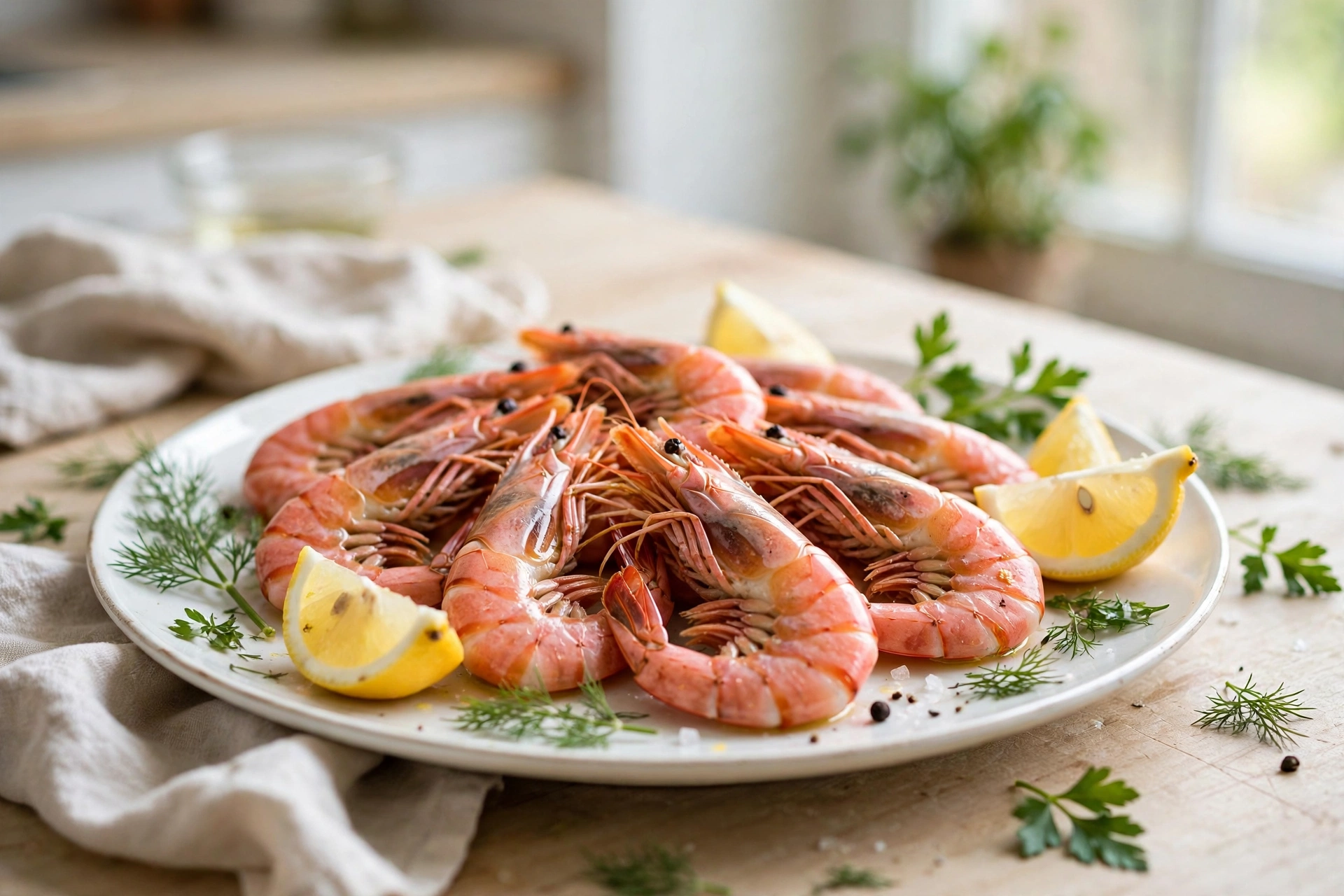
Are prawns high in cholesterol? Yes — a 3 oz serving has about 180 mg of cholesterol, almost as much as a large egg. But prawns have only 0.4 g of saturated fat, and saturated fat drives blood cholesterol far more than the cholesterol in food. For most people, grilled prawns are a heart-friendly choice.
By Sarah | Last updated: November 11, 2026
Key Takeaways
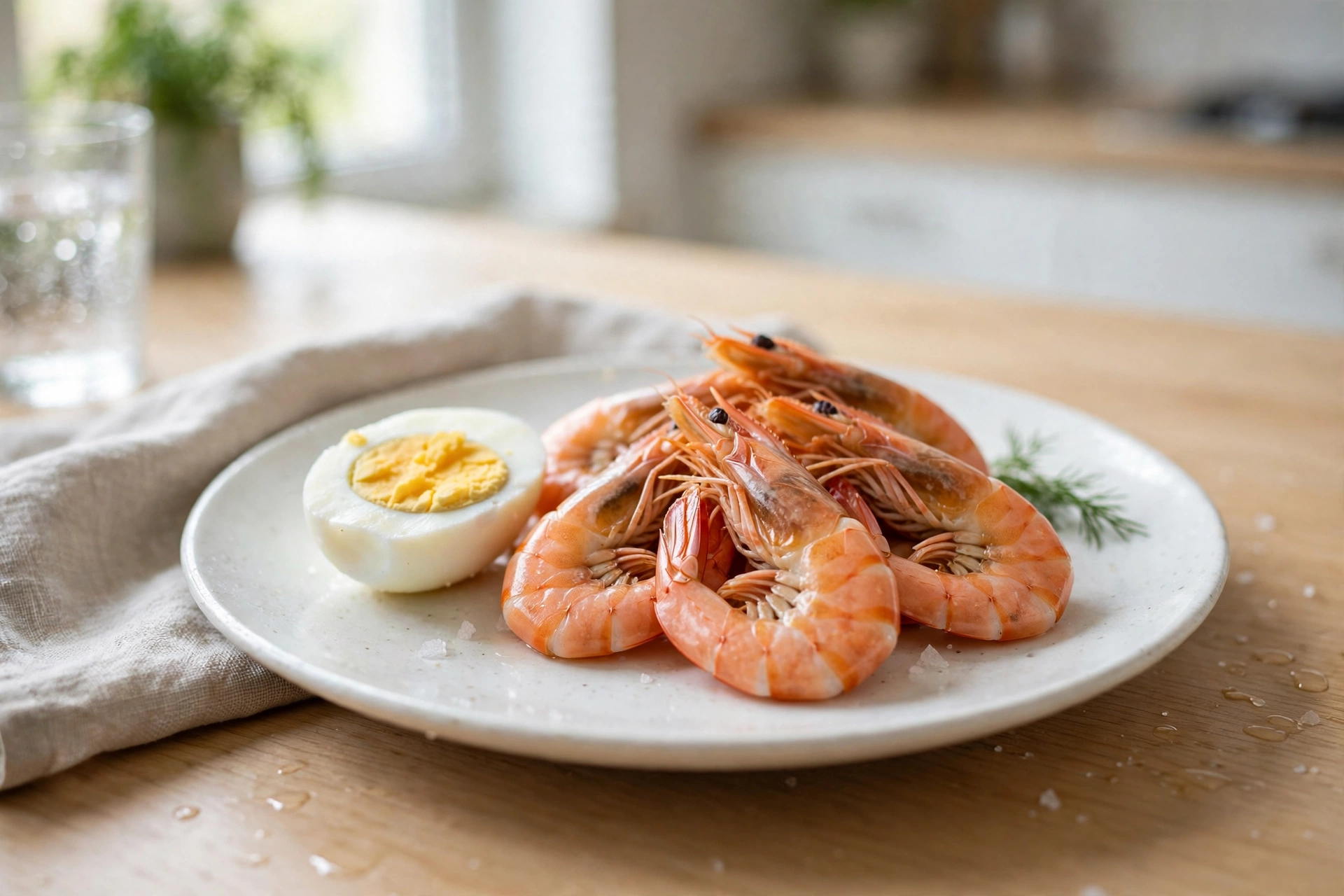
- Are prawns high in cholesterol? Yes — about 180 mg per 3 oz, almost as much as a large egg (186 mg).
- Prawns have only 0.4 g of saturated fat per 3 oz — about 3% of the AHA daily budget.
- In the best trial, a shrimp diet raised LDL by 7% but raised HDL by 12% and cut triglycerides by 13%.
- The NHS no longer lists prawns among the foods to cut for high cholesterol.
- How you cook prawns matters more than the prawns: grilled is light, fried nearly doubles the calories.
In This Article
- Are Prawns High in Cholesterol? The Short Answer
- Prawns Nutrition: The Numbers
- Dietary Cholesterol vs Blood Cholesterol
- What the Trial Found
- How You Cook Prawns Matters
- How Many Prawns Can You Eat?
- Who Should Be Careful?
- Frequently Asked Questions
Are Prawns High in Cholesterol? The Short Answer
Yes, prawns are high in cholesterol — a 3 oz serving has about 180 mg, nearly as much as a large egg. But that number alone does not decide what prawns do to your blood cholesterol. Prawns have only 0.4 g of saturated fat per serving, and saturated fat is the main dietary driver of LDL.
For most people, the answer to “are prawns high in cholesterol?” matters less than the answer to “are prawns high in saturated fat?” — and that answer is no.
Prawns used to sit on every “foods to avoid” list for cholesterol, and “are prawns high in cholesterol?” was the question that put them there. That changed when research showed dietary cholesterol has a much smaller effect on blood cholesterol than once thought. The NHS no longer lists prawns among the foods to cut. The AHA’s 2020 advisory says healthy people need no strict dietary cholesterol limit, as long as their diet is low in saturated fat. Prawns fit that rule well.
Prawns Nutrition: The Numbers
A 3 oz (85 g) serving of cooked prawns has about 180 mg of cholesterol, 0.4 g of saturated fat, 101 calories, and 19 g of protein. That is a lot of protein for very few calories and almost no saturated fat. The cholesterol number looks high alone. Next to the saturated fat number, it tells a different story.
| Food (serving) | Cholesterol | Saturated fat | Calories |
|---|---|---|---|
| Prawns, cooked (3 oz) | ~180 mg | 0.4 g | 101 |
| Large egg (1) | 186 mg | 1.6 g | 72 |
| Butter (1 tbsp) | 30 mg | 7.2 g | 100 |
| Salmon, farmed (3 oz) | 54 mg | 2.0 g | 175 |
The table shows why the question “are prawns high in cholesterol?” needs a second question. Butter has far less cholesterol than prawns — 30 mg against 180 mg — but 18 times the saturated fat. Butter raises LDL far more than prawns do. The cholesterol in food is not the number that decides your blood LDL. The saturated fat is.
Dietary Cholesterol vs Blood Cholesterol
Your liver makes most of the cholesterol in your blood — about 80 percent of it. The cholesterol you eat is a smaller part of the picture. When you eat more cholesterol, your liver usually makes less to balance it out. That is why dietary cholesterol has a modest effect on blood cholesterol for most people.
Saturated fat works differently. It tells your liver to make more LDL and to clear less of it from your blood. That is why butter, fatty meat, and coconut oil raise LDL far more than prawns or eggs do, even though prawns and eggs carry more cholesterol per serving. That is the real answer to “are prawns high in cholesterol?” — the cholesterol is high, but the fat that drives blood LDL is almost absent. The AHA’s 2020 advisory reflects this: it dropped the old 300 mg daily cholesterol limit and focused on saturated fat instead. People with high LDL — especially with diabetes or heart-failure risk — should still be cautious, but the blanket ban on prawns is gone.
What the Trial Found
The best trial on this question is the Rockefeller study from 1996. Eighteen men ate 300 g of shrimp a day — about 590 mg of cholesterol — for three weeks. Their LDL rose by 7 percent. But their HDL rose by 12 percent, and their triglycerides fell by 13 percent. The overall pattern was mixed, not clearly harmful.
The same trial had an egg arm for comparison. Men eating two eggs a day — about 581 mg of cholesterol, nearly the same amount — saw LDL rise by 10 percent and HDL rise by 8 percent. Prawns did better than eggs on both measures, even at the same cholesterol dose. That is the strongest evidence that asking “are prawns high in cholesterol?” is the wrong question — the cholesterol number does not tell the whole story. The low saturated fat and the protein quality matter too.
How You Cook Prawns Matters
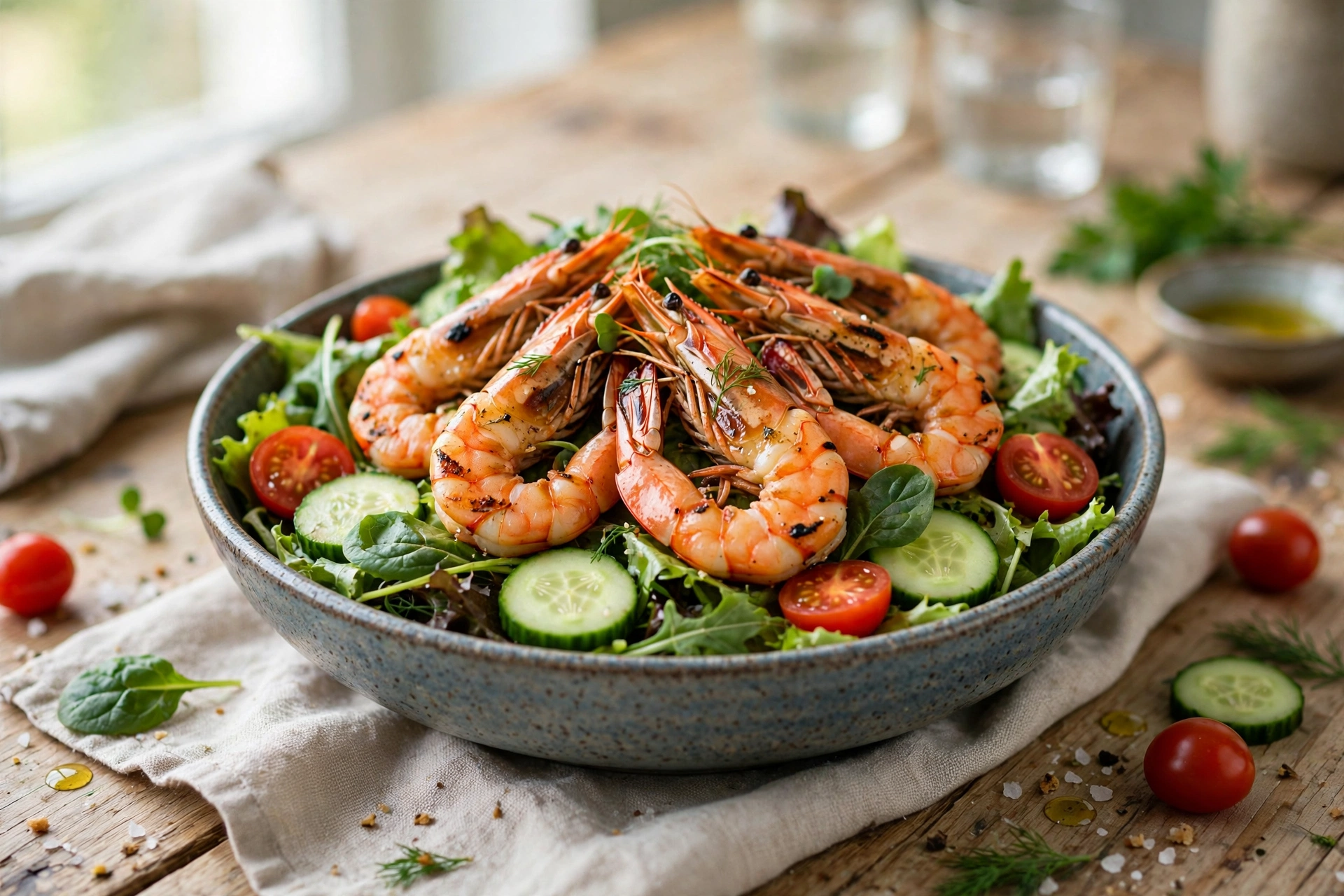
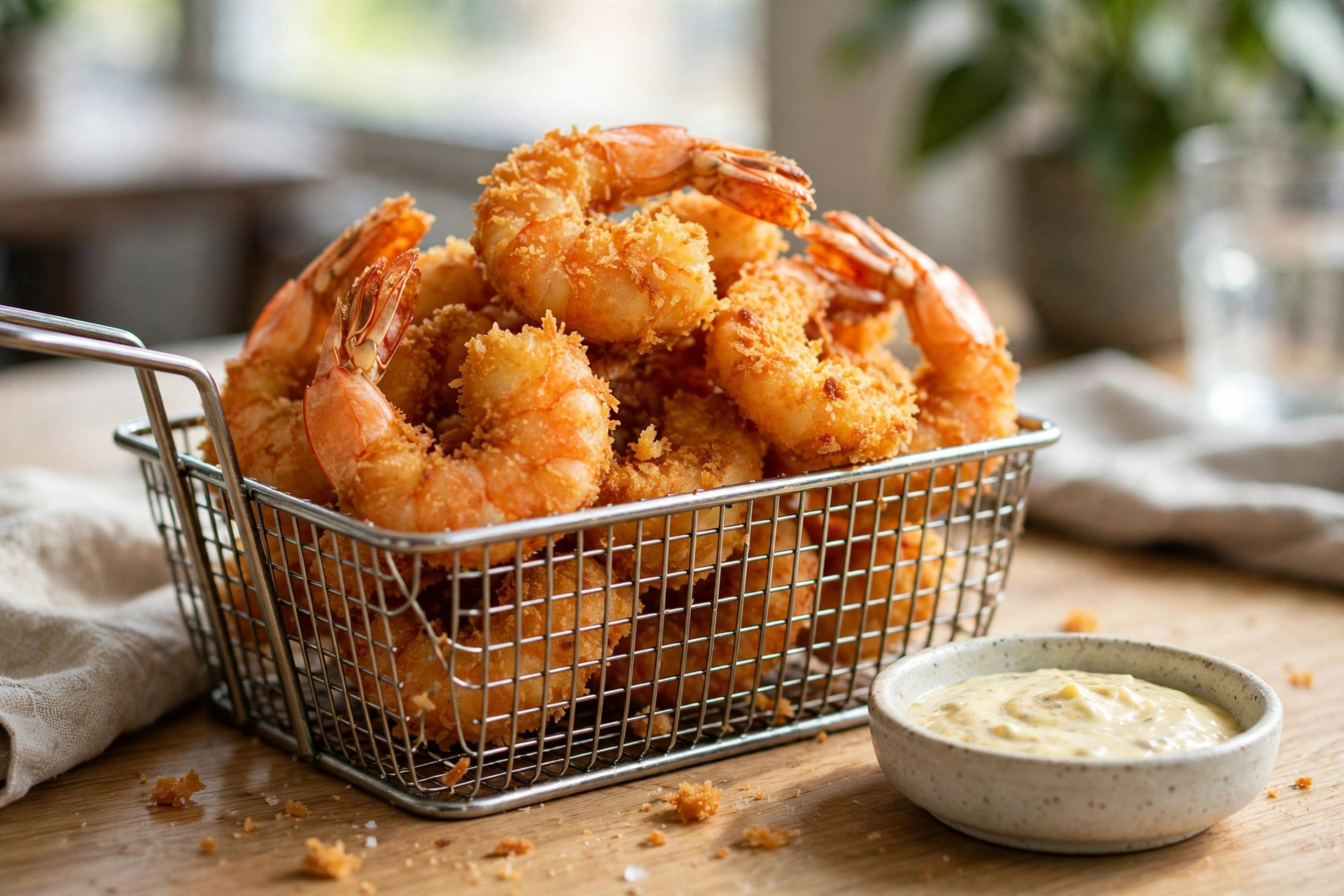
Grilled prawns and fried prawns are different foods. A 3 oz serving of grilled prawns has 0.4 g of saturated fat and about 101 calories. The same weight of breaded, fried prawns has 1.8 g of saturated fat and about 206 calories.
The coating and the frying oil do the damage, not the prawn. Prawns cooked in butter pick up the same problem — a tablespoon of butter adds 7 g of saturated fat to the plate.
I grill prawns with garlic and lemon most weeks — they cook in four minutes, and the plate feels light in a way fried prawns never did. When friends ask me “are prawns high in cholesterol?”, I tell them to look at the cooking method first. Try our air fryer shrimp skewers for the same result with even less oil. If you love fried prawns, keep them as an occasional treat and pair them with salad and vegetables, not chips.
How Many Prawns Can You Eat?
A sensible portion is 3 oz of cooked prawns — about 12 to 15 medium prawns — as part of one or two seafood meals a week. That is the AHA’s guidance for seafood in general, and prawns fit inside it. At 3 oz, you get about 180 mg of cholesterol and only 0.4 g of saturated fat.
So the portion uses almost none of your saturated fat budget. When you ask “are prawns high in cholesterol?”, the portion is part of the answer — a 3 oz serving is a small dose of cholesterol with almost no saturated fat.
Prawns are not an omega-3 food, though. A 3 oz serving has about 0.2 g of EPA and DHA, against about 1.8 g in the same weight of farmed salmon. So vary your seafood: prawns one meal, an oily fish the next. Our guides to salmon for cholesterol and sardines for cholesterol cover the omega-3 options. For weeknight ideas, see our low-calorie shrimp dinners.
Who Should Be Careful?
Most people can eat prawns without worrying about cholesterol. But some groups should be more careful. If your LDL is high and you have diabetes or a higher risk of heart failure, the AHA advises caution with dietary cholesterol. Prawns are not banned, but portion size and frequency matter more for you.
People with familial hypercholesterolaemia — an inherited condition that raises LDL very high — should also check with their doctor before eating prawns regularly, because their answer to “are prawns high in cholesterol?” is stricter than most people’s. And prawns are high in purines, so people with gout should limit them. For everyone else, the foods to limit are the ones on our guide to foods to avoid with high cholesterol — prawns are not on that list.
Frequently Asked Questions
Are prawns high in cholesterol compared to chicken?
Yes — prawns have far more dietary cholesterol than chicken. A 3 oz serving of prawns has about 180 mg, while the same weight of chicken breast has about 70 mg. But prawns have less saturated fat (0.4 g vs about 1 g), so their effect on blood LDL is similar or smaller. Both are lean protein choices.
Can I eat prawns with high cholesterol?
Yes, in most cases. The NHS no longer lists prawns among foods to cut for high cholesterol, and the AHA says healthy people need no strict dietary cholesterol limit if their diet is low in saturated fat. Keep portions near 3 oz, grill rather than fry, and check with your doctor if your LDL is very high.
Are prawns worse than eggs for cholesterol?
No — the Rockefeller trial found prawns did better than eggs at the same cholesterol dose. The shrimp diet raised LDL by 7% and HDL by 12%, while the egg diet raised LDL by 10% and HDL by 8%. Both are fine in moderation. The saturated fat in the rest of your meal matters more than either food alone.
Are prawns high in cholesterol — do they raise LDL?
Prawns can raise LDL slightly — about 7% in the Rockefeller trial at a very high dose (300 g a day). At a normal 3 oz portion, the effect is much smaller. Prawns also raise HDL and lower triglycerides, which partly balances the LDL rise. For most people, the net effect on heart risk is small.
Are frozen prawns as good as fresh prawns for cholesterol?
Yes — freezing does not change the answer to “are prawns high in cholesterol?” or the saturated fat content. Frozen prawns have the same nutrition as fresh ones, as long as they are plain and not breaded. Check the label for added sodium: some frozen prawns are treated with salt water, which matters more for blood pressure.
How should I cook prawns for heart health?
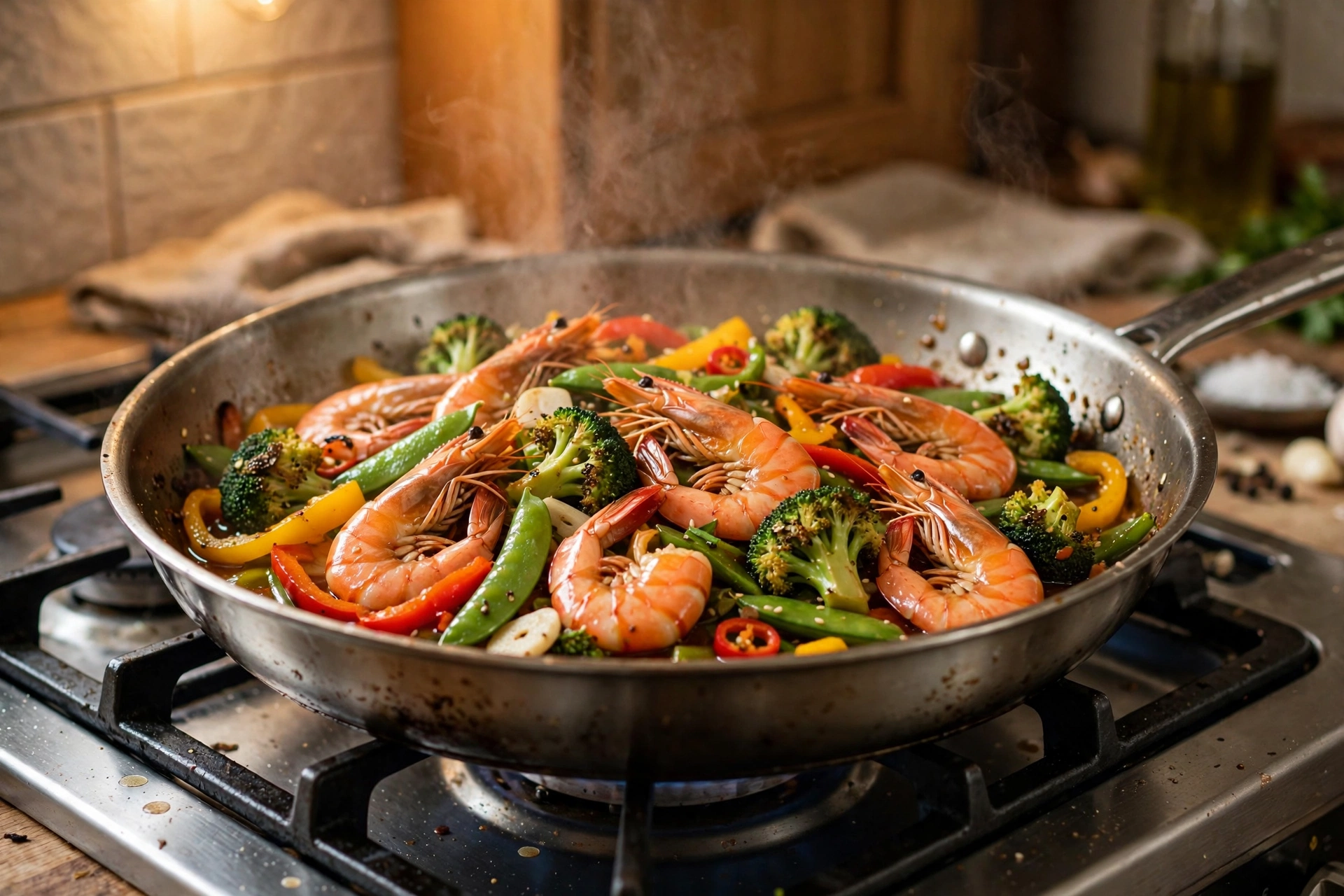
Grill, steam, poach, or air-fry them with olive oil, garlic, and lemon. Avoid breading and deep-frying, which nearly double the calories and quadruple the saturated fat. Skip butter-based sauces — a tablespoon of butter adds 7 g of saturated fat. Pair prawns with vegetables, salad, or whole grains for a balanced plate.
Your Next Step
So, are prawns high in cholesterol? Yes — about 180 mg per 3 oz, nearly as much as an egg. But with only 0.4 g of saturated fat, grilled prawns are a lean, heart-friendly protein for most people. Grill your next batch instead of frying it, keep the portion near 3 oz, and let the saturated fat number guide your choices.
This article is for general information only and is not medical advice. Please talk to your doctor or a registered dietitian, especially if you have diabetes, heart disease or take medicine.
Sources: USDA FoodData Central (FDC 171971, FDC 175180); De Oliveira e Silva et al., American Journal of Clinical Nutrition 1996 (Rockefeller shrimp trial); American Heart Association 2020 dietary cholesterol advisory; NHS high cholesterol guidance. Outbound link: NHS — High cholesterol