Best Foods for Heart Health: 15 Picks That Help
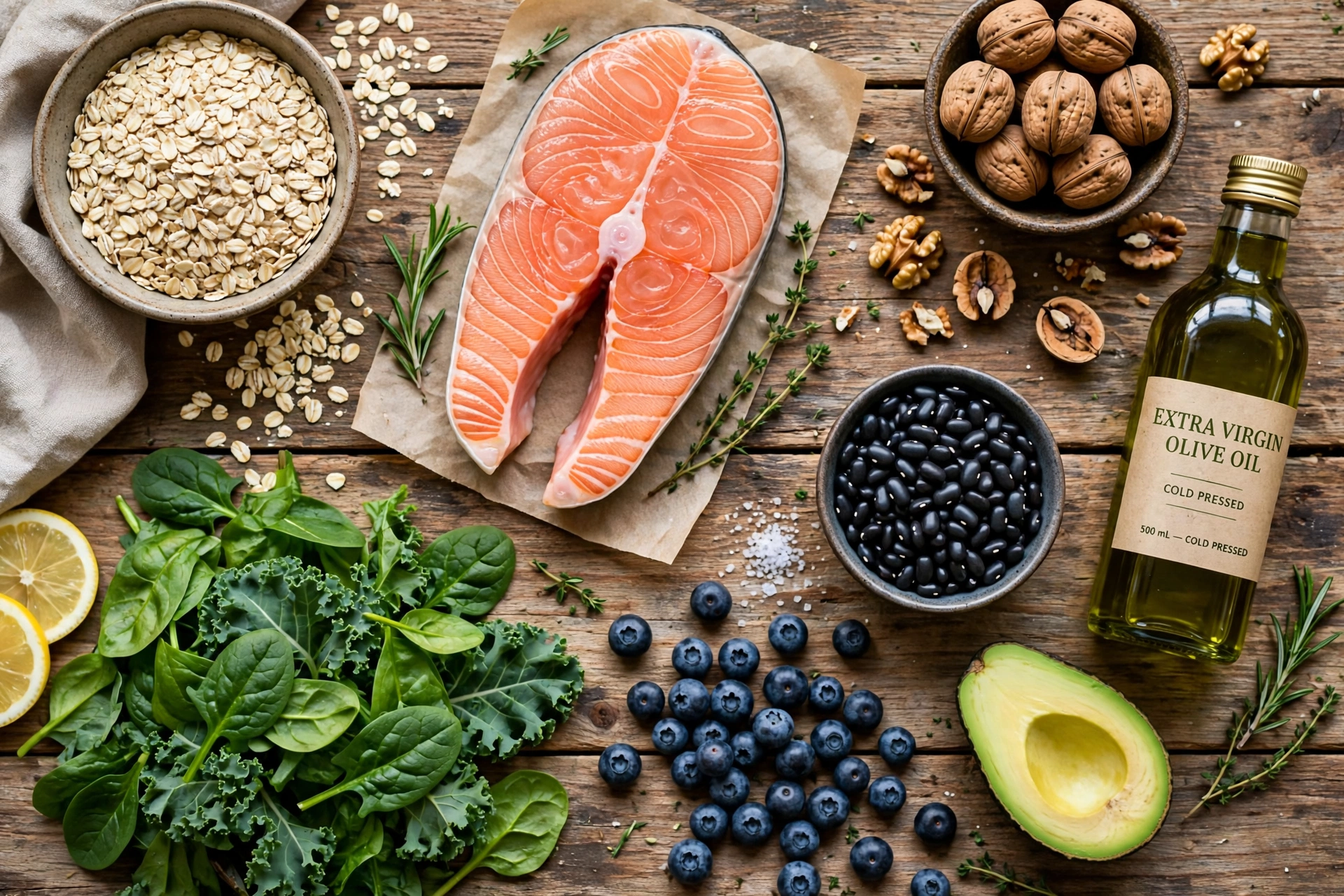
The best foods for heart health are fatty fish, oats, beans, lentils, nuts, seeds, berries, leafy greens, olive oil and avocado. They help in different ways — some lower blood pressure, some lower cholesterol, some calm inflammation. No single food does it alone; the pattern matters most.
Key Takeaways
- The best foods for heart health work as a pattern, not as single superfoods — fish twice a week, whole grains daily, vegetables at every meal.
- Every one of the best foods for heart health below comes with a portion, so you know how much to eat — not just what.
- No food replaces medicine. If you take heart or blood pressure medicine, keep taking it and talk to your doctor about diet changes.
Table of Contents
- What makes food heart-healthy?
- The 15 best foods
- A heart-healthy day
- What to limit
- Eggs, chocolate, wine
- Shopping list
- FAQ
What Makes a Food Good for Your Heart?
A food is good for your heart when it helps one of four things: blood pressure, cholesterol, triglycerides or inflammation. The American Heart Association’s 2026 guidance looks at the whole eating pattern, not single foods — vegetables and fruit, whole grains, healthy proteins, unsaturated fats and minimally processed foods, with less salt and added sugar.
That 2026 update lists nine features of a heart-healthy pattern: balance calories with activity; eat plenty of vegetables and fruits; choose whole grains; pick healthy proteins (plants, fish, low-fat dairy, lean meat); use unsaturated fats like olive oil; prefer whole foods; keep added sugars and sodium low; and if you do not drink, do not start.
No food on its own can protect your heart. What matters is the mix on your plate most days. The 15 best foods for heart health below are the strongest building blocks for that mix — and each one earns its place for a different reason. Read the American Heart Association’s diet and lifestyle recommendations for the full guidance.
The 15 Best Foods for Heart Health
These are the best foods for heart health, with a portion for each one. The table gives you the quick version; the sections below explain what each group does and why it matters. Start with the foods you already like — you do not need all 15 at once.
| # | Food | Portion | What it does | Key nutrient |
|---|---|---|---|---|
| 1 | Salmon | 85–100 g cooked, twice a week | Lowers triglycerides, calms inflammation | Omega-3 (EPA, DHA) |
| 2 | Sardines | 85–100 g, twice a week | Lowers triglycerides, calms inflammation | Omega-3 (EPA, DHA) |
| 3 | Oats | 40 g dry (1 cup cooked) | Lowers LDL cholesterol | Beta-glucan (soluble fiber) |
| 4 | Barley | 1/2 cup cooked | Lowers LDL cholesterol | Beta-glucan (soluble fiber) |
| 5 | Black beans | 1/2 cup cooked | Lowers LDL, helps blood pressure | Soluble fiber, potassium |
| 6 | Lentils | 1/2 cup cooked | Lowers LDL, helps blood pressure | Soluble fiber, potassium |
| 7 | Walnuts | Small handful (28 g) | Lowers LDL, calms inflammation | ALA omega-3, plant sterols |
| 8 | Almonds | Small handful (28 g) | Lowers LDL | Monounsaturated fat, fiber |
| 9 | Ground flaxseed | 1 tablespoon | Lowers LDL, calms inflammation | ALA omega-3, lignans |
| 10 | Blueberries | 1 cup (fresh or frozen) | Protects blood vessels | Anthocyanins |
| 11 | Spinach and leafy greens | 1–2 cups | Helps blood pressure, blood flow | Nitrates, potassium, folate |
| 12 | Extra virgin olive oil | 1 tablespoon | Lowers LDL, protects vessels | Monounsaturated fat, polyphenols |
| 13 | Avocado | 1/2 medium | Lowers LDL | Monounsaturated fat, fiber |
| 14 | Sweet potatoes | 1 medium | Helps blood pressure | Potassium, fiber |
| 15 | Tomatoes | 1 medium or 1/2 cup | Protects blood vessels | Lycopene, potassium |
Foods that help blood pressure
Leafy greens, beans, lentils and sweet potatoes are the best foods for heart health when blood pressure is the goal. They help in two ways: potassium helps the body get rid of salt and relaxes blood vessel walls, and fiber keeps the meal steady. Leafy greens and beetroot also carry nitrates, which the body turns into nitric oxide — a compound that helps blood vessels open up so blood flows more easily. A cup of spinach in a salad and a sweet potato with dinner is a simple daily habit.
If you have kidney disease, talk to your doctor before raising your potassium intake — high potassium can be harmful when the kidneys cannot clear it.
Foods that help cholesterol
Oats, barley, beans, lentils, nuts, olive oil and avocado are the best foods for heart health for cholesterol, mostly through soluble fiber and healthy fats. Soluble fiber forms a gel in the gut that traps cholesterol and carries it out. A bowl of porridge from 40 g of oats gives about 1.4 g, and the daily target for lowering LDL is 5 to 10 g. For the full story, see our soluble fiber foods for high cholesterol.
Foods that help triglycerides and inflammation
Fatty fish is the star here. Salmon and sardines carry EPA and DHA, the omega-3 fats that lower triglycerides and calm inflammation. The American Heart Association recommends two servings of fatty fish a week. Walnuts and flaxseed add ALA, the plant omega-3, and berries add anthocyanins that protect blood vessels.
Foods that protect blood vessels
Berries, tomatoes, citrus fruit and olive oil protect the lining of your blood vessels. Berries bring anthocyanins; tomatoes bring lycopene; citrus brings vitamin C and flavonoids; olive oil brings polyphenols. These antioxidants help stop damage to the cells that line your arteries. A drizzle of olive oil on a tomato salad is one of the easiest heart-healthy habits.
A note on diabetes
Heart health and blood sugar overlap, and several foods here help both. Oats, beans, lentils and leafy greens release energy slowly, which keeps blood sugar steadier. One watch-out: fruit juice and dried fruit are not whole fruit — juice has no fiber, and dried fruit packs much sugar into a small portion.
What Does a Heart-Healthy Day Look Like?
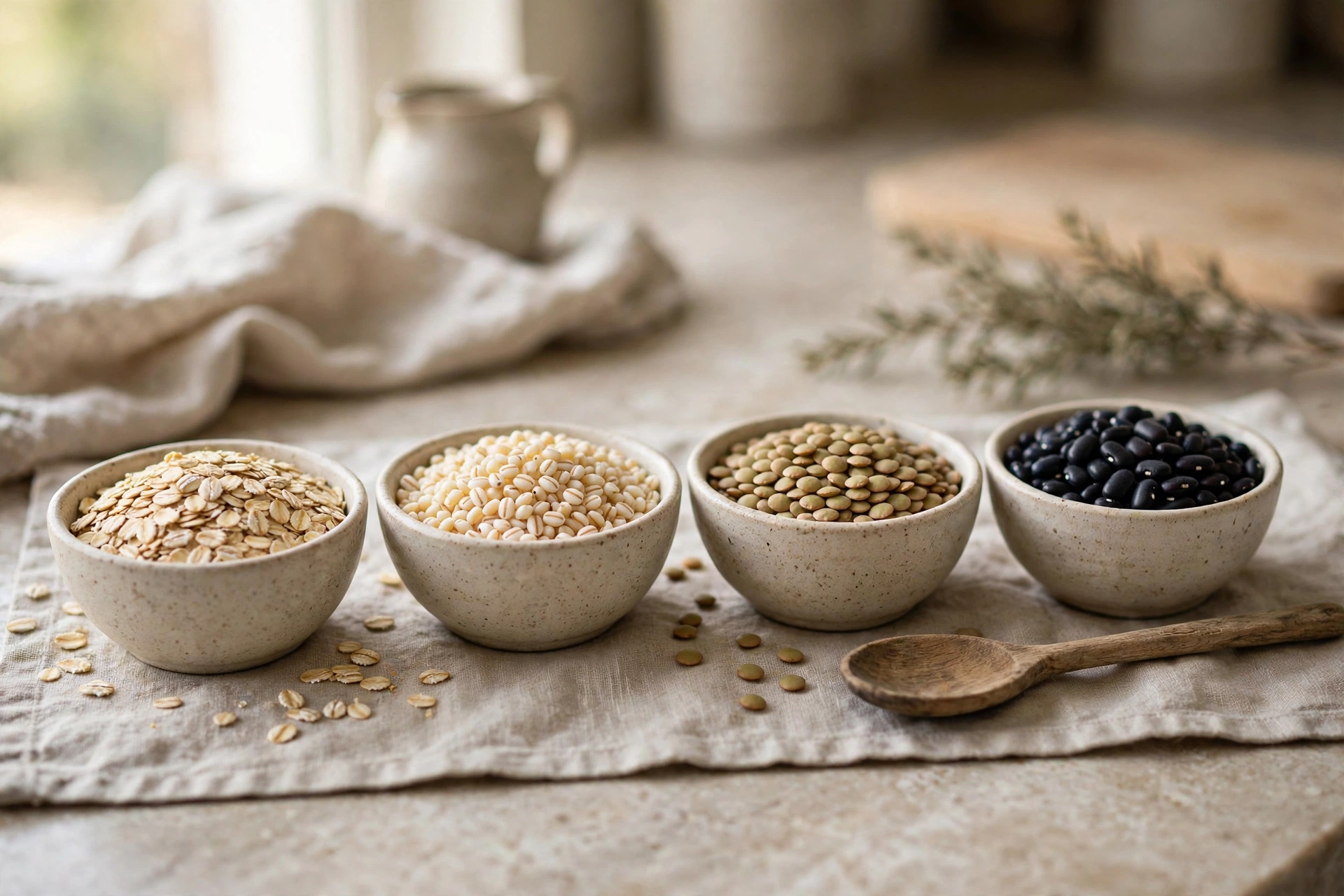
A heart-healthy day is not a diet — it is a normal day built from the best foods for heart health above. Here is one day that uses 12 of the 15 foods, with fish once, whole grains twice and vegetables at every meal.
| Meal | What to eat | Foods from the list |
|---|---|---|
| Breakfast | Porridge made with 40 g oats, topped with 1 cup blueberries, 1 tbsp ground flaxseed and a small handful of walnuts | Oats, blueberries, flaxseed, walnuts |
| Lunch | Lentil soup with spinach, a slice of whole wheat bread, and a tomato salad with 1 tbsp olive oil | Lentils, spinach, barley (in the soup), tomatoes, olive oil |
| Snack | An apple with a small handful of almonds | Almonds |
| Dinner | Baked salmon (100 g) with a sweet potato and steamed greens, plus half an avocado on the side | Salmon, sweet potato, leafy greens, avocado |
That day gives you one fish serving, two whole-grain servings and five or more vegetable and fruit servings. Swap the salmon for sardines on toast, or the lentil soup for black bean chili, and the pattern still holds.
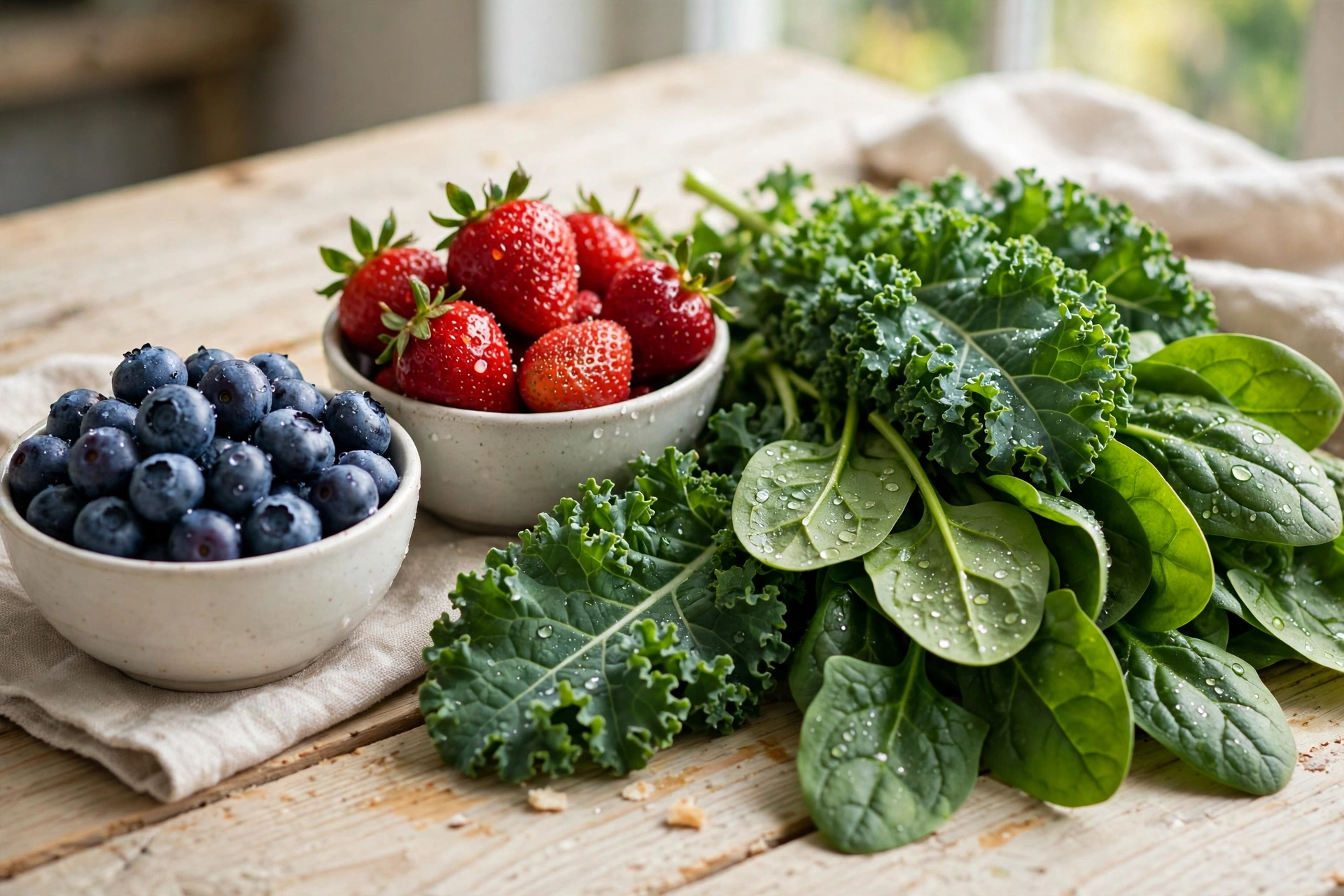
I keep a bag of frozen berries and a tin of sardines in the cupboard — on busy days, the berries go on my oats and the sardines go on toast, and dinner is still heart-healthy.
What Foods Should You Limit for Heart Health?
Limiting the right foods matters as much as adding the best foods for heart health. The American Heart Association’s guidance is clear: keep saturated fat low, keep sodium low, keep added sugars low, and choose whole foods over ultra-processed ones.
- Saturated fat: aim for no more than 6% of daily calories — about 13 g on a 2,000-calorie day. The main sources are fatty meat, butter, cheese, coconut oil and palm oil. Swap butter for olive oil, fatty meat for fish or beans.
- Sodium: no more than 2,300 mg a day, and 1,500 mg is better for most adults. Processed foods, bread, sauces and restaurant meals carry most of it. See how sodium affects blood pressure for the full picture.
- Added sugars: sugary drinks are the biggest source. Water, sparkling water and unsweetened tea are better everyday choices.
- Processed meat: bacon, sausage, salami and deli ham are high in sodium and saturated fat. Fresh meat, fish and plant proteins are better.
- Trans fat: mostly gone from packaged foods now, but still check labels for “partially hydrogenated oil.”
For the full list of foods to cut back on, see our foods to avoid with high cholesterol.
Are Eggs, Dark Chocolate and Red Wine Good for Your Heart?
Eggs can fit a heart-healthy pattern, dark chocolate is a treat rather than a health food, and red wine is not something to start for your heart. The honest answers are more careful than the headlines — here is what each one really offers.
Eggs can fit a heart-healthy pattern: one large egg a day is fine for most healthy people, and some guidance allows up to six a week after a heart event. The old fear was about the cholesterol in the yolk, but saturated fat in the overall diet matters more. For the full evidence, see are eggs bad for cholesterol.
Dark chocolate has flavonoids that may help blood vessels relax, but a normal portion is small — the American Heart Association notes that what most people eat in a day likely will not deliver enough flavonoids to help. If you enjoy it, choose 70% dark or higher, keep it to about 30 g, and treat it as a treat.
Red wine is the trickiest. It contains resveratrol, an antioxidant that may protect artery walls — but the American Heart Association is clear: if you do not drink, do not start, and if you do, limit it to one drink a day for women and two for men. Alcohol also raises blood pressure. Eat the grapes instead.
Heart-Healthy Shopping List
Take this list to the store. It covers the 15 best foods for heart health plus a few everyday staples, grouped by where you find them — produce, fish, pantry and fridge — so one trip covers the whole week. Check what you already have first, and buy only what you need.
- Produce: spinach, kale, blueberries, strawberries, tomatoes, sweet potatoes, avocados, lemons, garlic, onions
- Fish counter: salmon fillets, tinned sardines, tinned tuna in water
- Pantry: rolled oats, barley, black beans (tinned, no salt added), lentils (dried or tinned), walnuts, almonds, ground flaxseed, extra virgin olive oil
- Fridge: plain Greek yogurt, low-fat milk
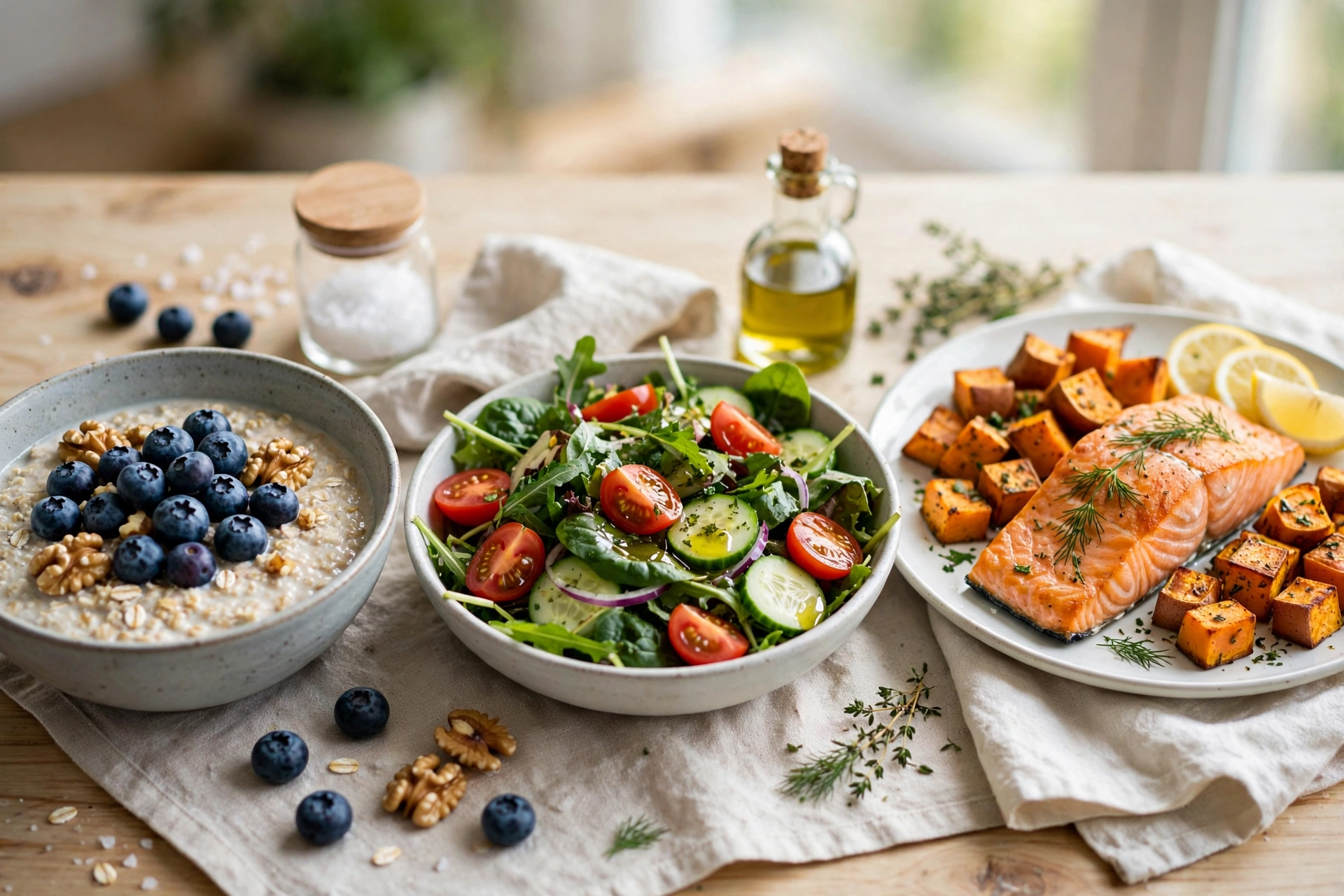
I shop the list in order — vegetables first, then fish, then the pantry staples — and I rarely need a second trip.
Frequently Asked Questions
Here are the questions readers ask most about the best foods for heart health.
What are the best foods for heart health?
The best foods for heart health are fatty fish, oats, beans, lentils, nuts, seeds, berries, leafy greens, olive oil and avocado. Each one helps in a different way — fish lowers triglycerides, oats and beans lower cholesterol, leafy greens help blood pressure. Eat them as a pattern, not as single superfoods.
How much fish should I eat for heart health?
Eat fatty fish twice a week, about 85 to 100 g cooked per serving. Salmon, sardines, trout, herring and mackerel are the best choices because they are rich in EPA and DHA omega-3 fats. Tinned sardines and tuna in water count too, and they keep in the cupboard for busy weeks.
Are eggs good for heart health?
Eggs can fit a heart-healthy pattern. One large egg a day is fine for most healthy people, and the cholesterol in the yolk matters less than the saturated fat in the rest of your diet. If you have high cholesterol or heart disease, ask your doctor what portion suits you. Our eggs post covers the evidence in full.
Can food lower cholesterol without medicine?
Food can help lower cholesterol — soluble fiber, plant sterols and unsaturated fats all lower LDL by a useful amount. But food is not a replacement for medicine your doctor has prescribed. Never stop a statin or blood pressure medicine because of a diet change; talk to your doctor first.
How fast can diet improve heart health?
Blood pressure and cholesterol numbers can start to move within a few weeks — most people see measurable LDL changes within 4 to 8 weeks of steady diet changes. Blood pressure often responds faster, especially when you cut sodium. The exact timing depends on the person, so keep your check-ups.
Is dark chocolate really good for your heart?
Dark chocolate has flavonoids that may help blood vessels, but a normal portion likely does not deliver enough to matter — that is the American Heart Association’s honest caution. Choose 70% dark or higher, keep it to about 30 g, and enjoy it as a treat. Do not eat chocolate as medicine.
Conclusion
The best foods for heart health are everyday foods: fish twice a week, oats and beans often, nuts and berries daily, leafy greens at every meal, and olive oil instead of butter. Start with one swap this week — fish for dinner, or oats for breakfast. For a ready-made heart-healthy meal, try our healthy tuna salad with Greek yogurt.
This article is for general information only and is not medical advice. Please talk to your doctor or a registered dietitian, especially if you have diabetes, heart disease or take medicine.