Are Clams High in Cholesterol? Low Fat, One Catch
Are clams high in cholesterol? No — a 3 oz serving of cooked clams has about 57 mg of cholesterol, far below prawns and eggs, and clams are almost fat-free, with just 0.19 g of saturated fat per 100 g and more B12 than any food I know. The one catch is sodium — and it is a big one.
By Sarah | Last updated: November 17, 2026

Key Takeaways
- Are clams high in cholesterol? No — about 57 mg per 3 oz, a third of prawns and a third of one egg.
- Saturated fat is almost zero: 0.19 g per 100 g — the fat that drives LDL, and the reason “are clams high in cholesterol?” gets a reassuring no.
- B12 is extraordinary: 98.9 mcg per 100 g, over 40 times the daily value.
- For “are clams high in cholesterol?”, the real catch is sodium: 700–1,200 mg per 100 g, depending on the source.
- Canned clams are even lower in cholesterol (30 mg/100 g) but often higher in sodium — rinse them well.
In This Article
- Are Clams High in Cholesterol? The Short Answer
- Clams Nutrition: The Numbers
- Dietary Cholesterol vs Blood Cholesterol
- Canned Clams vs Fresh Clams
- The Sodium Catch
- How You Cook Clams Matters
- Who Should Be Careful?
- Frequently Asked Questions
Are Clams High in Cholesterol? The Short Answer
No, clams are not high in cholesterol: cooked clams contain 67 mg of cholesterol per 100 g, about 57 mg in a 3 oz serving. That is low for seafood: Prawns carry about 189 mg per 100 g, and a single large egg has 186 mg, so clams sit at roughly a third of both.
The saturated fat figure is even more impressive: clams have just 0.19 g of saturated fat per 100 g, and saturated fat is what drives your liver to make more LDL (“bad”) cholesterol. So clams score well on both numbers that matter: low dietary cholesterol, almost no saturated fat.
When people ask “are clams high in cholesterol?”, they often expect a shellfish warning, but the research says otherwise. A classic study by Connor and Lin found clams, oysters and scallops did NOT raise blood cholesterol. Crab, lobster and shrimp did — mildly. Clams belong on the safe side of that line.
Clams Nutrition: The Numbers
Clams are one of the most nutrient-dense foods you can eat: a 100 g serving of cooked clams gives 148 calories and 25.6 g of protein, with just 1.95 g of fat. That rivals chicken breast on protein, with a vitamin profile chicken cannot match.
| Food (3 oz cooked) | Cholesterol | Saturated fat |
|---|---|---|
| Clams | 57 mg | ~0.2 g |
| Prawns | ~160 mg | ~0.4 g |
| Crab | ~45–82 mg | ~0.1 g |
| 1 large egg | 186 mg | 1.5 g |
The B12 figure is the headline: clams carry 98.9 mcg of vitamin B12 per 100 g — 4,121% of the daily value. That is more than 40 times your daily need in a single small serving, and B12 keeps your nerves and red blood cells healthy — a vitamin that is hard to get from plants. Clams also give selenium (116% DV), copper (77% DV), iodine (44% DV), iron, and vitamin C — rare in animal foods.
Omega-3s are modest: 0.43 g total per 100 g, with 0.28 g of EPA+DHA. Salmon beats clams easily on omega-3. But clams win on B12, iron and protein per calorie. That B12 load is the strongest reason “are clams high in cholesterol?” deserves a second look — the food is far more than its cholesterol number.

Dietary Cholesterol vs Blood Cholesterol
Here is the fact that changes the whole question: your liver makes about 80% of the cholesterol in your blood. The cholesterol you eat has a much smaller effect than most people think, because the liver simply makes less when you eat more, keeping blood levels fairly steady.
What does raise blood LDL is saturated fat (and trans fat), which tells the liver to make more LDL and to clear less of it. That is why butter, fatty meat and full-fat cheese matter more for cholesterol than eggs or shellfish. The old advice to avoid all dietary cholesterol has been replaced by a focus on saturated fat.
Clams are a perfect example. Their dietary cholesterol is low, and their saturated fat is almost zero. A food with 57 mg of cholesterol and 0.2 g of saturated fat will not push your LDL up in any meaningful way. When people ask “are clams high in cholesterol?”, the honest answer needs both numbers — and both are low.
Canned Clams vs Fresh Clams
Canned clams and fresh clams are not the same food, and the cholesterol numbers show it: canned clams (drained) have just 30.1 mg of cholesterol per 100 g, according to the Phillips 2012 sterol study. Cooked fresh clams have 67 mg per 100 g.
Both are low, but canned is lower, because canning and draining leach some cholesterol and fat into the liquid, which is discarded. Cooking fresh clams does the opposite: water leaves the clam, so nutrients concentrate. Raw clams have only about 25.5 mg per 3 oz, and cooking concentrates that to 57 mg — the clam does not gain cholesterol, it loses water.
Canned clams are a practical pantry food. They work in pasta, chowder and rice dishes, and cost far less than fresh. The trade-off is sodium: canned clams are often packed in salted liquid. Rinse them well. For “are clams high in cholesterol?”, either form is a good answer — fresh wins on flavour, canned wins on convenience and price.

The Sodium Catch
Here is the real catch with clams: sodium, and sources disagree on the exact figure — Nutrition Advance lists 1,200 mg per 100 g from USDA tables, while other USDA-based tables give about 708 mg per 100 g. The true figure depends on the species and the cooking water. Either way, clams are very salty.
The daily sodium limit is 2,300 mg for most adults, and 1,500 mg is ideal for heart health. A single 100 g serving of clams can supply a third to a half of that limit. If you have high blood pressure, that matters more than the cholesterol number ever will. Sodium raises blood pressure, and blood pressure is a bigger heart risk than the 57 mg of cholesterol in the same serving.
You can cut the sodium: rinse canned clams thoroughly to remove surface salt. Steam fresh clams in fresh water rather than seawater. Skip the extra salt in the dish, and let the clams season it. I never add salt to a clam pasta; the clams do the job. And avoid creamy chowder, which adds butter, cream and more salt on top of already salty clams. So the honest answer to “are clams high in cholesterol?” is no — but the sodium answer is yes, watch it.
How You Cook Clams Matters
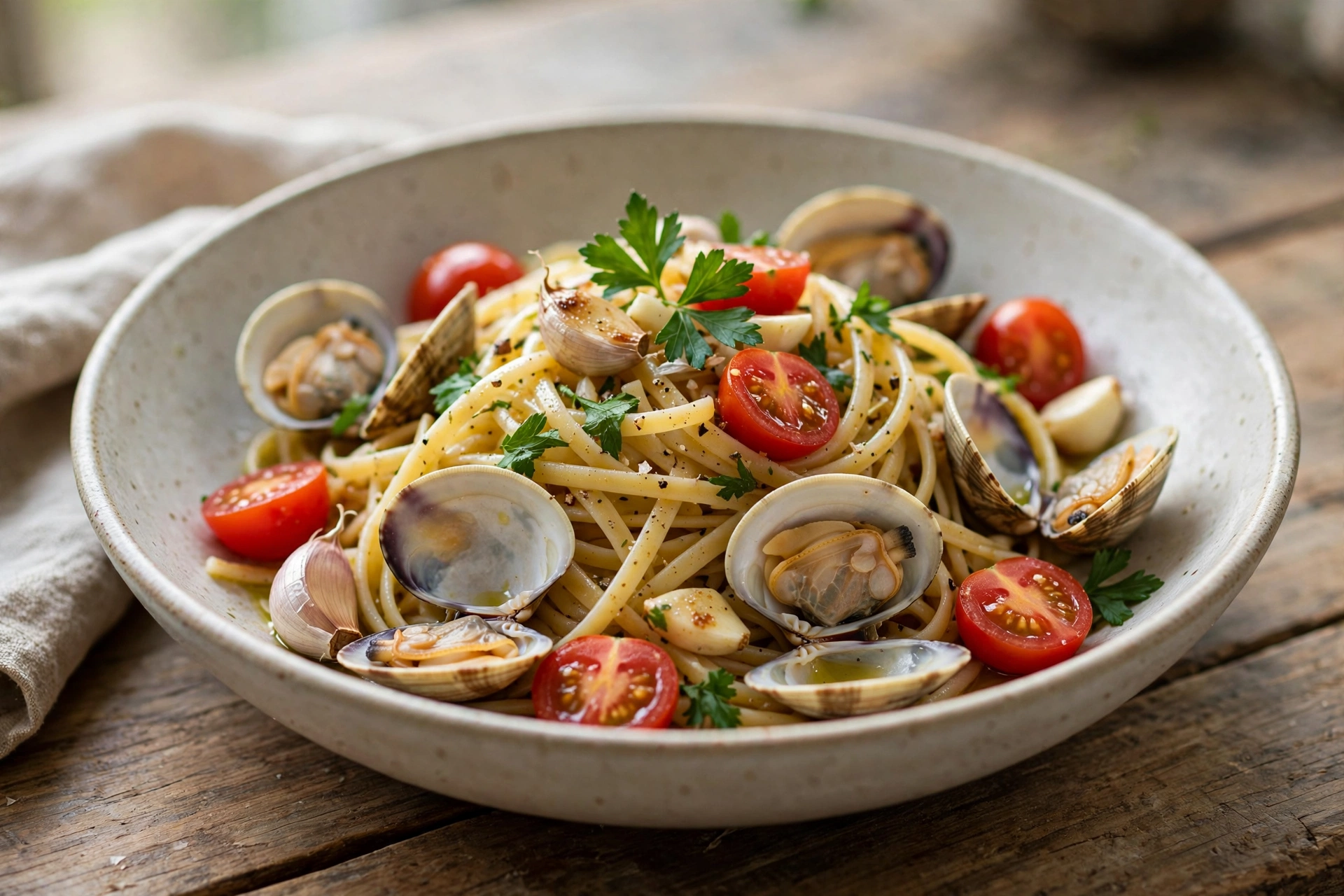
The clam is rarely the problem — the preparation is. Steamed clams with garlic, lemon and parsley add almost no fat. Linguine alle vongole — clams with pasta, garlic, white wine and olive oil — is a genuinely heart-healthy dish. The trouble starts with fried clam strips and creamy New England chowder.
Fried clams add batter and frying oil. Creamy chowder adds butter and cream — a saturated-fat and sodium pile-up on top of an already salty food. A bowl of creamy chowder can carry more saturated fat than a steak dinner. So the same clams can be a lean, light meal or a heavy one, depending on the recipe.
Keep it simple: steam clams in white wine or tomato broth with garlic and herbs. Toss them with pasta and olive oil. Or eat them straight from the shell with lemon. When people ask “are clams high in cholesterol?”, the cooking method is part of the answer — and steamed wins every time.
Who Should Be Careful?
Shellfish allergy is the biggest caution: mollusk allergy affects about 1.6% of US adults, and a crustacean allergy (prawns, crab) does not always mean a mollusk allergy, though cross-reaction is common. Ask your doctor before trying clams if you have any shellfish allergy.
Gout is the second note. Clams have moderate purines. The guidance for gout is to limit them, not eliminate them, especially during a flare. Keep portions small and skip them during flares.
Food safety matters more with clams than with most foods. Raw or undercooked clams can carry Vibrio bacteria and norovirus. Cook clams until the shells open, and discard any that stay closed. Never eat raw clams if you are pregnant, elderly, or have a weak immune system. Buy from trusted sellers, and eat clams the day you buy them. None of these cautions change the answer to “are clams high in cholesterol?” — no. Mussels and oysters carry the same cautions — and our guide to crab covers the crustacean side.
Frequently Asked Questions
Are clams high in cholesterol compared to prawns?
No — clams are far lower. A 3 oz serving of cooked clams has about 57 mg of cholesterol, while the same weight of prawns has about 160 mg. Clams are bivalve mollusks with non-cholesterol sterols that may block absorption; prawns are crustaceans. Both are low in saturated fat, but clams win clearly on cholesterol.
Can I eat clams with high cholesterol?
Yes, for most people. Clams have just 57 mg of cholesterol and 0.2 g of saturated fat per 3 oz, so they will not push your LDL up. The bigger watch is sodium: clams carry 700–1,200 mg per 100 g, which matters if you also have high blood pressure. Steam them, skip extra salt, and keep portions moderate.
Are canned clams as healthy as fresh clams?
Almost. Canned clams are even lower in cholesterol (30 mg/100 g vs 67 mg fresh) and keep most of the B12 and protein. The trade-off is sodium — canned clams are packed in salted liquid, so rinse them well. Fresh clams taste better, but canned clams are a fine pantry standby.
Do clams raise LDL cholesterol?
Unlikely, in normal portions. “Are clams high in cholesterol?” is the wrong worry — dietary cholesterol barely moves blood LDL for most people, and clams are almost fat-free at 0.19 g of saturated fat per 100 g. Connor & Lin found clams did not raise blood cholesterol at all. The bigger heart risk from clams is sodium, not cholesterol.
Are clams good for your heart?
Yes, with one caution. Clams combine low saturated fat with extraordinary B12, selenium, iodine and iron, plus modest omega-3s. That is a strong heart-health package. The caution is sodium: 700–1,200 mg per 100 g is a lot. Rinse canned clams, skip extra salt, and clams are a heart-friendly food.
How much sodium is in clams?
Sources disagree: Nutrition Advance lists 1,200 mg per 100 g from USDA tables, while other USDA-based tables give about 708 mg. The figure varies by species and cooking water. Either way, clams are very salty — a 100 g serving can supply a third to a half of the 2,300 mg daily limit. Rinse canned clams to cut sodium.

Your Next Step
So, are clams high in cholesterol? No — about 57 mg per 3 oz, with almost no saturated fat and more B12 than any food I know. Steam them with garlic and lemon, skip the extra salt, and watch the sodium if you have high blood pressure. They are an easy win on a cholesterol-conscious plate.
This article is for general information only and is not medical advice. Please talk to your doctor or a registered dietitian, especially if you have diabetes, heart disease or take medicine.
Sources: USDA FoodData Central (cooked clams: 67 mg cholesterol/100 g, 0.19 g saturated fat/100 g, B12 98.9 mcg/100 g); Phillips et al. 2012, Sterol composition of shellfish (canned clams 30.1 mg/100 g; mollusk non-cholesterol sterols 70.9–181 mg/100 g); Connor & Lin (clams/oysters/scallops not hypercholesterolemic). Outbound link: Phillips et al. 2012 — Sterol Composition of Shellfish (PMC)