Are Mussels High in Cholesterol? The Honest Numbers
Are mussels high in cholesterol? No — not by shellfish standards. A 3 oz serving of cooked mussels has about 48 mg of cholesterol, roughly a quarter of prawns and a quarter of one egg. Mussels are also low in saturated fat and rich in omega-3s, B12 and iron. For most people, they fit a cholesterol-conscious diet well.
By Sarah | Last updated: November 17, 2026
Key Takeaways
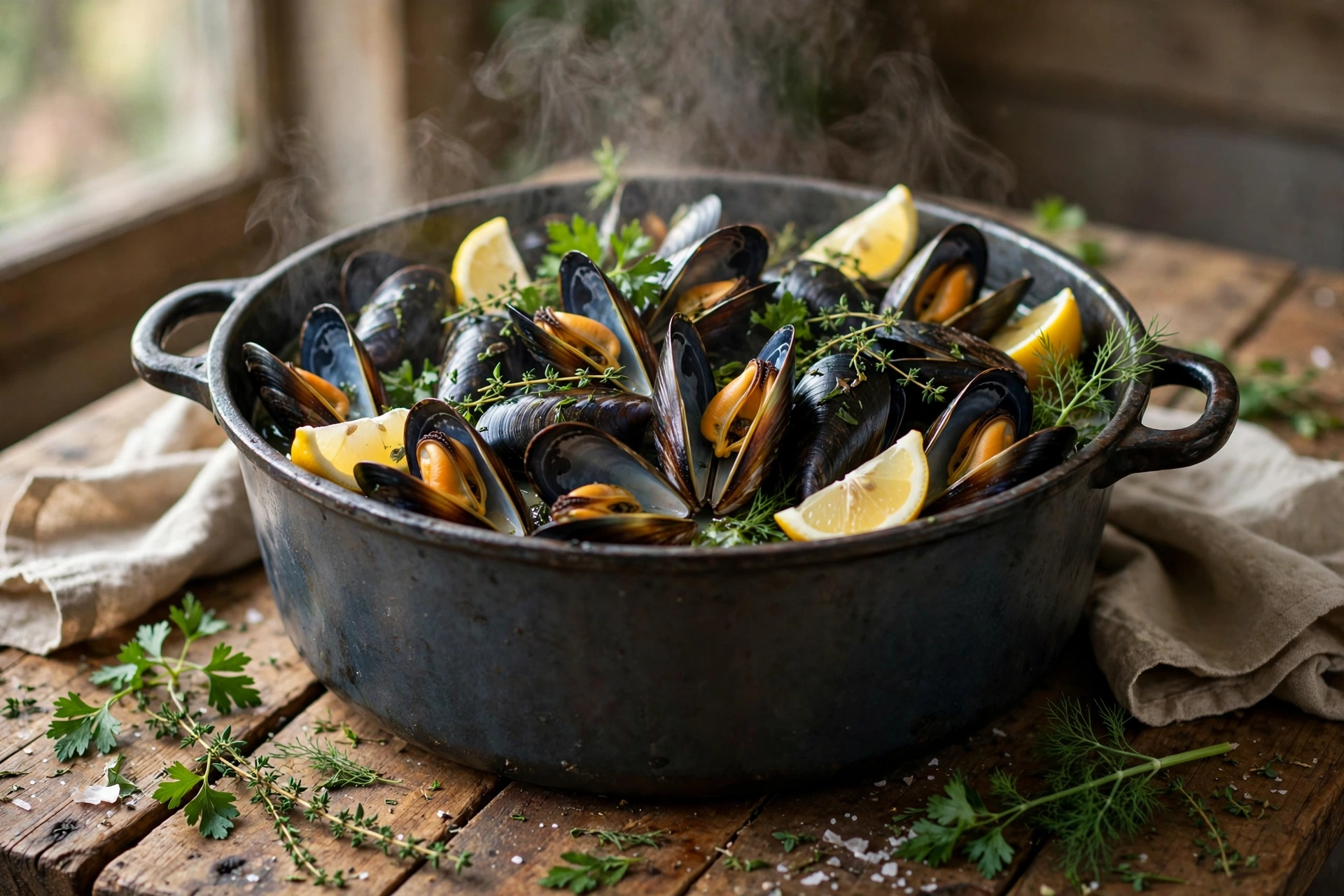
- Are mussels high in cholesterol? No — about 48 mg per 3 oz, far below prawns (~160 mg) and eggs (186 mg).
- Mussels are very low in saturated fat: 0.7 g per 100 g. That is the fat that matters most for LDL — and it is why “are mussels high in cholesterol?” gets a reassuring no.
- They carry 500–700 mg of omega-3 (EPA+DHA) per 100 g — the most of any shellfish.
- For “are mussels high in cholesterol?”, the sauce matters more than the mussel: cream and butter add the saturated fat.
- The FDA rates mussels a “best choice” — 2–3 servings a week is safe, including in pregnancy when fully cooked.
In This Article
- Are Mussels High in Cholesterol? The Short Answer
- Mussels Nutrition: The Numbers
- Dietary Cholesterol vs Blood Cholesterol
- Why Mussels Are Different From Prawns
- How You Cook Mussels Matters
- How Many Mussels Can You Eat?
- Who Should Be Careful?
- Frequently Asked Questions
Are Mussels High in Cholesterol? The Short Answer
No, mussels are not high in cholesterol. Cooked blue mussels contain 56 mg of cholesterol per 100 g — about 48 mg in a 3 oz serving. That is low for seafood, and far below prawns (~160 mg per 3 oz) or a single large egg (186 mg).
Some websites quote 70–80 mg per 3 oz, but the USDA figure of 48 mg is the one to trust. The saturated fat matters more than the cholesterol number. Mussels have just 0.7 g of saturated fat per 100 g. Saturated fat is what drives your liver to make more LDL (“bad”) cholesterol. So a food can carry some dietary cholesterol and still be kind to your blood cholesterol. Mussels are a good example.
When people ask “are mussels high in cholesterol?”, they often lump all shellfish together. Mussels are bivalve mollusks, not crustaceans like prawns and crab. That difference changes the numbers — and the verdict.
Mussels Nutrition: The Numbers
Mussels punch far above their weight. A 100 g serving of cooked mussels gives about 150 calories, 18 g of protein, and just 4 g of fat. For a food that small, the vitamin load is remarkable: B12 at about 600% of daily value, iron at about 37%, selenium at about 90%, and vitamin D at about 50%.
| Food | Cholesterol | Saturated fat | Omega-3 |
|---|---|---|---|
| Mussels (3 oz cooked) | 48 mg | ~0.6 g | ~500 mg |
| Prawns (3 oz cooked) | ~160 mg | ~0.4 g | ~240 mg |
| 1 large egg | 186 mg | 1.5 g | ~35 mg |
| Salmon (3 oz cooked) | ~55 mg | 1–2 g | ~1.8 g |
The omega-3 figure is the standout. Mussels carry 500–700 mg of EPA and DHA per 100 g. That is more than any other shellfish, including oysters, clams and scallops. Salmon still wins overall at about 1.8 g per 3 oz. But mussels are the best shellfish source by a clear margin. Omega-3s lower triglycerides and calm inflammation. That helps the heart in ways cholesterol numbers alone do not show.
Mussels are also one of the cheapest ways to get B12 and iron. If you eat little red meat, a weekly portion of mussels covers your B12 for days. That is one more reason “are mussels high in cholesterol?” gets a reassuring answer. The nutrition package around the cholesterol is excellent.
Dietary Cholesterol vs Blood Cholesterol
Here is the fact that changes the whole question. Your liver makes about 80% of the cholesterol in your blood. The cholesterol you eat — dietary cholesterol — has a much smaller effect than most people think. For most healthy people, eating cholesterol does not raise blood cholesterol much. The liver simply makes less to compensate.
What does raise blood LDL is saturated fat (and trans fat). Saturated fat tells the liver to make more LDL and to clear less of it from the blood. That is why butter, fatty meat and full-fat cheese matter more for cholesterol than eggs or shellfish. The NHS advice on high cholesterol focuses on cutting saturated fat, not on avoiding dietary cholesterol. That advice is good news for mussel lovers: “are mussels high in cholesterol?” turns out to matter less than the fat on the plate.
This is why mussels score so well. Their dietary cholesterol is low, and their saturated fat is almost nothing. A food with 48 mg of cholesterol and 0.7 g of saturated fat is a very different proposition. Compare it with the same cholesterol and 5 g of saturated fat. When people ask “are mussels high in cholesterol?”, the honest answer needs both numbers — and both are low.
Why Mussels Are Different From Prawns
Prawns and mussels sit in different branches of the shellfish family, and it shows in the numbers. Prawns are crustaceans, like crab and lobster. They carry about 189 mg of cholesterol per 100 g — more than three times the mussel figure. Our guide to are prawns high in cholesterol explains why prawns are still fine in moderation.
But mussels start from a much lower base. Mussels are bivalve mollusks, like clams and oysters . Mollusks carry plant-like sterols called phytosterols. Brassicasterol, campesterol and sitosterol may block cholesterol absorption in the gut. In one study, cholesterol made up only 37–51% of the total sterols in mussels. The rest were these other sterols, which compete with cholesterol for absorption.
That is a neat trick: mussels bring their own cholesterol-blocking compounds. It is one reason studies of mollusks find little effect on blood cholesterol. The numbers on the label look moderate, but the effect is small. Salmon and sardines are still the omega-3 champions. But mussels are the best shellfish choice for a cholesterol-conscious plate.
How You Cook Mussels Matters
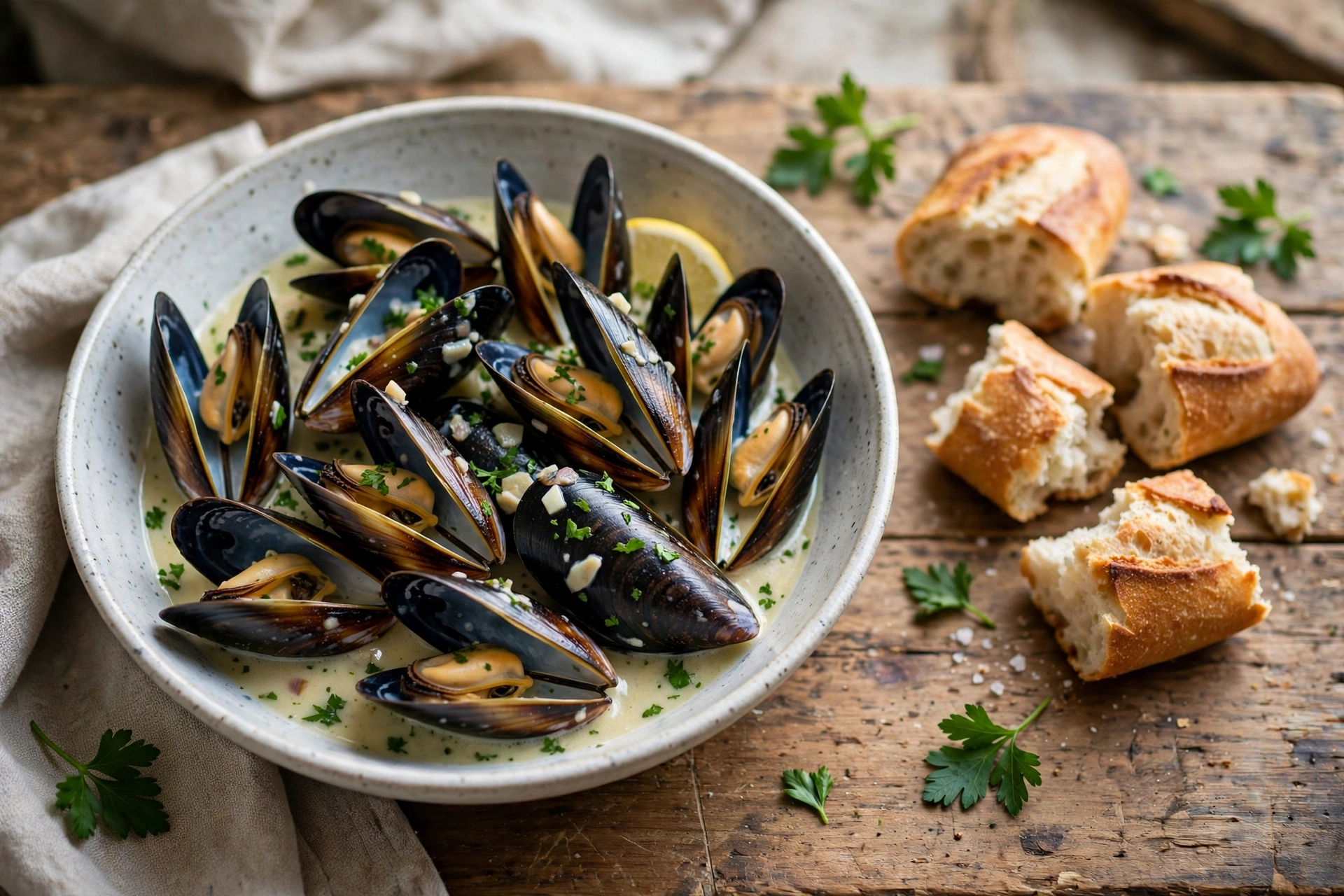
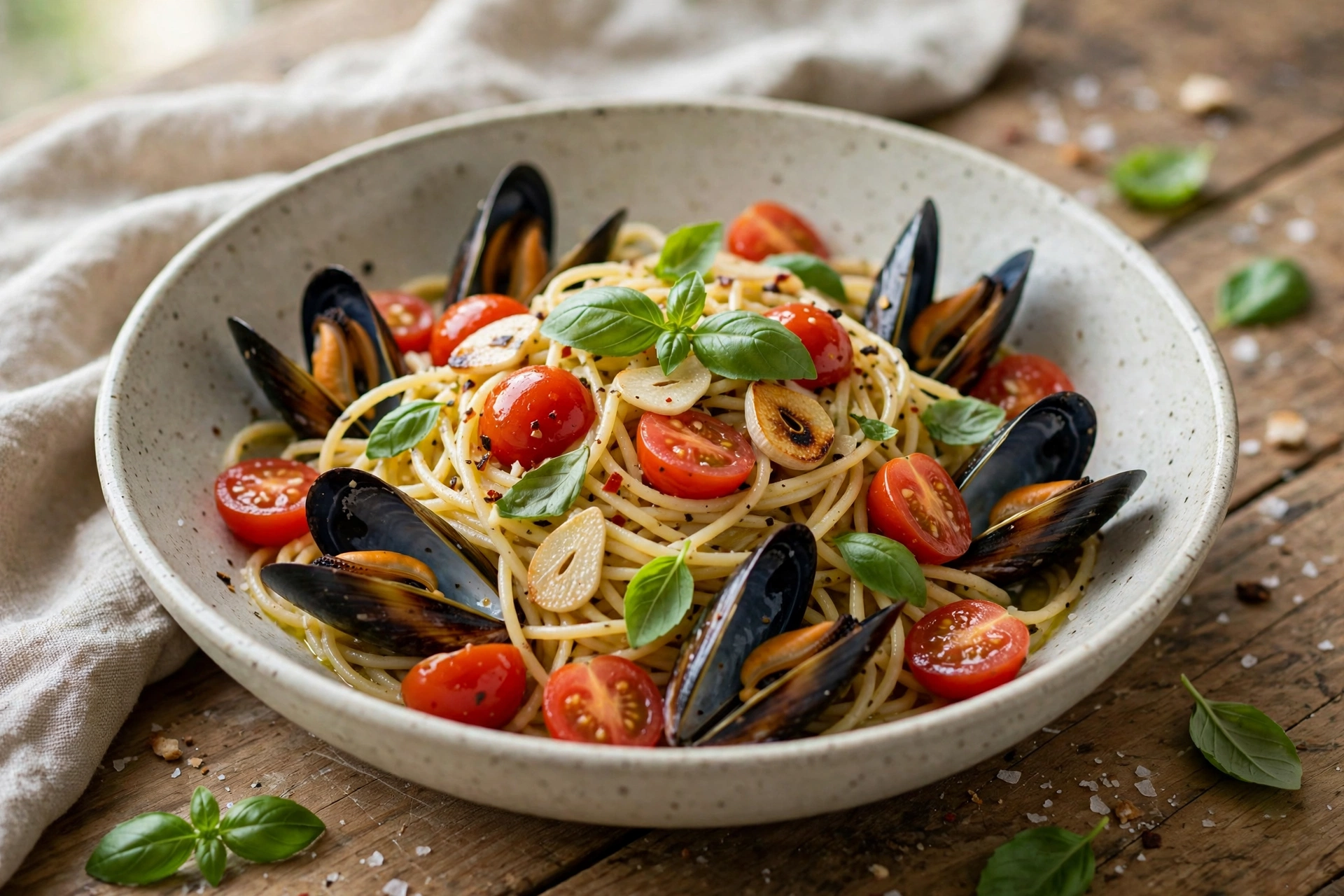
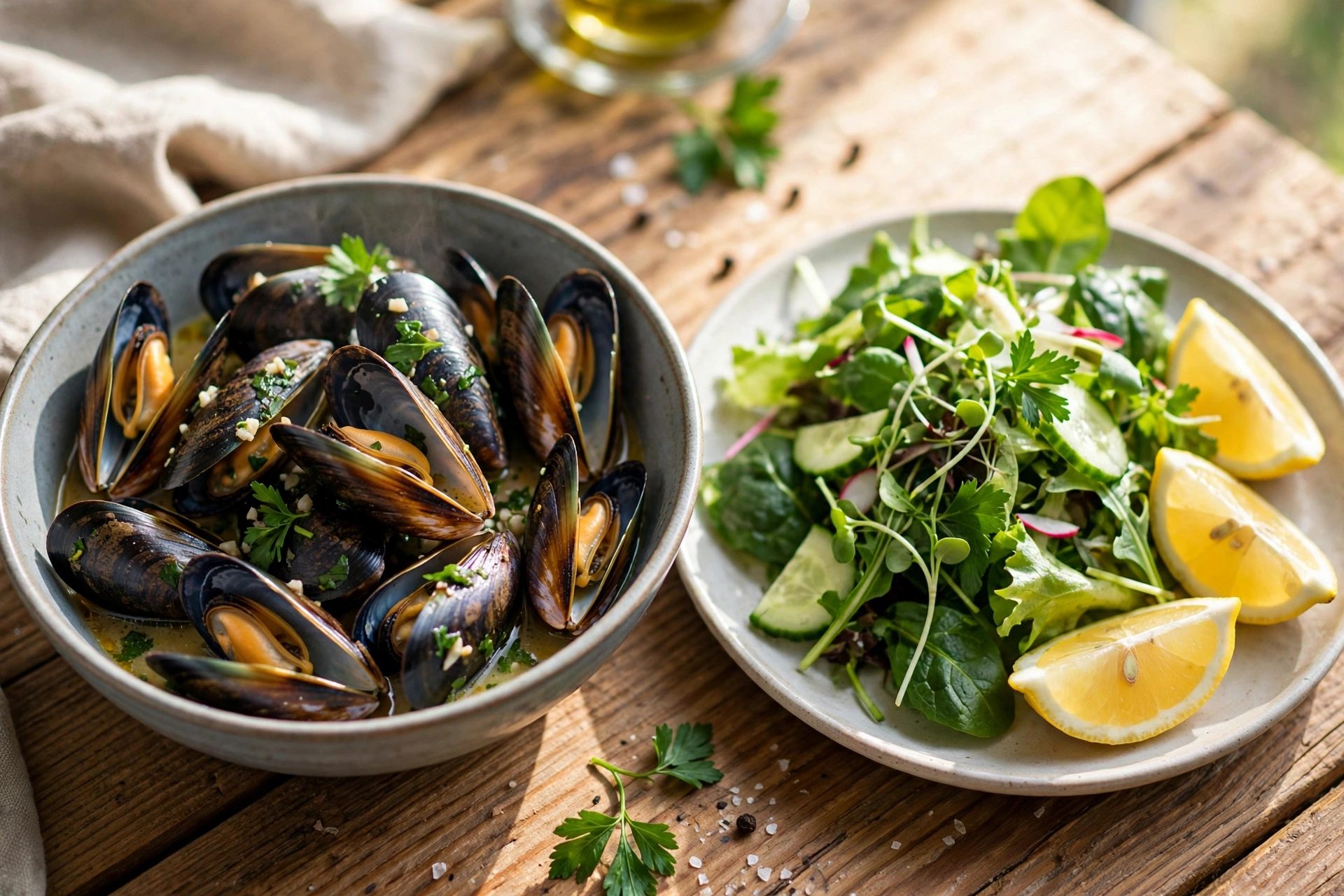
The mussel is rarely the problem. The sauce is. Steamed mussels in white wine, garlic and herbs add almost no saturated fat. Moules marinière — the classic French preparation — is a genuinely heart-healthy dish. The trouble starts with cream sauces and butter-heavy broths. Moules-frites adds fried fat from the chips too.
A tablespoon of butter adds 7 g of saturated fat — ten times what the mussels themselves contain. A cream sauce can add even more. So the same mussels can be a light, lean meal or a saturated-fat bomb. It depends on what you pour over them. When people ask “are mussels high in cholesterol?”, the cooking method is part of the answer.
Keep it simple. Steam mussels in white wine or tomato broth with garlic, shallots and herbs. Serve with crusty bread for the broth. Or add a side salad if you want to keep it lighter. I make mussels this way most Fridays, and the whole dish takes under twenty minutes. Skip the cream, go easy on the butter, and the mussels do the rest.
How Many Mussels Can You Eat?
The FDA rates mussels a “best choice” fish — the safest category for mercury. That means 2–3 servings a week is safe for most adults. The total is 8–12 oz, including for pregnant people. A typical serving is about 3 oz of mussel meat. That is roughly 15–20 medium mussels in their shells.
Eating mussels every day is not necessary, and variety is better for your diet overall. But there is nothing in the cholesterol numbers that argues against a couple of servings a week. Mussels are also one of the most sustainable seafoods. Farmed mussels need no feed, and they actually clean the water they grow in. So “are mussels high in cholesterol?” has a second happy answer. No — and they are good for the planet too.
Who Should Be Careful?
Shellfish allergy is the biggest caution. Mussels are mollusks, and a crustacean allergy (prawns, crab) does not always mean a mollusk allergy — but cross-reaction is common, so ask your doctor before trying them if you have any shellfish allergy. That allergy question matters more than “are mussels high in cholesterol?” for anyone with a shellfish allergy.
Gout is the second note. Mussels have moderate purines — higher than vegetables and grains, lower than organ meats. The guidance for gout is to limit mussels, not eliminate them, especially during a flare. If you have gout, keep portions small and skip them during flares.
Pregnant people can eat mussels, but only fully cooked. Raw or undercooked shellfish carries Vibrio and Listeria risk. Discard any mussels that stay closed after cooking, and any that smell off before cooking. Buy from trusted sellers, and eat mussels the day you buy them.
Frequently Asked Questions
Are mussels high in cholesterol compared to prawns?
No — mussels are far lower. A 3 oz serving of cooked mussels has about 48 mg of cholesterol, while the same weight of prawns has about 160 mg. Mussels are bivalve mollusks with phytosterols that may block cholesterol absorption; prawns are crustaceans with no such advantage. Both are low in saturated fat, but mussels win clearly on cholesterol.
Can I eat mussels with high cholesterol?
Yes, for most people. Mussels have just 48 mg of cholesterol and 0.7 g of saturated fat per 3 oz, plus omega-3s that support heart health. Steam them in wine or tomato broth rather than cream or butter. Keep to 2–3 servings a week. Mussels will not clash with cholesterol medicine — but check with your doctor about your diet.
Do mussels raise LDL cholesterol?
Unlikely, in normal portions. Dietary cholesterol has a small effect on blood LDL for most people, and mussels are very low in saturated fat — the fat that drives LDL up. Studies of mollusks find little effect on blood cholesterol. The bigger LDL risk is the sauce: butter and cream add far more saturated fat than the mussels themselves.
Are mussels good for your heart?
Yes. Mussels combine low saturated fat with 500–700 mg of omega-3 per 100 g — the most of any shellfish — plus B12, iron, selenium and vitamin D. Omega-3s lower triglycerides and calm inflammation. As part of a varied diet with vegetables, whole grains and oily fish, mussels are a heart-friendly food.
How many mussels can I eat a week?
The FDA rates mussels a “best choice” — 2–3 servings a week, or 8–12 oz total, is safe for most adults. A serving is about 3 oz of mussel meat, roughly 15–20 medium mussels in their shells. Eating them more often is unlikely to harm your cholesterol, but variety is better for your overall diet.
Are mussels safe during pregnancy?
Yes, when fully cooked. The FDA lists mussels as a “best choice” for pregnancy at 2–3 servings a week. Cook them until the shells open, and discard any that stay closed. Never eat raw mussels in pregnancy — raw shellfish can carry Vibrio and Listeria, which are dangerous for mother and baby.
Your Next Step
So, are mussels high in cholesterol? No — about 48 mg per 3 oz, with almost no saturated fat and the best omega-3 of any shellfish. Steam them in wine or tomato broth, skip the cream sauce, and enjoy them a couple of times a week. They are one of the easiest wins on a cholesterol-conscious plate.
This article is for general information only and is not medical advice. Please talk to your doctor or a registered dietitian, especially if you have diabetes, heart disease or take medicine.
Sources: USDA FoodData Central (cooked blue mussels: 56 mg cholesterol/100 g, 0.7 g saturated fat/100 g, 500–700 mg EPA+DHA/100 g); FDA “best choice” advice (2–3 servings/week); Healthy Food Guide expert Q&A (1/2 cup cooked mussels ~25 mg). Outbound link: NHS — High Cholesterol