Is Garlic Good for Blood Pressure? What Studies Say
Is garlic good for blood pressure? Yes — garlic supplements lower systolic blood pressure by 8–10 mmHg in people with hypertension, according to reviews of dozens of trials. That is similar to standard blood pressure medication. Food garlic helps too, but less — raw garlic gives a minor 3–5 mmHg drop. Garlic cannot replace medication, but it is a useful addition.
By Sarah | Last updated: November 11, 2026

Key Takeaways
- Is garlic good for blood pressure? Yes — supplements cut systolic BP by 8–10 mmHg in hypertensive trials.
- The Ried 2014 review found garlic lowered BP ~10 mmHg systolic + ~8 mmHg diastolic in uncontrolled hypertension.
- Meta-analyses show standardized garlic lowers SBP by 8.3 and DBP by 5.5 mmHg in hypertensive people.
- Allicin forms only when garlic is crushed — rest 10 minutes before cooking (heat degrades allicin).
- Garlic cannot replace BP medication — and supplements increase bleeding risk with blood thinners.
In This Article
- Is Garlic Good for Blood Pressure? The Short Answer
- How Garlic Lowers Blood Pressure
- What the Trials Found
- Food Garlic vs Supplements
- How to Cook Garlic Right
- How Much Garlic Should You Eat?
- Who Should Be Careful?
- Frequently Asked Questions
Is Garlic Good for Blood Pressure? The Short Answer
Yes, garlic is good for blood pressure — with one important distinction. The big trial numbers come from standardized garlic supplements, not from food garlic. The Ried 2014 review found garlic supplements lowered blood pressure by about 10 mmHg systolic and 8 mmHg diastolic in people with uncontrolled hypertension — similar to standard blood pressure medication.
Meta-analyses put the average at SBP −8.3 and DBP −5.5 mmHg in people with high blood pressure. That is the honest answer to “is garlic good for blood pressure?” — yes, by about 8–10 mmHg.
Food garlic helps too, but the effect is smaller. Eating 4–5 raw cloves a day gives a minor 3–5 mmHg reduction in some mild cases. That is still useful — a 5 mmHg systolic drop lowers heart disease and stroke risk. But if your blood pressure is high, garlic is a complement to medication, not a replacement.
How Garlic Lowers Blood Pressure
Garlic works through two mechanisms. First, its polysulfides convert to hydrogen sulfide (H2S) in your body — a gas that relaxes smooth muscle in blood vessel walls. Second, garlic enhances endothelial nitric oxide (NO), another vasodilator. Together, H2S and NO widen your blood vessels, so blood flows more easily and pressure drops.
That widening is how garlic answers “is garlic good for blood pressure?” — yes, by relaxing your blood vessels.
The key compound is allicin — but allicin does not exist in a whole garlic clove. It forms only when you crush, chop, or chew garlic, when the enzyme alliinase meets alliin. That is why whole roasted garlic and garlic powder have less allicin than freshly crushed garlic. Aged garlic extract uses a different compound (S-allylcysteine) that is stable and standardizable.

What the Trials Found
The evidence for “is garlic good for blood pressure?” is large and mostly positive. The Ried 2014 review (Integrative Blood Pressure Control) pooled trials of garlic supplements in uncontrolled hypertension and found SBP down about 10 mmHg and DBP down about 8 mmHg — similar to standard BP medication.
Meta-analyses of standardized garlic found SBP −8.3 and DBP −5.5 mmHg in people with high blood pressure, comparable to first-line ACE inhibitor monotherapy.
The Ried 2010 randomised trial is the clearest single study: 50 people with treated but uncontrolled blood pressure took 4 capsules (960 mg) of aged garlic extract a day for 12 weeks. Their systolic pressure fell about 10 mmHg more than the control group. A 2025 meta-analysis (19 trials, Phytotherapy Research) found aged garlic modestly lowered SBP and LDL, though effects differed across populations. A 2023 systematic review found garlic can lower BP, LDL, triglycerides, and inflammatory markers, and raise HDL.
Cochrane 2020 adds honest nuance: across 1,300+ participants, garlic supplements might reduce SBP by 5–8 mmHg in mild hypertension — but the effect vanishes in severe cases. That nuance matters for “is garlic good for blood pressure?” — garlic helps most when blood pressure is mildly or moderately high, not when it is severely uncontrolled. That is why garlic complements medication rather than replacing it.
Food Garlic vs Supplements
Food garlic and garlic supplements are not the same. Food garlic — 1–2 cloves a day in cooking — gives a small BP benefit (3–5 mmHg in mild cases) plus the flavour and other nutrients. Supplements — standardized aged garlic extract, 300–600 mg of allicin precursors a day — give the bigger trial numbers (8–10 mmHg SBP).
The trade-off is control. Supplements are standardized: you know the dose. Food garlic varies: the allicin content depends on the garlic variety, how fresh it is, and how you cook it. If you want the trial-level effect, supplements are the studied route — but talk to your doctor first, especially if you take blood thinners. For most people, food garlic plus a healthy diet is the safer starting point. That is the practical answer to “is garlic good for blood pressure?” — start with food, add supplements only with your doctor’s OK. For the foods to limit, see our list of the foods to avoid with high cholesterol.
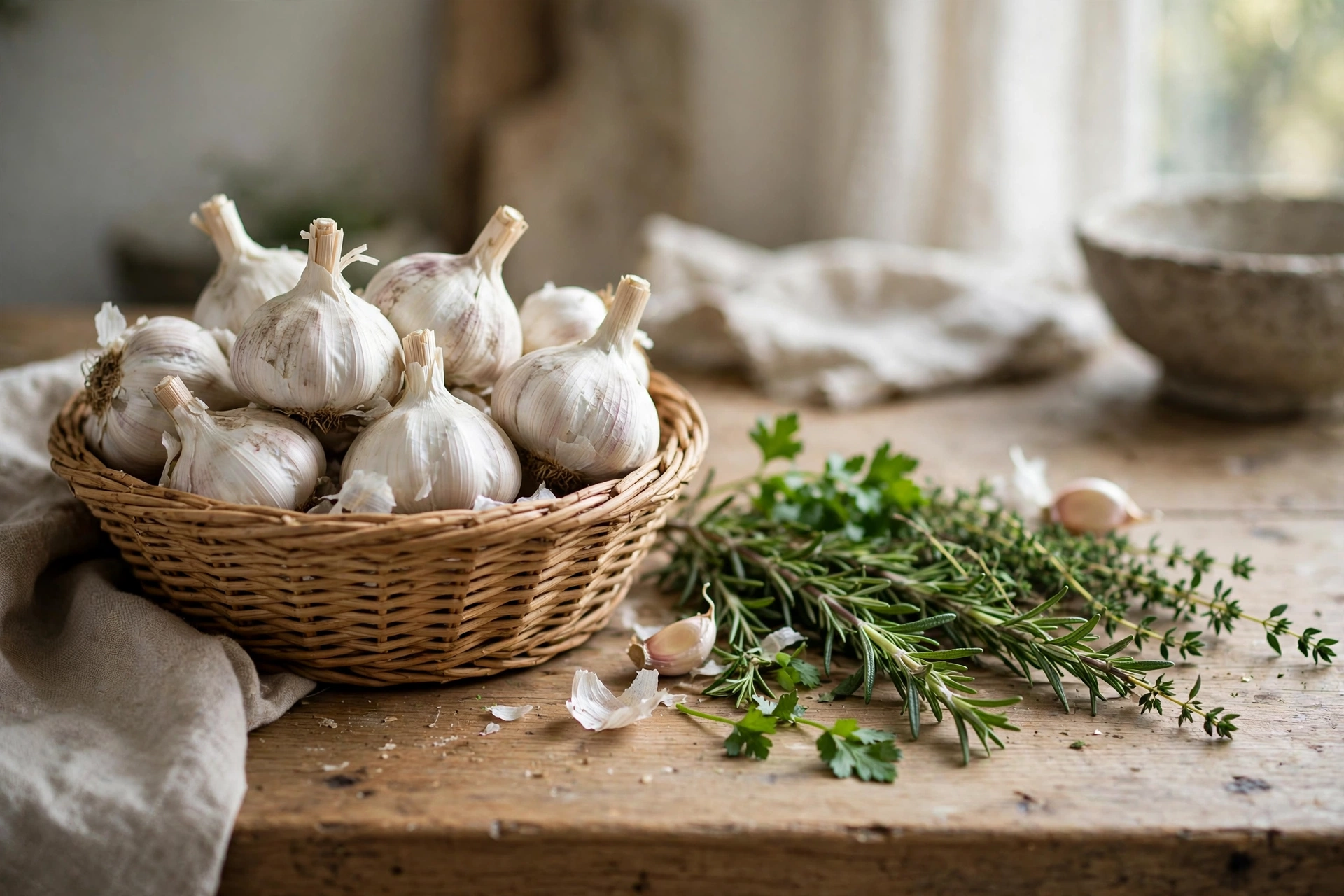
How to Cook Garlic Right
How you cook garlic decides how much allicin survives. Allicin forms only when garlic is crushed — and heat degrades it. The fix is the 10-minute rule: crush or chop your garlic, then wait 10 minutes before it hits the pan. In those 10 minutes, allicin converts to stable heat-tolerant sulfur compounds that survive cooking.
I crush two cloves of garlic for most dinners — and I wait 10 minutes before it hits the pan. It is a small habit, but the science says it matters. Roasted garlic is my favourite way to eat it — soft, sweet, and spreadable on bread. I roast a whole bulb on Sundays. Garlic powder and pre-minced jarred garlic have far less allicin than fresh crushed garlic. That is why “is garlic good for blood pressure?” has a different answer for fresh garlic than for garlic powder.

How Much Garlic Should You Eat?
The food dose is 1–2 cloves a day (about 3–6 g of fresh garlic). That is the amount in most cooking — a couple of cloves in a stir-fry, soup, or pasta sauce. The supplement dose in trials is standardized extract, 300–600 mg of allicin precursors a day, or 960 mg of aged garlic extract (the Ried 2010 dose).
Do not take supplement doses without talking to your doctor. That dose is the practical answer to “is garlic good for blood pressure?” — 1–2 cloves a day in food.
More is not better. Eating 4–5 raw cloves a day gives only a minor 3–5 mmHg extra drop in mild cases — and raw garlic in large amounts causes heartburn, bad breath, and stomach upset. One to two cloves a day, crushed and rested, is the sweet spot for food garlic.
Who Should Be Careful?
Garlic is safe for most people as food, but supplements need care. Garlic supplements increase bleeding risk and interact with blood thinners (warfarin, aspirin, clopidogrel). If you take blood thinners, talk to your doctor before taking garlic supplements — and tell your surgeon if you take them before an operation. Garlic can also cause heartburn and stomach upset, especially raw.
Garlic cannot replace blood pressure medication. If your doctor has prescribed BP medicine, keep taking it — garlic is an addition, not a substitute. If your blood pressure is severely high, see your doctor promptly. For the bigger picture, see foods that lower blood pressure naturally, the best foods for heart health, ginger for blood pressure , and turmeric for inflammation .
If you are new to garlic supplements, start with food garlic for a month and check your blood pressure. Most people find the habit sticks easily. The answer to “is garlic good for blood pressure?” is yes — but supplements need your doctor’s OK.

Frequently Asked Questions
Is garlic good for blood pressure if I eat it every day?
Yes — daily garlic is what the trials tested. Food garlic (1–2 cloves a day) gives a small BP benefit; supplements give the bigger trial numbers (8–10 mmHg SBP). Daily is better than occasional — the BP benefit builds over weeks. Crush your garlic and wait 10 minutes before cooking for the most allicin.
How many garlic cloves a day for blood pressure?
One to two cloves a day (about 3–6 g of fresh garlic) is the food dose. That is the amount in most cooking. Eating 4–5 raw cloves a day gives only a minor extra drop (3–5 mmHg) in mild cases — and causes heartburn and bad breath. For the trial-level effect, supplements (300–600 mg standardized extract) are the studied dose.
Does garlic lower blood pressure immediately?
No — not immediately. The trial effects build over weeks: the Ried 2010 trial ran 12 weeks, and most meta-analyses cover 8–12 weeks of daily garlic. So “is garlic good for blood pressure?” is a long-term question — the answer builds over weeks. Garlic is a long-term habit, not a quick fix. If your BP is dangerously high, seek medical care promptly.
Is raw garlic better than cooked garlic for blood pressure?
Raw garlic has more allicin than cooked garlic — heat degrades allicin. But raw garlic in large amounts causes heartburn and stomach upset. The best compromise is the 10-minute rule: crush garlic, wait 10 minutes, then cook. The allicin converts to heat-stable sulfurs that survive cooking. Roasted garlic is gentler on the stomach.
Can garlic replace blood pressure medication?
No — garlic cannot replace blood pressure medication. The trial numbers (8–10 mmHg SBP) match medication, but garlic is not a substitute — especially in severe hypertension, where Cochrane 2020 found the effect vanishes. So “is garlic good for blood pressure?” has a yes — but “can garlic replace my medication?” has a no. Keep taking your medicine and talk to your doctor first.
Does garlic interact with blood thinners?
Yes — garlic supplements increase bleeding risk and interact with blood thinners (warfarin, aspirin, clopidogrel). Food garlic in normal cooking amounts is usually fine, but supplements are a different dose. Tell your doctor and surgeon if you take garlic supplements, especially before an operation. Stop supplements as your doctor advises.
Your Next Step
So, is garlic good for blood pressure? Yes — supplements cut systolic BP by 8–10 mmHg in trials, and food garlic gives a smaller but real benefit. Start with 1–2 crushed cloves a day — crush, wait 10 minutes, then cook. If you want the trial-level effect, talk to your doctor about aged garlic extract. Keep taking your prescribed medicine.
This article is for general information only and is not medical advice. Please talk to your doctor or a registered dietitian, especially if you have diabetes, heart disease or take medicine.
Sources: Ried 2014 (Integr Blood Press Control: SBP ~−10, DBP ~−8 mmHg in uncontrolled hypertension; H2S + NO mechanism; aged garlic extract S-allylcysteine); meta-analyses (SBP −8.3, DBP −5.5 mmHg in hypertensive cohorts, comparable to first-line ACE inhibitor monotherapy); Ried 2010 RCT (Maturitas: 50 people, 960 mg aged garlic extract/day × 12 weeks → ~10 mmHg greater SBP reduction); 2025 meta-analysis (19 RCTs, Phytother Res: aged garlic modestly lowered SBP + LDL); 2023 systematic review (garlic lowers BP, LDL, triglycerides, inflammatory markers, raises HDL); Cochrane 2020 (1,300+ participants: SBP −5–8 mmHg in mild hypertension; effect vanishes in severe cases); dose (1–2 cloves/day ~3–6 g fresh, or 300–600 mg standardized extract); allicin (forms only when crushed; rest 10 min; heat degrades); raw 4–5 cloves/day (minor 3–5 mmHg in mild cases); habitual garlic 10–15% total + LDL reduction (DailyFoodFighter). Outbound link: NCCIH — Garlic