High Volume Low Calorie Meals: 10 Filling Ideas
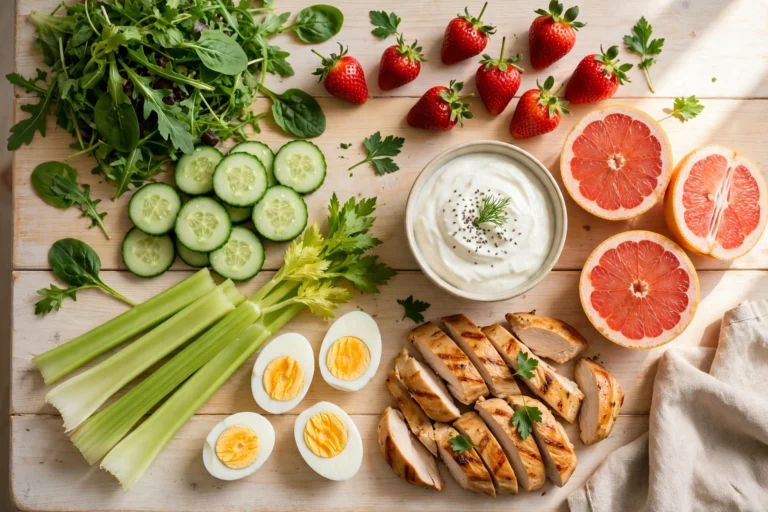
High volume low calorie meals are big plates of food built from water-rich, high-fiber ingredients — vegetables, broth, fruit, and lean protein — so you eat more and feel full on 300 to 500 calories. The secret is energy density: foods with more water and fiber pack fewer calories per bite.
By Sarah | Last updated: November 12, 2026

Key Takeaways
- High volume low calorie meals use water-rich foods to fill your plate for fewer calories.
- Energy density is the key number: aim for foods under 1.5 calories per gram.
- Start every meal with soup, salad, or vegetables — then add protein.
- Protein and fiber keep you full; volume alone does not.
- A sample 1,400-calorie day is included below.
On This Page
- What Is Volumetrics?
- The Energy Density Table
- The 4-Part Formula
- Why Protein and Fiber Matter
- 10 Meal Ideas
- A Sample Day
- Tips That Make It Work
- Mistakes to Avoid
- FAQs
What Is Volumetrics? The Science of Eating More for Less
Volumetrics is a way of eating developed by Dr. Barbara Rolls at Penn State. It is built on one finding: people tend to eat the same weight of food each day, not the same number of calories. If that food is lighter in calories per gram, you eat the same amount and take in fewer calories — without feeling deprived.
High volume low calorie meals put this idea on the plate. A pound of vegetables has about 100 to 150 calories. A pound of cheese has about 1,800. Both fill a plate, but one leaves you hungry for more and the other does not.
Research supports the idea. In a study at Penn State, people who started lunch with a broth-based soup ate about 12% fewer calories at the meal and did not eat more later. Salad starters cut meal calories by about 12% too — as long as the dressing stayed light.
The Energy Density Table
Energy density means calories per gram of food. The lower the number, the more you can eat for the same calories. Use this table when you build a plate.
| Energy density | Calories per gram | Foods |
|---|---|---|
| Very low | 0.0–0.6 | Broth soups, most vegetables, fruit, salads |
| Low | 0.6–1.5 | Cooked grains, beans, lean meat, fish, yogurt |
| Medium | 1.5–4.0 | Bread, cheese, dried fruit, red meat |
| High | 4.0–9.0 | Butter, oil, nuts, chips, chocolate |
The best high volume low calorie meals are built mostly from the first two rows. That does not mean the other rows are banned — a drizzle of olive oil or a sprinkle of cheese adds flavor. But they are accents, not the base.
The 4-Part Formula for a Filling, Low-Calorie Meal
Every filling low-calorie meal follows the same pattern. Use it for lunch and dinner.
- Start with volume. Fill half the plate with vegetables, salad, or broth-based soup. This is the base that fills your stomach.
- Add protein. Aim for 20 to 30 grams — chicken, fish, eggs, tofu, Greek yogurt, or beans. Protein slows digestion and keeps you full for hours.
- Add fiber. Beans, lentils, whole grains, and fruit slow eating and feed gut bacteria. Aim for 8 to 10 grams of fiber per meal.
- Add flavor, not calories. Herbs, spices, lemon, vinegar, hot sauce, and mustard add taste for almost no calories. A little healthy fat — olive oil or avocado — helps you absorb vitamins and feel satisfied.
Why Protein and Fiber Matter
Volume fills your stomach, but protein and fiber keep you full. Without them, a big plate of vegetables digests fast and hunger returns in an hour.
Aim for 20 to 30 grams of protein and 8 to 10 grams of fiber at each meal. That is a palm of chicken, a cup of beans, or a cup of Greek yogurt, plus vegetables and whole grains.
High volume low calorie meals work best when every plate has all three: volume, protein, and fiber. Skip one and the meal feels thin, even if the plate is full.
10 High Volume Low Calorie Meals
Each idea below is a full meal for about 300 to 500 calories. Calorie counts are rough estimates for planning, not lab values.
1. Big Veggie Omelet With Fruit (about 300 calories)
Three eggs with spinach, mushrooms, peppers, and tomatoes, plus a cup of berries on the side. The vegetables double the size of the omelet without adding many calories. Use cooking spray instead of butter to keep the fat low.
2. Chicken and Vegetable Stir-Fry (about 350 calories)
One chicken breast with 3 cups of mixed vegetables — broccoli, peppers, snap peas, and carrots — in a light soy-ginger sauce over 1/2 cup of rice. The vegetables are the star; the rice is the side. See our low-calorie chicken dinner recipes for more ideas.

3. Huge Salad With Grilled Chicken (about 400 calories)
Four cups of mixed greens with cucumber, tomato, shredded carrots, and 150 grams of grilled chicken, dressed with lemon and 1 tablespoon of olive oil. Add a slice of whole-grain bread if you want more staying power.

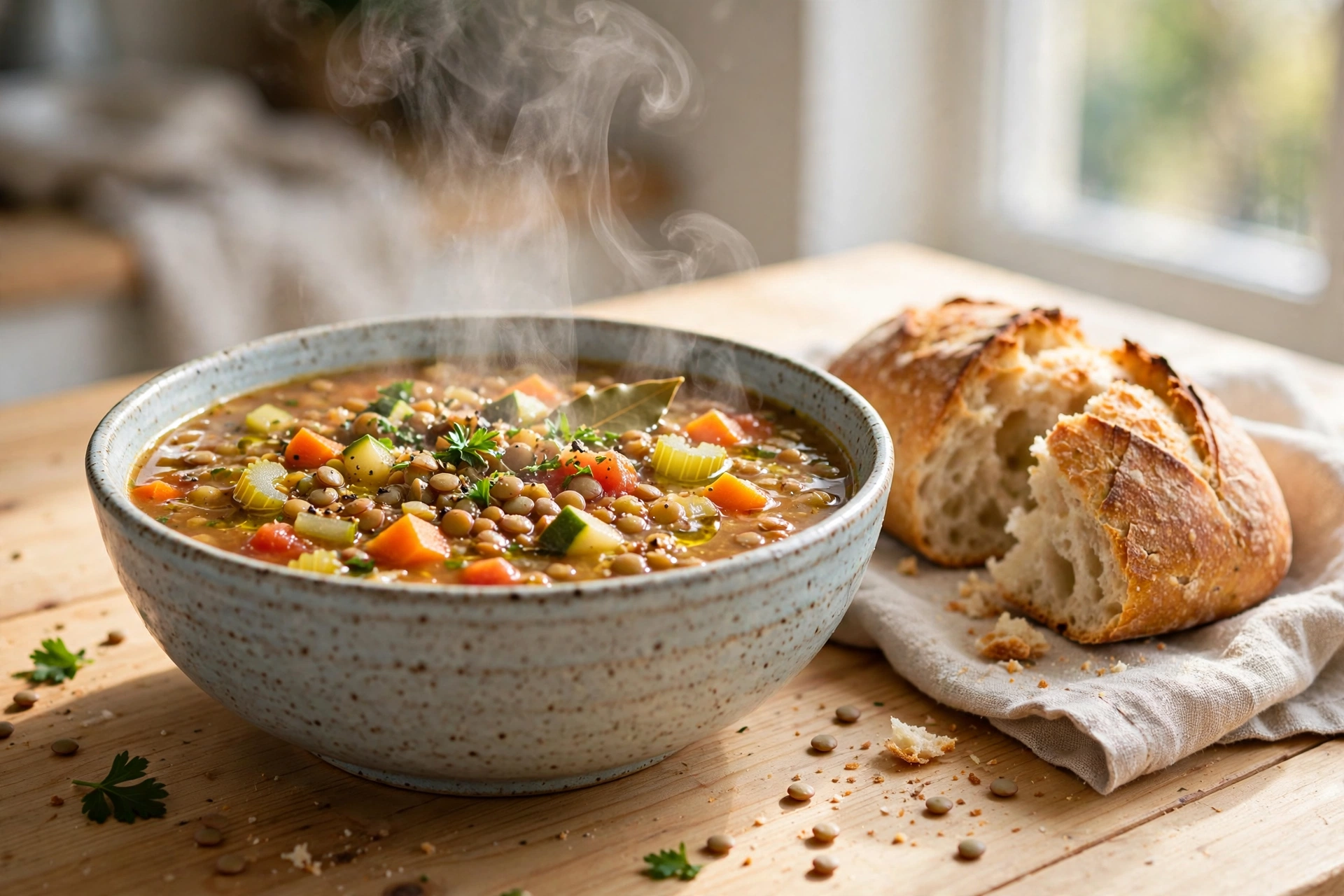
4. Lentil and Vegetable Soup (about 300 calories)
Lentil soup is a classic among high volume low calorie meals: a big bowl with carrots, celery, onion, and tomatoes. Lentils give you protein and fiber in one food, and the broth adds volume. This soup freezes well, so make a double batch. Our low-sodium vegetable soup recipe is a lighter version.
5. Zucchini Noodles With Turkey Meatballs (about 400 calories)
Two cups of zucchini noodles topped with three lean turkey meatballs and tomato sauce. Zucchini noodles have about 20 calories per cup, versus about 200 for pasta. Add a side salad to make the plate even bigger.
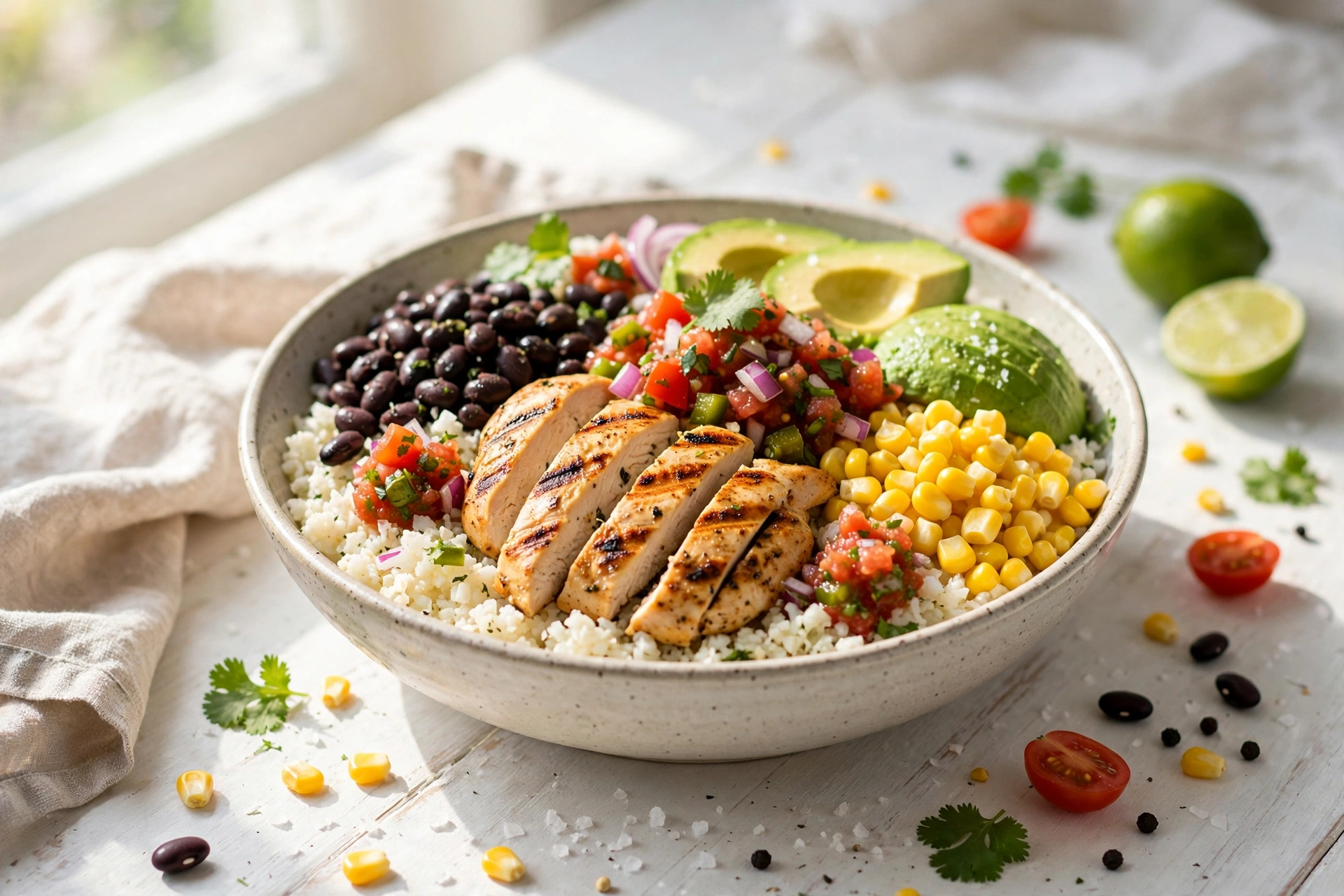
6. Cauliflower Rice Burrito Bowl (about 450 calories)
Two cups of cauliflower rice with black beans, grilled peppers, corn, salsa, and 100 grams of chicken. Cauliflower rice has about 25 calories per cup. Top with a spoonful of Greek yogurt instead of sour cream.
7. Air-Fryer Shrimp and Roasted Vegetables (about 350 calories)
Shrimp with a big tray of roasted broccoli, zucchini, and peppers, seasoned with garlic and lemon. Shrimp is high in protein and very low in calories — about 85 calories per 100 grams. See our low-calorie shrimp dinner recipes for the method.
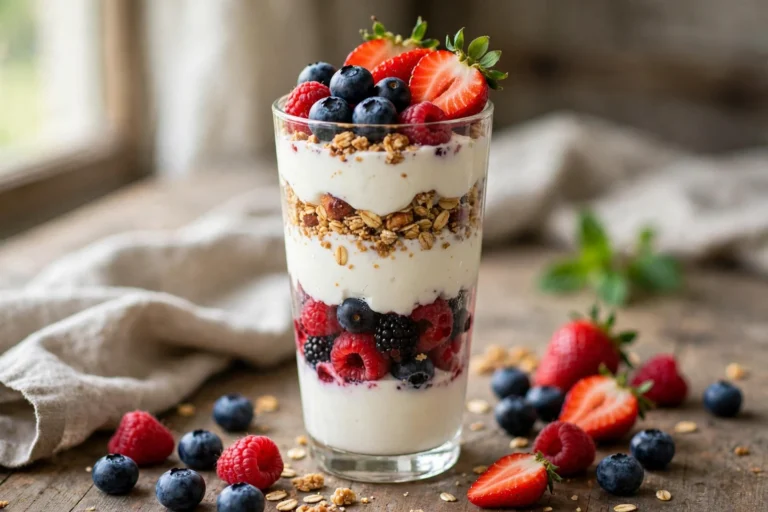
8. Greek Yogurt Parfait With Berries (about 300 calories)
One cup of nonfat Greek yogurt layered with a cup of mixed berries and 2 tablespoons of oats. The yogurt gives you about 20 grams of protein; the berries add volume and fiber. This works for breakfast or a light dinner.
9. Egg White and Veggie Scramble Wrap (about 350 calories)
Four egg whites scrambled with spinach, mushrooms, and tomatoes, wrapped in a large whole-grain tortilla with salsa. Egg whites are almost pure protein — about 17 calories each — so the wrap stays light while the vegetables fill it out.
10. Broth-Based Noodle Bowl (about 400 calories)
A broth-based noodle bowl is one of the easiest high volume low calorie meals: a big bowl of low-sodium broth with rice noodles, shredded chicken, bok choy, mushrooms, and bean sprouts. The broth fills you up before you reach the noodles. Keep the noodle portion to about 1 cup cooked.
A Sample Day: 1,400 Calories
Here is how high volume low calorie meals add up across a day. Every meal is a full plate.
| Meal | What to eat | Calories |
|---|---|---|
| Breakfast | Greek yogurt parfait with berries | ~300 |
| Lunch | Huge salad with grilled chicken | ~400 |
| Snack | Apple with 2 tbsp peanut butter | ~250 |
| Dinner | Lentil and vegetable soup + bread | ~450 |
| Total | ~1,400 |
Adjust portions to your own needs — this is a template, not a prescription. For a full plan, see our healthy meal prep for weight loss guide.
Tips That Make Volume Eating Work
Start with soup or salad. A broth-based soup or a big salad before the main course cuts total meal calories by about 12%, per Penn State research. Keep dressings light — 1 to 2 tablespoons of oil, not half a cup.
Eat slowly. It takes about 20 minutes for fullness signals to reach your brain. Put your fork down between bites. High volume low calorie meals give you more food to chew, which helps.
Keep the vegetables visible. If the vegetables are buried under sauce or cheese, you will eat less of them. Put them on top or on the side where you can see them.
Stock the freezer. Frozen vegetables, frozen berries, and frozen shrimp make volume eating fast. They are just as nutritious as fresh and never go bad. Our guide to non-starchy vegetables for diabetics lists the best low-calorie vegetables.
Mistakes That Make Volume Eating Fail
Skipping protein. A plate of vegetables alone will leave you hungry in an hour. Every meal needs 20 to 30 grams of protein.
Drowning salads in dressing. Two tablespoons of ranch dressing add about 140 calories. Two tablespoons of olive oil and lemon add about 240. Measure dressings — do not pour freehand.
Forgetting fiber. Volume without fiber digests fast. Beans, lentils, whole grains, and fruit slow things down and keep you full.
Eating too little. High volume low calorie meals should leave you satisfied, not starving. If you are hungry all the time, add more protein, more fiber, or more calories. The NHLBI healthy eating guide explains how to set a safe calorie target.
Frequently Asked Questions
What are high volume low calorie meals?
High volume low calorie meals are meals built from water-rich, high-fiber foods — vegetables, broth, fruit, and lean protein — that fill a large plate for 300 to 500 calories. They use the volumetrics idea: eat the same weight of food, but choose foods with fewer calories per gram.
How many calories should a high volume meal have?
Most high volume low calorie meals run 300 to 500 calories for a main meal. That leaves room for a snack and still fits a 1,200 to 1,600 calorie day. Your own target depends on your size, age, and activity — ask your doctor or dietitian for a personal number.
Can you lose weight eating high volume meals?
Yes. Studies show that people who eat lower-energy-density diets take in fewer calories and lose more weight, while feeling just as full. The key is choosing low-density foods most of the time and keeping protein at 20 to 30 grams per meal.
What foods have the lowest energy density?
Broth-based soups, cucumbers, lettuce, tomatoes, strawberries, and melons have the lowest energy density — under 0.6 calories per gram. Most non-starchy vegetables fall in this range. Water-rich fruit and cooked grains are next, at 0.6 to 1.5 calories per gram.
Do I need to count calories for volumetrics?
No. Volumetrics works by choosing low-density foods, not by counting every calorie. If you fill half your plate with vegetables, add lean protein, and keep added fats small, the calories take care of themselves. Counting helps at first if you want a check.
Is volume eating safe for everyone?
Volume eating is safe for most healthy adults. If you have diabetes, kidney disease, or a digestive condition, or you take medicine that affects appetite, talk to your doctor or dietitian before changing your diet. Children and pregnant women need different guidance.
Your Next Step
High volume low calorie meals are not a diet — they are a way to build a plate. Start tonight: fill half your plate with vegetables, add lean protein, and eat slowly.
Your stomach will not know the difference. Your calorie count will.
This article is for general information only and is not medical advice. Please talk to your doctor or a registered dietitian, especially if you have diabetes, heart disease or take medicine.