Are Pecans Good for Cholesterol? What Trials Found
Yes — modestly, when they replace other snacks. Are pecans good for cholesterol? Three independent trials found LDL down about 6 percent: a Penn State trial of 138 adults, a University of Georgia trial, and a New Mexico State experiment all landed on the same number. One ounce is 19 halves, about 196 calories.
By Sarah | Last updated: November 16, 2026
Key Takeaways
- Are pecans good for cholesterol? Yes — three trials found LDL down about 6%.
- A 2025 Penn State trial (138 adults) found total cholesterol down 3.6% and LDL down 6% when pecans replaced usual snacks.
- A 2026 review of 52 studies found the strongest pecan evidence is blood lipids.
- One ounce (19 halves) has about 196 calories, 20 g of fat, and 2.7 g of fiber.
- Statins cut LDL 20 to 60%; pecans cut it about 6%. Pecans help — they do not replace medicine.
On This Page
- Short Answer
- How It Works
- Research
- Pecans vs Statins
- Nutrition
- How Many
- Raw vs Roasted
- Pecans vs Other Nuts
- Who Should Be Careful
- FAQs
Are Pecans Good for Cholesterol? The Short Answer
Yes, pecans can help cholesterol — modestly, when they replace other snacks. In a 2025 Penn State trial, 138 adults who ate about 2 ounces of raw unsalted pecans a day instead of their usual snacks saw total cholesterol fall 3.6 percent and LDL fall 6 percent. Their diet quality improved 17 percent too.
People often ask me, “Are pecans good for cholesterol?” My honest answer is yes — with a portion in mind. I keep a jar of raw pecan halves in my pantry and eat 19 halves (one ounce) as an afternoon snack instead of crackers. That swap is the whole point: pecans help when they replace chips, not when you eat them on top of chips.
One honest note: pecans are the highest-calorie tree nut at about 196 calories per ounce. And the diabetes evidence for pecans is mixed — this post is about cholesterol, where the evidence is stronger.
How Pecans Affect Cholesterol
Pecans lower cholesterol through five mechanisms. First, monounsaturated fat: pecans are rich in oleic acid, the same MUFA found in olive oil, which lowers LDL and triglycerides while raising HDL. Second, fiber: one ounce has 2.7 grams of fiber, which binds to bile acids in your gut.
Third, plant sterols: pecans contain beta-sitosterol, which blocks cholesterol absorption. Fourth, polyphenols: pecans have a unique polyphenol profile among tree nuts, and polyphenols support healthy blood vessels and reduce lipid oxidation. Fifth, tocopherols: pecans are rich in gamma-tocopherol, a form of vitamin E that stops LDL from oxidizing.
That is why the question “are pecans good for cholesterol?” has a yes answer with five mechanisms behind it. The University of Georgia’s pecan research notes that pecans are high in healthy fatty acids and fiber, both linked to lower cholesterol.
What the Research Says
Three independent trials landed on the same number: about 6 percent LDL reduction. The Penn State 2025 trial (138 adults at risk for metabolic syndrome) found total cholesterol down 3.6 percent and LDL down 6 percent when participants ate about 2 ounces of raw unsalted pecans a day instead of snacks. Non-HDL, the total:HDL ratio, and triglycerides all improved.
The University of Georgia trial (52 adults at higher heart risk, 8 weeks) found total cholesterol down 5 percent and LDL down 6 to 9 percent. A New Mexico State experiment found LDL down 6 percent after 8 weeks of daily pecans. Three trials, three teams, one number: about 6 percent.
A 2026 review in Nutrients looked at 52 peer-reviewed pecan studies from 2000 to 2025. Its conclusion: the strongest, most consistent pecan evidence is blood lipids — snack-sized portions improved total cholesterol, LDL, triglycerides, and non-HDL. The review also noted that blood-sugar results were mixed and that few long-term human studies exist.
So are pecans good for cholesterol? The honest answer is yes — the evidence converges on about 6 percent LDL reduction, which is modest but real. The diet-quality angle matters too: the Penn State trial found diet quality 17 percent higher in the pecan group, because pecans replaced less healthy snacks.
Pecans vs Statins: Keep the Scale Honest
Here is the number that keeps this post honest. Statins cut LDL by 20 to 60 percent. Pecans cut LDL by about 6 percent. That is not a close contest. If your doctor has prescribed a statin, pecans are not a replacement for it.
The study author said it plainly: pecans should not replace cholesterol medication. Pecans are a food that helps — a few points of LDL, better diet quality, more fiber and healthy fats. A statin is a medicine that treats high cholesterol.
That is why the question “are pecans good for cholesterol?” has a scale in the answer. Yes, pecans help — about 6 percent. No, they do not replace a statin. Eat pecans as part of a heart-healthy diet, and take your medicine as prescribed.
Pecans Nutrition: What's in an Ounce?
One ounce of pecans (28 grams, about 19 halves) has about 196 calories, 20 grams of fat, 2.6 grams of protein, and 2.7 grams of fiber. It has 1.8 grams of saturated fat and 0 mg of cholesterol — plant foods have no cholesterol. About 12 grams of the fat is monounsaturated (oleic acid).
Pecans are the highest-calorie tree nut, but they are also among the richest in vitamin E: one ounce gives you about 6.9 mg, mostly gamma-tocopherol. They also give you magnesium, zinc, and copper.
| Nutrient (1 oz / 28 g) | Amount | % Daily Value |
|---|---|---|
| Calories | About 196 | — |
| Total fat | About 20 g | — |
| Monounsaturated fat | About 12 g | — |
| Saturated fat | 1.8 g | 9% |
| Protein | 2.6 g | — |
| Fiber | 2.7 g | 10% |
| Carbs | About 3.9 g | — |
| Vitamin E | About 6.9 mg | 46% |
| Magnesium | About 34 mg | 8% |
| Zinc | About 1.3 mg | 12% |
| Cholesterol | 0 mg | 0% |
That is why the question “are pecans good for cholesterol?” has a portion in the answer. One ounce is a good food. Two ounces is 392 calories — a meal, not a snack. Measure your portion, especially if you eat pecans every day.
How Many Pecans Per Day?
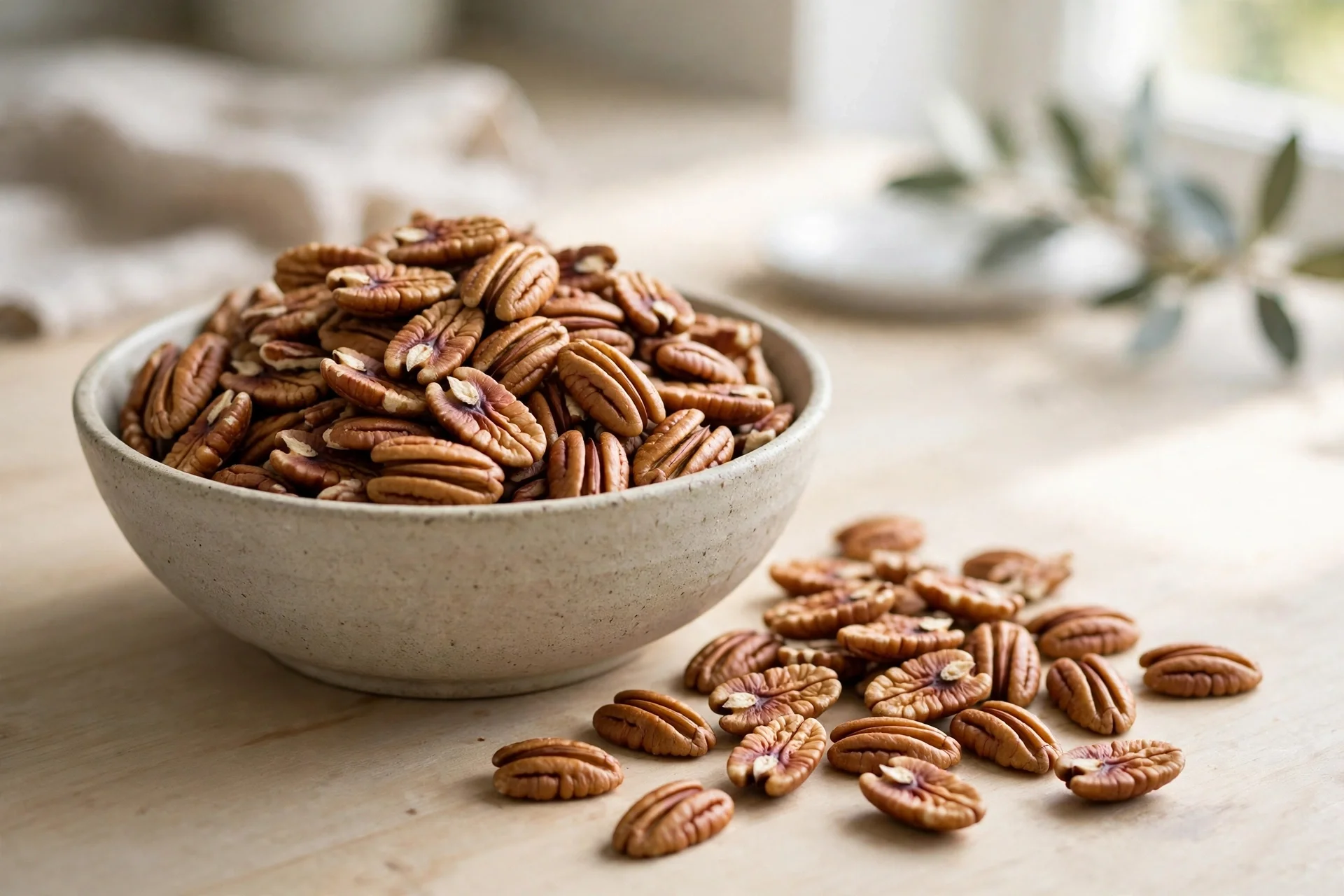
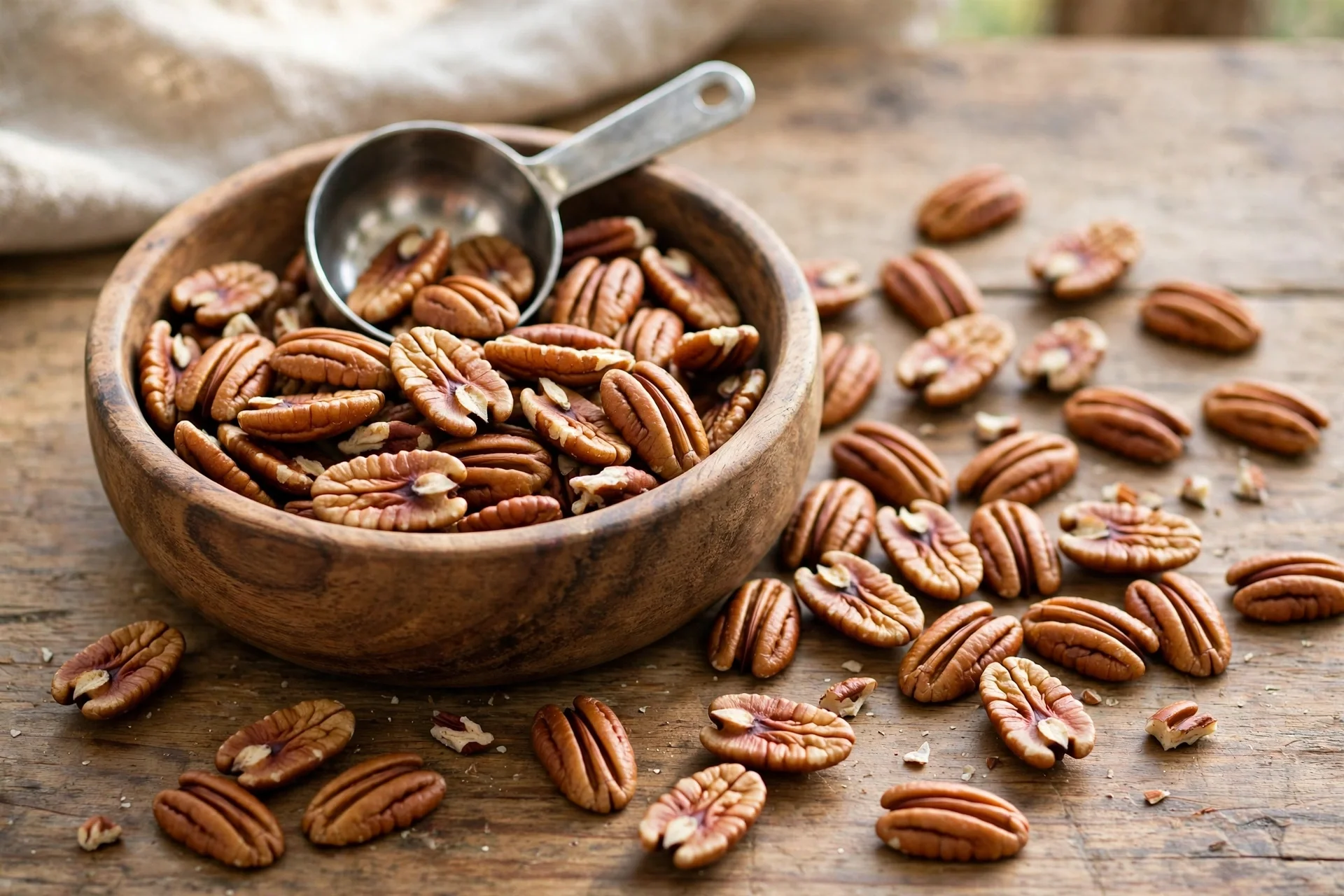
The usual portion is 1 ounce a day — 19 halves, about 196 calories. That is a generous handful and fits most meal plans as a snack. The Penn State trial used about 2 ounces a day (38 halves, about 392 calories) — but that was a snack replacement, not an addition.
The answer to “are pecans good for cholesterol?” depends on the portion and the substitution. One ounce a day instead of crackers is a good swap. Two ounces a day instead of chips is the trial dose. Three ounces a day on top of your usual snacks is 588 calories of nuts — too much for most people.
If you are watching your weight, pecans are the most calorie-dense nut. They are worth the calories for the nutrients, but only in a measured portion. Count out 19 halves into a small bowl. Do not eat from the bag.
Raw vs Roasted, Salted vs Candied
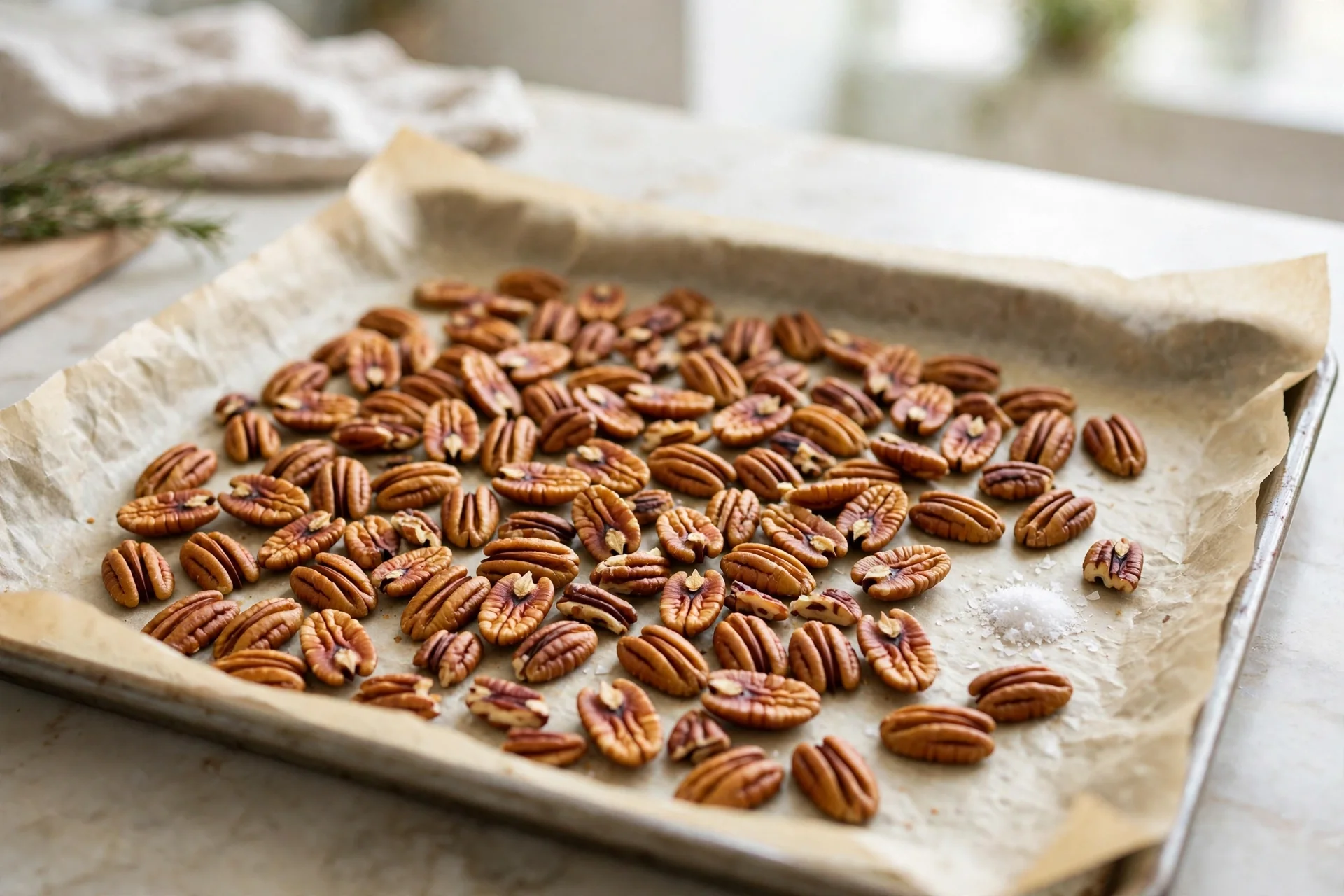
Raw unsalted pecans are the best choice — that is what the trials used. Dry-roasted pecans taste nuttier and are just as healthy. Either form works for cholesterol. Avoid oil-roasted pecans, which add unnecessary fat and calories and no extra benefit.
Salted pecans add sodium, which matters if you have high blood pressure. Candied or sugared pecans are the real trap: they are dessert, not a health food. A handful of candied pecans can add 10 grams of sugar or more, which undoes the cholesterol benefit. Pecan pie is delicious, but it is not a cholesterol food.
That is why the question “are pecans good for cholesterol?” has a label in the answer. Raw, unsalted pecans are a heart-healthy snack. Candied pecans, pecan pie, and honey-glazed pecans are treats — enjoy them, but do not count them as health food.
Pecans vs Walnuts, Almonds and Pistachios
Walnuts have the strongest cholesterol evidence of any nut — more trials, bigger effect sizes, and ALA omega-3 that pecans lack. Almonds have more fiber and protein per ounce. Pistachios have more protein, more lutein, and more nuts per ounce (49 kernels vs 19 halves).
But pecans have their own advantages. They have the most vitamin E of any tree nut (46 percent of daily value per ounce). They have a unique polyphenol profile. And they are the richest-tasting nut — buttery, sweet, and satisfying, which makes them easy to eat as a snack replacement.
So when you ask “are pecans good for cholesterol?” against the other nuts, the answer is that all of them help — walnuts have the strongest evidence, pecans have the most vitamin E. See our walnuts guide, our almonds guide, our pistachios guide , and our nuts for heart health guide for the full comparison.
Who Should Be Careful?
Pecans are safe for most people, but a few groups should take care. If you have a tree-nut allergy, do not eat pecans. If you have diabetes, know that the pecan blood-sugar evidence is mixed — the 2026 review found no clear benefit for blood sugar. Pecans help cholesterol, not necessarily blood sugar.
If you are watching your weight, measure your portion: pecans are 196 calories per ounce, the highest of any tree nut. It is easy to eat two ounces without noticing, and that is 392 calories. Count out 19 halves.
If you are asking “are pecans good for cholesterol?” while taking a statin, the answer is yes — pecans help alongside medicine, not instead of it. Do not stop your statin to eat pecans. The statin does far more for your LDL than any food can.
Frequently Asked Questions
Are pecans good for cholesterol if I already take a statin?
Yes. Pecans work alongside statins, not instead of them. A statin lowers LDL by 20 to 60 percent; pecans add about 6 percent on top. Do not stop your statin to eat pecans. Tell your doctor you are adding them, especially if you take blood pressure medicine.
Are pecans good for cholesterol every day?
Yes, in a 1-ounce portion. One ounce a day (19 halves) gives you healthy fats, fiber, and vitamin E without too many calories. Measure the ounce — about a small handful — and do not eat from the bag. Buy raw, unsalted pecans.
How many pecans should I eat a day?
One ounce a day — 19 halves, about 196 calories. The trial dose was about 2 ounces a day (38 halves), but that was a snack replacement, not an addition. Eat pecans instead of chips or crackers, not on top of them.
Are pecans better than walnuts for cholesterol?
Walnuts have slightly stronger evidence — more trials, bigger effect sizes, and ALA omega-3 that pecans lack. But pecans have more vitamin E and a unique polyphenol profile. Both are good for cholesterol. Eat a mix of nuts for the best coverage, and measure your portions.
Are candied pecans healthy?
No. Candied or sugared pecans are dessert, not a health food. A handful can add 10 grams of sugar or more, which undoes the cholesterol benefit. Pecan pie is delicious, but it is not a cholesterol food. For the health benefit, eat raw, unsalted pecans.
Do pecans raise blood sugar?
Are pecans good for cholesterol and blood sugar? For cholesterol, yes. Pecans are very low in carbs (about 4 grams per ounce), so they do not spike blood sugar. But the 2026 review found the blood-sugar evidence mixed. They help cholesterol, not necessarily blood sugar. Talk to your doctor if you have diabetes.
Your Next Step
So, are pecans good for cholesterol? For most people, yes — modestly, when they replace other snacks. Three trials found LDL down about 6 percent, and a 2026 review of 52 studies confirmed the lipid benefit. Eat 1 ounce a day, raw and unsalted, instead of chips.
Try 19 halves tomorrow: a small handful of raw pecans as your afternoon snack, instead of crackers.
This article is for general information only and is not medical advice. Please talk to your doctor or a registered dietitian, especially if you have diabetes, heart disease or take medicine.