Are Apples Good for Diabetics? The Honest Answer
Are apples good for diabetics? Yes — when you eat them whole, with the skin on, and paired with protein or fat. One medium apple has 25 grams of carbs, 4 grams of fiber, and a glycemic index of about 36. That is a low-GI fruit. The problems start with juice, pie, and dried apples.
By Sarah | Last updated: November 11, 2026

Key Takeaways
- Are apples good for diabetics? Yes — whole, with the skin on, paired with protein or fat.
- One medium apple: 25 g carbs, 4 g fiber, GI about 36, GL about 6–7.
- The skin holds about two-thirds of the fiber — do not peel it.
- Juice, pie, and dried apples are the forms to limit, not the whole fruit.
- Test your own response: the same apple affects different people differently.
On This Page
- Short Answer
- What’s in an Apple
- Best Variety
- Whole vs Juice vs Dried
- How Many
- Best Pairings
- 3-Day Plan
- Who Should Be Careful
- FAQs
Are Apples Good for Diabetics? The Short Answer
Yes. Apples are good for diabetics when you follow three rules: eat the whole fruit, keep the skin on, and pair it with protein or fat. The skin holds about two-thirds of the fiber. The pairing slows the rise. Break any of the three rules and the same apple behaves very differently.
The research supports apples. A 2017 meta-analysis of 228,315 people found that the highest apple and pear intake was linked to an 18 percent lower risk of type 2 diabetes. Harvard cohorts of over 187,000 people found that apples, blueberries, and grapes were linked to up to 23 percent lower risk. And in a study of 38,000 women, regular apple eaters had a 28 percent lower risk.
Are apples good for diabetics in every form? No — the form matters more than the fruit. A whole apple is a low-GI food. Apple juice is a fast sugar with no fiber. The rest of this guide shows you the numbers, the best varieties, and the pairings that keep blood sugar steady.
What's in an Apple? Carbs, Fiber, and GI
One medium apple (182 grams, with skin) has 95 calories, 25 grams of carbs, 4 grams of fiber, and 19 grams of natural sugar. Its glycemic index is about 36 — low. Its glycemic load is about 6 or 7 — also low. The fiber, mostly pectin, is what keeps the rise gentle.
| Nutrient | Per medium apple (182 g, with skin) |
|---|---|
| Calories | 95 kcal |
| Carbs | 25 g |
| Fiber | 4.4 g |
| Sugar | 18.9 g |
| Protein | 0.5 g |
| Sodium | 2 mg |
| Potassium | 195 mg |
| Net carbs | ~20.7 g |
Pectin is a type of soluble fiber — it forms a gel in your gut that slows how fast sugar reaches your blood. Apples are about 85 percent water, which also helps. Harvard’s guide to carbohydrates and blood sugar explains how GI and GL work: low-GI foods (55 or less) raise blood sugar more slowly, and apples sit well inside that range. Apples rank among the low glycemic fruits — compare them with bananas, which have a higher GI when ripe.
Which Apple Variety Is Best for Diabetes?
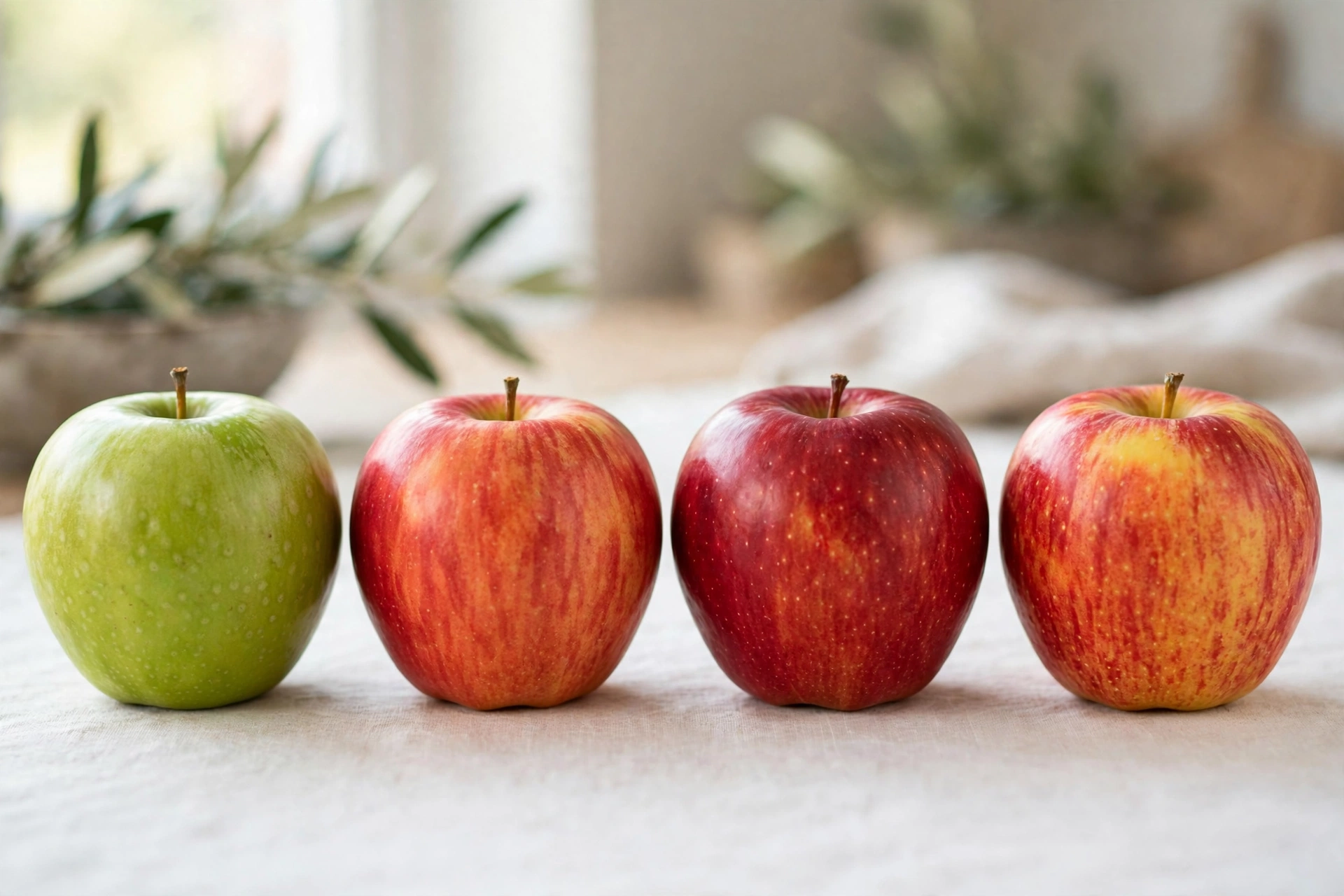
Granny Smith is the usual answer — lowest in sugar, tartest in taste, and a glycemic index of about 34. But the honest truth is that variety differences are small. The GI range across common varieties is about 34 to 39. Portion matters more than variety. Pick the apple you enjoy.
| Variety | GI (indicative) | Carbs (medium) | Sugar |
|---|---|---|---|
| Granny Smith | ~34 | ~21 g | ~12 g |
| Gala | ~36 | ~25 g | ~16 g |
| Red Delicious | ~37 | ~20 g net | ~17 g |
| Pink Lady | ~38 | ~21 g net | ~18 g |
| Fuji | ~38 | ~22 g net | ~19 g |
| Honeycrisp | ~39 | ~23 g net | ~20 g |
These GI values are indicative — different sources disagree, and one source even puts Honeycrisp lower than Gala and Fuji. The differences are small either way: 5 GI points between the lowest and highest. Are apples good for diabetics regardless of variety? Yes — the variety is a detail, and the portion is the decision.
Whole Apple vs Juice vs Sauce vs Dried
The form matters more than the variety. A whole apple has fiber that slows the sugar down. Juice has the same sugar with no fiber at all. Dried apples pack the sugar of several apples into a small handful. Sauce sits in the middle. The table below shows the numbers.
| Form | Serving | Carbs | Fiber | Verdict |
|---|---|---|---|---|
| Whole apple, with skin | 1 medium (182 g) | 25 g | 4.4 g | Best choice |
| Unsweetened applesauce | ½ cup | 12–14 g | Low | OK in small portions |
| Apple juice, unsweetened | 8 oz | 29 g | 0 g | Skip as a drink |
| Dried apples | ½ cup | ~40 g | Low | Easy to overeat |
| Apple pie | ⅛ of a 9-inch pie | 58 g | 0 g | A dessert, not a fruit |
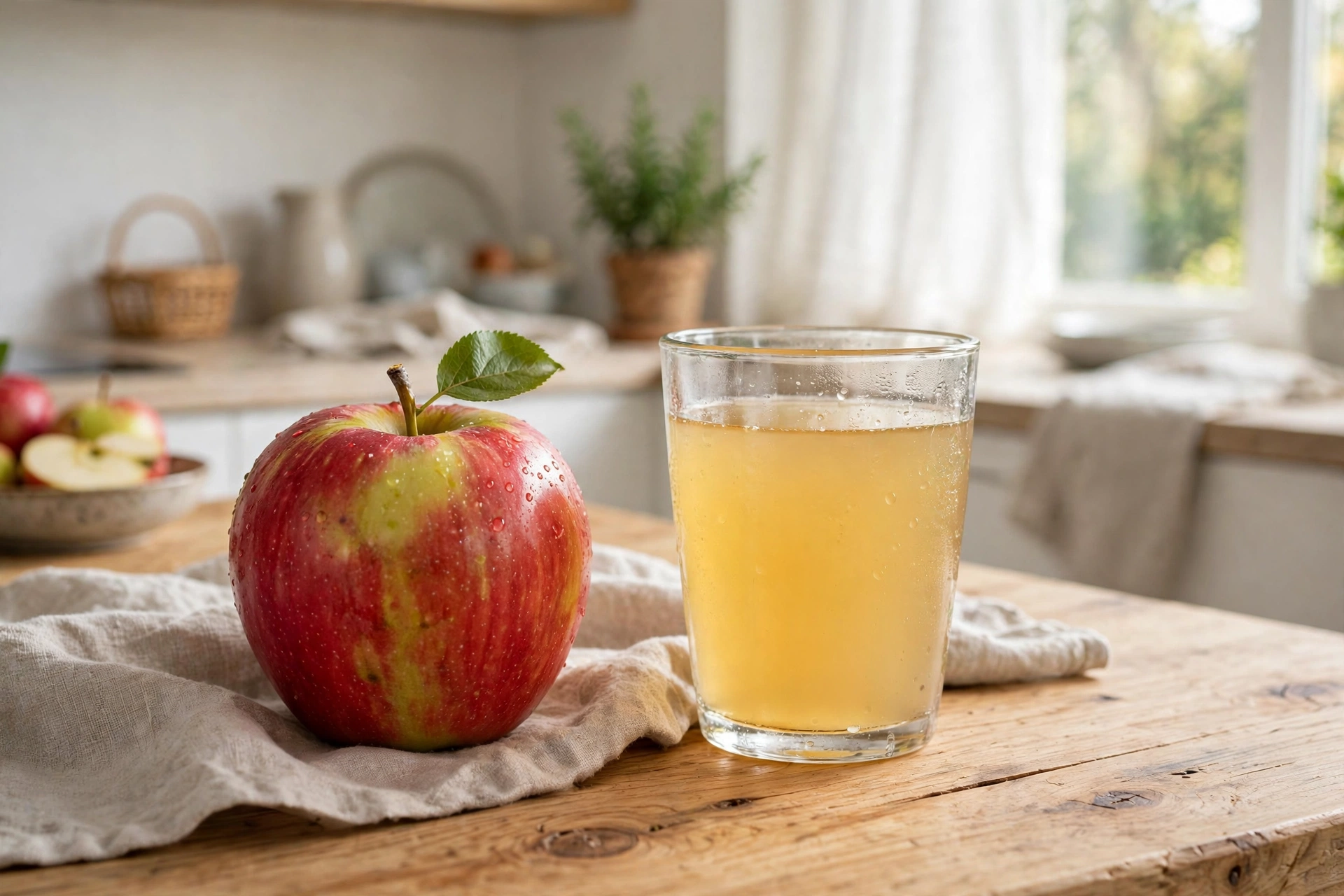
Juice is the worst form for blood sugar. An 8-ounce glass has 29 grams of carbs and zero fiber — the sugar hits your blood fast. Harvard research found that daily juice drinking was linked to a 21 percent higher risk of type 2 diabetes. Dried apples are the sneakiest: half a cup has about 40 grams of carbs, the sugar of nearly two whole apples, in a handful you can eat in a minute.
Are apples good for diabetics as juice? No — save juice for treating a low blood sugar, where fast sugar is exactly what you need. For everyday eating, the whole fruit wins every time.
How Many Apples Can a Diabetic Eat?
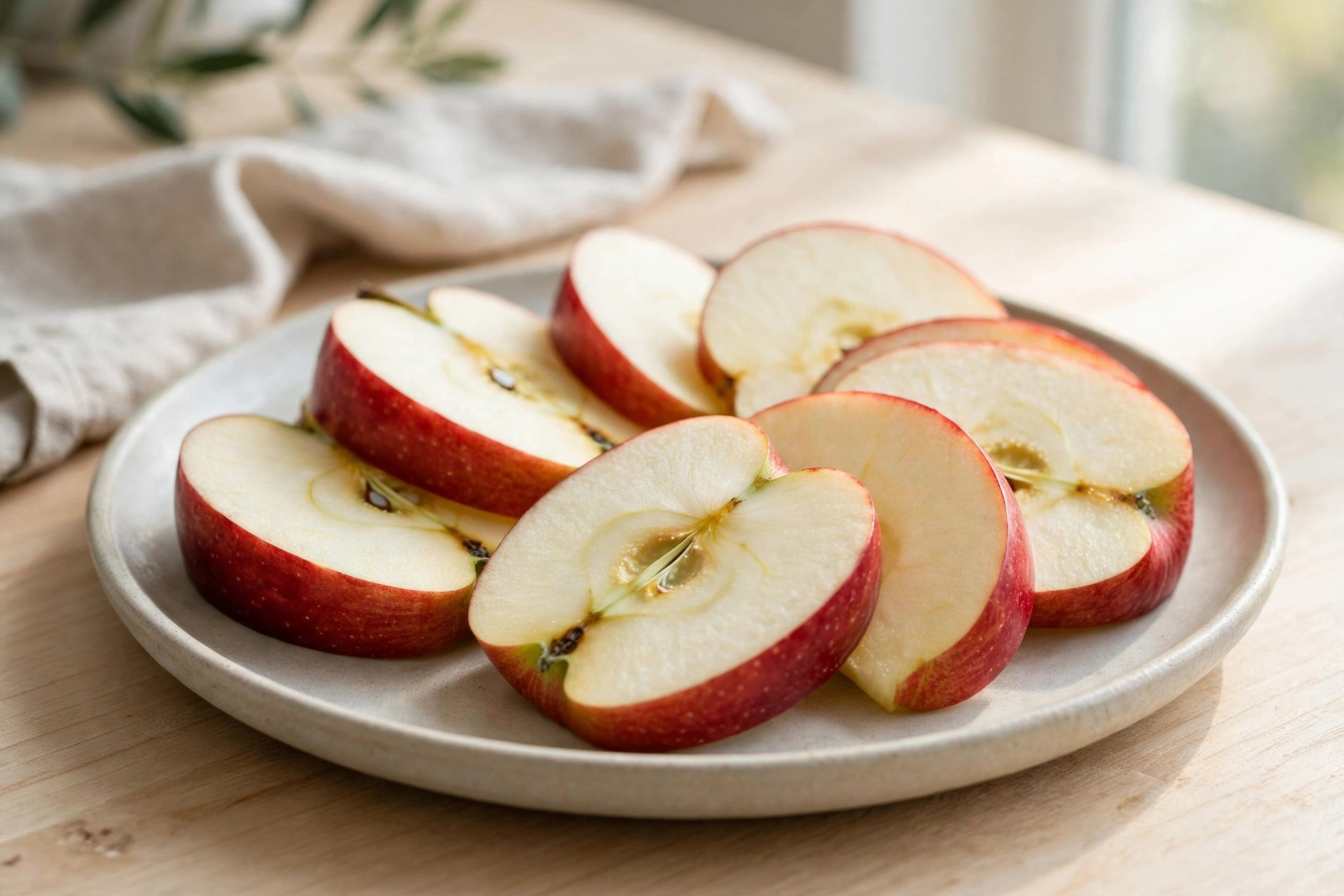
One medium apple per sitting is a good portion. That is 25 grams of carbs — about half of a typical 45 to 60 gram meal target, or most of a 15 to 30 gram snack target. A medium apple is about the size of a tennis ball. If your apple is larger, eat half now and half later.
How many a day depends on your carb budget. One apple is 25 grams, so two apples use up 50 grams — most of a meal’s target on their own. Count each apple, and fit it into your plan the same way you count bread or rice. Are apples good for diabetics every day? Yes, in the right portion — one a day fits most meal plans easily.
The Best Pairings for Blood Sugar
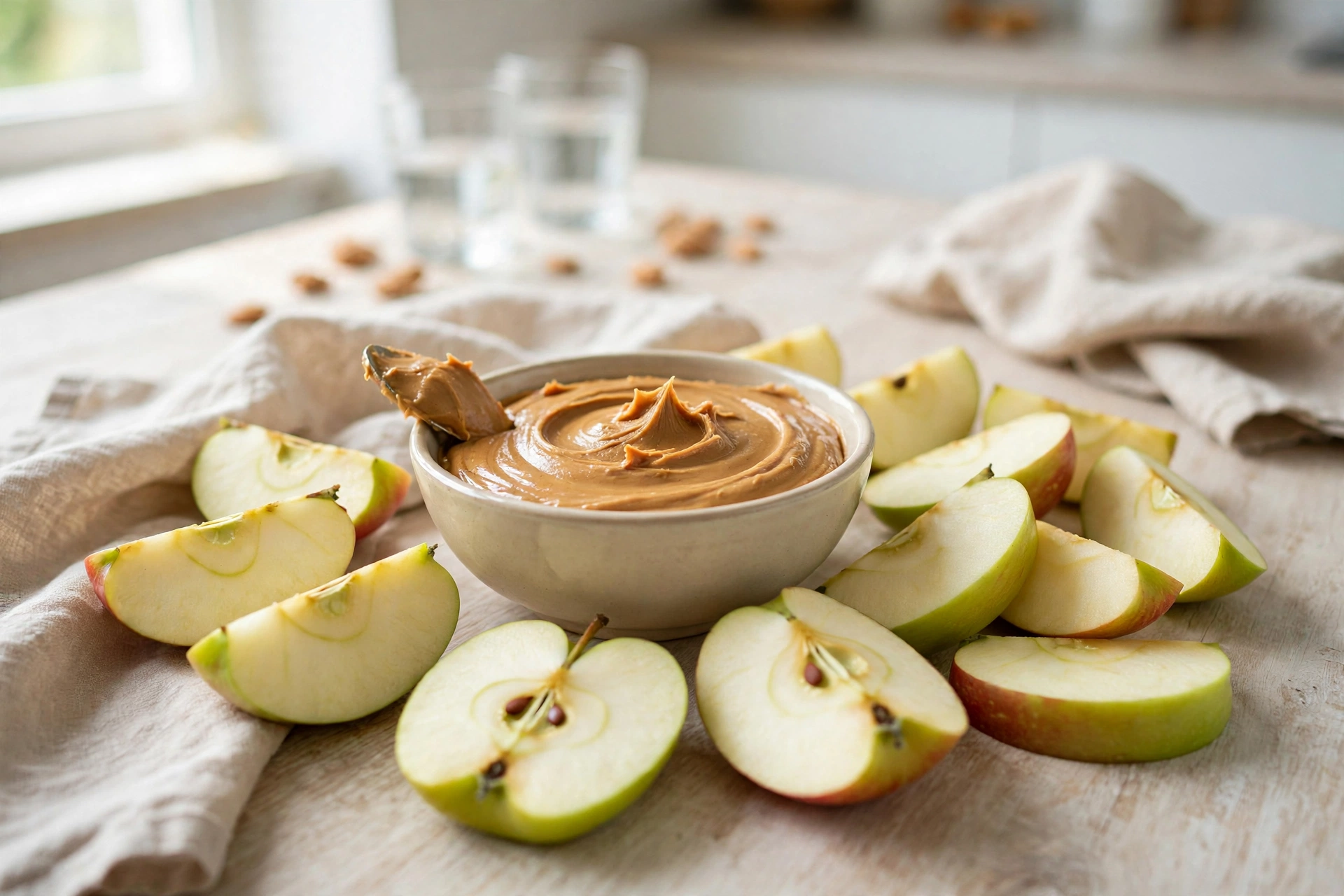
Never eat an apple alone if you can help it. Pair it with protein or fat and your blood sugar rises more slowly. Peanut butter, Greek yogurt, cheese, and walnuts all work. The table below shows what each pairing adds. The apple stays the same — the pairing changes the outcome.
| Pairing (1 medium apple + …) | Total carbs | Protein |
|---|---|---|
| 1 tbsp peanut butter | ~29 g | ~4 g |
| ½ cup plain Greek yogurt | ~29 g | ~13 g |
| 1 oz cheddar cheese | ~25 g | ~7 g |
| 1 oz walnuts | ~29 g | ~4 g |
| Sliced into oatmeal | Varies | Varies |
My favorite snack is apple slices with a spoonful of peanut butter — it keeps me full until dinner. It also makes a good bedtime snack when you want something sweet before bed. Are apples good for diabetics as a snack? Yes — with a pairing, an apple is one of the best snacks you can eat.
Test Your Own Apple: A Simple 3-Day Plan
Everyone responds to apples differently — one study found the same apple caused blood sugar differences of more than 50 points between people. So test your own response. Eat the same apple three days in a row, each time with a different pairing, and check before and two hours after.
- Day 1 — apple alone: eat one medium apple on its own. Check your blood sugar before, and again 2 hours after.
- Day 2 — apple + peanut butter: eat the same size apple with 1 tablespoon of peanut butter. Check before and 2 hours after.
- Day 3 — apple + Greek yogurt: eat the same size apple with ½ cup of plain Greek yogurt. Check before and 2 hours after.
Compare the three results. Most people see the smallest rise on the days with a pairing. Are apples good for diabetics in your body? This plan gives you the answer for you — not for the average person in a study.
Who Should Be Careful?
Apples are safe for most people with diabetes, but three situations need care. If you take insulin, count the 25 grams of carbs in a medium apple. If you use juice to treat a low, that is the one time juice is the right choice. With type 1 diabetes, carb counting matters most, because insulin doses match carbs.
Are apples good for diabetics who take insulin? Yes — just count them. A medium apple is 25 grams, which is more than one carb choice (15 grams). If you use a carb-to-insulin ratio, an apple needs its own dose. Do not guess: weigh the apple once or twice until you can judge the size by eye.
Frequently Asked Questions
Are apples good for diabetics with type 2 diabetes?
Yes. A whole apple with the skin on is a low-GI food, with 25 grams of carbs and 4 grams of fiber per medium apple. Large studies link regular apple eating to a lower risk of type 2 diabetes. Eat one medium apple at a time, pair it with protein or fat, and skip the juice.
Which apple is best for diabetes?
Granny Smith is the usual pick — lowest in sugar (about 12 grams) and lowest GI (about 34). But the differences between varieties are small: the GI range is about 34 to 39 across common varieties. Portion matters more than variety. Pick the apple you enjoy and will eat with the skin on.
Are apples good for diabetics every day?
Yes, in the right portion. One medium apple a day fits most meal plans — it is 25 grams of carbs, about half a typical meal target. Count it in your carb budget the same way you count bread or rice. Two apples a day can work too, if your plan has room for 50 grams of fruit carbs.
Is apple juice OK for diabetics?
Not as a regular drink. An 8-ounce glass of unsweetened apple juice has 29 grams of carbs and zero fiber, so the sugar hits your blood fast. Harvard research linked daily juice drinking to a 21 percent higher risk of type 2 diabetes. Save juice for treating a low blood sugar, where fast sugar is what you need.
Should I peel an apple before eating it?
No — keep the skin on. The skin holds about two-thirds of the apple’s fiber, and peeling loses about 30 percent of it. The fiber is what slows the sugar down. Wash the apple well instead. If you truly cannot eat the skin, pair the peeled apple with protein or fat to make up for the lost fiber.
How many carbs are in a medium apple?
A medium apple (182 grams, with skin) has 25 grams of total carbs and about 20.7 grams of net carbs, after subtracting the 4.4 grams of fiber. It also has 95 calories, 19 grams of natural sugar, and 195 mg of potassium. A large apple can have 30 grams or more — size matters, so check the weight.
Your Next Step
So, are apples good for diabetics? Yes — whole, with the skin on, paired with protein or fat, one medium apple at a time. Start with a Granny Smith and a spoonful of peanut butter. Test your response over three days. Then enjoy your apples with confidence.
I keep a bowl of apples on the counter and a jar of peanut butter next to it — it is the snack my family reaches for most.
This article is for general information only and is not medical advice. Please talk to your doctor or a registered dietitian, especially if you have diabetes, heart disease or take medicine.