

Are Chia Seeds Good for Cholesterol? Dose Matters
Yes — modestly, at the right dose. Are chia seeds good for cholesterol? In 14 trials, chia lowered LDL by about 5 mg/dL, but only at 35 grams a day or more. Triglycerides fell 9 to 13 mg/dL. Two tablespoons a day is good for general health, but it may not be enough for the LDL effect.
By Sarah | Last updated: November 16, 2026

Key Takeaways
- Are chia seeds good for cholesterol? Yes — modestly. LDL fell 4.77 mg/dL in 14 trials, but only at 35 g a day or more.
- Triglycerides fell 9 to 13 mg/dL across the trials — the strongest chia result.
- Two tablespoons a day (28 g) is good for general health, but 3 tablespoons (42 g) is the trial dose for LDL.
- Milled or soaked chia beats whole dry seeds — whole seeds did not raise blood omega-3s in one trial.
- Chia takes months, not days: the clearest results came at 12 weeks.
On This Page
- Short Answer
- How It Works
- Research
- Why Studies Disagree
- How Much
- Milled vs Whole vs Soaked
- How to Eat It
- Chia vs Flaxseed
- Who Should Be Careful
- FAQs
Are Chia Seeds Good for Cholesterol? The Short Answer
Yes, chia seeds can help lower cholesterol — modestly, at the right dose, over months. A 2024 meta-analysis of 14 trials found that chia lowered LDL by 4.77 mg/dL, but only in people eating 35 grams a day or more. Below that dose, LDL did not change. Triglycerides fell at every dose, by 9 to 13 mg/dL.
People often ask me, “Are chia seeds good for cholesterol?” My honest answer is yes, with a measuring spoon. I make chia pudding twice a week with 3 tablespoons of seeds — that is the dose the trials used for LDL.
One honest note: chia is not a replacement for cholesterol medicine. It lowers LDL by about 5 mg/dL; statins lower it by 20 to 60 percent. Chia helps alongside a heart-healthy diet, not instead of treatment.
How Chia Seeds Affect Cholesterol
Chia seeds lower cholesterol through two main mechanisms. First, soluble fiber: one ounce of chia has about 9.8 grams of fiber, including about 4 grams of soluble fiber. When chia meets liquid, it forms a gel. That gel binds to bile acids in your gut, and your liver pulls LDL from your blood to make more.
Second, ALA omega-3: chia is rich in alpha-linolenic acid, a plant omega-3 fat. Your body must convert ALA to EPA and DHA, and that conversion is limited. But one serving has nearly three times the daily value of omega-3s, so even a limited conversion adds up.
That is why the question “are chia seeds good for cholesterol?” has a yes answer with a mechanism behind it. The fiber gel is the workhorse. See our soluble fiber guide for how soluble fiber lowers LDL, and our oatmeal guide for another gel-forming food.
What the Research Says
The best evidence comes from a 2024 meta-analysis of 14 trials with 835 people. Triglycerides fell 8.69 mg/dL at doses under 35 grams a day, and 13.11 mg/dL at doses of 35 grams or more. LDL fell 4.77 mg/dL — but only in the higher-dose group. Below 35 grams a day, LDL did not change.
Not every trial found a benefit. In 2009, researchers gave 50 grams of whole chia a day to 50 overweight adults for 12 weeks. Nothing changed — no change in weight, blood pressure, or cholesterol. That null result shows dose and form matter more than the seed itself.
A 2021 review of 10 trials called the overall picture “heterogeneous” — the results were mixed. The pattern is clear: higher doses, milled or soaked seeds, and longer trials found the benefit. Lower doses, whole seeds, and shorter trials did not.
So are chia seeds good for cholesterol? The honest answer is that the effect is real but small — about 5 mg/dL of LDL at the right dose — and it is not guaranteed. A trial in people with type 2 diabetes found 37 grams a day with a calorie-reduced diet lowered LDL and triglycerides more than diet alone.
Why Studies Disagree: Dose, Form and Time
The studies disagree because they tested different things. Dose: trials that used 35 grams or more found an LDL effect; trials that used less did not. Form: trials that used milled chia found a benefit; the null trial used whole seeds. Time: the clearest results came at 12 weeks.
This is the most useful framing for anyone asking “are chia seeds good for cholesterol?” — the answer depends on how much you eat, what form you eat, and how long you eat it. A sprinkle of whole chia on your salad for two weeks will not move your LDL. Three tablespoons of milled or soaked chia a day for three months might.
How Much Chia Per Day?
The dose depends on your goal. For general health, MD Anderson says 2 tablespoons a day is enough for most people. For cholesterol, the trials that found an LDL effect used 35 grams a day or more — about 3 tablespoons.
| Dose | Amount | Fiber | Calories |
|---|---|---|---|
| 2 tablespoons | About 28 g | About 9.8 g | About 137 |
| 3 tablespoons | About 42 g | About 14.7 g | About 206 |
| 35 g (LDL threshold) | About 2.5 tbsp | About 12 g | About 171 |
| 50 g (Nieman null dose) | About 4 tbsp | About 17.5 g | About 245 |
The answer to “are chia seeds good for cholesterol?” depends on the dose. Two tablespoons is a good start for general health. Three tablespoons is the trial dose for LDL. Build up over a week or two, and drink plenty of water.
Milled vs Whole vs Soaked
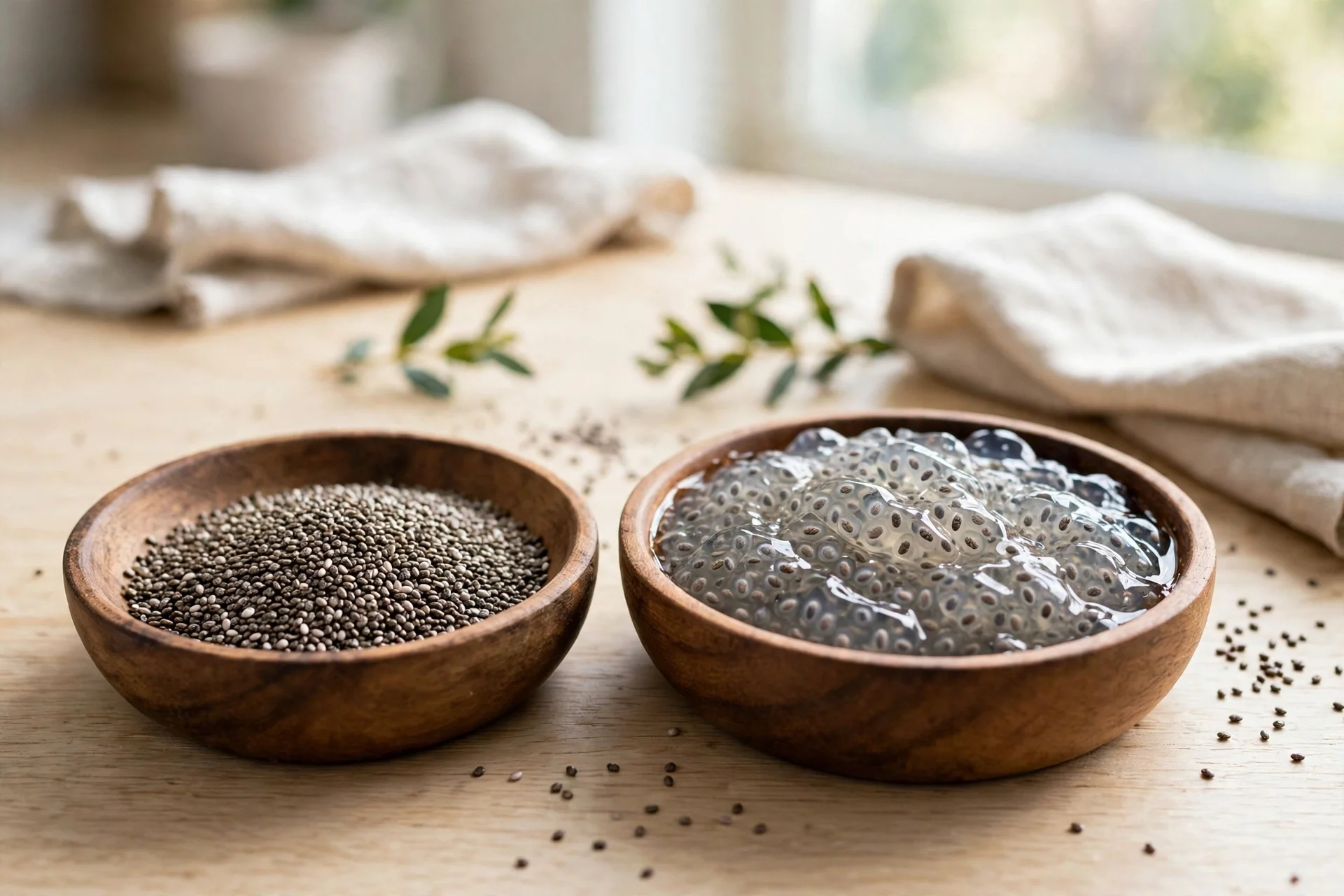
The form you eat changes what your body gets. In a 2012 trial, 25 grams a day of milled chia raised blood levels of ALA and EPA in postmenopausal women over 10 weeks. Whole seeds did not. The hard seed coat blocks absorption — your body cannot break it down well enough to release the omega-3s.
Soaking is the easy fix. Chia seeds absorb liquid and form a gel, which softens the coat and makes the nutrients available. Soak chia in water, milk, or yogurt for 20 minutes before eating. Or buy milled chia, which is pre-ground like ground flaxseed.
That is why the question “are chia seeds good for cholesterol?” needs the word “soaked” or “milled” in the answer. Whole dry seeds give you fiber, but not the omega-3 benefit. Soak them, or grind them, and you get both.
How to Eat Chia Seeds Every Day
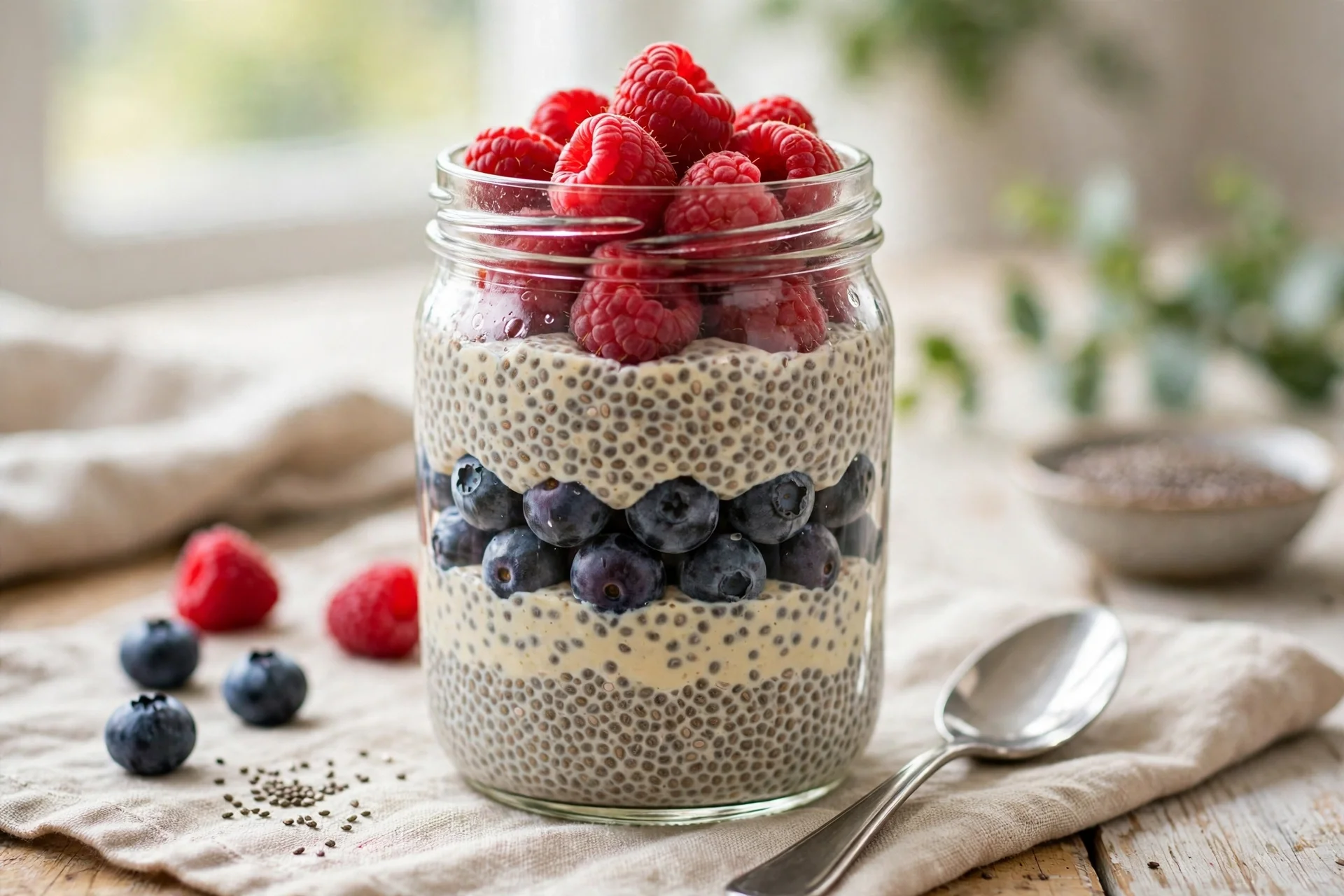
Chia seeds are easy to add to food. The classic is chia pudding: mix 3 tablespoons of chia with a cup of milk, stir, refrigerate overnight, and top with berries. Try our high-protein chia pudding for a recipe that hits the trial dose.
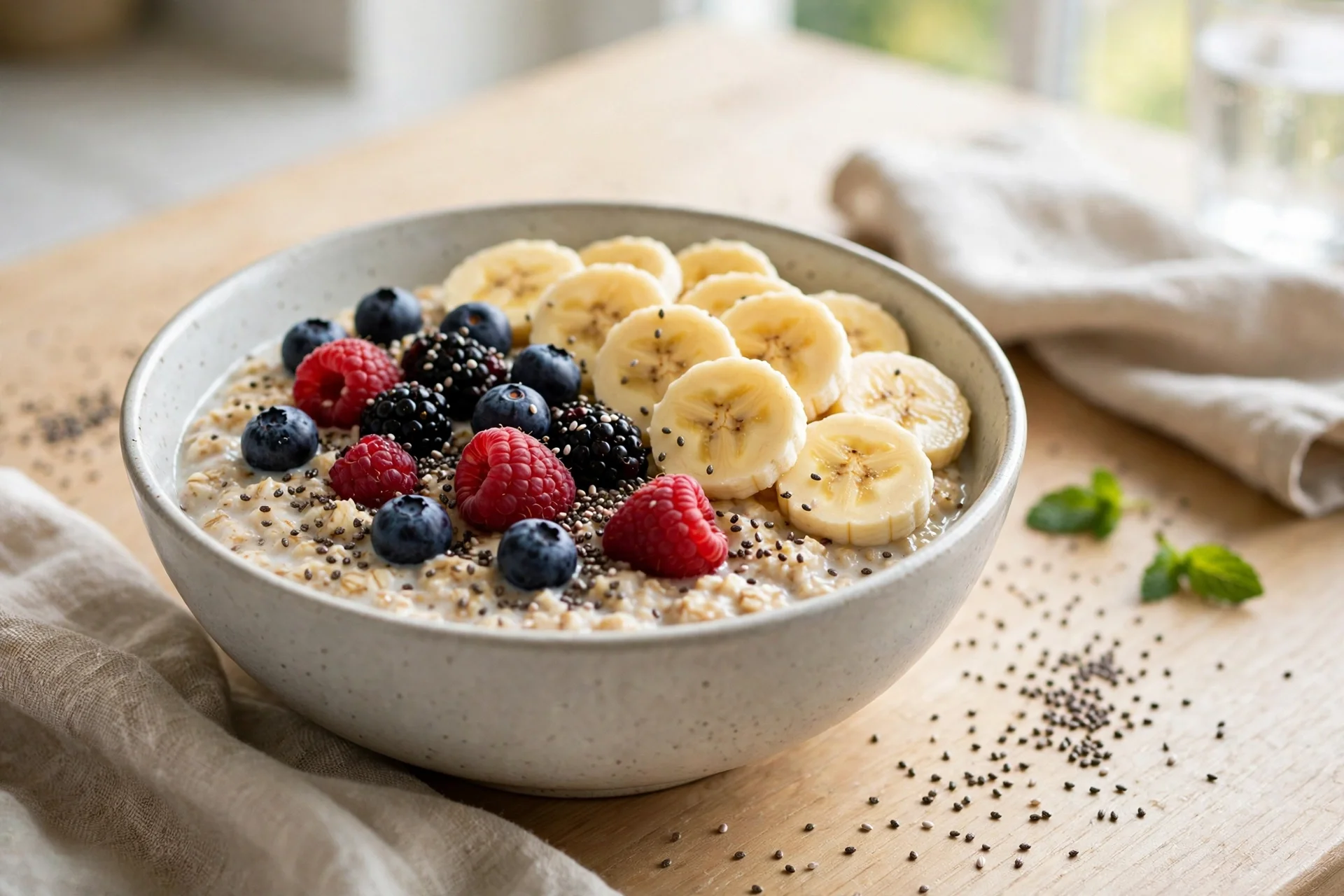
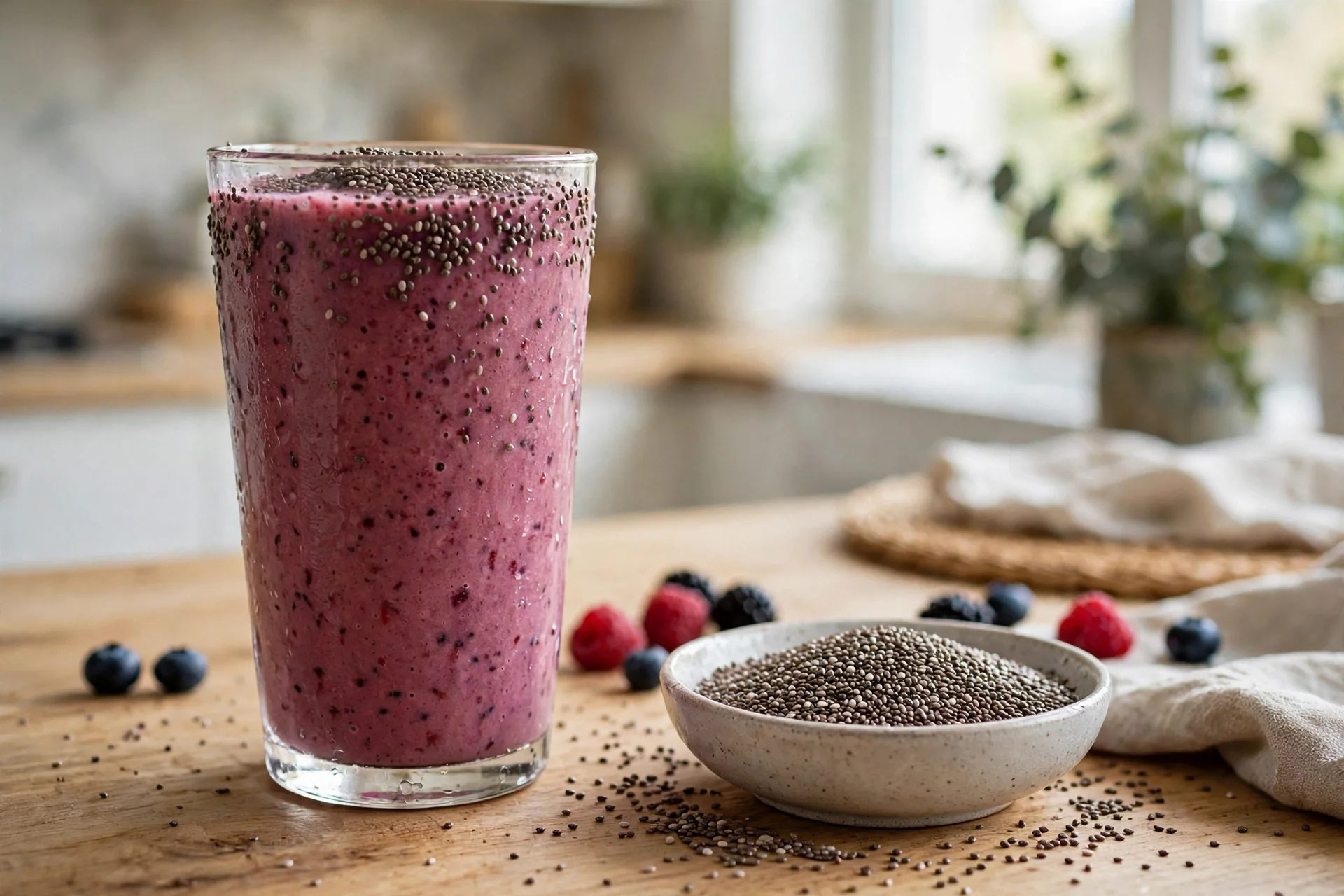
You can also stir chia into oatmeal, yogurt, or smoothies. Add a tablespoon to pancake batter or muffin mix. Sprinkle soaked chia over salads.
I make a big jar of chia pudding on Sunday nights — 3 tablespoons of seeds per serving, with almond milk and a handful of berries. It takes five minutes to prep, and it is breakfast for two days. That is my answer to “are chia seeds good for cholesterol?” — measure the dose, soak the seeds, eat them every week.
Chia vs Flaxseed for Cholesterol
Chia and flaxseed are both good for cholesterol, but they have different strengths. Flaxseed has more lignans and more ALA per tablespoon, and its evidence base is larger (28 trials vs 14 for chia). Chia has more fiber per ounce (about 10 grams vs about 8 grams for flaxseed).
The practical difference is prep. Flaxseed must be ground — whole seeds pass through undigested. Chia can be eaten whole, but milled or soaked chia works better for omega-3s.
So when you ask “are chia seeds good for cholesterol?” against flaxseed, the answer is that both help — flaxseed has the stronger evidence, chia has the easier prep. See our flaxseed guide for the full flaxseed story.
Chia also helps with blood sugar and digestion — see our chia and diabetes guide and our chia and constipation guide for the same seed from different angles.
Who Should Be Careful?
Chia seeds are safe for most people, but a few groups should take care. Chia absorbs liquid and swells — always soak dry seeds before eating them, and drink plenty of water. Dry chia without water can cause bloating or, rarely, a blockage.
If you take blood pressure or blood sugar medicine, talk to your doctor first. MD Anderson advises limiting chia if you have low blood pressure or low blood sugar, because chia may lower both further. Harvard Health’s chia guide notes that chia is rich in fiber, ALA, calcium, and magnesium — worth knowing if you take medicine.
If you are asking “are chia seeds good for cholesterol?” while taking a statin, the answer is yes — chia helps alongside medicine, not instead of it. Do not stop your statin to eat chia. The statin does far more for your LDL than any food can.
Frequently Asked Questions
Are chia seeds good for cholesterol if I already take a statin?
Yes. Chia works alongside statins, not instead of them. A statin lowers LDL by 20 to 60 percent; chia adds a few more points on top. Do not stop your statin to eat chia. Tell your doctor you are adding chia, especially if you take blood pressure or blood sugar medicine, because chia may lower both.
Are chia seeds good for cholesterol every day?
Yes. Two to 3 tablespoons of chia a day is safe for most people and is the dose used in most trials. Soak the seeds first, and drink plenty of water. If you notice bloating or gas, start with 1 tablespoon and build up slowly over a week or two.
How much chia should I eat for cholesterol?
Are chia seeds good for cholesterol at 2 tablespoons? For the LDL effect, trials used 35 grams a day or more — about 3 tablespoons. For general health, 2 tablespoons a day is enough. The dose range in trials hinting at benefit is 20 to 40 grams a day. Build up gradually, soak the seeds, and drink water with them.
How long do chia seeds take to lower cholesterol?
Months, not days. The shortest trial with meaningful lipid changes ran 8 weeks; the clearest results came at 12 weeks. At the usual 2 to 3 tablespoon dose, expect a modest drop over 2 to 3 months. Get your cholesterol checked before you start and again after 3 months to see your own response.
Should chia seeds be ground or whole?
Milled or soaked is better than whole and dry. A 2012 trial found that milled chia raised blood omega-3 levels, but whole seeds did not. Soaking softens the seed coat and makes the nutrients available. If you eat chia dry, you still get fiber — but you miss the omega-3 benefit.
Can chia seeds replace cholesterol medicine?
No. Chia lowers LDL by about 5 mg/dL at the right dose. Statins lower LDL by 20 to 60 percent. Chia is a helpful food, not a medicine. If your doctor has prescribed a statin, keep taking it. Add chia as part of a heart-healthy diet, not as a replacement for treatment.
Your Next Step
So, are chia seeds good for cholesterol? For most people, yes — modestly, at 35 grams a day or more, over months. LDL fell 4.77 mg/dL in 14 trials, and triglycerides fell 9 to 13 mg/dL. Soak the seeds, eat 3 tablespoons a day, and check your numbers after 3 months.
Try one jar of chia pudding tomorrow: 3 tablespoons of seeds, a cup of milk, berries on top, and make it a weekly habit.
This article is for general information only and is not medical advice. Please talk to your doctor or a registered dietitian, especially if you have diabetes, heart disease or take medicine.


