5 Healthy Poke Bowl Recipes (Fresh & Easy)
These healthy poke bowl recipes cover raw tuna, salmon, seared tuna, cooked shrimp and tofu — with sushi-grade safety tips and exact per-serving nutrition from the batch totals. Two bowls are raw, one is seared, and two are cooked or plant-based.
Key Takeaways
- All 5 healthy poke bowl recipes use brown rice as the base — more fiber than white sushi rice, and it holds up to the soy dressing.
- Protein ranges from 33 g to 50 g per serving — the classic ahi tuna bowl is highest.
- Raw fish bowls must be eaten the same day — buy sushi-grade fish from a trusted fishmonger.
In This Post
What Is a Poke Bowl?
Poke (pronounced poh-keh) is a Hawaiian dish of cubed raw fish, usually tuna or salmon, tossed in a soy-based sauce and served over rice with fresh toppings. The word “poke” means “to slice or cut” in Hawaiian. A healthy poke bowl follows the same formula: a whole grain, a protein, vegetables, a healthy fat, and a sauce.
Traditional poke uses white sushi rice. These healthy poke bowl recipes use brown rice instead — it adds fiber (the tuna bowl has 10 grams) and keeps you full longer. The sauces stay light: low-sodium soy sauce, sesame oil and lime.
Fish is one of the healthiest proteins you can eat. Our best fish for heart health explains why oily fish like salmon and tuna are worth eating twice a week, and our is salmon good for cholesterol covers salmon.
Is Raw Fish Safe at Home? What You Need to Know
Raw fish is safe at home if you buy the right fish and handle it well. Buy sushi-grade fish from a trusted fishmonger. Keep it cold, use it the same day, and use a clean board. The FDA’s guide to selecting and serving seafood safely covers what to look for: fresh fish should smell like the sea, not fishy.
Some people should skip raw fish entirely: pregnant people, children, older adults, and anyone with a weakened immune system. For them, the cooked options in these healthy poke bowl recipes are the right choice — the seared tuna, cooked shrimp and tofu bowls. There is no raw fish in those three.
I buy the tuna from a fishmonger I trust, keep it on ice, and cube it just before serving — the bowl takes 20 minutes from start to finish.
Poke Bowl vs Buddha Bowl — What’s the Difference?
Poke bowls and buddha bowls look similar in a photo, but they are different dishes. A poke bowl is Hawaiian, built on rice and raw fish with a soy-based sauce, served cold. A buddha bowl is plant-based, built on grains and vegetables. For the plant-based version, see our healthy buddha bowls .
| Poke bowl | Buddha bowl | |
|---|---|---|
| Origin | Hawaiian | Modern plant-based |
| Protein | Raw tuna, raw salmon | Tofu, chickpeas, lentils |
| Base | Brown rice (here) | Quinoa, brown rice |
| Sauce | Soy, sesame, lime | Tahini, peanut, hummus |
| Served | Cold | Warm or room temperature |
Pick by protein or by style — every one of these healthy poke bowl recipes is ready in 20 minutes or less. The ahi tuna bowl has the most protein (50 g). The salmon bowl has the most calories (696). The tofu bowl has the most fiber (15 g).
| Bowl | Time | Calories | Protein | Fiber | Raw or cooked |
|---|---|---|---|---|---|
| 1. Classic Ahi Tuna | 20 min | ~563 | 50 g | 10 g | Raw |
| 2. Salmon Avocado | 20 min | ~696 | 44 g | 11 g | Raw |
| 3. Seared Tuna | 20 min | ~494 | 44 g | 8 g | Seared |
| 4. Cooked Shrimp | 15 min | ~482 | 33 g | 10 g | Cooked |
| 5. Tofu | 15 min | ~610 | 39 g | 15 g | No-cook |
5 Healthy Poke Bowl Recipes
Five bowls, five proteins.
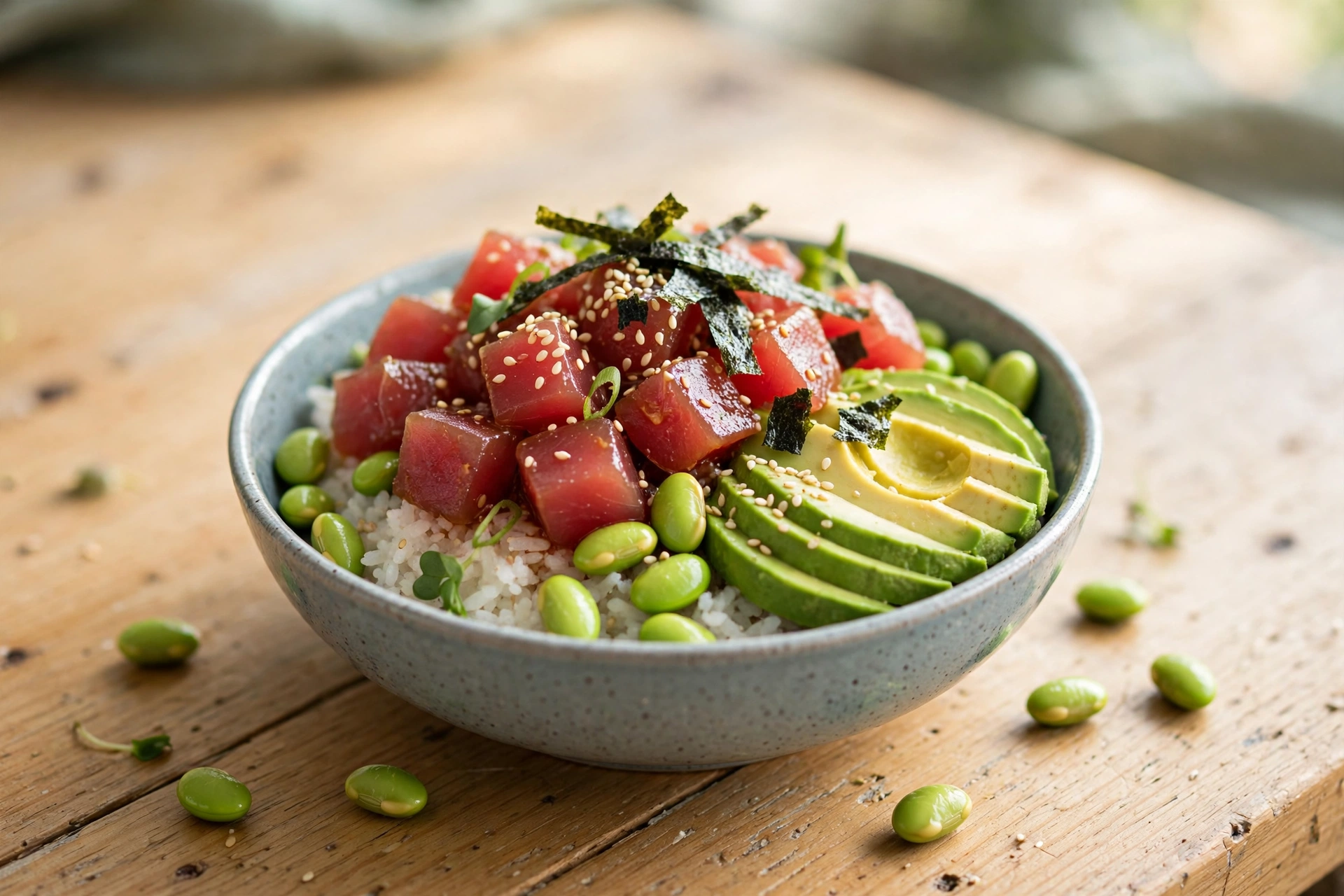
1. Classic Ahi Tuna Poke Bowl
The highest-protein bowl here — 50 grams from yellowfin tuna.
Serves 2 · Prep 20 min · Cook — (no-cook, raw fish) · Total 20 min
Ingredients
- 300 g sushi-grade yellowfin tuna, cubed (raw)
- 300 g cooked brown rice (about 100 g dry), cooled
- 100 g edamame (shelled)
- 100 g cucumber, diced
- 100 g avocado, diced
- 20 g low-sodium soy sauce (about 4 tsp)
- 2 tsp sesame oil (10 g)
- 20 g green onion, sliced
- 10 g sesame seeds (about 1 tbsp)
- 1 tsp fresh ginger, grated (5 g)
Method
- Cook the edamame per the packet (3–4 minutes in boiling water). Drain and cool.
- Whisk the soy sauce, sesame oil and ginger together.
- Toss the tuna cubes in the sauce and keep cold.
- Divide the rice between 2 bowls. Top with the tuna, edamame, cucumber and avocado. Sprinkle with green onion and sesame seeds.
| Nutrition per serving | |
|---|---|
| Calories | ~563 kcal |
| Protein | 50 g |
| Carbs | 49 g |
| Fiber | 10 g |
| Sugar | 3 g |
| Fat | 20 g |
| Sodium | 323 mg |
Why this works: yellowfin tuna is almost pure protein — 24 grams per 100 grams — so 300 grams gives this bowl 50 grams, the most of these healthy poke bowl recipes. The sesame oil and ginger give the classic poke flavour.
Ingredients
Method
- Cook the edamame per the packet (3–4 minutes in boiling water). Drain and cool.
- Whisk the soy sauce, sesame oil and ginger together.
- Toss the tuna cubes in the sauce and keep cold.
- Divide the rice between 2 bowls. Top with the tuna, edamame, cucumber and avocado. Sprinkle with green onion and sesame seeds.
Notes
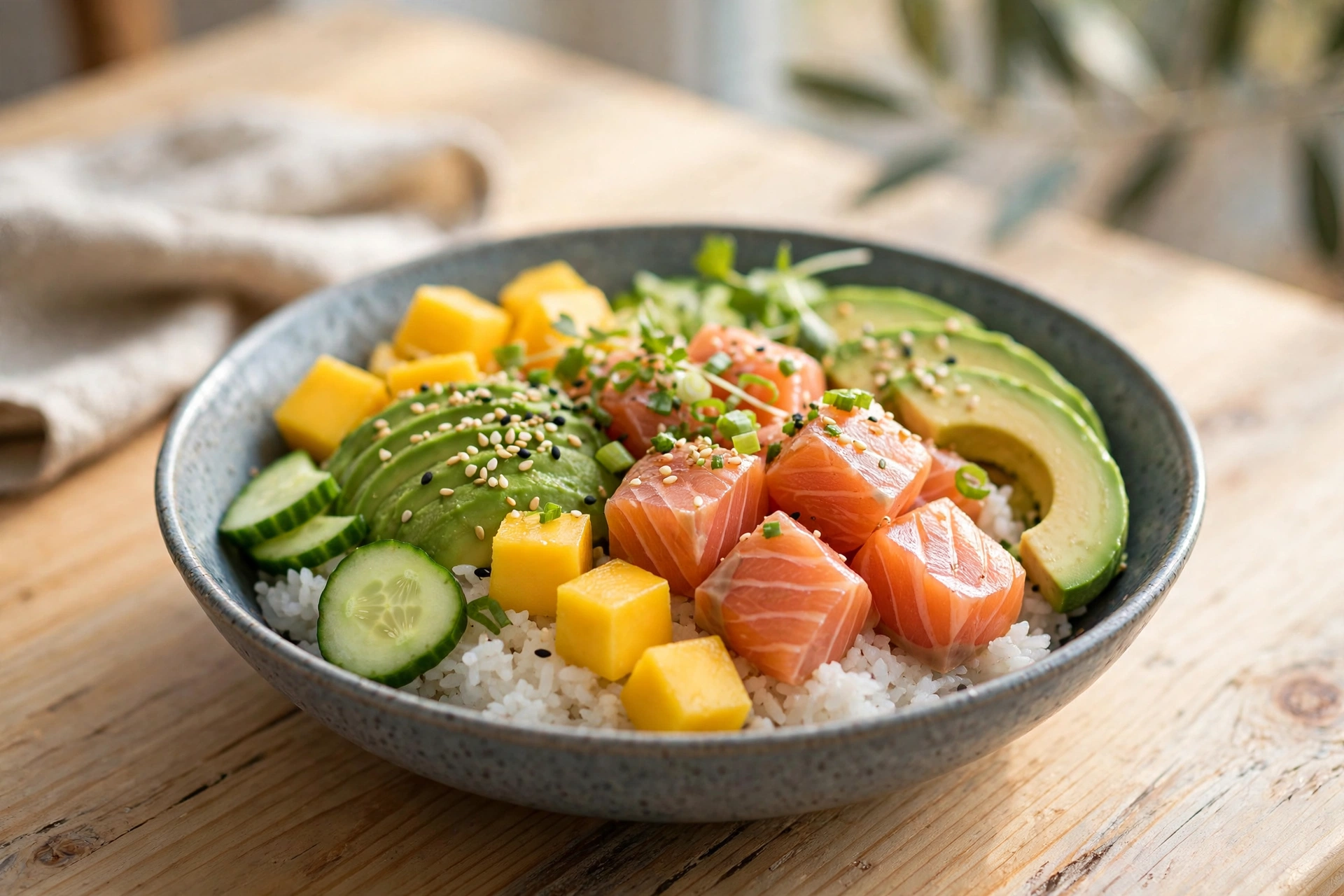
2. Salmon Avocado Poke Bowl
The omega-3 bowl — raw salmon, avocado and mango, lime-soy dressing.
Serves 2 · Prep 20 min · Cook — (no-cook, raw fish) · Total 20 min
Ingredients
- 300 g sushi-grade salmon, cubed (raw)
- 300 g cooked brown rice (about 100 g dry), cooled
- 100 g edamame (shelled)
- 100 g mango, diced
- 100 g cucumber, diced
- 100 g avocado, diced
- 1 tbsp low-sodium soy sauce (15 g)
- 1 tbsp lime juice (15 g)
- 10 g sesame seeds (about 1 tbsp)
- 20 g green onion, sliced
Method
- Cook the edamame per the packet (3–4 minutes in boiling water). Drain and cool.
- Whisk the soy sauce and lime juice together.
- Toss the salmon cubes in the dressing and keep cold.
- Divide the rice between 2 bowls. Top with the salmon, edamame, mango, cucumber and avocado. Sprinkle with green onion and sesame seeds.
| Nutrition per serving | |
|---|---|
| Calories | ~696 kcal |
| Protein | 44 g |
| Carbs | 56 g |
| Fiber | 11 g |
| Sugar | 10 g |
| Fat | 34 g |
| Sodium | 294 mg |
Why this works: salmon and avocado give omega-3 fats that no other bowl here matches. The mango adds sweetness without added sugar — the 10 grams of sugar per serving all come from fruit. It is the richest of these healthy poke bowl recipes.
Ingredients
Method
- Cook the edamame per the packet (3–4 minutes in boiling water). Drain and cool.
- Whisk the soy sauce and lime juice together.
- Toss the salmon cubes in the dressing and keep cold.
- Divide the rice between 2 bowls. Top with the salmon, edamame, mango, cucumber and avocado. Sprinkle with green onion and sesame seeds.
Notes
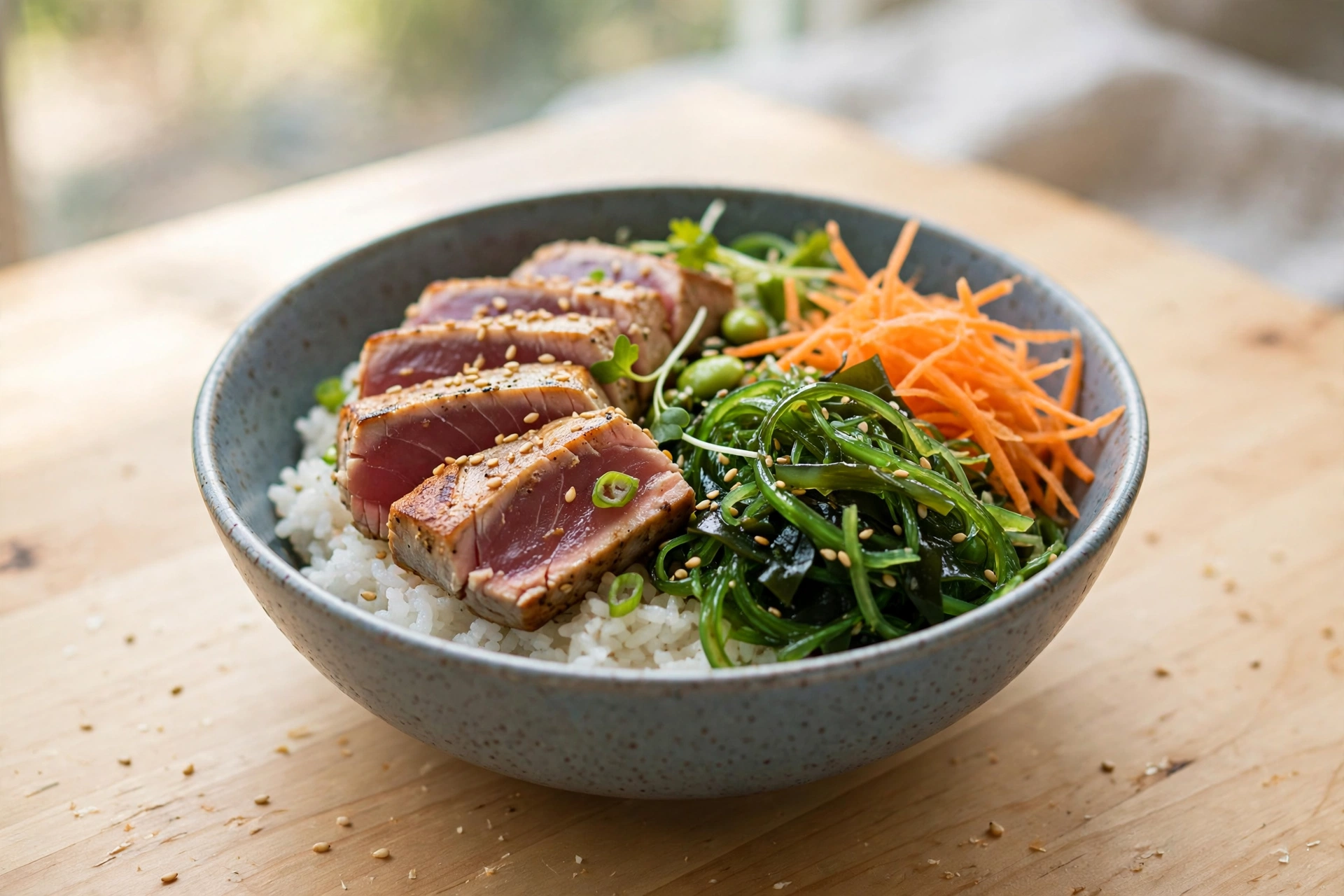
3. Seared Tuna Poke Bowl
The middle ground — seared outside, rare in the middle.
Serves 2 · Prep 15 min · Cook 5 min · Total 20 min
Ingredients
- 300 g yellowfin tuna steak (raw weight)
- 300 g cooked brown rice (about 100 g dry), cooled
- 10 g dried wakame seaweed
- 100 g cucumber, diced
- 80 g carrot, grated or julienned
- 100 g avocado, diced
- 1 tbsp low-sodium soy sauce (15 g)
- 1 tbsp rice vinegar (15 g)
- 10 g sesame seeds (about 1 tbsp)
- 1 tsp olive oil (5 g, for searing)
Method
- Soak the wakame in cold water 10 minutes. Drain and squeeze dry.
- Heat the oil in a pan over high heat. Sear the tuna 1–2 minutes per side — browned outside, still pink inside. Rest 2 minutes, then slice.
- Whisk the soy sauce and rice vinegar together.
- Divide the rice between 2 bowls. Top with the tuna, wakame, cucumber, carrot and avocado. Drizzle with the dressing and sprinkle with sesame seeds.
| Nutrition per serving | |
|---|---|
| Calories | ~494 kcal |
| Protein | 44 g |
| Carbs | 47 g |
| Fiber | 8 g |
| Sugar | 4 g |
| Fat | 15 g |
| Sodium | 327 mg |
Why this works: searing gives you a cooked outside and a rare centre — the flavour of raw tuna with a safer feel. The wakame adds a sea flavour for almost no calories. At 494 calories it is the second-lightest of these healthy poke bowl recipes.
Ingredients
Method
- Soak the wakame in cold water 10 minutes. Drain and squeeze dry.
- Heat the oil in a pan over high heat. Sear the tuna 1–2 minutes per side — browned outside, still pink inside. Rest 2 minutes, then slice.
- Whisk the soy sauce and rice vinegar together.
- Divide the rice between 2 bowls. Top with the tuna, wakame, cucumber, carrot and avocado. Drizzle with the dressing and sprinkle with sesame seeds.
Notes

4. Cooked Shrimp Poke Bowl
The lightest bowl here — 482 calories.
Serves 2 · Prep 10 min · Cook 5 min · Total 15 min
Ingredients
- 300 g shrimp, peeled and deveined (raw weight)
- 300 g cooked brown rice (about 100 g dry), cooled
- 100 g pineapple, diced
- 100 g edamame (shelled)
- 100 g cucumber, diced
- 100 g avocado, diced
- 1 tbsp low-sodium soy sauce (15 g)
- 1 tbsp lime juice (15 g)
- 10 g sesame seeds (about 1 tbsp)
Method
- Cook the shrimp in a pan over medium-high heat 3–4 minutes until pearly white and opaque. Cool.
- Cook the edamame per the packet (3–4 minutes in boiling water). Drain and cool.
- Whisk the soy sauce and lime juice together.
- Divide the rice between 2 bowls. Top with the shrimp, pineapple, edamame, cucumber and avocado. Drizzle with the dressing and sprinkle with sesame seeds.
| Nutrition per serving | |
|---|---|
| Calories | ~482 kcal |
| Protein | 33 g |
| Carbs | 56 g |
| Fiber | 10 g |
| Sugar | 8 g |
| Fat | 15 g |
| Sodium | 382 mg |
Why this works: shrimp cooks in 3–4 minutes, which is why this is the fastest of these healthy poke bowl recipes. The pineapple adds a sweet-tart bite, and the shrimp is fully cooked — the safest choice if you skip raw fish.
Ingredients
Method
- Cook the shrimp in a pan over medium-high heat 3–4 minutes until pearly white and opaque. Cool.
- Cook the edamame per the packet (3–4 minutes in boiling water). Drain and cool.
- Whisk the soy sauce and lime juice together.
- Divide the rice between 2 bowls. Top with the shrimp, pineapple, edamame, cucumber and avocado. Drizzle with the dressing and sprinkle with sesame seeds.
Notes
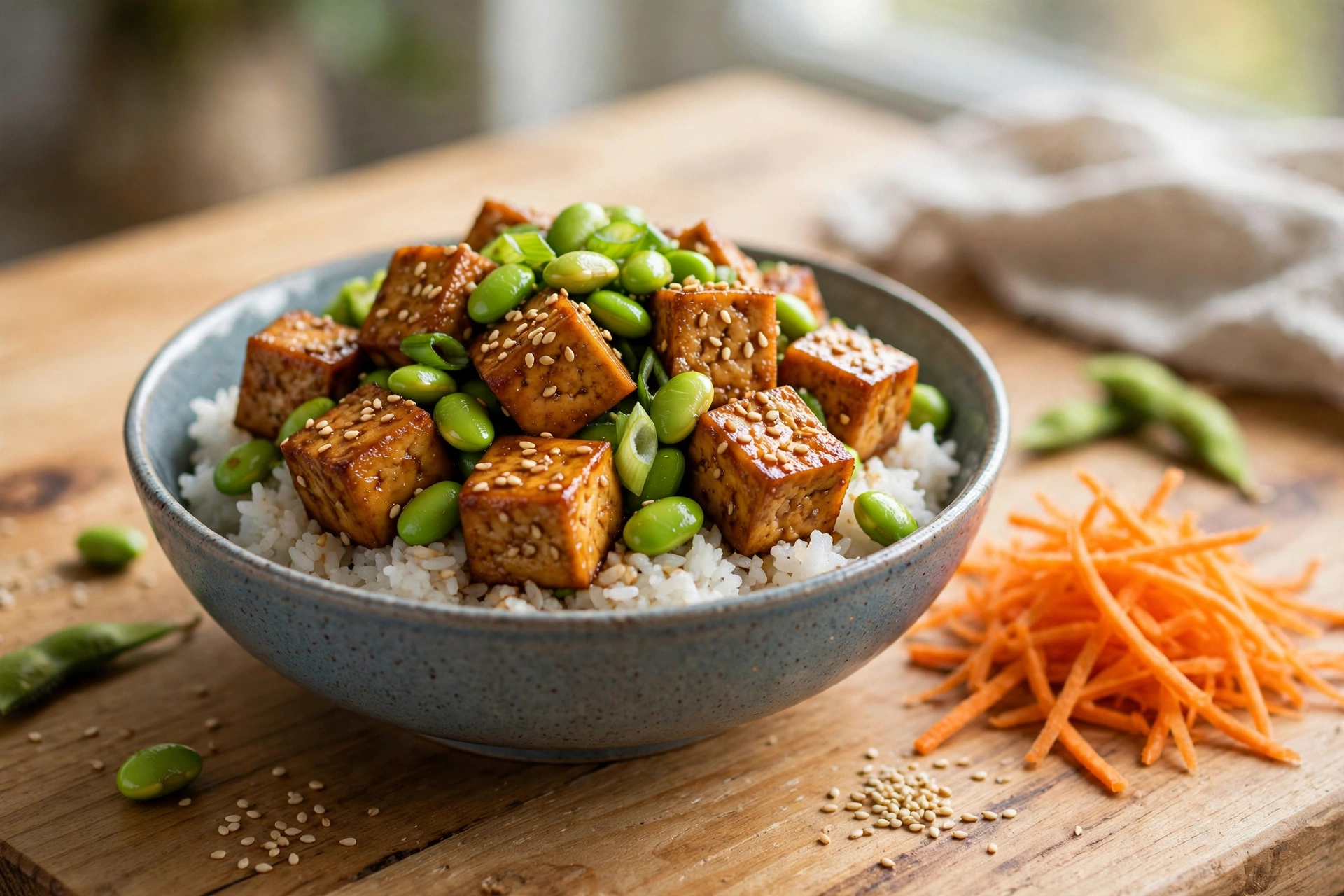
5. Tofu Poke Bowl
The plant-based bowl — 39 grams of protein, most fiber here.
Serves 2 · Prep 15 min · Cook — (no-cook) · Total 15 min
Ingredients
- 300 g firm tofu, pressed and cubed
- 300 g cooked brown rice (about 100 g dry), cooled
- 100 g edamame (shelled)
- 100 g carrot, grated or julienned
- 100 g cucumber, diced
- 100 g avocado, diced
- 1 tbsp low-sodium soy sauce (15 g)
- 1 tsp sesame oil (5 g)
- 10 g sesame seeds (about 1 tbsp)
- 20 g green onion, sliced
Method
- Cook the edamame per the packet (3–4 minutes in boiling water). Drain and cool.
- Whisk the soy sauce and sesame oil together. Toss the tofu cubes in the dressing and leave 10 minutes.
- Divide the rice between 2 bowls. Top with the tofu, edamame, carrot, cucumber and avocado. Sprinkle with green onion and sesame seeds.
| Nutrition per serving | |
|---|---|
| Calories | ~610 kcal |
| Protein | 39 g |
| Carbs | 58 g |
| Fiber | 15 g |
| Sugar | 7 g |
| Fat | 30 g |
| Sodium | 250 mg |
Why this works: firm tofu soaks up the soy-sesame dressing in 10 minutes, so it tastes like poke without fish. The edamame and avocado add fiber — 15 grams per serving, the most of these healthy poke bowl recipes — and the sodium is lowest at 250 mg.
Ingredients
Method
- Cook the edamame per the packet (3–4 minutes in boiling water). Drain and cool.
- Whisk the soy sauce and sesame oil together. Toss the tofu cubes in the dressing and leave 10 minutes.
- Divide the rice between 2 bowls. Top with the tofu, edamame, carrot, cucumber and avocado. Sprinkle with green onion and sesame seeds.
Notes
How Do You Store Poke Bowls?
Raw fish bowls in these healthy poke bowl recipes must be eaten the same day — do not keep them overnight. Buy the fish the day you eat it, keep it cold, and eat the bowl within a few hours. That is the rule for the tuna and salmon bowls here.
The cooked bowls keep longer. The seared tuna, cooked shrimp and tofu bowls keep 1 to 2 days in the fridge, but they are best the same day — the rice dries out and the avocado browns. Store the components separately: rice in one container, protein in another, fresh toppings in a third.
FAQs
What is a poke bowl?
A poke bowl is a Hawaiian dish of cubed raw fish, usually tuna or salmon, tossed in a soy-based sauce and served over rice with fresh toppings. The word “poke” means “to slice or cut” in Hawaiian. These healthy poke bowl recipes use brown rice, lean fish and a light soy dressing.
Is poke safe to eat at home?
Yes, if you buy sushi-grade fish from a trusted fishmonger and handle it well. Keep it cold, use it the same day, and cut it on a clean board. Pregnant people, young children, older adults and anyone with a weak immune system should choose the cooked options instead.
Can I make these healthy poke bowl recipes without raw fish?
Yes — three of the five bowls have no raw fish. The seared tuna is cooked on the outside, the shrimp bowl is fully cooked, and the tofu bowl is plant-based. All three use the same brown rice base and soy dressings, so you still get the poke flavour.
How long does a poke bowl last in the fridge?
A raw fish poke bowl must be eaten the same day — do not keep it overnight. The cooked bowls (seared tuna, shrimp, tofu) keep 1 to 2 days in the fridge, but they are best the same day. The rice dries out and the avocado browns.
Are poke bowls healthy?
They can be very healthy. Each of these healthy poke bowl recipes has 33 to 50 grams of protein, brown rice for fiber, fresh vegetables and a light dressing with no added sugar. Watch the soy sauce — we use the low-sodium kind, which keeps sodium at 250 to 382 mg per serving. Avoid sweet mayo-based sauces.
What is the best fish for a poke bowl?
Yellowfin tuna (ahi) is the classic choice — lean, firm and mild. Salmon is richer, with omega-3 fats. Both need to be sushi-grade from a trusted fishmonger. For cooked fish instead, try our air-fryer salmon fillets or our low-calorie shrimp dinners.
Conclusion
Five healthy poke bowl recipes, from raw tuna to plant-based tofu. Start with the ahi tuna bowl for the most protein, or the cooked shrimp bowl if you prefer no raw fish. For the plant-based version, try our healthy buddha bowls .
This article is for general information only and is not medical advice. Please talk to your doctor or a registered dietitian, especially if you have diabetes, heart disease or take medicine.