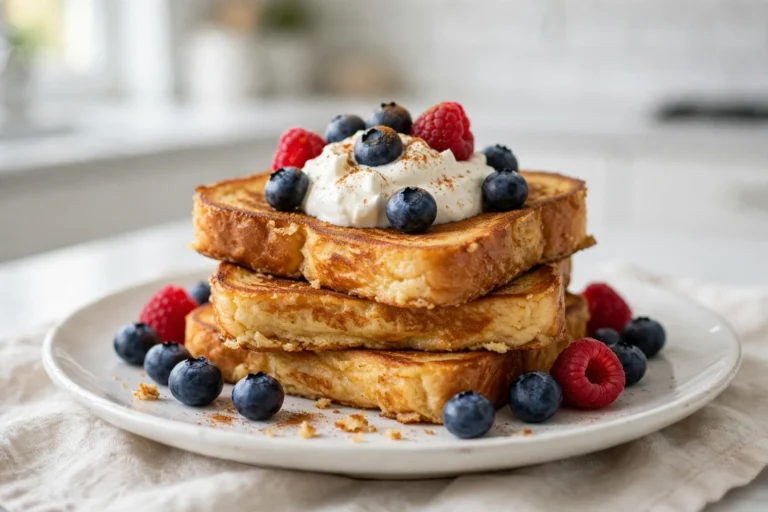
5 Healthy Smoothie Bowl Recipes (No Added Sugar)
These healthy smoothie bowl recipes need no added sugar — strawberry banana, tropical mango, green spinach, blueberry almond and chocolate peanut butter. All five are no-cook and ready in 10 minutes, with full ingredients, steps, and exact per-serving nutrition from the batch totals.
Key Takeaways
- All 5 healthy smoothie bowl recipes have no added sugar — the sweetness comes from fruit, not honey, syrup or juice.
- Protein ranges from 10 g to 16 g per serving — the chocolate peanut butter bowl is highest at 16 g.
- Every bowl is no-cook and ready in 10 minutes — blend, pour, top, eat.
In This Post
What Makes a Smoothie Bowl Healthy (and Filling)?
A healthy smoothie bowl follows a simple formula: frozen fruit for the base, a protein for staying power, a little liquid to blend, and toppings that add crunch and fiber. Most cafe smoothie bowls fail on the protein — mostly fruit and juice, so you are hungry again in an hour. Every bowl in this post has Greek yogurt or peanut butter, which is why they work as breakfast.
| Part of the bowl | What it does | Examples in this post |
|---|---|---|
| Frozen fruit | Thick base, natural sweetness | Banana, berries, mango, pineapple |
| Protein | Keeps you full | Greek yogurt, peanut butter |
| Liquid | Helps it blend | Almond milk, light coconut milk |
| Toppings | Crunch, fiber, colour | Granola, chia, almonds, seeds |
The sugar question matters here. These healthy smoothie bowl recipes have 22 to 30 grams of sugar per serving — but all of it comes from whole fruit, not added sugar. Harvard’s Nutrition Source explains that sugary drinks are linked to weight gain and type 2 diabetes, while whole fruit brings fiber, vitamins and water along with its sugar.
If you want a single high-protein version, our high-protein smoothie bowl is a good next read, and our high-protein breakfast recipes for weight loss cover more filling breakfasts.
How Do You Make a Smoothie Bowl Thick, Not Runny?
Use frozen fruit and very little liquid. That is the whole secret. Frozen banana is the best thickener — it blends creamy, almost like soft-serve ice cream. Fresh fruit makes a thin smoothie; frozen fruit makes a bowl you can eat with a spoon.
Start with half the liquid in the recipe, blend, and add more only if the blender stalls. A high-speed blender helps, but any blender works if you stop and push the fruit down with a spatula between blends. If the bowl is still too thin, add a few more frozen banana slices or a spoonful of chia seeds and wait 5 minutes — the chia thickens it.
I freeze the banana in slices the night before — it blends thicker than a whole frozen banana, and the bowl holds its shape for the toppings.
Pick your bowl by protein or by flavour — every one of these healthy smoothie bowl recipes is ready in 10 minutes. The chocolate peanut butter bowl has the most protein (16 g). The strawberry banana bowl is lightest (259 calories). The blueberry almond bowl has the most fiber (9 g).
| Bowl | Time | Calories | Protein | Fiber | Sugar (from fruit) |
|---|---|---|---|---|---|
| 1. Strawberry Banana Protein | 10 min | ~259 | 13 g | 8 g | 24 g |
| 2. Tropical Mango Coconut | 10 min | ~272 | 10 g | 5 g | 30 g |
| 3. Green Spinach Avocado | 10 min | ~288 | 11 g | 8 g | 30 g |
| 4. Blueberry Almond | 10 min | ~295 | 14 g | 9 g | 27 g |
| 5. Chocolate Peanut Butter | 10 min | ~300 | 16 g | 7 g | 22 g |
5 Healthy Smoothie Bowl Recipes
Five bowls, five flavours, ten minutes each.
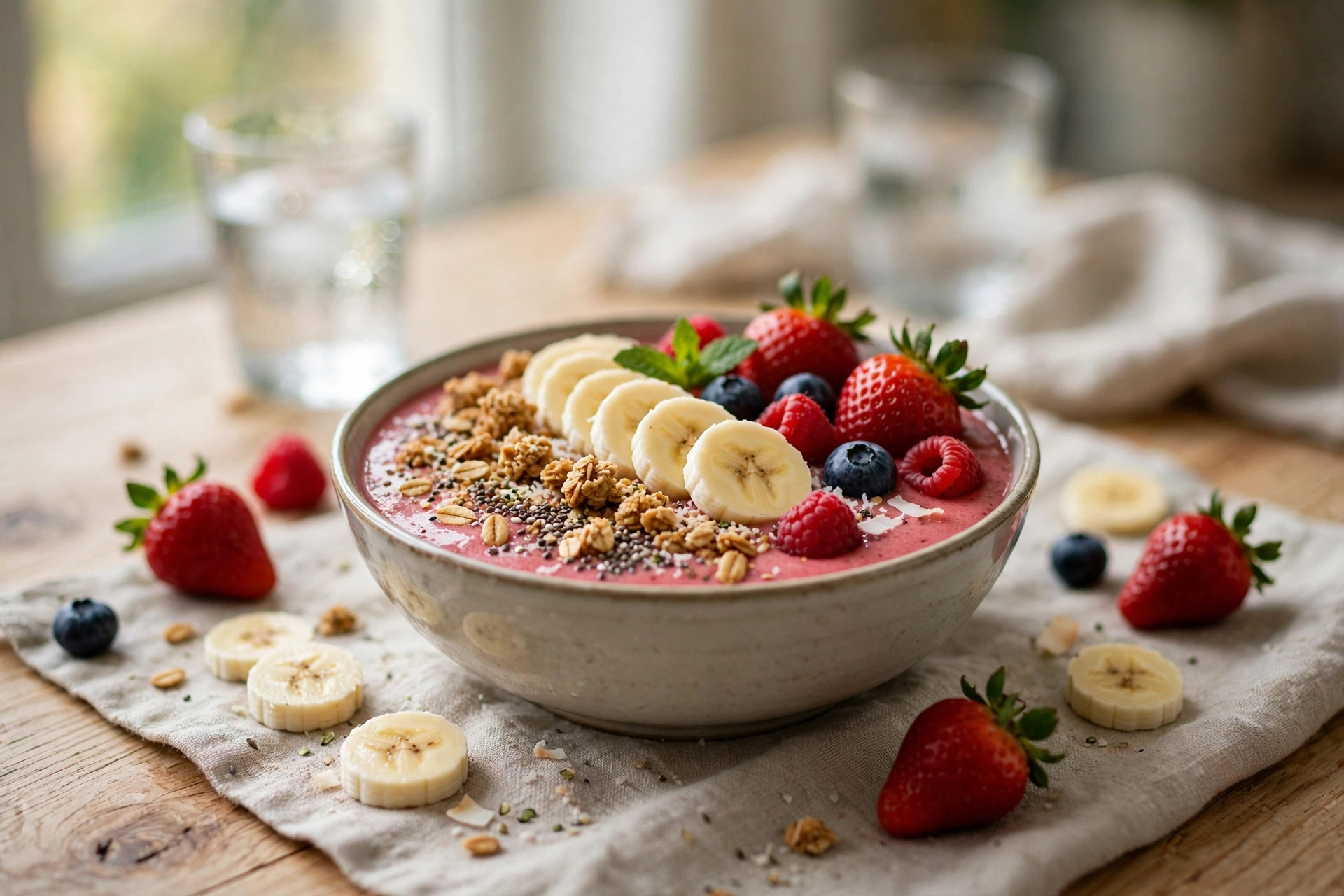
1. Strawberry Banana Protein Bowl
The lightest bowl here — 259 calories, with Greek yogurt for 13 grams of protein.
Serves 2 · Prep 10 min · Cook — (no-cook) · Total 10 min
Ingredients
- 200 g frozen strawberries
- 200 g frozen banana, sliced
- 170 g Greek yogurt
- 120 ml almond milk
- 10 g chia seeds (about 1 tbsp)
- 20 g granola (topping)
- 50 g fresh blueberries (topping)
Method
- Add the frozen strawberries, frozen banana, Greek yogurt, almond milk and chia seeds to a blender.
- Blend on high for 1–2 minutes, stopping to push the fruit down, until thick and smooth.
- Divide between 2 bowls. Top with the granola and fresh blueberries.
| Nutrition per serving | |
|---|---|
| Calories | ~259 kcal |
| Protein | 13 g |
| Carbs | 46 g |
| Fiber | 8 g |
| Sugar | 24 g |
| Fat | 5 g |
| Sodium | 70 mg |
Why this works: Greek yogurt adds 17 grams of protein per 170 grams, which is why this bowl keeps you full — most fruit-only bowls have almost no protein. The chia seeds add fiber and omega-3 fats. It is the lightest of these healthy smoothie bowl recipes.
Ingredients
Method
- Add the frozen strawberries, frozen banana, Greek yogurt, almond milk and chia seeds to a blender.
- Blend on high for 1–2 minutes, stopping to push the fruit down, until thick and smooth.
- Divide between 2 bowls. Top with the granola and fresh blueberries.
Notes
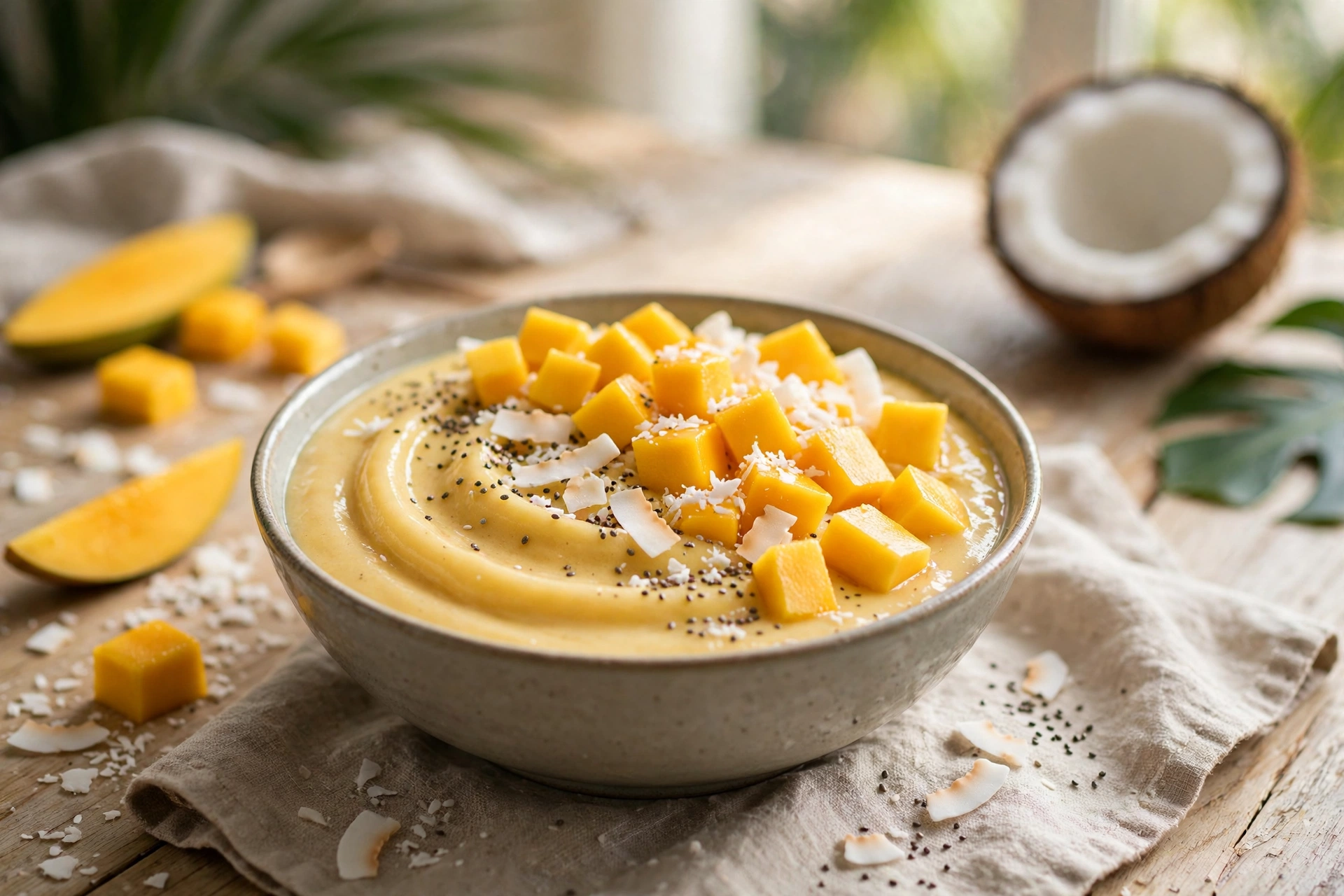
2. Tropical Mango Coconut Bowl
The lowest-sodium bowl here — 30 mg, with mango, pineapple and coconut.
Serves 2 · Prep 10 min · Cook — (no-cook) · Total 10 min
Ingredients
- 200 g frozen mango
- 150 g frozen pineapple
- 100 g frozen banana, sliced
- 120 g Greek yogurt
- 120 ml light coconut milk
- 10 g coconut flakes (topping)
- 10 g pumpkin seeds (topping)
Method
- Add the frozen mango, frozen pineapple, frozen banana, Greek yogurt and coconut milk to a blender.
- Blend on high for 1–2 minutes, stopping to push the fruit down, until thick and smooth.
- Divide between 2 bowls. Top with the coconut flakes and pumpkin seeds.
| Nutrition per serving | |
|---|---|
| Calories | ~272 kcal |
| Protein | 10 g |
| Carbs | 42 g |
| Fiber | 5 g |
| Sugar | 30 g |
| Fat | 10 g |
| Sodium | 30 mg |
Why this works: mango and pineapple are sweet enough that this bowl needs no added sugar at all — the 30 grams of sugar per serving all come from fruit. The light coconut milk keeps the fat at 10 grams, and the pumpkin seeds add crunch. It is the sunniest of these healthy smoothie bowl recipes.
Ingredients
Method
- Add the frozen mango, frozen pineapple, frozen banana, Greek yogurt and coconut milk to a blender.
- Blend on high for 1–2 minutes, stopping to push the fruit down, until thick and smooth.
- Divide between 2 bowls. Top with the coconut flakes and pumpkin seeds.
Notes
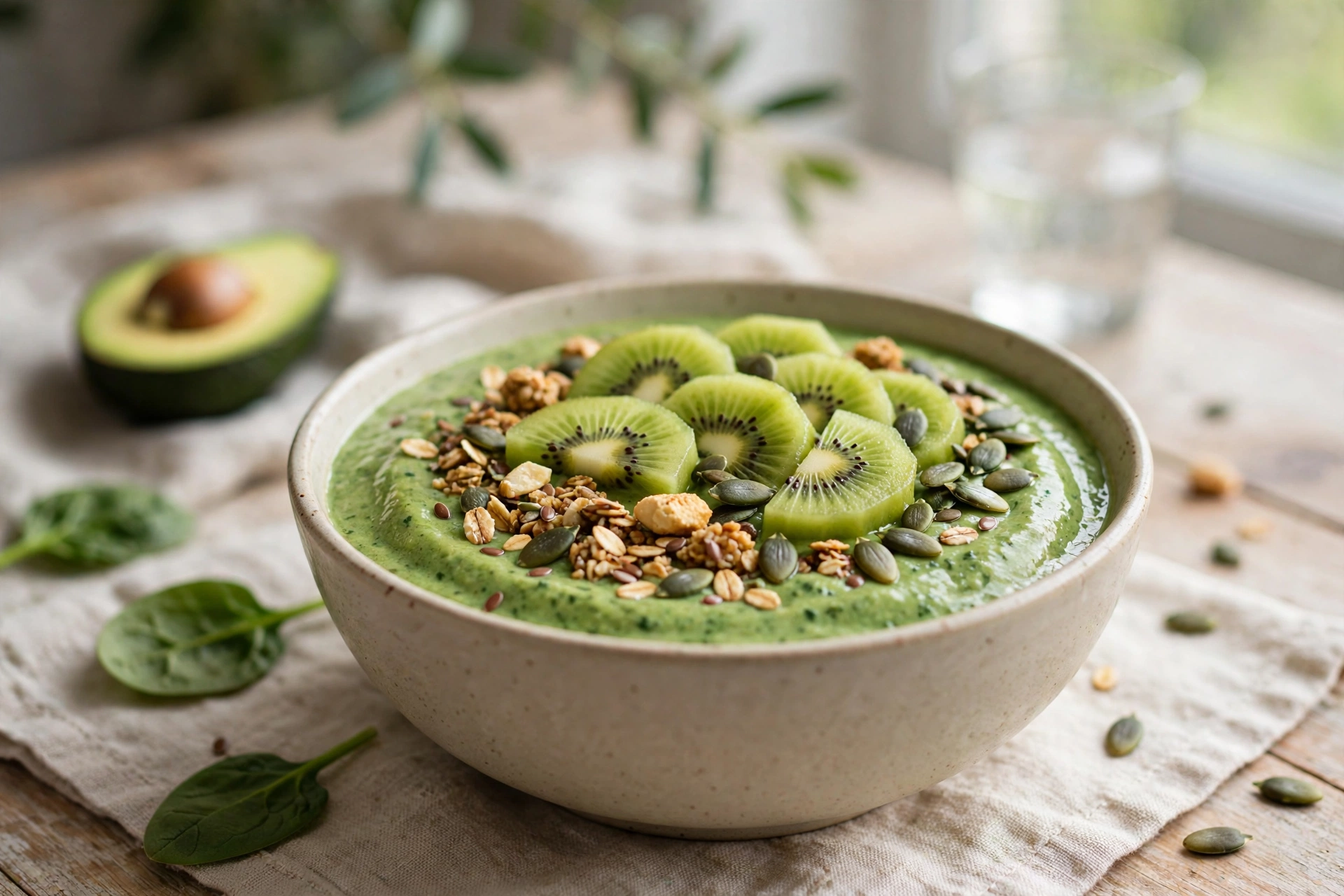
3. Green Spinach Avocado Bowl
The green bowl — spinach and avocado, sweetened with banana and mango.
Serves 2 · Prep 10 min · Cook — (no-cook) · Total 10 min
Ingredients
- 60 g spinach leaves
- 200 g frozen banana, sliced
- 150 g frozen mango
- 50 g avocado (about 1/2 small)
- 120 ml almond milk
- 120 g Greek yogurt
- 20 g granola (topping)
- 75 g kiwi, sliced (topping, about 1)
Method
- Add the spinach, frozen banana, frozen mango, avocado, almond milk and Greek yogurt to a blender.
- Blend on high for 1–2 minutes, stopping to push the fruit down, until thick and smooth.
- Divide between 2 bowls. Top with the granola and kiwi slices.
| Nutrition per serving | |
|---|---|
| Calories | ~288 kcal |
| Protein | 11 g |
| Carbs | 51 g |
| Fiber | 8 g |
| Sugar | 30 g |
| Fat | 7 g |
| Sodium | 87 mg |
Why this works: you cannot taste the spinach — the banana and mango cover it completely — but it adds iron and folate for almost no calories. The avocado makes the bowl creamy without cream. It is the best way to eat greens at breakfast in these healthy smoothie bowl recipes.
Ingredients
Method
- Add the spinach, frozen banana, frozen mango, avocado, almond milk and Greek yogurt to a blender.
- Blend on high for 1–2 minutes, stopping to push the fruit down, until thick and smooth.
- Divide between 2 bowls. Top with the granola and kiwi slices.
Notes
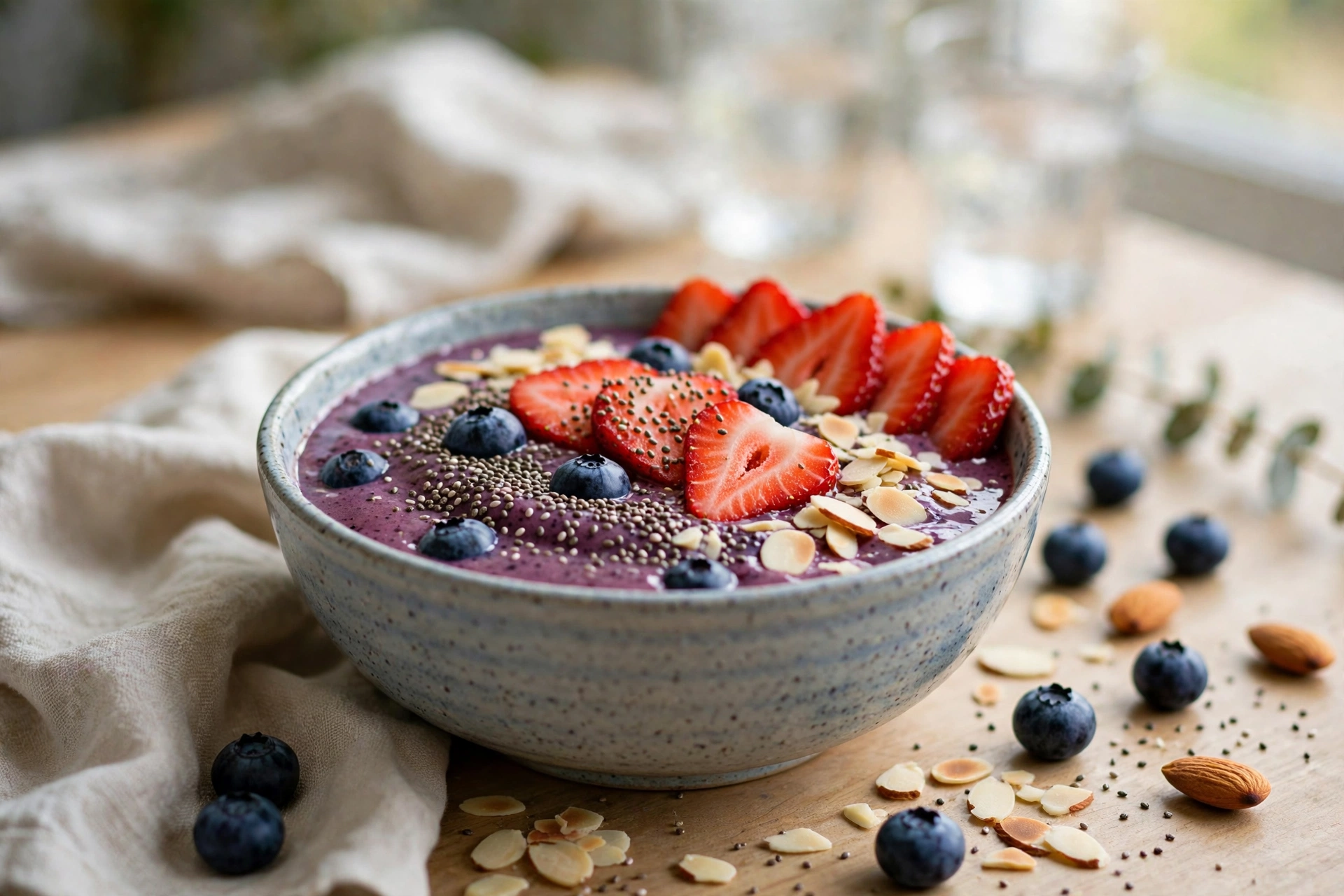
4. Blueberry Almond Bowl
The highest-fiber bowl here — 9 grams, from blueberries, banana and chia.
Serves 2 · Prep 10 min · Cook — (no-cook) · Total 10 min
Ingredients
- 200 g frozen blueberries
- 200 g frozen banana, sliced
- 170 g Greek yogurt
- 120 ml almond milk
- 20 g almonds, chopped
- 10 g chia seeds (about 1 tbsp)
- 50 g fresh strawberries, sliced (topping)
Method
- Add the frozen blueberries, frozen banana, Greek yogurt, almond milk, almonds and chia seeds to a blender.
- Blend on high for 1–2 minutes, stopping to push the fruit down, until thick and smooth.
- Divide between 2 bowls. Top with the fresh strawberries.
| Nutrition per serving | |
|---|---|
| Calories | ~295 kcal |
| Protein | 14 g |
| Carbs | 47 g |
| Fiber | 9 g |
| Sugar | 27 g |
| Fat | 8 g |
| Sodium | 70 mg |
Why this works: blueberries and chia together give 9 grams of fiber — the most of these healthy smoothie bowl recipes — and the almonds add healthy fats and crunch. The Greek yogurt brings 14 grams of protein, so this bowl works as a full breakfast.
Ingredients
Method
- Add the frozen blueberries, frozen banana, Greek yogurt, almond milk, almonds and chia seeds to a blender.
- Blend on high for 1–2 minutes, stopping to push the fruit down, until thick and smooth.
- Divide between 2 bowls. Top with the fresh strawberries.
Notes
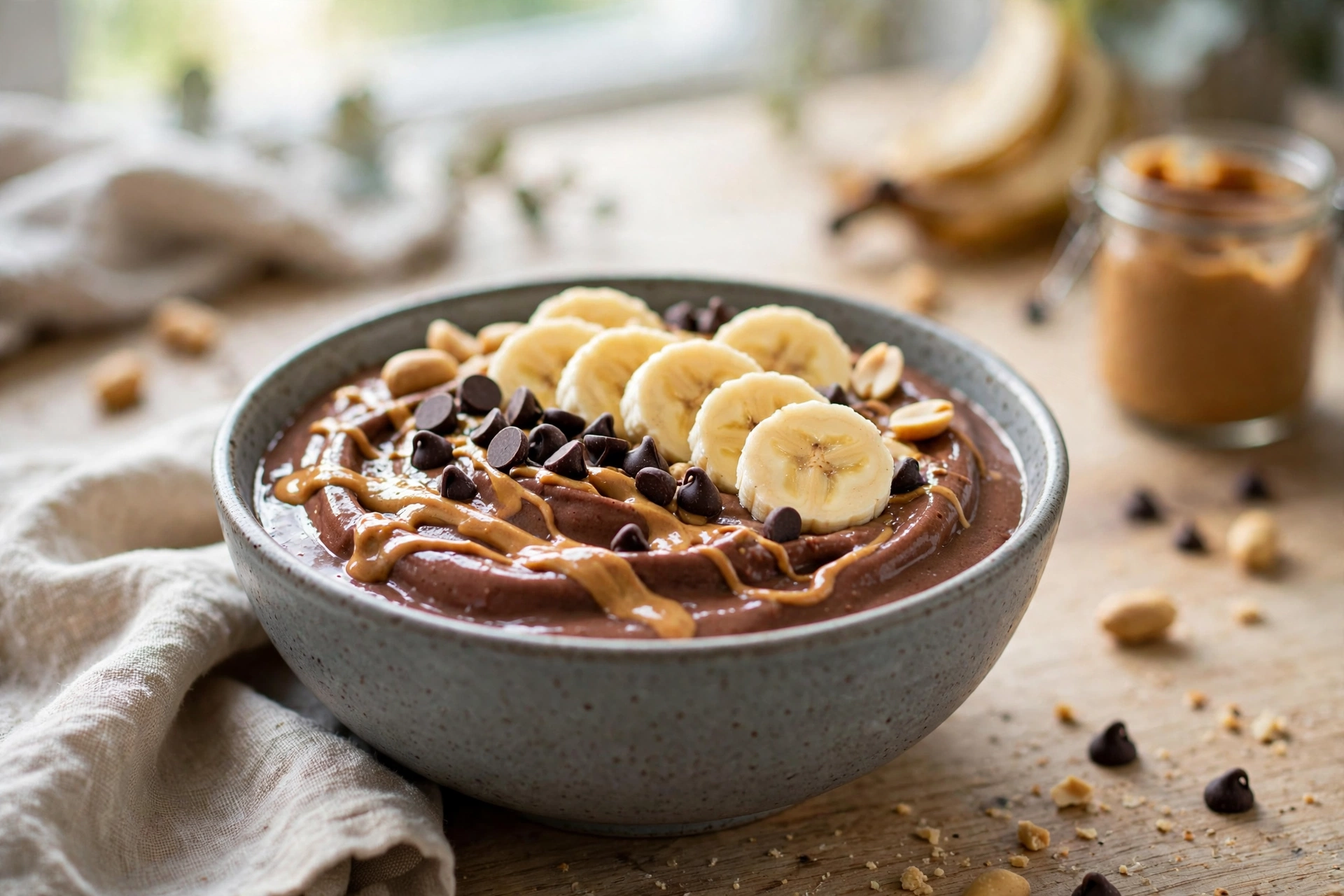
5. Chocolate Peanut Butter Bowl
The highest-protein bowl here — 16 grams, with cocoa and peanut butter.
Serves 2 · Prep 10 min · Cook — (no-cook) · Total 10 min
Ingredients
- 200 g frozen banana, sliced
- 170 g Greek yogurt
- 32 g natural peanut butter (about 2 tbsp)
- 10 g unsweetened cocoa powder (about 1 tbsp)
- 120 ml almond milk
- 10 g dark chocolate chips (topping)
- 50 g fresh banana, sliced (topping)
Method
- Add the frozen banana, Greek yogurt, peanut butter, cocoa powder and almond milk to a blender.
- Blend on high for 1–2 minutes, stopping to push the fruit down, until thick and smooth.
- Divide between 2 bowls. Top with the chocolate chips and banana slices.
| Nutrition per serving | |
|---|---|
| Calories | ~300 kcal |
| Protein | 16 g |
| Carbs | 41 g |
| Fiber | 7 g |
| Sugar | 22 g |
| Fat | 12 g |
| Sodium | 72 mg |
Why this works: cocoa and peanut butter taste like dessert, but this bowl has 16 grams of protein and no added sugar — the only chocolate is 10 grams of dark chocolate chips on top. The sugar is lowest here at 22 grams. It is the most filling of these healthy smoothie bowl recipes.
Ingredients
Method
- Add the frozen banana, Greek yogurt, peanut butter, cocoa powder and almond milk to a blender.
- Blend on high for 1–2 minutes, stopping to push the fruit down, until thick and smooth.
- Divide between 2 bowls. Top with the chocolate chips and banana slices.
Notes
What Toppings Go on a Smoothie Bowl?
Toppings are where a smoothie bowl becomes a meal — they add the crunch and fiber that the blended base lacks. Good choices are granola, chia seeds, chopped almonds, pumpkin seeds, coconut flakes, and fresh fruit. Keep the portions small: a tablespoon of seeds or 20 grams of granola is plenty. Toppings add calories fast — a heavy hand with granola adds 100 calories.
Use toppings you can see. Arrange them in rows or sections on top of the bowl — it looks better and you taste each one separately. Fresh fruit on top adds colour and a second texture. Avoid sweetened toppings like honey, chocolate sauce or sweetened coconut flakes — they undo the no-added-sugar point of these healthy smoothie bowl recipes.
Can You Make Smoothie Bowls Ahead?
These healthy smoothie bowl recipes are best eaten straight away — they melt and go thin within an hour. But you can prep the parts ahead. Freeze the fruit in portion bags (one bag per bowl), and keep the toppings in small containers. In the morning, blend the frozen fruit with the yogurt and milk, pour, top, and eat. The whole thing takes 10 minutes.
If you must make one the night before, blend it thick, freeze it in a sealed container, and move it to the fridge 30 minutes before eating. It will be softer than fresh but still good. Add the toppings fresh in the morning — granola goes soggy overnight. For more make-ahead breakfasts, see our healthy breakfast bowls and our is oatmeal good for diabetics.
FAQs
What is a smoothie bowl?
A smoothie bowl is a thick smoothie served in a bowl and eaten with a spoon, topped with granola, seeds, nuts or fresh fruit. It uses frozen fruit and very little liquid, so it is much thicker than a drinkable smoothie. The toppings add crunch and fiber that a glass smoothie does not have.
Are smoothie bowls healthy?
They can be very healthy if they have protein and no added sugar. Every one of these healthy smoothie bowl recipes has Greek yogurt or peanut butter for protein, whole fruit for sweetness, and toppings for fiber. Watch the sugar: these bowls have 22 to 30 grams per serving from fruit, so they are not low-sugar — they are no-added-sugar.
Can I make these healthy smoothie bowl recipes without a blender?
You need a blender for a smooth bowl — a food processor works too. A hand blender can work in a deep jug, but it takes longer and the bowl will be less smooth. If you have no blender, mash the banana with a fork, stir in the yogurt, and top with fruit — it is a yogurt bowl, not a smoothie bowl.
How do you make a smoothie bowl thick?
Use frozen fruit and very little liquid. Start with half the liquid in the recipe, blend, and add more only if the blender stalls. Frozen banana is the best thickener — it blends creamy, almost like soft-serve. If the bowl is still too thin, add a few more frozen banana slices or a spoonful of chia seeds.
Are smoothie bowls good for weight loss?
They can help. Each of these healthy smoothie bowl recipes is 259 to 300 calories with protein and fiber, a filling combination for the calories. The strawberry banana bowl is lightest at 259 calories. Watch the toppings — a heavy hand with granola or peanut butter can add 100 calories or more to the bowl.
Can you make smoothie bowls the night before?
You can, but they are best fresh. Blend the bowl thick, freeze it in a sealed container, and move it to the fridge 30 minutes before eating. It will be softer than fresh but still good. Add the toppings fresh in the morning — granola goes soggy overnight. Or prep frozen fruit bags and blend in the morning.
Conclusion
Five healthy smoothie bowl recipes, no added sugar, ten minutes each. Start with the strawberry banana bowl for the lightest breakfast, or the chocolate peanut butter bowl for the most protein. For more gut-friendly breakfasts, see our best foods for gut health.
This article is for general information only and is not medical advice. Please talk to your doctor or a registered dietitian, especially if you have diabetes, heart disease or take medicine.