Low Sodium Spinach Dip Recipe (Baked & Creamy)

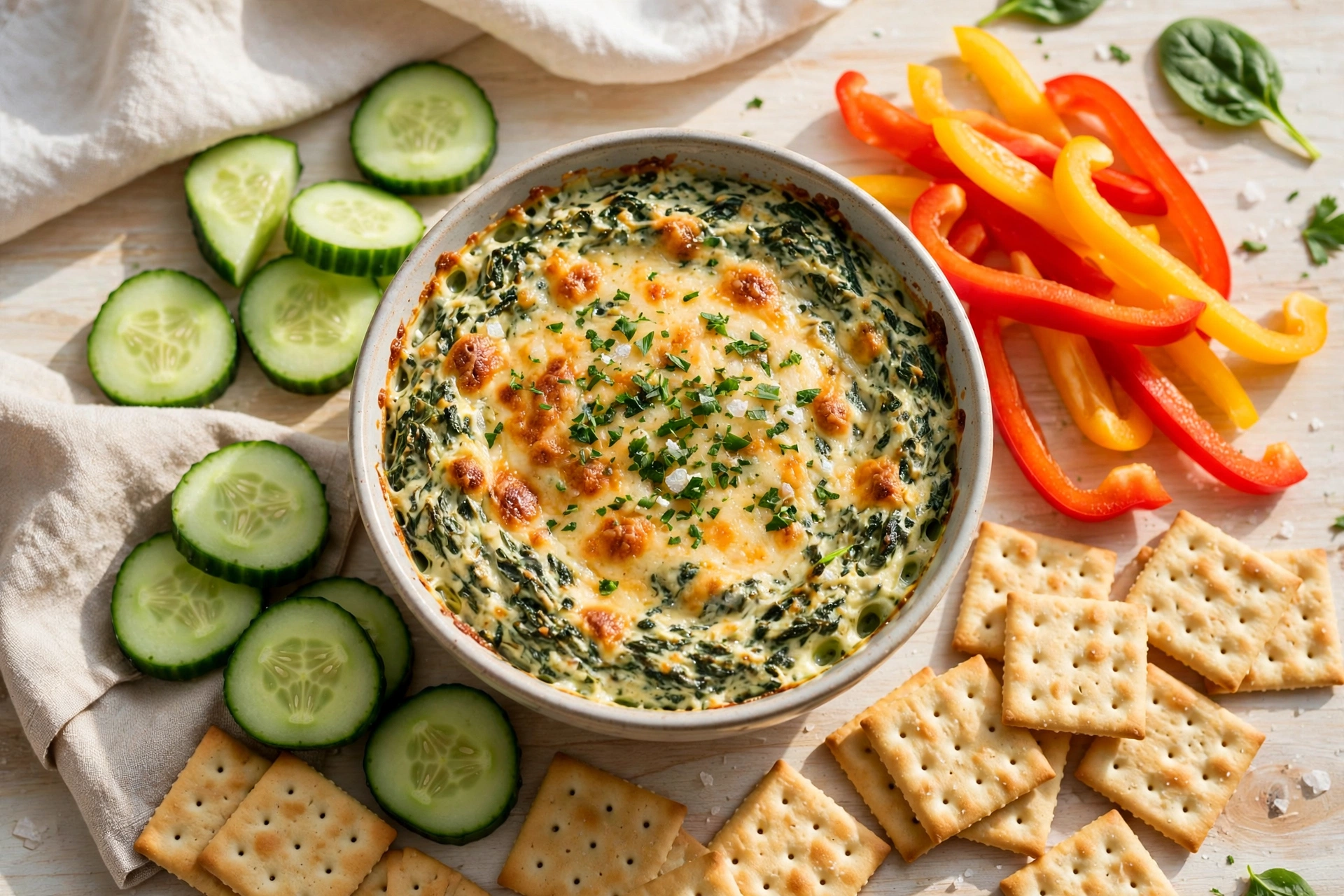
This low sodium spinach dip recipe is baked, creamy and just 182 milligrams of sodium per serving — spinach and artichokes folded into Greek yogurt, light cream cheese and mozzarella. It takes 40 minutes, serves 10, and works as a party dip everyone at the table can eat.
Key Takeaways
- 182 mg of sodium per serving. A standard spinach-artichoke dip has 450–650 mg in a smaller serving.
- Greek yogurt does the heavy work. It replaces most of the cream cheese, with more protein and less fat.
- Frozen artichokes, not canned. Frozen hearts have about 60 mg of sodium per 100 g; canned can have 400 mg.
- 40 minutes, serves 10. This low sodium spinach dip recipe is a baked party dip with no frying.
- Keeps 4 days. Assemble it ahead and bake when guests arrive.
In This Post
- What makes it low in sodium?
- Frozen vs canned artichokes
- Ingredients
- How to make
- Is it healthy?
- Watery dip?
- Storage
- FAQs
What Makes This Spinach Dip Low in Sodium?
This low sodium spinach dip recipe keeps sodium low by cutting the cheese — the three cheeses are still the largest source of sodium, but Greek yogurt replaces most of the cream cheese, and the Parmesan is a small amount for flavor rather than the main body. The whole batch carries about 1,825 mg of sodium.
| Ingredient | Sodium in the batch |
|---|---|
| Mozzarella, part-skim (100 g) | 627 mg |
| Light cream cheese (115 g) | 434 mg |
| Parmesan (25 g) | 382 mg |
| Frozen spinach (280 g) | 196 mg |
| Frozen artichoke hearts (200 g) | 120 mg |
| Greek yogurt (170 g) | 61 mg |
| Garlic, onion, lemon, pepper, oil | 5 mg |
| Batch total (10 servings) | 1,825 mg |
The three cheeses carry 1,443 mg of the 1,825 mg batch — about 79%. That is why the “skinny” spinach dip from a popular food blog still has 665 mg of sodium per serving: it uses 1½ cups of Parmesan. This low sodium spinach dip recipe uses 25 g of Parmesan for flavor and lets yogurt and mozzarella do the rest, which is why the number drops to 182 mg.
Frozen vs Canned Artichokes — Which Is Lower in Sodium?
Frozen artichoke hearts are much lower in sodium than canned. Frozen hearts have about 60 mg of sodium per 100 g, while canned artichoke hearts can have up to 400 mg per 100 g — more than six times as much. That is why this low sodium spinach dip recipe uses frozen hearts as the default.
| Artichoke form | Sodium per 100 g | Sodium in this recipe (200 g) |
|---|---|---|
| Frozen hearts | 60 mg | 120 mg |
| Canned, drained | ~400 mg | ~800 mg |
| Canned, rinsed and soaked 10 min | ~200 mg | ~400 mg |
If you only have canned artichokes, rinse them well and soak them in fresh water for 10 minutes — that cuts the sodium by about half. Even so, frozen is the better choice: using canned hearts would add about 680 mg of sodium to the batch, or about 68 mg per serving.
What Ingredients Do You Need?
This low sodium spinach dip recipe uses frozen spinach, frozen artichoke hearts, three cheeses and Greek yogurt. Everything is a supermarket staple, and the frozen vegetables keep the sodium low.

- Frozen spinach (280 g, 10 oz): Thawed and squeezed very dry. Squeezing is the most important step — wet spinach makes a watery dip.
- Frozen artichoke hearts (200 g, 7 oz): Thawed and chopped. Frozen, not canned — canned hearts are much higher in sodium.
- Light cream cheese (115 g, 4 oz): Softened to room temperature so it mixes smoothly.
- Greek yogurt (170 g, ¾ cup, plain nonfat): The main body of the dip — creamy, tangy, and high in protein.
- Mozzarella (100 g, 1 cup shredded, part-skim): For the melt and the golden top.
- Parmesan (25 g, ¼ cup grated): A small amount for flavor. Parmesan is very high in sodium, so a little goes a long way.
- Garlic (9 g, 3 cloves): Minced.
- Yellow onion (50 g, ½ small): Diced fine.
- Lemon juice (15 ml, 1 tablespoon): Fresh, not bottled. It brightens the richness.
- Black pepper (½ teaspoon), garlic powder (½ teaspoon): The seasoning. No salt is added.
- Olive oil (5 ml, 1 teaspoon): For brushing the baking dish.
How Do You Make This Low Sodium Spinach Dip Recipe?
This low sodium spinach dip recipe takes 40 minutes: thaw and squeeze the spinach, mix the cheeses and yogurt, fold in the vegetables, and bake at 375°F until bubbly and golden. The squeeze step is the one that decides whether the dip is creamy or watery.

- Squeeze the spinach. Thaw the spinach, then squeeze it dry in a clean kitchen towel — twist hard until no more water comes out. This is the most important step.
- Chop the artichokes. Thaw the artichoke hearts and chop them into small pieces.
- Mix the base. In a large bowl, stir the softened cream cheese, Greek yogurt, mozzarella, Parmesan, garlic, onion, lemon juice, black pepper and garlic powder until smooth.
- Fold in the vegetables. Add the squeezed spinach and chopped artichokes and fold until evenly mixed.
- Bake. Brush a baking dish with olive oil, spread the dip in, and bake at 375°F for 25 minutes until bubbly and golden on top. Rest 5 minutes before serving.
In this low sodium spinach dip recipe, do not skip the squeeze — a wet handful of spinach can add half a cup of water to the dip, and no amount of baking fixes a watery base. Squeeze it in a towel, not just in your hands.
I make this spinach dip for every party. The first time I served it, I did not tell anyone it was low in sodium — and nobody asked. The squeeze-the-spinach step is the one I never skip.
Is Spinach Dip Healthy?
Spinach dip is healthy when the base is yogurt rather than all cream cheese and mayo: one serving of this low sodium spinach dip recipe has about 99 calories, 8 g of protein, 6 g of carbs, 2 g of fiber and 5 g of fat. The spinach and artichokes add fiber and volume for very few calories.
| This recipe (⅓ cup) | Standard (¼ cup) | |
|---|---|---|
| Sodium | 182 mg | 450–650 mg |
| Calories | 99 | ~150 |
| Protein | 8 g | ~6 g |
| Fat | 5 g | ~10 g |
The sodium is the headline number. The FDA explains that most sodium in the average diet comes from packaged and restaurant foods, not from the salt shaker, so cooking a dip like this at home is one of the simplest ways to cut sodium. Read their guide to sodium in your diet for the full picture.
The dippers matter too: cucumber and bell pepper strips have almost no sodium, carrots have about 45 mg per ½ cup, and low-sodium crackers add about 70 mg per small handful — while bread can add 150–200 mg per slice, more than the dip itself. Our low sodium guacamole is the other dip for the same party table, and our low sodium snacks for high blood pressure have more ideas for the spread.

Why Is My Spinach Dip Watery?
Spinach dip goes watery when the spinach was not squeezed dry, when the artichokes were not drained, or when the dip sat too long before serving and the vegetables released their water.
| Problem | Cause | Fix |
|---|---|---|
| Dip is watery | Spinach not squeezed dry | Squeeze in a clean towel until no water comes out |
| Dip is thin | Artichokes not drained | Drain and pat the artichokes dry before chopping |
| Dip separates | Overbaked | Bake 25 minutes, not longer — pull it when bubbly |
| Dip is bland | Not enough acid | Add another tablespoon of lemon juice |
| Top did not brown | Oven too cool | Finish under the broiler for 2 minutes |
How Do You Store Spinach Dip?
Store this low sodium spinach dip recipe in an airtight container in the fridge for up to 4 days. Reheat in the oven at 350°F for 15 minutes or in the microwave in short bursts, stirring between each — reheat until it is steaming hot all the way through. Do not freeze it — the yogurt separates and the texture turns grainy.
For make-ahead, assemble the dip up to 2 days before and keep it covered in the fridge, then bake when guests arrive. Our healthy green bean casserole is another make-ahead dish for the same table, and our low sodium vegetable soup pairs with the leftover dip for an easy lunch. Our low sodium salad dressing recipes turn the leftover vegetables into a salad for the next day.
Ingredients
Method
- Squeeze the thawed spinach dry in a clean kitchen towel.
- Chop the thawed artichoke hearts.
- Mix the cream cheese, yogurt, mozzarella, Parmesan, garlic, onion, lemon juice, black pepper and garlic powder until smooth.
- Fold in the spinach and artichokes.
- Brush a baking dish with olive oil, spread the dip in, and bake at 375°F for 25 minutes until bubbly and golden. Rest 5 minutes.
Notes
FAQs
How much sodium is in this low sodium spinach dip recipe?
Each serving has 182 milligrams of sodium. The whole batch carries about 1,825 mg, and the three cheeses are the largest contributors — mozzarella 627 mg, light cream cheese 434 mg and Parmesan 382 mg. A standard spinach-artichoke dip has 450–650 mg of sodium in a smaller serving.
Can I make spinach dip without cream cheese?
Yes. This low sodium spinach dip recipe already uses mostly Greek yogurt — only 4 oz of cream cheese in the whole batch. You can skip the cream cheese entirely and use 1½ cups of yogurt instead. The dip will be tangier and lighter, with about 140 mg of sodium per serving instead of 182 mg.
How long does spinach dip last in the fridge?
Spinach dip lasts up to 4 days in the fridge in an airtight container, per USDA guidance for cooked dishes. Reheat it in the oven at 350°F for 15 minutes or in the microwave in short bursts, stirring between each, until it is steaming hot all the way through. Do not freeze it — the yogurt separates.
What do you serve with spinach dip?
Serve spinach dip with vegetable dippers — cucumber and bell pepper strips have almost no sodium, and carrots have about 45 mg per ½ cup. Low-sodium crackers work too, at about 70 mg per small handful. Bread adds the most sodium, at about 150–200 mg per slice, so keep the bread for guests who are not watching sodium.
Can I make spinach dip ahead of time?
Yes. This low sodium spinach dip recipe is made for cooking ahead — assemble the dip up to 2 days before, cover it and keep it in the fridge, then bake when guests arrive. Baked leftovers keep for up to 4 days in the fridge and reheat well in the oven at 350°F.
Can I make spinach dip in the slow cooker?
Yes. Put the mixed dip in a slow cooker and cook on low for 2–3 hours, stirring once halfway through, until it is hot and bubbly. The slow cooker keeps the dip warm for serving, which is handy for a party. Do not cook it on high — the yogurt can separate.
Conclusion
This low sodium spinach dip recipe proves that a party dip does not need salt to taste like a party dip. One hundred eighty-two milligrams of sodium, 8 grams of protein, 40 minutes — and a baked dip that everyone at the table can eat.
This article is for general information only and is not medical advice. Please talk to your doctor or a registered dietitian, especially if you have diabetes, heart disease or take medicine.