Low Sodium Pasta Salad Recipe (Only 20mg Sodium)
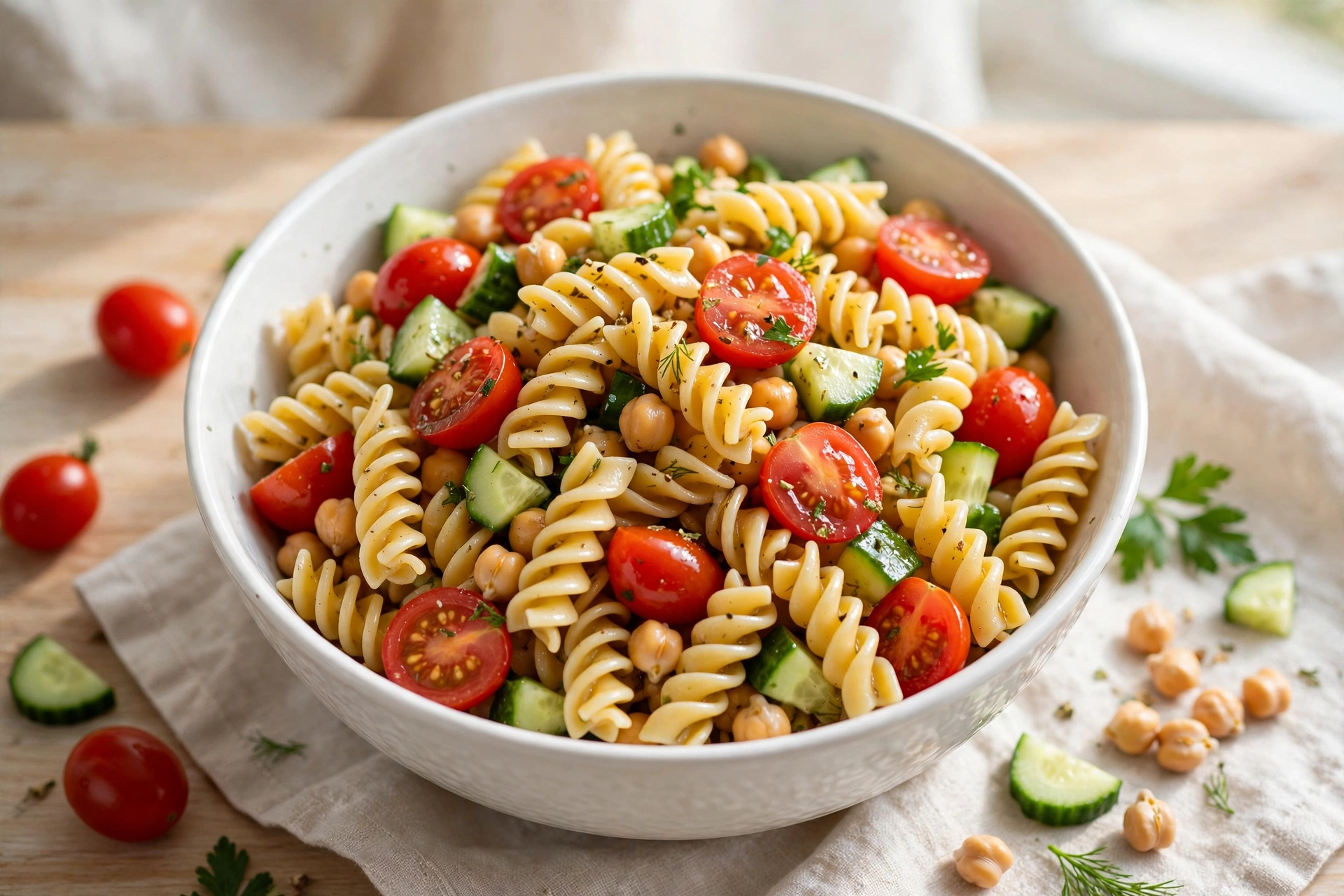
This low sodium pasta salad recipe has just 20 milligrams of sodium per serving — about as low as a pasta salad can go. Rotini, chickpeas, cherry tomatoes, cucumber and bell pepper get tossed in a homemade red wine vinaigrette with no added salt. It takes 30 minutes, serves 8, and tastes better the next day.
Key Takeaways
- About 20 mg of sodium per serving. A deli pasta salad can have 400–500 mg in the same size serving.
- 12 g of protein per serving. From chickpeas — no meat needed.
- No-salt vinaigrette. Olive oil, red wine vinegar, lemon and mustard powder bring the flavor.
- 30 minutes, serves 8. This low sodium pasta salad recipe is built for picnics, potlucks and meal prep.
- Keeps 4 days. The flavors get better overnight as the pasta soaks up the dressing.
In This Post
- What makes it low in sodium?
- Ingredients
- How to make
- Deli comparison
- Is it healthy?
- Bland or dry?
- Storage
- FAQs
What Makes This Pasta Salad Low in Sodium?
This low sodium pasta salad recipe keeps sodium low by skipping every usual source of salt: no salted pasta water, no bottled dressing, no olives, no feta, no cured meat. Every ingredient is fresh or no-salt-added, and the dressing is homemade. The whole batch carries about 149 mg of sodium — about the same as a single slice of bread.
Here is where the sodium actually comes from. Fresh mozzarella is the largest contributor, and even that is small.
| Ingredient | Sodium in the batch |
|---|---|
| Fresh mozzarella (115 g) | 69 mg |
| Rotini (340 g dry) | 20 mg |
| Chickpeas, no-salt-added (240 g) | 17 mg |
| Cherry tomatoes (300 g) | 15 mg |
| Fresh parsley (15 g) | 8 mg |
| Cucumber, pepper, onion | 13 mg |
| Olive oil, vinegar, lemon, spices | 6 mg |
| Batch total (8 servings) | 149 mg |
A standard deli pasta salad gets most of its sodium from bottled Italian dressing — about 300 mg per 2 tablespoons — plus salted pasta water and salty cheese. A bottled dressing at the same volume as this recipe’s would add about 1,350 mg of sodium to the batch, or about 170 mg per serving. The homemade vinaigrette adds about 6 mg in total.
I make this low sodium pasta salad recipe whenever I need a side dish I can trust — my mother watches her sodium closely, and this is the one pasta salad she can eat a full serving of.
What Ingredients Do You Need?
This low sodium pasta salad recipe uses rotini, chickpeas, fresh vegetables, a little fresh mozzarella, and a homemade vinaigrette. Nothing comes from a jar except the vinegar.

- Rotini (340 g, 12 oz dry): The spirals hold the dressing. Penne or fusilli work too.
- Chickpeas (240 g, 1½ cups, no-salt-added canned, rinsed): Rinse them well — the canning liquid carries sodium even in no-salt-added cans.
- Cherry tomatoes (300 g, 2 cups): Halved. They add juice and sweetness.
- Cucumber (200 g, 1 large): Diced.
- Red bell pepper (150 g, 1 pepper): Diced. Any color works.
- Red onion (80 g, ½ small): Diced fine.
- Fresh mozzarella (115 g, 4 oz): Diced small — much lower in sodium than shredded mozzarella.
- Fresh parsley (15 g, ¼ cup chopped): Flat-leaf or curly, both work.
- Olive oil (60 ml, ¼ cup): Extra-virgin for the best flavor.
- Red wine vinegar (45 ml, 3 tablespoons): The main acid in the dressing.
- Lemon juice (30 ml, 2 tablespoons): Fresh, not bottled.
- Mustard powder (1 teaspoon): The key swap — Dijon has about 1,135 mg of sodium per 100 g; mustard powder has none.
- Garlic (2 cloves, minced), dried oregano (1 teaspoon), black pepper (½ teaspoon): The seasoning. No salt is added.
How Do You Make This Low Sodium Pasta Salad Recipe?
This low sodium pasta salad recipe takes 30 minutes: boil the pasta, whisk the dressing, chop the vegetables, and toss everything together. The pasta needs 10 minutes to cool before you mix it — warm pasta soaks up the dressing and the salad turns dry.

- Boil the pasta. Bring a large pot of water to a boil — do not add salt. Cook the rotini until just al dente, about 9–10 minutes. Drain and rinse under cold water until cool.
- Whisk the dressing. In a small bowl, whisk the olive oil, red wine vinegar, lemon juice, mustard powder, garlic, oregano and black pepper until combined.
- Chop the vegetables. Halve the tomatoes, dice the cucumber, pepper and onion, and chop the parsley. Dice the mozzarella into small cubes.
- Combine. Put the cooled pasta, chickpeas, tomatoes, cucumber, pepper, onion and parsley in a large bowl. Pour the dressing over the top.
- Toss and chill. Toss until everything is coated. Fold in the mozzarella last so it does not break apart. Cover and chill for at least 30 minutes before serving.
In this low sodium pasta salad recipe, do not skip the cold rinse — it stops the cooking and keeps the pasta firm. Mushy pasta is the most common mistake.
How Does It Compare to Deli Pasta Salad?
A deli pasta salad looks similar but the numbers are very different. The table below compares one serving of each — about 1½ cups.
| This recipe | Typical deli pasta salad | |
|---|---|---|
| Sodium | 20 mg | 400–500 mg |
| Calories | 335 | 350–450 |
| Protein | 12 g | 6–8 g |
| Fiber | 5 g | 2–3 g |
| Fat | 12 g | 15–20 g |
| Added salt | None | Yes |
The deli version is not a bad food — it is just built for a shelf life, not for a sodium budget. Bottled dressing, salted pasta water and salty cheese add up fast.
If you want a creamy version instead, our low sodium macaroni salad uses a yogurt dressing and elbow macaroni — a different dish with the same low-sodium idea.
Is Pasta Salad Healthy?
Pasta salad is healthy when the dressing is light and the vegetables do real work: one serving of this low sodium pasta salad recipe has about 335 calories, 12 g of protein, 5 g of fiber and 12 g of fat, most of it monounsaturated fat from olive oil.
The sodium is the headline number. The FDA explains that most of the sodium in the average diet comes from packaged and restaurant foods, not from the salt shaker — so cooking a side dish like this at home is one of the simplest ways to cut sodium. Read their guide to sodium in your diet for the full picture.
For a diabetes-friendly plate, plan around the 46 g of carbs per serving — pair it with a lean protein and keep the portion to 1½ cups. Our chickpea salad is a lower-carb option, and our low sodium salad dressing recipes give you more no-salt dressing ideas.

Why Is My Pasta Salad Bland or Dry?
In this low sodium pasta salad recipe, bland means the dressing is too mild or the pasta soaked it all up, and dry means the pasta was mixed while warm or the salad sat uncovered in the fridge.
| Problem | Cause | Fix |
|---|---|---|
| Salad tastes flat | Not enough acid | Add another tablespoon of lemon juice or vinegar |
| Salad is dry | Pasta was warm when mixed | Cool the pasta fully; toss with 1 tablespoon of oil first |
| Dressing pools at the bottom | Too much dressing for the pasta | Drain the extra; toss again before serving |
| Mozzarella went rubbery | Mixed while pasta was warm | Fold the mozzarella in last, after chilling |
| Onion is too sharp | Raw onion too strong | Soak diced onion in cold water for 10 minutes |
How Do You Store Pasta Salad?
Store this low sodium pasta salad recipe in an airtight container in the fridge for up to 4 days — the flavor improves on day two as the pasta soaks up the dressing. Stir it before serving and add a splash of lemon juice if it looks dry. Do not freeze it — the vegetables go limp and the dressing separates.
For meal prep, divide the batch into 8 containers and keep them sealed; the salad is safe at room temperature for up to 2 hours, so pack it with an ice pack for lunch. Our low sodium Italian dressing is a good extra to keep on hand, and our healthy pasta salad is the sister version of this dish.

Ingredients
Method
- Boil the rotini in unsalted water until al dente, about 9–10 minutes. Drain and rinse under cold water until cool.
- Whisk the olive oil, red wine vinegar, lemon juice, mustard powder, garlic, oregano and black pepper in a small bowl.
- Chop the vegetables and parsley; dice the mozzarella.
- Combine the cooled pasta, chickpeas, tomatoes, cucumber, pepper, onion and parsley in a large bowl. Pour the dressing over and toss until coated.
- Fold in the mozzarella. Cover and chill for at least 30 minutes before serving.
Notes
FAQs
How much sodium is in this low sodium pasta salad recipe?
Each serving has about 20 milligrams of sodium. The whole batch carries about 149 mg, and fresh mozzarella is the largest single contributor at 69 mg. A typical deli pasta salad has 400–500 mg of sodium in the same size serving, so this version cuts the sodium by about 95%.
Can I make pasta salad without salt?
Yes. This low sodium pasta salad recipe uses no added salt at all — the flavor comes from red wine vinegar, lemon juice, garlic, oregano and black pepper. Mustard powder replaces Dijon mustard, which is surprisingly salty. If you miss salt, add more lemon juice or vinegar before reaching for the shaker.
What dressing is lowest in sodium for pasta salad?
A homemade vinaigrette is lowest: olive oil, vinegar, lemon juice and spices have almost no sodium — about 6 mg in this whole batch. Bottled Italian dressing has about 300 mg of sodium per 2 tablespoons, which is why store-bought pasta salad is so salty. Our low sodium Italian dressing is another homemade option.
How long does pasta salad last in the fridge?
Pasta salad lasts up to 4 days in the fridge in an airtight container, per USDA guidance for cooked pasta dishes. The flavor is best on day two. Stir it before serving and add a splash of lemon juice if it looks dry. Do not freeze it — the vegetables go limp and the dressing separates.
Can I add protein to this pasta salad?
Yes. The chickpeas already give each serving 12 grams of protein. For more, add diced grilled chicken breast, a can of no-salt-added tuna, or an extra cup of chickpeas. Keep the dressing the same — it coats the extra protein without adding sodium.
Is this pasta salad good for meal prep?
Yes. This low sodium pasta salad recipe is built for meal prep — it serves 8, keeps 4 days, and tastes better on day two. Divide it into sealed containers and pack it with an ice pack for lunch. It is safe at room temperature for up to 2 hours.
Conclusion
This low sodium pasta salad recipe proves that a pasta salad does not need salt to taste like a pasta salad. Twenty milligrams of sodium, 12 grams of protein, 30 minutes — and a side dish that works for picnics, potlucks and weekday lunches alike.
This article is for general information only and is not medical advice. Please talk to your doctor or a registered dietitian, especially if you have diabetes, heart disease or take medicine.