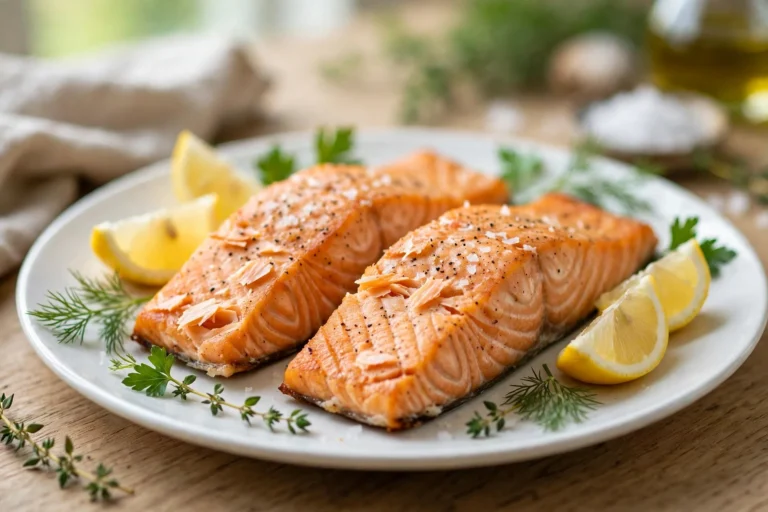
One Pot Chicken Rice Recipe (Brown Rice, 55 Min)

This one pot chicken rice recipe cooks chicken breast and brown rice together in a single pot, with carrots, peas, and bell pepper built in. Dinner and sides in 55 minutes, with 385 calories and 31 grams of protein per serving.
Key Takeaways
- Two-stage cooking: the rice simmers first, and the chicken joins for the last 10–12 minutes.
- Brown rice, not white: more fiber and slower carbs — and the method is adjusted for it.
- 385 calories a serving: this one pot chicken rice recipe has 31 g of protein and 337 mg of sodium.
- Vegetables built in: carrots, peas, and bell pepper, no separate side.
- One pot, 55 minutes: 10 minutes of prep, then the stove does the rest.
In This Post
- Why brown rice?
- Ingredients
- How to make
- Juicy chicken?
- Is it healthy?
- Mushy or crunchy rice?
- Storage and reheating
- FAQs
Why Brown Rice (and Why It Needs a Different Method)
Brown rice is the better choice for this one pot chicken rice recipe: it keeps its bran and germ, so it brings more fiber and a slower rise in blood sugar than white rice. One serving has 4 g of fiber and 48 g of slower-digesting carbs.
Brown rice also needs a different method: it takes 40–45 minutes (white rice takes 18) and needs more liquid — about 2 cups of broth per cup, against 1½ for white. That longer cook is why the chicken cannot go in at the start, because a breast simmered for 40 minutes turns dry, and the two-stage method below fixes that.
| Rice | Cook time | Liquid per cup | Fiber per serving |
|---|---|---|---|
| Brown (ours) | 40–45 min | 2 cups | 4 g |
| White / basmati | 18 min | 1½ cups | 1 g |
No competitor in this search uses brown rice — all use white or basmati — and for the full picture on brown rice and blood sugar, read is brown rice good for diabetics.
What Ingredients Do You Need?
This one pot chicken rice recipe needs 680 g of chicken breast, 300 g of brown rice, carrots, peas, a red bell pepper, onion, garlic, olive oil, low-sodium chicken broth, turmeric, and cumin. No cream, no butter — the broth and spices do the flavor work.
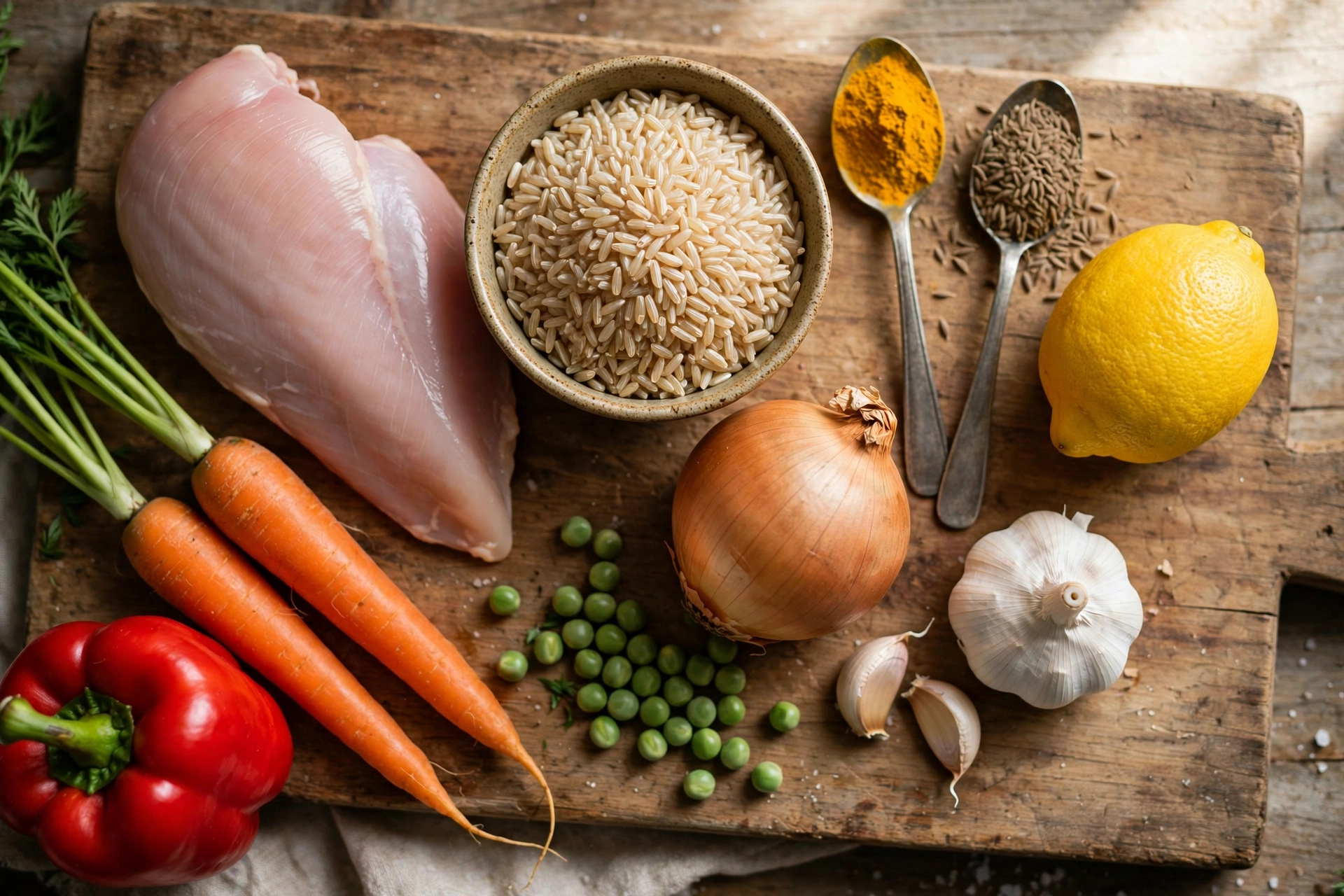
- Chicken breast (680 g, about 1½ lb): In chunks. Breast, not thighs — the leanest build in this search.
- Brown rice (300 g, about 1½ cups): Long-grain, rinsed to wash off starch.
- Carrots (150 g, 2 medium): Diced small; they cook with the rice.
- Frozen peas (100 g, about ⅔ cup): No need to thaw; they go in with the chicken.
- Red bell pepper (1, 150 g): Diced; it adds color and crunch.
- Onion (1 medium, 150 g) and garlic (2 cloves): Diced and minced; they build the base.
- Olive oil (1 tablespoon): For sautéing; all the fat in the pot.
- Low-sodium chicken broth (3 cups): Low-sodium matters: regular broth adds ~400 mg sodium per serving.
- Turmeric (1 tsp), cumin (1 tsp), salt (½ tsp): The warm, golden spice base.
- Lemon (1): Juice at the end, wedges to serve.
How Do You Make One Pot Chicken Rice Recipe?
This one pot chicken rice recipe has two stages: the rice simmers with the vegetables for 30 minutes, then the chicken and peas join for the last 10–12 minutes. The chicken cooks through without drying out, and everything finishes together.

- Sauté the onion and garlic. Warm the olive oil in a large pot over medium heat; cook the onion 5 minutes until soft, then add the garlic for 1 minute.
- Add the rice and spices. Stir in the rice, turmeric, and cumin; cook 1 minute until fragrant.
- Add the broth and vegetables. Add the broth, carrots, and bell pepper; bring to a boil.
- Simmer 30 minutes. Lower the heat, cover, and simmer 30 minutes. Do not lift the lid.
- Add the chicken and peas. Nestle the chicken into the rice, scatter the peas on top, and cover.
- Cook 10–12 minutes. Simmer until the chicken reaches 165°F and the rice is tender.
- Rest and finish. Take the pot off the heat and rest 10 minutes, lid on, then stir in the lemon juice and serve.

In this one pot chicken rice recipe, the 10-minute rest matters as much as the cooking, because the rice finishes absorbing the broth, the grains firm up, and the chicken relaxes — and skipping the rest leaves the rice wet on top and dry at the bottom, which I learned the first time I served it straight off the stove.
How Do You Keep the Chicken Juicy?
Keep the chicken juicy by adding it late: the chicken in this one pot chicken rice recipe goes in for the last 10–12 minutes only, after the rice has simmered for 30. A breast needs about 10 minutes to reach 165°F in simmering broth — any longer and it dries out.
Cut the breast into even chunks so they cook at the same speed, and use a thermometer on the largest piece, because without one you are guessing — and if you cut a chunk open, the meat should be white all the way through. Four of the five competitors use thighs, which forgive overcooking, while breast does not, and that is why the two-stage method exists.
Is One Pot Chicken and Rice Healthy?
One-pot chicken and rice is a healthy choice: one serving of this one pot chicken rice recipe has about 385 calories, 31 g of protein, 48 g of carbs, 4 g of fiber, and 7 g of fat. The breast is the leanest protein in the pot, and the brown rice and vegetables add fiber that white-rice versions lack.
The number that sets this one pot chicken rice recipe apart is the comparison: the only competitor that publishes calories lands at 645 per serving, with coconut milk doing the damage, while ours uses broth, not coconut milk, and breast, not skin-on thighs — the same comfort, 260 fewer calories. Harvard’s protein guide explains why lean protein matters for staying full.
| Per serving (1 of 6) | Amount |
|---|---|
| Calories | ~385 kcal |
| Carbohydrates | 48 g |
| Fiber | 4 g |
| Protein | 31 g |
| Fat | 7 g |
| Sodium | ~337 mg |
| Sugar | 5 g |
For more chicken dinners, try our low calorie chicken dinner recipes or high protein chicken fajita bowl. For a different one-pot chicken dinner, see the healthy chicken curry recipe .
Why Is My Rice Mushy or Crunchy?
Rice turns mushy when there is too much liquid or the lid is lifted too often, and crunchy when there is too little liquid or the heat is too high. Both are easy to fix — the table below covers the four most common ones.
| Problem | Cause | Fix |
|---|---|---|
| Mushy rice | Too much broth, or lid lifted | Measure the broth; keep the lid on |
| Crunchy rice | Too little liquid, or heat too high | Add ¼ cup broth; lower the heat |
| Dry chicken | Chicken in from the start | Add chicken for the last 10–12 min only |
| Burnt bottom | Heat too high, or thin pot | Lowest simmer; use a heavy pot |
The most common mistake in this one pot chicken rice recipe is lifting the lid to check, because every peek lets out steam and adds minutes to the cook time — so trust the clock for the first 30 minutes, then check once when the chicken goes in.
How Do You Store and Reheat Chicken and Rice?
Store chicken and rice in airtight containers in the refrigerator for up to 4 days, or freeze it in portions for up to 3 months, cooling it completely first — spread it on a sheet pan to cool fast — and reheating only the portion you plan to eat.
To reheat, add a splash of broth or water (about 2 tablespoons per serving), cover, and warm it in the microwave in 1-minute bursts, stirring between each, or in a covered pot over low heat, because the rice absorbs liquid as it sits and needs moisture back. For a soup that reheats well, try our slow cooker chicken barley soup.

Ingredients
Method
- Sauté the onion and bell pepper in the oil for 5 minutes, then the garlic, turmeric, and cumin for 1 minute.
- Add the brown rice, carrots, broth, and salt. Bring to a boil.
- Cover, lower the heat, and simmer 30 minutes without lifting the lid.
- Lay the chicken cubes on top and push them into the rice. Cover again.
- Simmer 10–12 minutes until the chicken reaches 165°F inside.
- Scatter the peas over the top, cover, and rest off the heat for 5 minutes.
- Stir in the lemon juice, fluff, and serve.
Notes
FAQs
Can I use white rice instead of brown rice?
Yes, white rice works in this one pot chicken rice recipe — use 300 g and reduce the broth to 2¼ cups. Simmer 18 minutes (instead of 30) before adding the chicken, then cook 10–12 minutes more. Fiber drops to about 1 g per serving (from 4 g), but the timing for the chicken stays the same.
How do I keep the chicken from drying out?
Keep the chicken juicy by adding it late: the chicken in this one pot chicken rice recipe goes in for the last 10–12 minutes only, after the rice has simmered for 30. Cut the breast into even chunks and use a thermometer — 165°F is done. Any longer and breast meat dries out, which is why the two-stage method exists.
Can I use frozen vegetables?
Yes, frozen vegetables work well here. The peas are frozen already — they go in with the chicken at the end and thaw in minutes. Frozen carrots or mixed vegetables can replace the fresh carrots; add them with the broth at step 3. No need to thaw first.
How long does chicken and rice last in the fridge?
Chicken and rice lasts up to 4 days in the refrigerator in an airtight container. Cool it quickly — spread it on a sheet pan — then pack it away. Reheat only the portion you plan to eat, with a splash of broth to bring back the moisture. For longer storage, freeze it in portions for up to 3 months.
How do I reheat chicken and rice?
Reheat chicken and rice with a splash of broth or water — about 2 tablespoons per serving — to replace the moisture the rice absorbed. Cover and warm it in the microwave in 1-minute bursts, stirring between each, or in a covered pot over low heat. It should be steaming hot all the way through.
Can I double this recipe?
Yes, this one pot chicken rice recipe doubles cleanly — use a large Dutch oven or stockpot (at least 6 quarts) so the rice cooks evenly. Double every ingredient and keep the times the same: 30 minutes for the rice, then 10–12 minutes for the chicken. Stir gently when the chicken goes in.
Conclusion
This one pot chicken rice recipe does everything in one pot — brown rice, juicy chicken, and vegetables, with 31 g of protein and only one pot to wash. The trick is the two-stage method: rice first, chicken last, dinner in 55 minutes.
This article is for general information only and is not medical advice. Please talk to your doctor or a registered dietitian, especially if you have diabetes, heart disease or take medicine.