Prebiotic Foods for Gut Health: 12 Best Picks

Prebiotic foods for gut health are the fibers your good gut bacteria eat: garlic, onions, oats, beans, bananas, and asparagus. They feed bacteria like Bifidobacterium, which make short-chain fatty acids that support your gut lining. Start with the gentle foods — oats and bananas — and add one new food each week.
Key Takeaways
- Prebiotic foods for gut health feed your good gut bacteria — they are fibers, not live bacteria like probiotics.
- The 12 best picks run gentle to potent: start with oats and bananas, add beans and Jerusalem artichoke last.
- Aim for about 5 grams of prebiotic fiber a day inside 28 grams of total fiber — and ramp up over 4 weeks to avoid bloating.
Table of Contents
- What are prebiotics
- The 12 best foods
- Resistant starch
- How much
- A prebiotic day
- Without bloating
- Supplements
- Who should be careful
- FAQ
What Are Prebiotic Foods?
Prebiotic foods are foods with fibers that your good gut bacteria eat and turn into short-chain fatty acids — mainly butyrate, propionate, and acetate. These acids feed the cells of your gut lining. The main prebiotic fibers are inulin, FOS, GOS, resistant starch, beta-glucan, and pectin. Prebiotic foods for gut health feed bacteria; probiotics add live bacteria.
Think of it this way: probiotics are the seeds, prebiotics are the fertilizer. Probiotics add live bacteria — yogurt, kefir, kimchi. Prebiotics feed the bacteria already living in your gut — garlic, onions, oats, beans. Fiber is the bigger family: all prebiotics are fiber, but not all fiber is prebiotic. Only fibers that specific good bacteria can use count as prebiotic.
When gut bacteria eat prebiotic fiber, they make short-chain fatty acids. Butyrate is the main fuel for the cells lining your colon. Propionate may help with blood sugar. Acetate travels through the body. A fiber-poor diet starves these bacteria — one mouse study found the gut’s protective mucus layer thins without enough fiber. That is why prebiotic foods for gut health matter — they keep the bacteria that make these acids well fed.
The six prebiotic fiber types each have their own best foods. Inulin and FOS come from garlic, onions, leeks, and asparagus. GOS comes from beans, lentils, and chickpeas. Resistant starch comes from green bananas, raw oats, and cooled potatoes. Beta-glucan comes from oats and barley. Pectin comes from apples and citrus. Eating a mix covers all six.
For the live-bacteria side, see our guide to fermented foods . For the full picture, see best foods for gut health .
What Are the Best Prebiotic Foods for Gut Health?

These 12 prebiotic foods for gut health run from gentle to potent. Start at the top if your gut is sensitive. Each food lists its fiber grams, its main prebiotic fiber, and how gentle it is. The fiber grams come from USDA FoodData Central.
| Food | Serving | Fiber | Main prebiotic fiber | Tolerance |
|---|---|---|---|---|
| Banana (slightly green) | 1 medium | 3.1 g | Resistant starch | Gentle |
| Oats | ½ cup dry | 4.0 g | Beta-glucan, resistant starch | Gentle |
| Apple (with skin) | 1 medium | 4.4 g | Pectin | Gentle |
| Barley | 1 cup cooked | 6.0 g | Beta-glucan | Moderate |
| Onion | ½ cup cooked | 1.4 g | Inulin, FOS | Moderate |
| Garlic | 3 cloves | 0.2 g | FOS, inulin | Moderate |
| Leek | ½ cup cooked | 0.5 g | Inulin | Moderate |
| Asparagus | ½ cup cooked | 1.8 g | Inulin | Moderate |
| Lentils | ½ cup cooked | 7.8 g | GOS, resistant starch | Potent |
| Chickpeas | ½ cup cooked | 6.2 g | GOS | Potent |
| Black beans | ½ cup cooked | 7.5 g | GOS, resistant starch | Potent |
| Jerusalem artichoke | ½ cup | 1.2 g | Inulin | Potent |
Bananas are the gentlest start. Slightly green bananas have more resistant starch — it turns to sugar as the banana ripens. See are bananas bad for diabetics for the green-vs-ripe detail.
Oats and barley bring beta-glucan, the fiber with an FDA heart-health claim at 3 grams a day. A bowl of oatmeal gives about half that. See is oatmeal good for diabetics for the blood-sugar side.
Garlic, onions, and leeks are the most powerful inulin sources — and the most likely to cause gas. Cook them well; cooking softens the fiber. A clove or two in a soup is a gentle dose.
Beans, lentils, and chickpeas bring GOS and resistant starch — and the most fiber per serving. Start with a quarter cup, not a full cup. Jerusalem artichoke is the most potent of all: start with two or three slices.
What Is Resistant Starch, and Why Does It Matter?
Resistant starch is starch your small intestine cannot digest, so it reaches your colon where gut bacteria ferment it into butyrate. It comes from green bananas, raw oats, and cooked-then-cooled potatoes, rice, and pasta. Because it is not digested as sugar, it does not spike blood sugar the way regular starch does.
For blood sugar, resistant starch is the most useful of all the prebiotic foods for gut health — it feeds bacteria without spiking glucose. That makes it a rare double win: good for your gut and steady for your blood sugar.
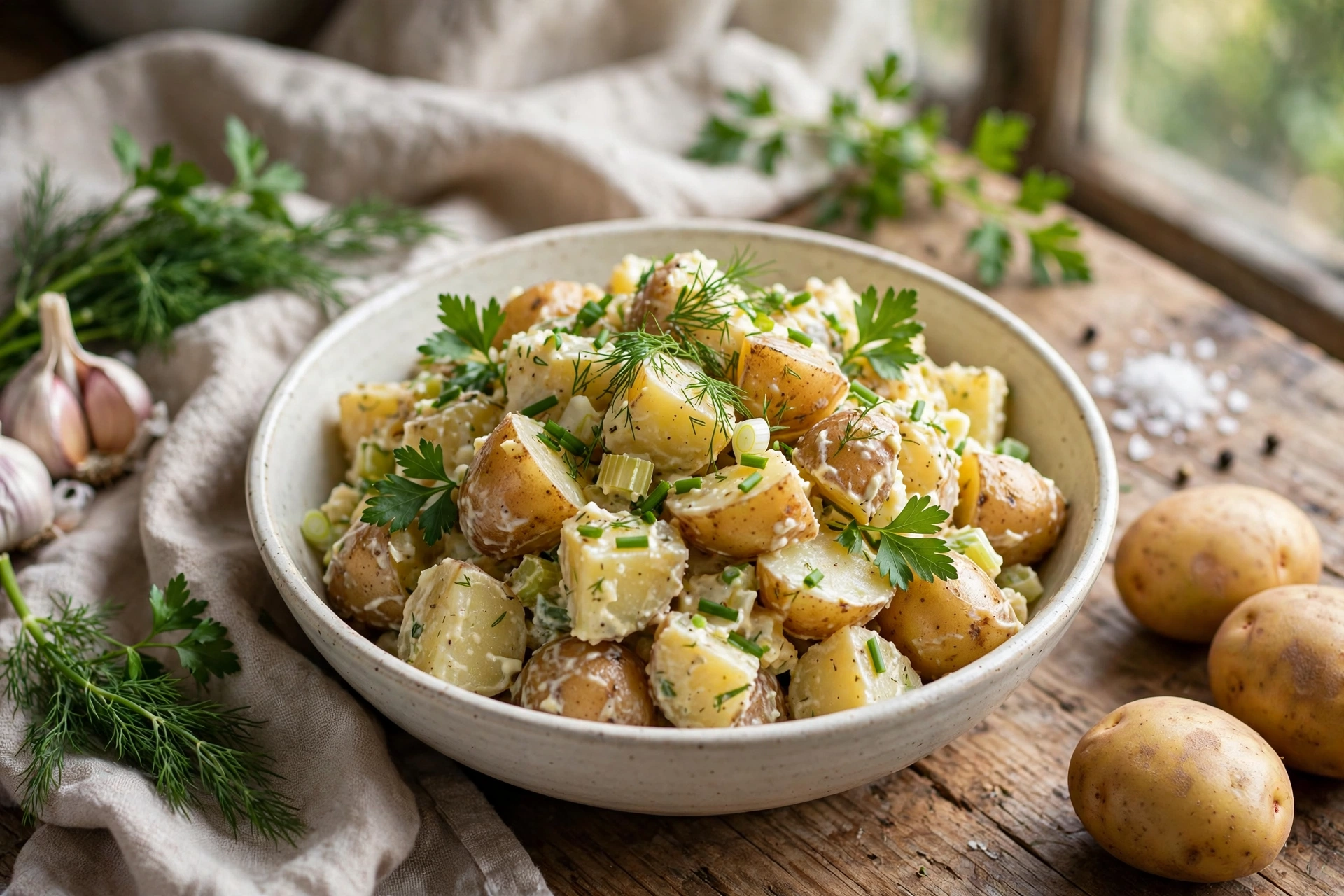
The cooled-food trick is simple: cook potatoes, rice, or pasta, cool them in the fridge overnight, and eat them cold or reheated. Reheating keeps most of the resistant starch. Potato salad made with cooled potatoes is one of the easiest ways to eat it.
The potato salad in this post is the one I make most — cooked potatoes, cooled overnight, and it still tastes like a normal potato salad.
Overnight oats work the same way: raw oats soaked overnight keep their resistant starch. Try our high protein overnight oats for a ready-made breakfast.
How Much Prebiotic Fiber Do You Need?
There is no official daily target for prebiotic fiber, but studies that show a benefit use about 5 to 10 grams a day. Most Americans eat about 5 grams of inulin and FOS — and only half the 28-gram Daily Value for total fiber. Hitting 28 grams of total fiber a day delivers roughly 5 grams of prebiotic fiber naturally.
Most of that 5 grams comes from wheat (about 70%) and onions (about 25%) — so if you eat bread and cook with onions, you are already partway there. The gap is total fiber: most people eat about 15 grams a day, roughly half the Daily Value.
Start at 5 grams, not 10. In one study, 5 grams of inulin and FOS a day was well tolerated, while 10 grams caused flatulence in sensitive people. The ramp below keeps you at the gentle end. More is not better if your gut is not ready for it.
Prebiotic foods for gut health are easy to find — the 12 foods in this post cover all six prebiotic fiber types. For the full fiber picture — fiber types, food sources, and how much you need — see the MedlinePlus fiber guide.
What Does a Prebiotic Day of Eating Look Like?

A prebiotic day of eating is simple: oats and banana for breakfast, lentil soup for lunch, an apple for a snack, and barley with asparagus for dinner. That day gives about 29 grams of total fiber and roughly 5 grams of prebiotic fiber — with no supplements and no special shopping. Here is how it adds up.
| Meal | What you eat | Fiber | Prebiotic fiber |
|---|---|---|---|
| Breakfast | Overnight oats (½ cup dry) + 1 banana | 7.1 g | ~1.5 g |
| Lunch | Lentil soup (½ cup lentils) + 1 slice whole wheat bread | 9.8 g | ~1.5 g |
| Snack | 1 apple with skin | 4.4 g | ~0.5 g |
| Dinner | Barley (1 cup cooked) + asparagus (½ cup) + garlic in cooking | 8.0 g | ~2 g |
| Total | ~29 g | ~5.5 g |
This sample day uses prebiotic foods for gut health at every meal — no supplements, no special shopping. Swap the barley for brown rice and you lose most of the prebiotic fiber — barley is the workhorse here.
How Do You Add Prebiotic Foods Without Bloating?

Add prebiotic foods for gut health slowly — one new food a week, starting with the gentle ones. Cook your onions, garlic, and beans well. Drink water with fiber-rich meals. Start beans at a quarter cup, not a full cup. If you feel gassy, stay at the same amount for a week before adding more.
- Week 1: oats and banana every day. Add an apple with the skin.
- Week 2: cook with garlic and onions. Add barley to one meal.
- Week 3: add asparagus and leeks. Try lentils — a quarter cup.
- Week 4: add chickpeas and black beans. Try Jerusalem artichoke — two or three slices.
I started with oats and bananas — the two gentlest foods on this list — and added one new food each week. My gut thanked me for the slow start.
Water helps: fiber absorbs water, and too little water can make bloating worse. Chew well and take a short walk after meals — movement helps gas move through. If bloating lasts more than a few days at the same amount, drop back a step. Gas is normal when your gut bacteria adjust — pain is not.
Do You Need a Prebiotic Supplement?
Most people do not need a prebiotic supplement. Food gives you prebiotic fiber plus vitamins, minerals, and other fibers that a powder cannot match. Supplements — usually inulin or FOS powder — can help if you cannot eat enough high-fiber foods. Start at 2 to 3 grams a day and talk to your doctor first.
If food alone is not enough, a supplement can top up the prebiotic foods for gut health you already eat. If you do buy one, look for a single-ingredient powder (inulin or FOS), third-party tested, with no added sugar. Skip blends that promise to “detox” your gut — that is marketing, not science.
Who Should Be Careful With Prebiotic Foods?
People with IBS, SIBO, active IBD, or recent bowel surgery should go slowly with prebiotic foods — or ask their doctor first. Many prebiotics are FODMAPs, the fermentable carbs that trigger bloating and pain in sensitive guts. If you follow a low-FODMAP plan, work with a dietitian: the plan restricts many prebiotic foods.
That does not mean avoiding prebiotic foods for gut health forever. A dietitian can help you reintroduce them one at a time and find your tolerance. Some prebiotics — like partially hydrolyzed guar gum — have good trial evidence in IBS.
Frequently Asked Questions
Here are the questions readers ask most about prebiotic foods for gut health.
What is the difference between prebiotics and probiotics?
Prebiotics are fibers that feed the good bacteria already in your gut — garlic, onions, oats, beans. Probiotics are live bacteria you eat — yogurt, kefir, kimchi. Prebiotic foods for gut health are the fertilizer; probiotics are the seeds. You need both, but food is the easiest place to start.
How much prebiotic fiber do I need daily?
There is no official target, but studies showing a benefit use 5 to 10 grams a day. Hitting 28 grams of total fiber a day — the Daily Value — delivers roughly 5 grams of prebiotic fiber naturally. Start at 5 grams: one study found 10 grams caused gas in sensitive people.
Can prebiotics cause bloating or gas?
Yes, especially at first. Gut bacteria ferment prebiotic fiber and make gas — that is how they work. Start with gentle prebiotic foods for gut health like oats and bananas, add one new food a week, and cook your onions and beans well. If bloating lasts more than a few days, drop back a step.
Is cooked garlic still prebiotic?
Yes. Cooking softens garlic’s fiber but does not destroy its prebiotic effect. Cooked garlic, onions, and leeks still feed your gut bacteria — and cooked is gentler on sensitive stomachs than raw. Raw garlic is stronger but more likely to cause gas.
Do I need a prebiotic supplement?
Most people do not. Food gives you prebiotic fiber plus vitamins, minerals, and other fibers a powder cannot match. A supplement can help if you cannot eat enough high-fiber foods. Start at 2 to 3 grams a day and talk to your doctor first.
Which prebiotic foods are best for IBS?
Start with the gentlest: oats, bananas, and small amounts of cooked vegetables. Many prebiotics are FODMAPs that can trigger IBS symptoms, so go slowly and work with a dietitian. Partially hydrolyzed guar gum — a soluble fiber supplement — has good trial evidence in IBS.
Conclusion
Prebiotic foods for gut health are not exotic — they are garlic, onions, oats, beans, and bananas, the foods already in your kitchen. Start with the gentle ones, add one a week, and let your gut adjust. Your bacteria will do the rest.
This article is for general information only and is not medical advice. Please talk to your doctor or a registered dietitian, especially if you have diabetes, heart disease or take medicine.