Slow Cooker Vegetable Stew Recipe (Thick, 9g Fiber)
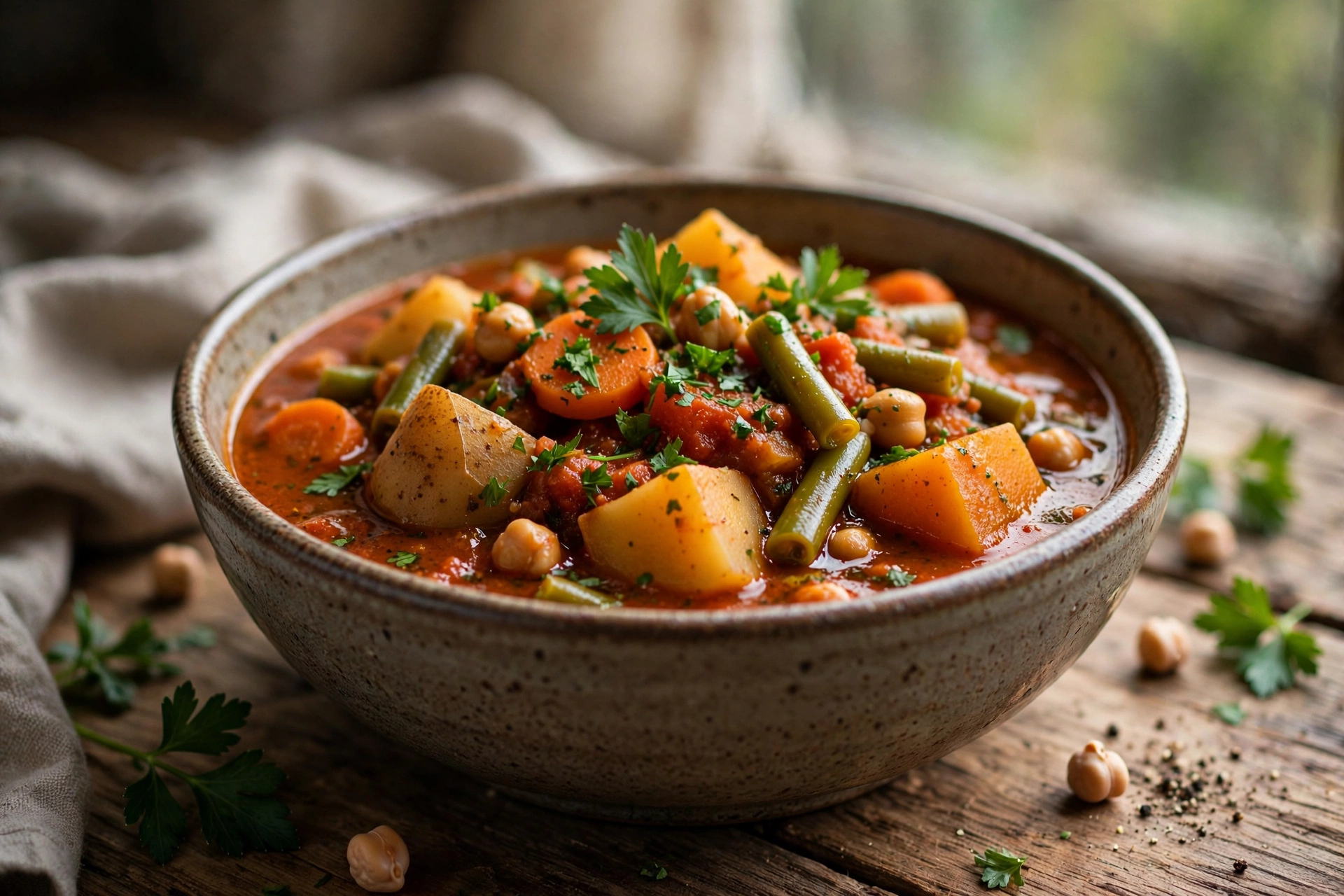
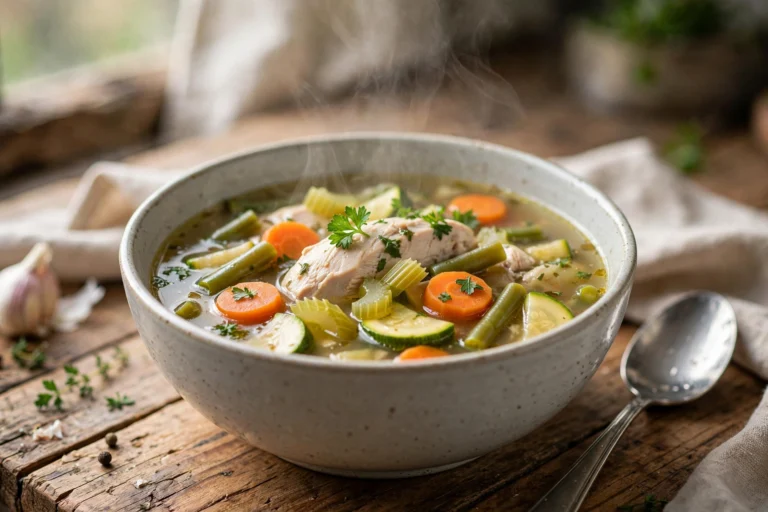
This slow cooker vegetable stew recipe is thick, not brothy: chunky potatoes, butternut squash, chickpeas, and vegetables in a lemon-herb broth. Layer the hard vegetables, add the chickpeas and broth, and cook on LOW for 6–7 hours. Stir in the green vegetables, and dinner is ready.
Key Takeaways
- Thick, not brothy. This slow cooker vegetable stew recipe uses just 2 cups of broth and a slurry finish, so the sauce clings to every bite.
- Chickpeas for protein. One can of chickpeas adds 17 g of protein to the pot.
- LOW 6–7 hours or HIGH 3–4 hours. Low and slow gives the most tender squash.
- Add soft vegetables late. Zucchini and green beans go in for the last hour only.
- Vegan and freezer-friendly. No dairy, no meat, and it freezes for 3 months.
In This Post
- Stew or soup?
- Ingredients
- How to make
- How long?
- How to thicken
- Which vegetables hold up?
- Healthy?
- Storage
- FAQs
Stew or Soup — What’s the Difference?
A stew is thicker and heartier than a soup, with less broth and bigger pieces of vegetables. This slow cooker vegetable stew recipe uses just 2 cups of broth for 6 servings, while a soup would use 6–8 — so the result eats like a meal, not a starter.
| Stew | Soup | |
|---|---|---|
| Broth | 2 cups, thickened | 6–8 cups, thin |
| Vegetables | Chunky, 2–3 cm pieces | Smaller, spoon-sized |
| Protein | Chickpeas cooked in | Often none or added |
| Role | Main course on its own | Starter or light lunch |
I used to drown vegetables in broth and wonder why my stew ate like soup. The fix is simple: less liquid, bigger cuts, and a thickening finish. If you want a lighter bowl, our slow cooker vegetable soup is the brothy version.
What Ingredients Do You Need?
This slow cooker vegetable stew recipe needs potatoes, butternut squash, carrots, and chickpeas, plus celery, onion, garlic, and diced tomatoes for the base. Zucchini and green beans go in late so they stay firm, and a squeeze of lemon brightens the finish.

- Yukon Gold potatoes (450 g / 1 lb): Peeled, cut into 2–3 cm chunks.
- Butternut squash (400 g / about ½ medium): Peeled, cut into 2–3 cm chunks.
- Carrots (240 g / about 3): Peeled, cut into thick coins.
- Celery (150 g / 3 stalks): Sliced.
- Onion (1, about 150 g): Diced.
- Garlic (3 cloves): Minced.
- Green beans (150 g / 1 cup): Trimmed, cut in half.
- Zucchini (200 g / 1 medium): Cut into half-moons.
- Chickpeas (240 g / 1 can): Drained and rinsed.
- Diced tomatoes (400 g / 1 can): No salt added.
- Low-sodium vegetable broth (2 cups / 480 ml): Low-sodium keeps the salt in check.
- Tomato paste (1 tablespoon): For depth and color.
- Olive oil (1 tablespoon): For the optional sauté.
- Cornstarch (2 tablespoons): Mixed with water for the slurry.
- Lemon juice (1 tablespoon): Stirred in at the end.
- Dried thyme (1 teaspoon), bay leaves (2), salt (½ teaspoon), black pepper (½ teaspoon): The seasoning.
How to Make This Slow Cooker Vegetable Stew Recipe
This slow cooker vegetable stew recipe takes about 20 minutes of prep and 6–7 hours on LOW. The steps are simple, but the two-stage timing matters most: hard vegetables go in first, soft vegetables last — so nothing turns to mush.
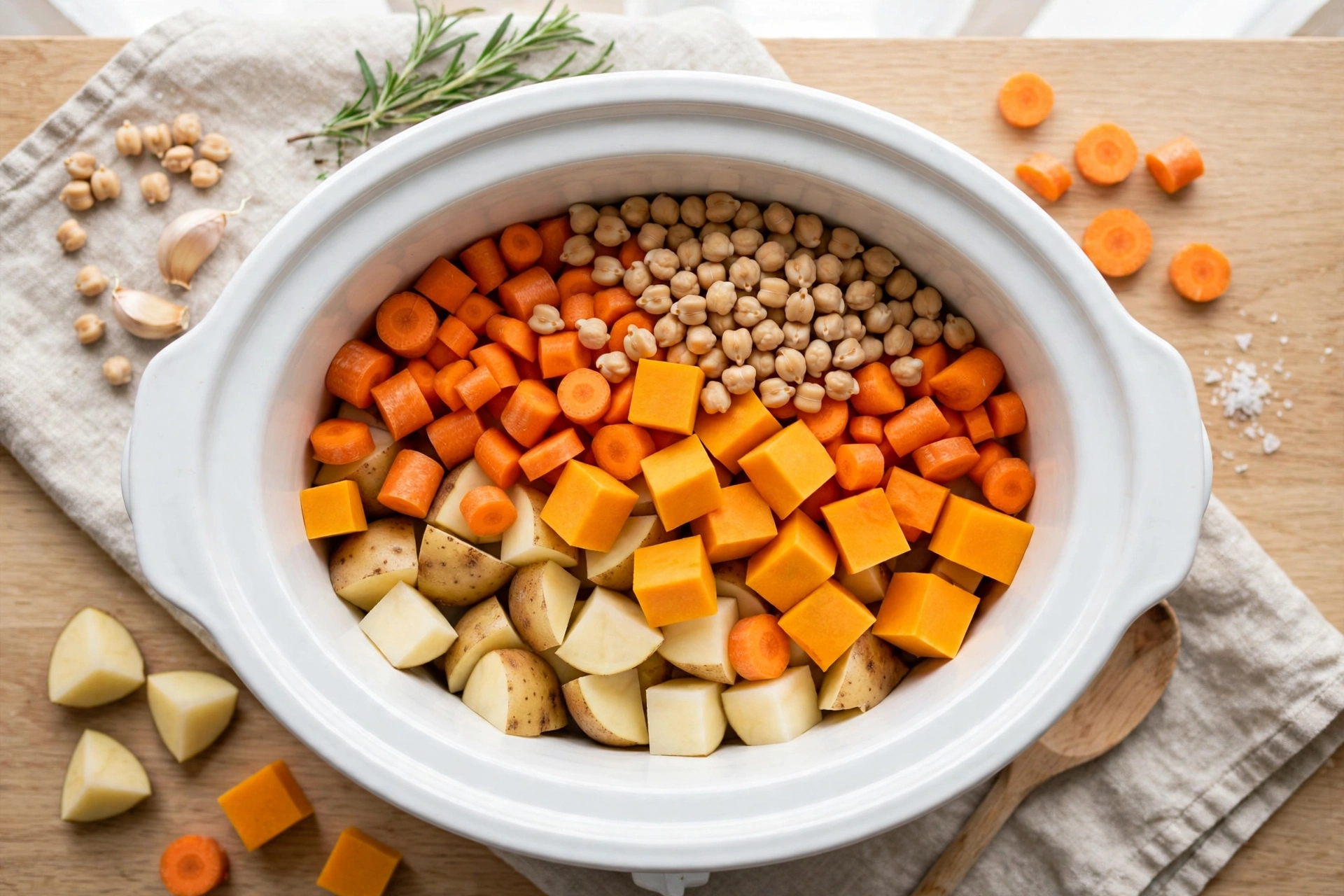
- Prep the vegetables. Dice the onion, cut the potatoes and squash into chunks, slice the carrots and celery, mince the garlic.
- Optional sauté. Warm the olive oil in a pan and cook the onion and garlic for 3–4 minutes until soft.
- Layer the hard vegetables. Put the potatoes, squash, carrots, celery, and onion in the slow cooker first.
- Add the chickpeas and tomatoes. Pour in the chickpeas, diced tomatoes, tomato paste, thyme, bay leaves, salt, and pepper.
- Pour in the broth. Add the broth. Do not stir — the layers cook best undisturbed.
- Cook LOW 6–7 hours. Cook on LOW for 6–7 hours or HIGH for 3–4 hours, until the potatoes are tender.
- Add the soft vegetables. Stir in the green beans and zucchini for the last hour of cooking.
- Thicken and finish. Whisk the cornstarch with ¼ cup of cold water, stir it in, and cook on HIGH for 20–30 minutes. Stir in the lemon juice, remove the bay leaves, and serve.

The two-stage timing is the secret — zucchini added at the start would dissolve into the sauce. Our slow cooker ratatouille uses the same late-add trick for its soft vegetables.
How Long Do You Cook Vegetable Stew in the Slow Cooker?
Cook vegetable stew in the slow cooker on LOW for 6–7 hours or HIGH for 3–4 hours, until the potatoes and squash are tender all the way through. LOW gives the best texture; HIGH works when you are short on time.
| Setting | Time | Best for |
|---|---|---|
| LOW (this recipe) | 6–7 hours | Most tender squash, best texture |
| HIGH | 3–4 hours | Same-day dinner, still good |
| LOW, over 8 hours | Too long | Squash breaks down, sauce goes gluey |
This slow cooker vegetable stew recipe was tested on LOW for 6.5 hours, and the squash held its shape. Do not cook past 8 hours on LOW — the squash dissolves and the sauce turns gluey.
How Do You Thicken Vegetable Stew?
Thicken vegetable stew with a cornstarch slurry — 2 tablespoons of cornstarch whisked into ¼ cup of cold water, stirred in at the end and cooked on HIGH for 20–30 minutes. The potatoes also help: as they cook, their starch thickens the sauce on its own.
A second option is the blend method: scoop out 2 cups of stew, blend until smooth, and stir it back in. It thickens without any starch. In this slow cooker vegetable stew recipe, the slurry is the simpler choice — but the blend method works just as well.
Which Vegetables Hold Up in a Slow Cooker?
Hard vegetables hold up best in a slow cooker: potatoes, butternut squash, carrots, parsnips, and celery can cook for 6–7 hours and keep their shape. Soft vegetables — zucchini, green beans, spinach, peas — go in for the last hour only, or they turn to mush.
| Holds up 6–7 h | Add in the last hour | Add at the end |
|---|---|---|
| Potatoes, squash, carrots, parsnips, celery, onion | Zucchini, green beans, mushrooms, corn | Spinach, peas, fresh herbs, lemon |
I learned this the hard way: my first vegetable stew had zucchini in from the start, and by dinner it had vanished into the sauce. The two-stage method keeps every vegetable tender, but still itself.
Is Slow Cooker Vegetable Stew Healthy?
Slow cooker vegetable stew is a healthy choice — high in fiber, full of vegetables, and naturally vegan. One serving of this slow cooker vegetable stew recipe has about 238 calories, 9 g of fiber, and 8 g of protein, with 382 mg of sodium.
The chickpeas are the protein anchor: one can adds 17 g of protein and 15 g of fiber to the whole pot. Harvard’s guide to vegetables and fruits explains why a varied mix of vegetables is one of the best everyday habits.
For a fuller meal, serve the stew with crusty bread or over rice. For more plant-based dinners, our slow cooker lentil soup and chickpea salad are both high in fiber. For a stovetop version, our healthy vegetable soup is the quick weeknight option.
How Do You Store Vegetable Stew?
Store vegetable stew in the fridge for up to 3–4 days in an airtight container, and reheat until steaming hot throughout. This slow cooker vegetable stew recipe freezes well for up to 3 months — the thick sauce reheats without separating.
Cool the stew quickly, then refrigerate within 2 hours. To freeze, portion into containers, leaving room for expansion. Thaw overnight in the fridge, then reheat until bubbling.
Ingredients
Method
- Dice the onion, cut the potatoes and squash into chunks, slice the carrots and celery, and mince the garlic.
- Optional: sauté the onion and garlic in the olive oil for 3–4 minutes.
- Layer the potatoes, squash, carrots, celery, and onion in the slow cooker.
- Add the chickpeas, diced tomatoes, tomato paste, thyme, bay leaves, salt, and pepper.
- Pour in the broth. Do not stir.
- Cook on LOW for 6–7 hours or HIGH for 3–4 hours, until the potatoes are tender.
- Stir in the green beans and zucchini for the last hour of cooking.
- Whisk the cornstarch with ¼ cup of cold water, stir it in, and cook on HIGH for 20–30 minutes. Stir in the lemon juice, remove the bay leaves, and serve.
Notes
FAQs
Can I make this slow cooker vegetable stew recipe ahead of time?
Yes, this slow cooker vegetable stew recipe is a great make-ahead dinner. Cook it fully, cool it quickly, and refrigerate for up to 3–4 days — the flavor gets even better overnight. Reheat on the stove or in the microwave until steaming hot, adding a splash of broth if the sauce thickened too much.
How long do you cook vegetable stew in the slow cooker?
Cook vegetable stew in the slow cooker on LOW for 6–7 hours or HIGH for 3–4 hours, until the potatoes and squash are tender. LOW gives the best texture and the most tender squash. Do not cook past 8 hours on LOW — the squash dissolves and the sauce turns gluey.
How do you thicken vegetable stew in a slow cooker?
Thicken vegetable stew with a cornstarch slurry — 2 tablespoons of cornstarch whisked into ¼ cup of cold water, stirred in at the end and cooked on HIGH for 20–30 minutes. You can also blend 2 cups of stew until smooth and stir it back in. Never add dry cornstarch straight to the pot, or it will clump.
Which vegetables hold up in a slow cooker?
Hard vegetables hold up best: potatoes, butternut squash, carrots, parsnips, and celery can cook for 6–7 hours and keep their shape. Soft vegetables — zucchini, green beans, spinach, peas — go in for the last hour only, or they turn to mush. Add spinach and fresh herbs at the very end.
Is slow cooker vegetable stew vegan?
Yes, this slow cooker vegetable stew recipe is fully vegan — no meat, no dairy, no animal products at all. The chickpeas provide the protein, the potatoes and squash provide the body, and the lemon-herb broth provides the flavor. Serve it with crusty bread or over rice for a complete meal.
What do you serve with slow cooker vegetable stew?
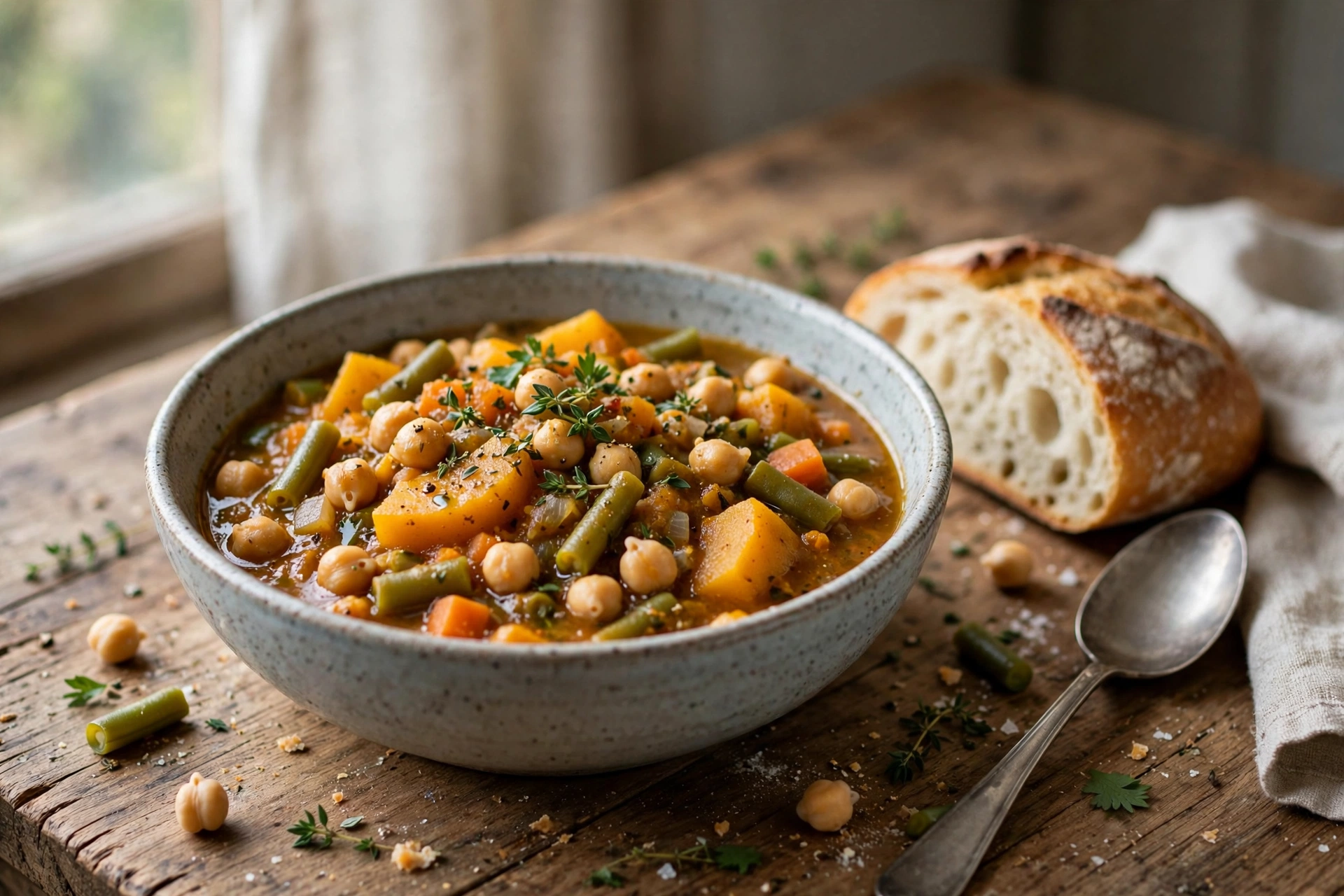
Serve this slow cooker vegetable stew recipe with crusty bread for dipping, plain rice, or a green salad. The stew is a full meal on its own, so a simple side is all you need. A spoonful of plain yogurt on top adds creaminess if you are not keeping it vegan.
Conclusion
This slow cooker vegetable stew recipe proves a meatless dinner can be thick, hearty, and filling. Potatoes, squash, chickpeas, and vegetables — layered in the morning, finished at the end, and ready by dinner. Try it once, and it will become your cold-weather staple.
This article is for general information only and is not medical advice. Please talk to your doctor or a registered dietitian, especially if you have diabetes, heart disease or take medicine.