Low Sodium Stir Fry Sauce Recipe (10 Minutes)
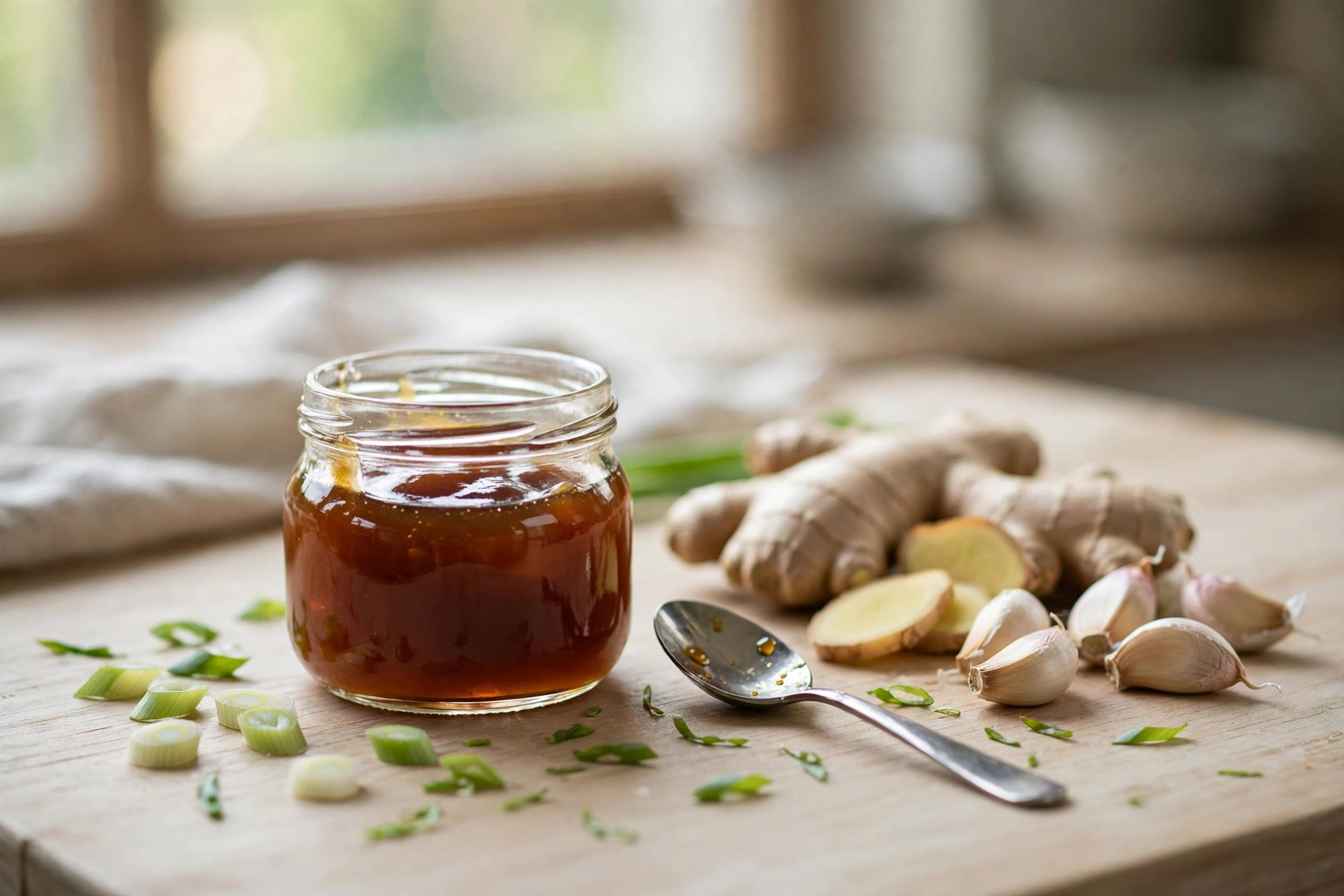
This low sodium stir fry sauce recipe makes one cup of sauce with just 52 mg of sodium per tablespoon. Whisk coconut aminos, broth, rice vinegar, honey, garlic, ginger and cornstarch, then simmer until thick. It takes ten minutes and works for chicken, vegetables or tofu.
Key Takeaways
- Only 52 mg of sodium per tablespoon in this low sodium stir fry sauce recipe — less than half the best rival recipe (119 mg).
- This low sodium stir fry sauce recipe is ready in 10 minutes with 10 simple ingredients.
- No soy sauce — coconut aminos taste salty and savory with far less salt.
Table of Contents
Why Is Stir Fry Sauce So High in Sodium?
Most stir fry sauces start with soy sauce, and one tablespoon holds about 900 mg of sodium — more than a third of the 2,300 mg daily limit. Bottled sauces add more salt. A homemade sauce keeps the salt low.
Soy sauce is the main reason: it is made by fermenting soybeans in salty water. Even “low sodium” soy sauce has 500 to 600 mg per tablespoon. This low sodium stir fry sauce recipe starts from coconut aminos instead.
The American Heart Association aims for 1,500 mg of sodium a day for most adults; the World Health Organization suggests no more than 2,000 mg. Read the American Heart Association’s sodium guidance for the full numbers.
How Much Sodium Is in This Low Sodium Stir Fry Sauce?
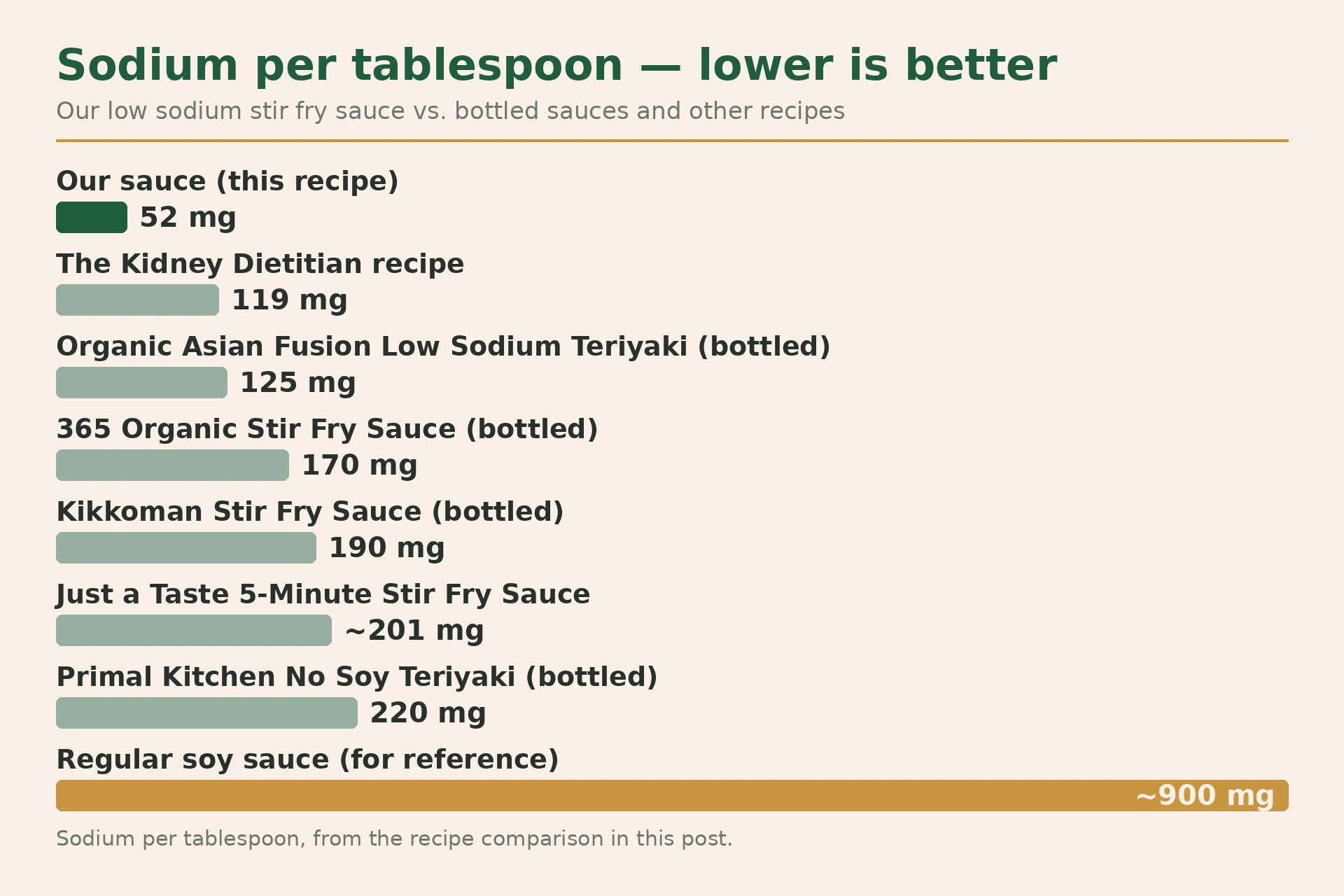
This low sodium stir fry sauce recipe has 52 mg of sodium per tablespoon — less than half of the best recipe we found elsewhere (119 mg). It is far below bottled sauces, which range from 125 to 220 mg per tablespoon.
We set out to beat 119 mg per tablespoon and landed at 52 mg.
Bottled figures come from The Kidney Dietitian. Coconut aminos vary by brand (240–300 mg); we used 270 mg, the Coconut Secret label value.
How this low sodium stir fry sauce recipe compares — milligrams of sodium per tablespoon:
| Sauce | Sodium per tbsp |
|---|---|
| Our sauce (this recipe) | 52 mg |
| The Kidney Dietitian recipe | 119 mg |
| Organic Asian Fusion Low Sodium Teriyaki (bottled) | 125 mg |
| 365 Organic Stir Fry Sauce (bottled) | 170 mg |
| Kikkoman Stir Fry Sauce (bottled) | 190 mg |
| Just a Taste 5-Minute Stir Fry Sauce (per tbsp, from batch total) | ~201 mg |
| Primal Kitchen No Soy Teriyaki (bottled) | 220 mg |
| Regular soy sauce (for reference) | ~900 mg |
What Ingredients Do You Need for Low Sodium Stir Fry Sauce?
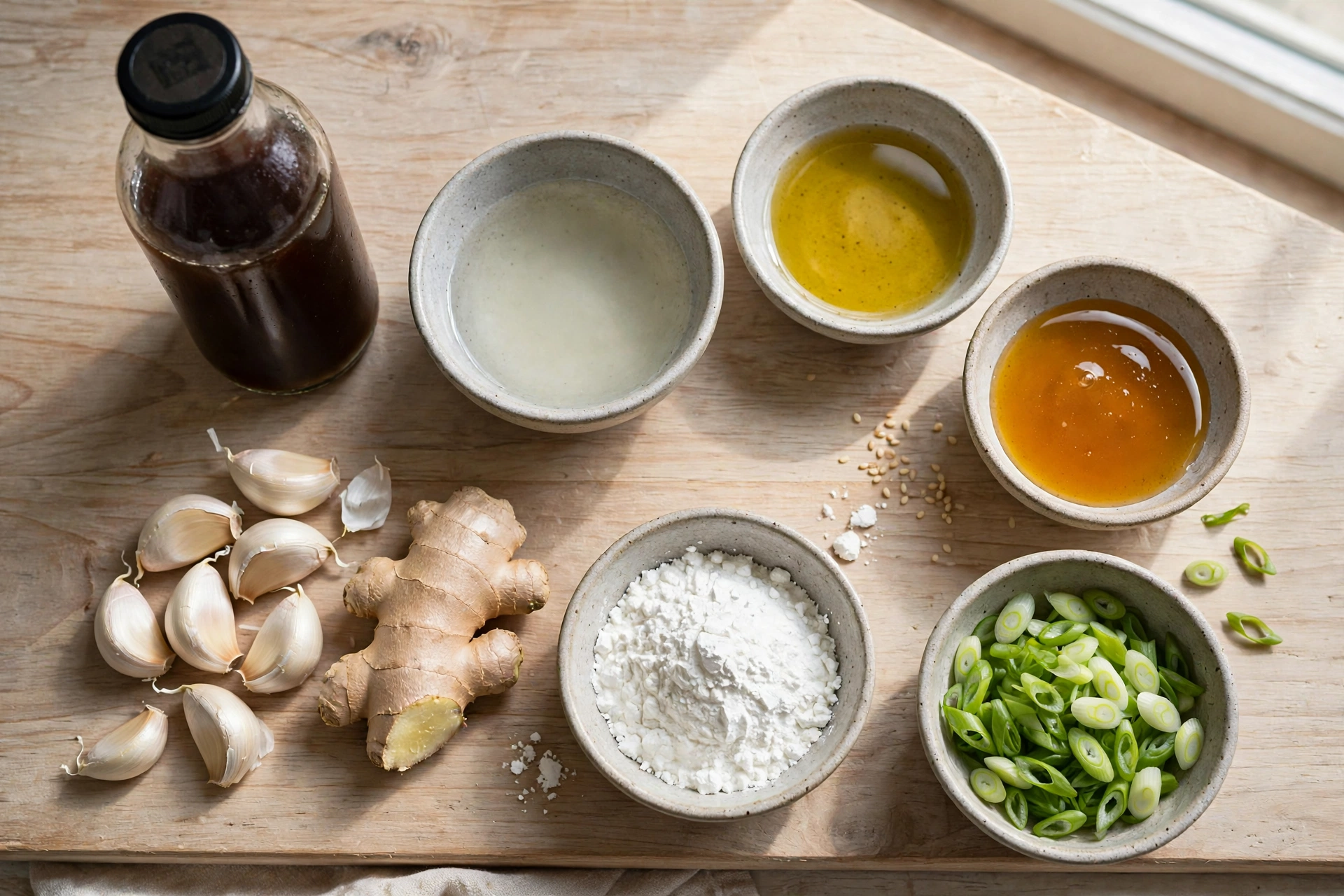
You need coconut aminos, no-salt-added vegetable broth, rice vinegar, honey, sesame oil, garlic, fresh ginger, cornstarch, green onion and red pepper flakes. Coconut aminos replace soy sauce and bring the salty taste with far less sodium. The rest add brightness.
Each ingredient has a job in this low sodium stir fry sauce recipe:
- Coconut aminos (3 tbsp): salty base, mild and sweet. Most brands: 240–300 mg per tbsp.
- No-salt-added vegetable broth (1/2 cup): body, no salt. Buy “no salt added.”
- Rice vinegar (2 tbsp): bright and tangy. Use plain, not seasoned.
- Honey (1 tbsp): balances the vinegar; adds gloss.
- Sesame oil (1 tsp): warm, nutty flavor. Toasted is best.
- Garlic (2 cloves) and fresh ginger (1 tsp): sharp, warm flavor, almost no sodium.
- Cornstarch (1 tbsp): the thickener. Glossy, no salt.
- Green onion (2 tbsp) and red pepper flakes (a pinch): fresh flavor, color, gentle heat. Skip the flakes for kids.
Is this sauce good for people with diabetes?
This sauce has about 2 g of carbs and 1 g of sugar per tablespoon. The honey is the main source of sugar.
For the no-added-sugar version, skip the honey and add 1 tablespoon of water plus 1/2 teaspoon more rice vinegar.
How Do You Make This Low Sodium Stir Fry Sauce Recipe?
To make this low sodium stir fry sauce recipe, whisk every ingredient except the cornstarch in a pan, then stir in the cornstarch mixed with water. Simmer until the sauce turns glossy. Let it cool, then pour it over your stir fry or store it in a jar.
You need one small saucepan, a whisk and a spoon to make this low sodium stir fry sauce recipe.
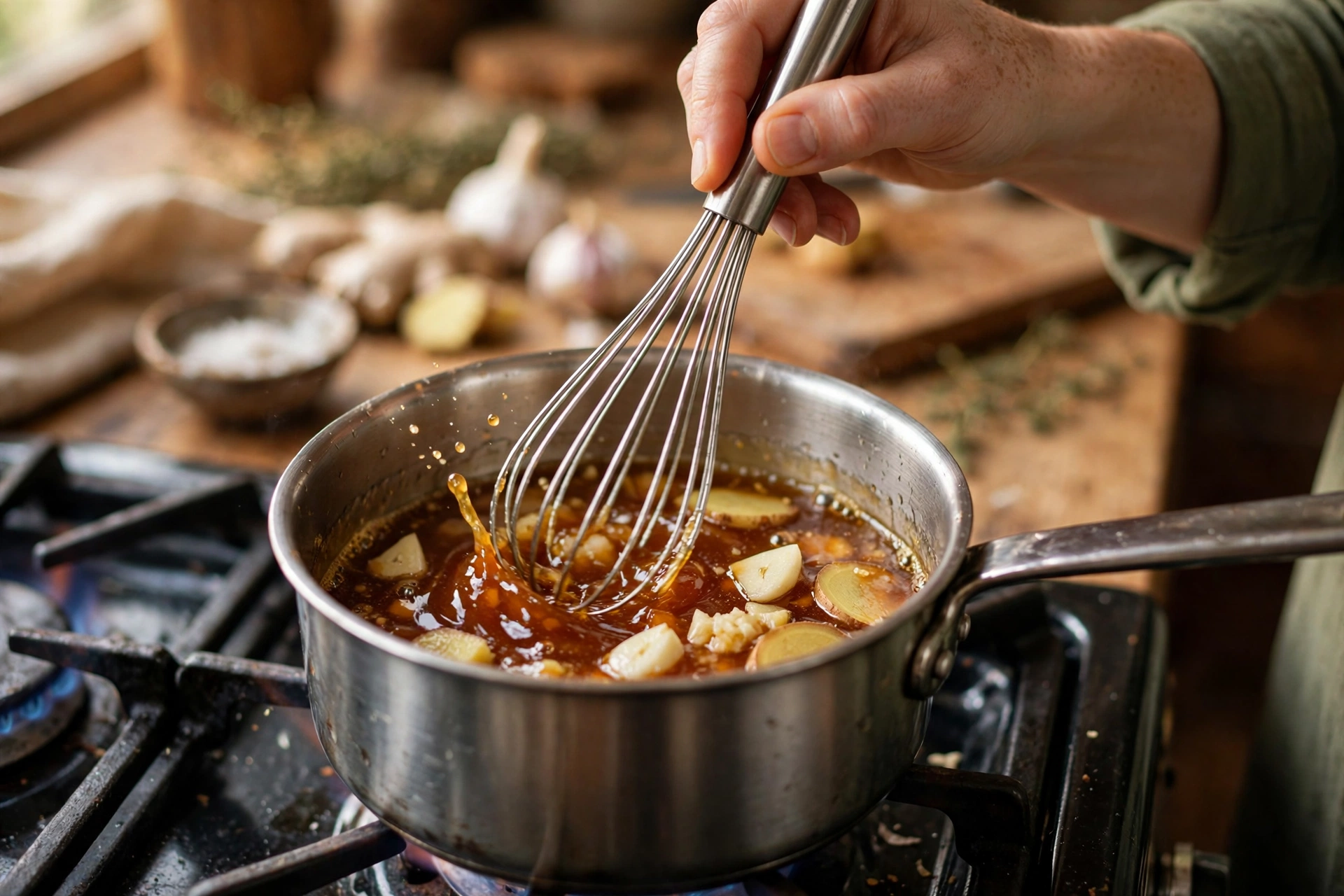
- Whisk the base. Add everything except the cornstarch and water to a pan and whisk until the honey blends in.
- Mix the slurry. Stir the cornstarch with 2 tablespoons of water, then whisk it in.
- Simmer. Bubble gently for 2 to 3 minutes, stirring often, until glossy and thick.
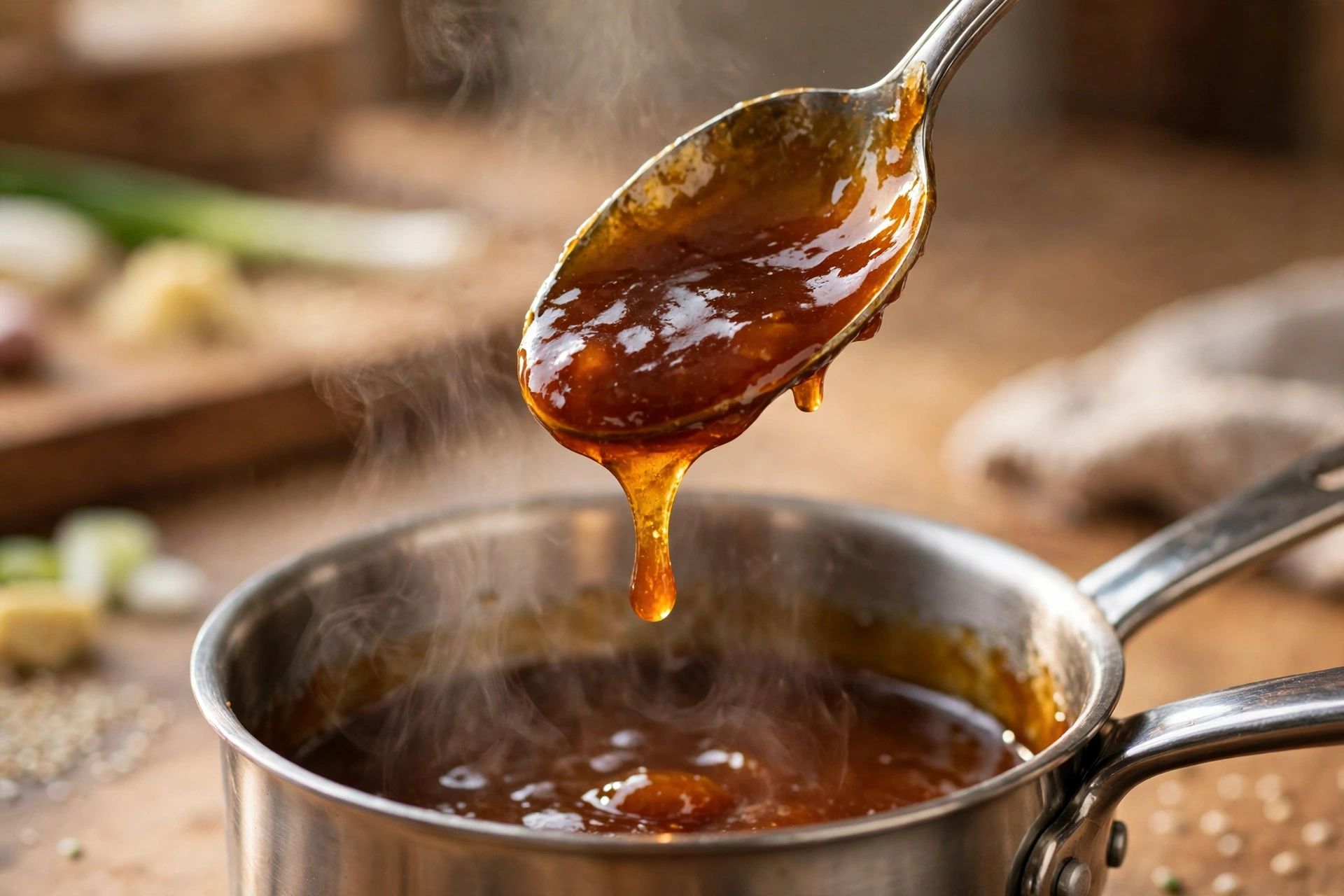
- Do the spoon test. The sauce should coat the back of a spoon.
- Cool and use. Cool 5 minutes. Pour it over your stir fry or into a jar.
I like this sauce best spooned over chicken and broccoli — the chicken takes on the glaze, and I add the broccoli near the end so it stays bright and crisp.
How Do You Build a Low Sodium Stir Fry With This Sauce?
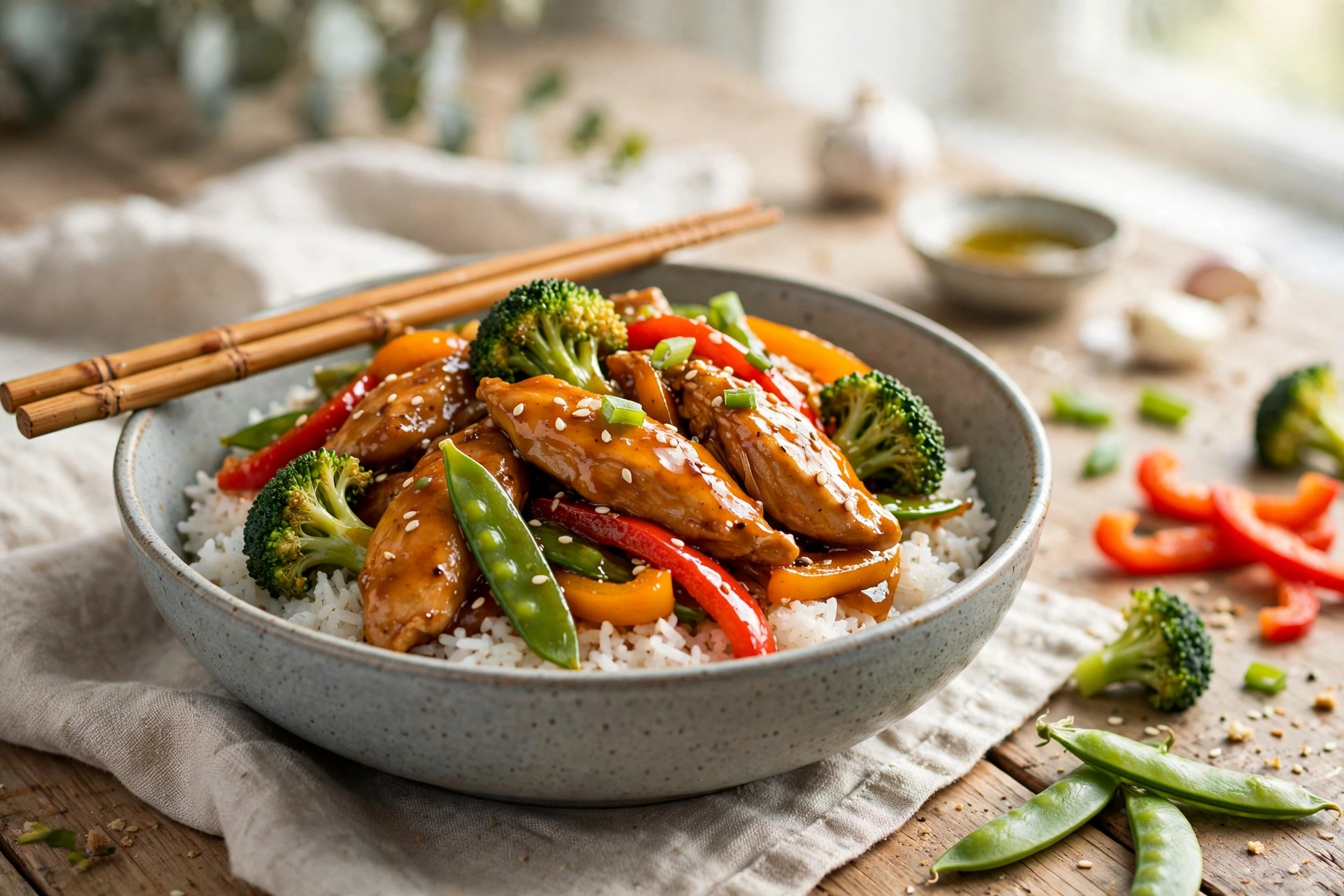
Toss about three-quarters of a cup of sauce with one pound of protein and four cups of vegetables. Cook the protein first, add the vegetables, then pour in the sauce and stir until it coats everything. Serve over rice, noodles or cauliflower rice.
Use chicken, shrimp, tofu, tempeh or lean beef, cut into small, even pieces. Season with black pepper and garlic, not salt.
For vegetables, use about 4 cups of broccoli, peppers, snap peas, carrots, mushrooms or green beans — firm ones first, soft ones last.
Heat a little oil in a large pan or wok over high heat. Cook the protein first, then take it out. Cook the vegetables until bright and just tender.
Add the protein back, pour in the sauce, and stir until glossy. Serve right away.
For busy nights, healthy tuna salad with Greek yogurt makes another quick low-sodium dinner, and our low sodium taco seasoning works on stir fry nights too. Our white whole wheat bread makes a good whole-grain side.
What Are the Best Low Sodium Swaps?
Coconut aminos are the best swap because they taste salty and savory with about 270 mg of sodium per tablespoon, far less than soy sauce. Low-sodium soy sauce still has 500 to 600 mg per tablespoon. Coconut aminos are already soy-free.
The base you choose sets the sodium level for the whole sauce:
| Base (1 tbsp) | Sodium | Soy-free? | Gluten-free? |
|---|---|---|---|
| Coconut aminos | ~270 mg | Yes | Yes |
| Low-sodium soy sauce | ~500–600 mg | No | No |
| Tamari | ~700–900 mg | No | Yes |
| Regular soy sauce | ~900 mg | No | No |
Low-sodium soy sauce sounds like a good swap, but it still holds about twice the sodium of coconut aminos. Tamari is gluten-free, but its sodium is close to regular soy sauce.
If you cannot find coconut aminos for this low sodium stir fry sauce recipe, check the label. Our Low Sodium Vegetable Soup uses the same low-salt approach.
How to Store Low Sodium Stir Fry Sauce
Keep the cooled sauce from this low sodium stir fry sauce recipe in a sealed jar in the fridge for up to one week. Freeze it in ice cube trays for up to three months, and thaw the cubes you need overnight.
Let the sauce cool fully before you seal the jar, and use a clean spoon each time.
Freeze the cooled sauce in a tray, then bag the cubes. Each cube is about 2 tablespoons.
Common Mistakes to Avoid
The most common mistakes with this low sodium stir fry sauce recipe are adding cornstarch straight to the hot sauce, skipping the simmer, and adding extra salty ingredients. Mix the cornstarch with cold water first, simmer two to three minutes, and taste before you add extra soy sauce.
- Lumpy sauce: dry cornstarch in hot liquid turns lumpy. Mix it with cold water first, then whisk hard or strain.
- Sauce too thin: it needs a real simmer. Bubble it for 2 to 3 minutes and do the spoon test.
- Sauce too salty: taste before you add anything extra. Stir in 1 tablespoon of water and 1 teaspoon of vinegar to soften it.
Ingredients
Method
- Whisk everything except the cornstarch and water in a pan until the honey blends in.
- Stir the cornstarch with 2 tablespoons of water, then whisk it in.
- Simmer 2 to 3 minutes, stirring often, until glossy and thick.
- Do the spoon test: the sauce should coat the back of a spoon.
- Cool 5 minutes. Use right away or store in a sealed jar.
Notes
Frequently Asked Questions
Here are the questions readers ask most about this low sodium stir fry sauce recipe.
How do you make stir fry sauce low sodium?
Start with coconut aminos, not soy sauce. Add rice vinegar, garlic, ginger and sesame oil for flavor, and use no-salt-added broth. Skip extra soy sauce and bottled sauces. Honey balances the vinegar, and cornstarch gives the sauce body without salt.
Is stir fry sauce high in sodium?
Most bottled stir fry sauces are high in sodium, with 125 to 220 mg per tablespoon. Two spoonfuls can add more than 400 mg to your meal. This homemade sauce has only 52 mg per tablespoon, so you stay in control.
Can I make stir fry sauce without soy sauce?
Yes. This sauce uses coconut aminos, not soy sauce, so it is soy-free and still tastes salty and savory. Coconut aminos come from coconut sap and taste mild and sweet. Find a soy-free aminos product and check the label for sodium.
How long does homemade stir fry sauce last?
This sauce keeps in the fridge for up to one week. Cool it before you seal the jar, and use a clean spoon. To store longer, freeze it in ice cube trays for up to three months, then thaw only what you need.
How do you thicken stir fry sauce without salt?
Cornstarch is the simplest way to thicken a sauce without salt. Mix one tablespoon of cornstarch with two tablespoons of water, then stir it into the sauce while it simmers. Let it bubble gently until it coats the back of a spoon.
Is this stir fry sauce good for people with diabetes?
This sauce has about 2 g of carbs and 1 g of sugar per tablespoon. The honey adds most of the sugar, so if you watch sugar, use the no-added-sugar version. Check with your doctor or dietitian about your plan.
Conclusion
This low sodium stir fry sauce recipe gives you takeout flavor with a fraction of the salt — 52 mg per tablespoon, ready in ten minutes. Make a batch this week.
For more on why cutting salt matters, see How Does Sodium Affect Blood Pressure?.
This article is for general information only and is not medical advice. Please talk to your doctor or a registered dietitian, especially if you have diabetes, heart disease or take medicine.